
The Aztec Empire: An Intricate Political Structure Behind the Great Civilization

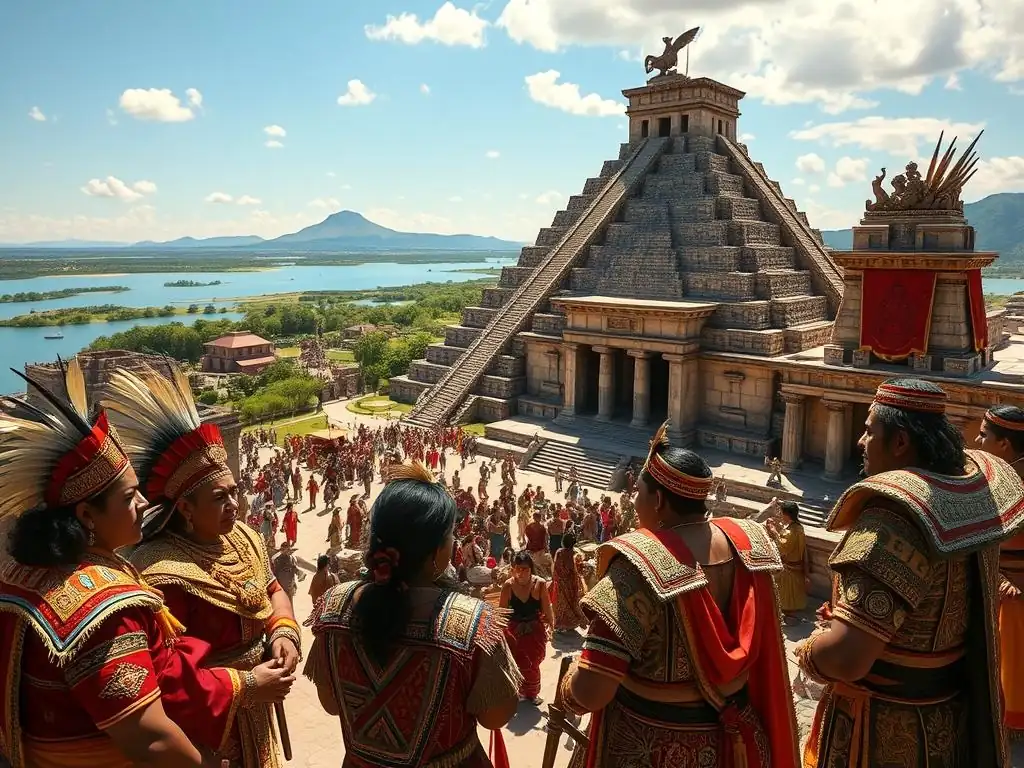
Welcome to Indigenous Civilizations of the Americas, where we delve into the rich tapestry of cultures that flourished long before European contact. In our featured article, "The Aztec Empire: An Intricate Political Structure Behind the Great Civilization," we invite you to uncover the complexities of the Aztec Empire's political structure—a fascinating system that not only governed a vast civilization but also shaped its legacy for generations to come. Join us on this journey as we explore the achievements, societies, and enduring impact of these remarkable indigenous cultures, and prepare to be inspired by the stories that lie ahead.
Introduction to the Aztec Empire Political Structure
The Aztec Empire stands as one of the most remarkable civilizations in history, renowned for its rich cultural heritage, impressive architectural feats, and complex societal organization. At the core of this extraordinary civilization was a sophisticated political structure that not only facilitated governance but also maintained the empire’s stability and power.
This article delves into the intricacies of the Aztec Empire political structure, exploring its key features and the roles played by various entities within the government. Understanding this political framework is essential to appreciate how the Aztecs managed their vast territories and diverse populations, setting the stage for their enduring legacy in the Americas.
Overview of the Aztec Civilization
The Aztec civilization flourished in Mesoamerica from the 14th to the 16th centuries, with its capital in Tenochtitlan, present-day Mexico City. This civilization was marked by:
- Agricultural Innovation: The Aztecs developed advanced farming techniques, including chinampas (floating gardens), which maximized agricultural output.
- Cultural Richness: They created a vibrant culture, evident in their art, religion, and festivals, which were deeply intertwined with their political life.
- Expansionist Policies: The empire expanded through military conquests, establishing a vast network of tributary states that contributed to its wealth and power.
Importance of Governance in the Aztec Empire
Governance was pivotal for the Aztec Empire's success, as it allowed for:
- Social Order: A structured political system ensured that laws and regulations were upheld, maintaining order across diverse communities.
- Resource Management: Effective governance facilitated the management of resources, including tribute collection from conquered regions, which supported the empire's economy.
- Political Stability: A well-defined political hierarchy helped in mitigating conflicts and ensuring loyalty among the ruling class and the populace.
Key Features of the Aztec Empire Political Structure
The political structure of the Aztec Empire was characterized by several key features that defined its governance and authority.
Centralized Authority in the Aztec Government
The Aztec political system was highly centralized, with power concentrated in the hands of the emperor. This central authority was crucial for:
- Decision-Making: The emperor had the final say in matters of state, including military campaigns, diplomatic relations, and economic policies.
- Legal Authority: Laws were established and enforced from the central government, ensuring uniformity across the empire.
- Tribute System: A centralized system for collecting tribute from conquered regions enabled the empire to sustain its economy and military.
Role of the Emperor in Aztec Politics
The emperor, known as the Huey Tlatoani, was not only a political leader but also a religious figure. His role included:
- Divine Right to Rule: The emperor was considered semi-divine, believed to be chosen by the gods, which legitimized his authority.
- Military Leadership: As the commander-in-chief, the emperor led military campaigns to expand the empire and defend its borders.
- Cultural Steward: The emperor promoted cultural practices and religious ceremonies that reinforced the social order and loyalty among the people.
The Council of Nobles: Influence and Power
Complementing the emperor's authority was the Council of Nobles, a group of elite individuals who played a significant role in governance. Their influence was characterized by:
- Advisory Role: The council provided counsel to the emperor on important matters, including policy decisions and military strategies.
- Judicial Authority: They were involved in the judicial system, helping to administer justice and resolve disputes within the empire.
- Tribal Representation: Nobles often represented various city-states and regions, ensuring that different voices were heard in the political process.
The intricate political structure of the Aztec Empire was fundamental to its ability to govern effectively and maintain control over a vast and diverse territory, leaving a legacy that would influence future civilizations in the Americas.
The Administrative Divisions of the Aztec Empire
The administrative divisions of the Aztec Empire were essential for maintaining control over its vast territories and diverse populations. At its height in the 15th century, the empire spanned much of modern-day Mexico, incorporating a variety of ethnic groups and cultures. The administrative framework was structured to facilitate governance, taxation, and military mobilization.
The empire was divided into several key components:
- Capitals and Major Cities: At the apex was Tenochtitlan, the capital, which served not only as the political heart but also as a cultural and economic hub. Other important cities included Texcoco and Tlacopan, which formed the Triple Alliance, the backbone of the Aztec political structure.
- Provinces: The empire was further divided into provinces known as altepetl, which were often city-states that maintained a degree of autonomy. Each altepetl had its own ruler, known as a tlatoani, who governed under the authority of the emperor.
- Districts and Calpulli: Within provinces, districts were organized into calpulli, the fundamental social units that managed local affairs and resources.
This complex system allowed the Aztecs to efficiently administer their society, ensuring that local governance aligned with imperial interests.
The Calpulli: The Basic Social Unit
The calpulli was the fundamental social and administrative unit in Aztec society. Each calpulli was a community group that consisted of extended families, sharing land and resources, and was responsible for various local functions. The significance of calpulli can be understood through several key aspects:
- Land Ownership and Management: Calpulli members collectively owned land, which was cultivated for subsistence and tribute. This communal approach fostered a sense of solidarity and ensured that all members had access to resources.
- Political Representation: Each calpulli had its own leaders and representatives who participated in local governance and decision-making. These leaders played a crucial role in maintaining order within the community and communicating with higher authorities.
- Cultural Preservation: Calpulli were also centers of cultural identity, preserving traditions, practices, and languages, which were vital for the continuity of Aztec culture.
Given their importance, calpulli served as the backbone of the Aztec political structure, linking the larger imperial governance with local communities.
Provinces and Their Governance
The governance of the Aztec provinces was a delicate balance between central authority and local autonomy. Each province, or altepetl, operated under a tlatoani, who was often a member of the nobility. The structure of provincial governance included:
- Delegated Authority: While tlatoani had significant power, they were expected to uphold the emperor's laws and policies. This delegated authority ensured that provincial rulers remained loyal to the central government.
- Tribute Collection: Provinces were responsible for generating resources and collecting tribute for the empire. This system not only reinforced the economic foundation of the Aztec Empire but also highlighted the relationship between governance and resource management.
- Military Obligations: Provinces were required to provide troops for the imperial army during wars and conflicts. This military obligation reinforced the political ties between the provinces and the central authority.
Overall, provinces acted as crucial intermediaries, facilitating the administration of the empire while maintaining their unique identities.
Taxation and Resource Management in the Empire
Taxation was a cornerstone of the Aztec political structure, enabling the empire to sustain itself and expand its influence. The system of taxation was multifaceted and involved several key components:
- Tribute System: The Aztecs implemented a tribute system where conquered peoples and provinces were required to pay in goods, services, or labor. This tribute was essential for funding the empire's military, religious institutions, and public works.
- Resource Allocation: Collected tributes were managed centrally, with a focus on redistributing resources to sustain the ruling elite, maintain temples, and support the military. This allocation was crucial for ensuring loyalty among the nobility and maintaining social order.
- Economic Integration: The management of resources across provinces created an integrated economy, facilitating trade and exchange. This economic network strengthened political ties and enhanced the empire's resilience against external threats.
Through these mechanisms, the Aztec Empire effectively managed its resources, reinforcing its political structure and societal cohesion.
The Military and Political Structure of the Aztecs
The military was not only a tool for defense but also a central element of the political structure of the Aztec Empire. The intertwining of military and political power shaped the empire's governance and expansion strategies.
Military Hierarchy and Its Political Implications
The military hierarchy of the Aztec Empire was complex and stratified, reflecting the societal values placed on warfare and conquest:
- High Command: At the top were the tlatoque (plural of tlatoani) who were often military leaders as well as political rulers. Their dual roles enabled them to leverage military successes for political gain.
- Elite Warriors: Warriors were organized into ranks, with elite soldiers known as Eagle Warriors and Jaguar Warriors holding prestigious status. Their achievements in battle could elevate their social standing and influence.
- Common Soldiers: While the elite warriors were celebrated, common soldiers were essential for the empire's military campaigns. Their loyalty and effectiveness contributed to the stability and expansion of Aztec power.
The military hierarchy allowed the Aztecs to mobilize and project power effectively, reinforcing the political structure through conquest and control.
Role of Warfare in Expanding Political Control
Warfare played a pivotal role in the Aztec Empire's strategy for expanding political control. The Aztecs viewed military conquest as both a means of acquiring territory and a way to assert dominance over rival states:
- Conquest for Tribute: Victorious wars allowed the Aztecs to incorporate new provinces into their empire, which were then subjected to tribute obligations. This not only increased the empire's wealth but also expanded its influence.
- Cultural Exchange: Conquering new territories enabled the Aztecs to assimilate diverse customs and practices, further enriching their culture while simultaneously imposing their political structure.
- Demonstration of Power: The Aztecs used warfare as a demonstration of power, showcasing military prowess to both subjects and adversaries. Victories were celebrated and used to legitimize the authority of the ruling class.
Through warfare, the Aztec Empire not only expanded its territorial reach but also consolidated its political power.
Alliances and Vassal States in the Aztec Empire
The establishment of alliances and the management of vassal states were critical elements of the Aztec political structure. These relationships allowed the empire to govern effectively while maintaining a network of loyalty and control:
- Triple Alliance: Formed between Tenochtitlan, Texcoco, and Tlacopan, this alliance was instrumental in expanding Aztec influence. It enabled coordinated military campaigns and the sharing of resources.
- Vassal Relationships: Conquered states often retained local rulers as vassals, who were required to pay tribute and provide military support. This approach allowed for a degree of autonomy while ensuring loyalty to the Aztec Empire.
- Diplomatic Strategies: The Aztecs were adept at forging alliances with neighboring states, using marriage and diplomacy to strengthen political ties. These strategies helped to mitigate resistance and foster cooperation among diverse groups.
The intricate web of alliances and vassal states within the Aztec Empire was a fundamental aspect of its political structure, enabling effective governance and expansion while maintaining a semblance of local identity.
Religion and Politics in the Aztec Empire
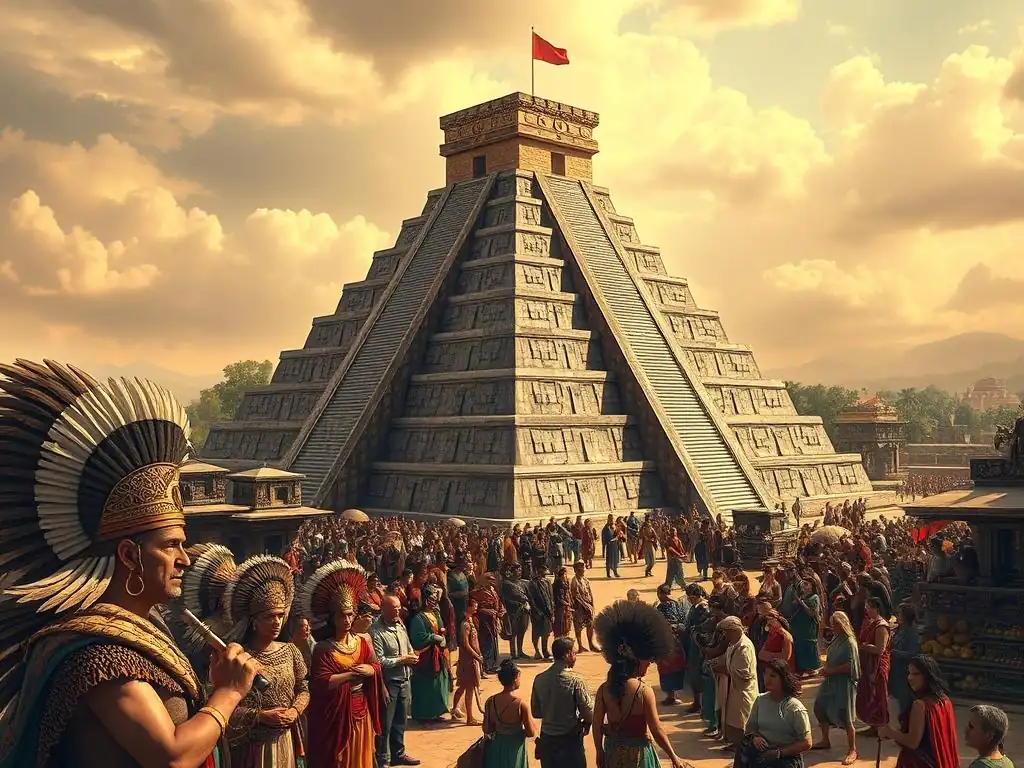
The Aztec Empire's political structure was deeply intertwined with its religious beliefs, creating a unique governance system that influenced every aspect of life. Religion was not merely a set of beliefs but served as a guiding framework for political authority and social order. The Aztecs viewed their rulers as divine representatives, which reinforced their power and the importance of adhering to religious practices in governance.
The Interconnection Between Religion and Governance
In the Aztec Empire, religion and governance were inseparable. The emperor, known as the Huey Tlatoani, was believed to be divinely chosen, acting as the intermediary between the gods and the people. This divine right to rule not only legitimized the emperor's authority but also established a moral responsibility to maintain cosmic order, known as Tlāltikpak.
Religious ceremonies often coincided with political events; for instance, the emperor's ascension to power was typically marked by significant sacrifices to ensure favor from the gods. Furthermore, the calendar of religious festivals dictated political life, as decisions about warfare, agriculture, and trade were influenced by religious observances. This integration of religion into public life created a cohesive society where the Aztecs believed their political stability was directly linked to their spiritual practices.
Role of Priests in Political Decision-Making
Priests held substantial power within the Aztec political structure, serving as advisors to the rulers and wielding significant influence in the council of nobles. They were responsible for interpreting the will of the gods, conducting rituals, and maintaining the complex calendar that governed both agricultural cycles and religious festivals.
The Tlacatecuhtli, or chief priest, played a pivotal role in advising the emperor on decisions that could impact the empire's fate. Their insights were considered vital, as they provided guidance on military campaigns, agricultural practices, and diplomatic relations. The priests were not just spiritual leaders; they were also political actors whose decisions could sway the course of the empire.
Religious Festivals and Their Political Significance
Religious festivals were more than mere celebrations; they were crucial events that reinforced the political hierarchy and unity within the Aztec Empire. Major festivals, such as Toxcatl and Tezcatlipoca, involved elaborate rituals and sacrifices that reaffirmed the emperor's divine authority and the community's devotion to the gods.
These festivals also served as a platform for the emperor to display power and gain the loyalty of his subjects. They provided opportunities for the nobility to demonstrate their wealth and influence, while the masses participated in communal activities that fostered social cohesion. Thus, the political significance of these festivals extended beyond spirituality, reinforcing loyalty to the empire and its leaders, and ultimately contributing to the social stability of the Aztec civilization.
Challenges to the Aztec Political Structure
Despite its intricate political structure, the Aztec Empire faced several challenges that threatened its stability and governance. Internal conflicts, external threats, and the demands of conquest all contributed to the complexities of maintaining control over a vast and diverse empire.
Internal Conflicts and Power Struggles
Internal strife was a constant challenge within the Aztec political structure. Power struggles among the nobility and regional leaders often led to conflicts that could undermine the emperor's authority. The pilli class, composed of noble families, frequently vied for influence, and rivalries could escalate into open conflict.
These internal disputes often weakened the central authority, making it difficult for the emperor to implement policies effectively. Additionally, the tensions between the different city-states within the empire could lead to factionalism, which posed a significant threat to unity and governance. Such conflicts sometimes resulted in civil wars, which drained resources and diverted attention from external threats.
Impact of External Threats on Governance
The Aztecs also faced significant external threats that challenged their political structure. Neighboring tribes and city-states, often resentful of Aztec dominance, posed continuous risks. As the empire expanded, so did the number of enemies, leading to a need for constant military readiness and strategic alliances.
The challenges of managing these external threats placed immense pressure on the political system. The emperor had to balance military campaigns with the needs of his subjects, all while maintaining the support of the nobility and the priesthood. This delicate balance was crucial to the empire’s survival and required adept political maneuvering.
The Role of Conquest and Expansion in Political Stability
Conquest and territorial expansion played a vital role in the political stability of the Aztec Empire. The Aztecs engaged in regular military campaigns to subjugate neighboring tribes, which allowed them to extract tribute and resources. This practice not only enriched the empire but also reinforced the emperor's power and authority.
Successful conquests were celebrated and used as propaganda to strengthen the emperor's image as a divine warrior. The spoils of war provided material support for the state, allowing for the maintenance of public works and religious institutions. However, the need for constant expansion also created tensions. The integration of newly conquered peoples posed challenges in governance, as the Aztecs had to manage diverse cultures and ensure loyalty to the central authority.
The Aztec Empire’s political structure was a complex interplay of religion, power dynamics, and external pressures, all of which shaped its governance and stability. Understanding these elements provides valuable insight into the resilience and challenges of one of the most sophisticated civilizations in pre-Columbian America.
Conclusion: Legacy of the Aztec Empire Political Structure
The political structure of the Aztec Empire was not only intricate but also remarkably effective in managing a vast and diverse territory. The hierarchy, which included the emperor, nobles, and a network of local rulers, facilitated both governance and cultural cohesion. The tribute system established economic interdependence among various city-states, ensuring a steady flow of resources that supported the empire's expansion and stability. Moreover, the Aztec emphasis on religious and cultural unity helped to foster a sense of identity among the diverse groups within the empire.
The legacy of the Aztec political structure is evident in its lasting influence on indigenous governance models in the Americas. Many contemporary indigenous communities draw upon elements of Aztec governance in their own political systems, demonstrating the enduring relevance of these ancient practices. The centralization of power, the importance of leadership, and the intricate relationship between governance and spirituality are all aspects that continue to resonate in modern indigenous political frameworks.
Lasting Impacts on Indigenous Governance
The Aztec Empire's political structure has left a profound impact on the governance systems of various indigenous peoples throughout the Americas. The integration of local rulers into the imperial framework allowed for a degree of autonomy while maintaining allegiance to the central authority. This model has been mirrored in numerous indigenous governance systems, promoting collaboration and regional leadership alongside respect for traditional customs.
Additionally, the concept of tribute and resource sharing established a foundation for economic cooperation among neighboring communities. Many modern indigenous groups emphasize collective resource management and mutual support, reflecting the principles laid down during the Aztec era. The emphasis on consensus decision-making and community involvement is another aspect that has survived, showcasing the democratic undercurrents present within the Aztec political system.
Lessons from the Aztec Political System for Modern Governance
The Aztec Empire offers valuable lessons for contemporary governance, particularly in relation to managing diversity within a unified political framework. The empire's ability to incorporate various cultures and practices under a single political umbrella demonstrates the importance of inclusivity in governance. This principle is especially relevant today, as societies become increasingly multicultural and interconnected.
Moreover, the Aztec focus on leadership accountability and the central role of the emperor can inform modern political systems. Effective leadership, characterized by strong decision-making capabilities and a clear vision, is crucial for maintaining stability and fostering progress. The balance of power between different societal sectors, as seen in the Aztec hierarchy, can inspire current governance models to promote checks and balances that enhance democratic processes.
References for Further Reading on Aztec Empire Political Structure
Recommended Books and Articles
-
"The Aztecs: A Very Short Introduction" by David Carrasco
This concise overview provides insights into the political, cultural, and social structures of the Aztec Empire, making it accessible for readers new to the subject.
-
"The Aztec Empire" by Michael E. Smith
A comprehensive resource that explores various aspects of Aztec society, including their political organization, religious practices, and economic systems.
-
"Empire of the Sun: The Rise and Fall of the Aztec Empire" by Patricia A. McAnany
This book delves into the complexities of Aztec governance and its implications for the empire's eventual decline.
Online Resources and Documentaries on the Aztec Civilization
-
"The Aztecs: A Documentary Reader"
An online compilation of primary sources and scholarly articles that provide a multi-faceted view of Aztec political structures and societal norms.
-
PBS Documentary: "The Aztecs"
A visually engaging and informative documentary that explores the Aztec Empire's rise to power, its governance, and its cultural achievements.
-
National Geographic: "Inside the Aztec Empire"
An interactive online resource that offers insights into the daily life, politics, and culture of the Aztec civilization, featuring articles, videos, and maps.
- Introduction to the Aztec Empire Political Structure
- Key Features of the Aztec Empire Political Structure
- The Administrative Divisions of the Aztec Empire
- The Military and Political Structure of the Aztecs
- Religion and Politics in the Aztec Empire
- Challenges to the Aztec Political Structure
- Conclusion: Legacy of the Aztec Empire Political Structure
- References for Further Reading on Aztec Empire Political Structure
Frequently Asked Questions
What was the political structure of the Aztec Empire?
The Aztec Empire's political structure was a complex hierarchy that included an emperor, nobility, and commoners, facilitating efficient governance and military organization.
How did the emperor maintain control over the empire?
The emperor maintained control through a network of loyal nobility, military strength, and religious authority, ensuring that various city-states adhered to his rule.
What role did tribute play in the Aztec political structure?
Tribute was essential for the Aztec political structure, as it provided resources and wealth from conquered regions, reinforcing the empire’s power and enabling expansion.
How did the Aztec political system influence their society?
The political system influenced Aztec society by establishing social classes, regulating trade, and fostering a sense of unity among diverse cultures within the empire.
What factors led to the decline of the Aztec political structure?
The decline of the Aztec political structure was due to internal strife, European colonization, and the disruption of tribute systems, which weakened their authority and cohesion.
Final Reflection: Understanding the Aztec Empire's Political Structure in Today's Context
The exploration of the Aztec Empire's political structure reveals not only the complexity of governance in ancient civilizations but also its relevance in contemporary discussions about power dynamics and societal organization. As we navigate a world filled with political challenges and shifting power balances, understanding how the Aztecs managed their empire can provide valuable insights into the importance of structured governance and community involvement. The lessons from the past resonate today, reminding us that effective leadership and organization are timeless necessities.
The intricate political framework of the Aztec Empire has left an indelible mark on our cultural and social landscape. By examining the roles of various leaders, the significance of tribute systems, and the interplay between religion and politics, we can appreciate how these elements shaped not just an empire, but a civilization. The Aztecs demonstrated that a well-structured political system could foster unity and resilience among diverse groups. In the midst of chaos, there is also opportunity.
– Sun Tzu. This quote encapsulates the essence of how the Aztec political structure turned potential discord into a thriving society, a lesson that remains pertinent in our current global climate.
As we reflect on the Aztec Empire's political structure, I invite you to consider how these historical insights can inform your understanding of modern governance and community engagement. Take a moment to reflect on the systems in place around you and how they shape your life. Are there lessons from the past that can inspire you to advocate for a more equitable and organized society? Embrace the opportunity to learn from history, and let it guide your actions toward creating a better future for all.
Unveil the Rich Legacy of the Aztec Empire Today!
Thank you for immersing yourself in the fascinating world of the Aztec Empire! You've unlocked insights into one of history's most intricate political structures, revealing the sophistication of this great civilization. Now, it’s time to take what you've learned and explore further!
Here’s how you can deepen your understanding and engage with the rich cultural heritage of the Aztec Empire:
- Dive Deeper: Explore additional resources on topics such as the daily life of the Aztecs and their remarkable achievements in agriculture, trade, and architecture.
- Join the Conversation: Share your insights in the comments section! We’d love to hear how the Aztecs inspire you or any questions that have ignited your curiosity.
- Explore Local Connections: Visit a museum exhibit featuring Aztec artifacts or consider volunteering with organizations that promote indigenous history and culture in your community.
What aspect of the Aztec political structure intrigued you the most? How do you believe understanding their history can influence our perspective on modern governance?