
The Ingenious Astronomy of the Aztecs: Mapping the Cosmos

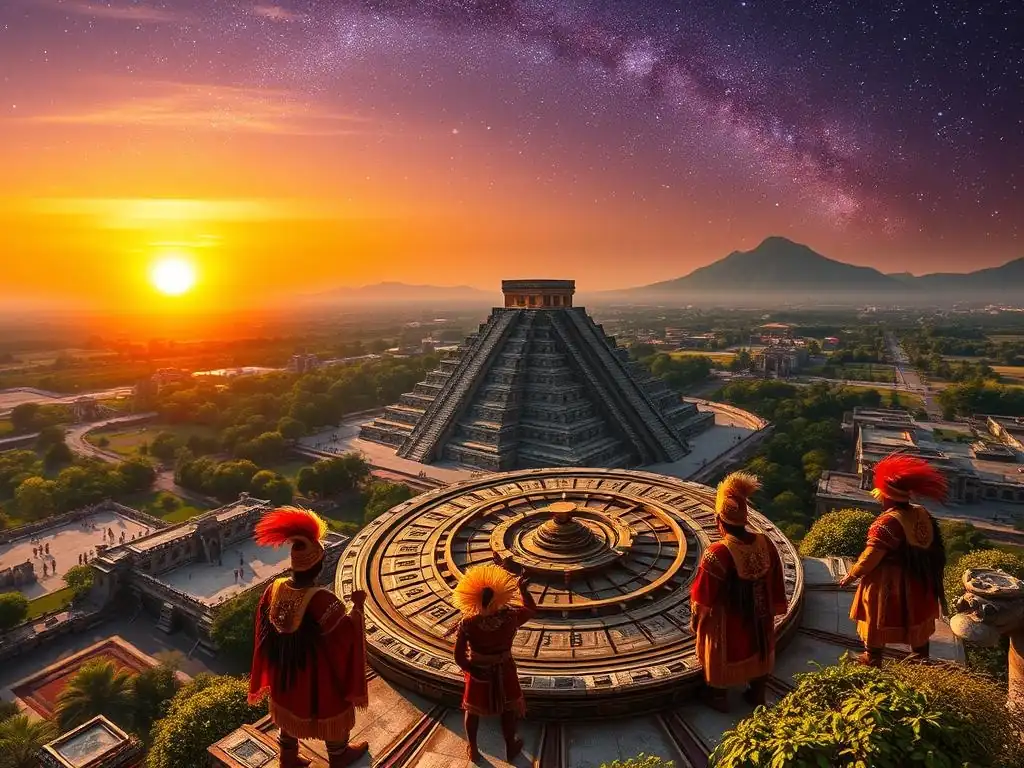
Welcome to Indigenous Civilizations of the Americas, where we embark on a captivating journey through the rich tapestry of cultures that flourished long before European contact. Here, we delve into the remarkable achievements and profound wisdom of these diverse societies. In our featured article, "The Ingenious Astronomy of the Aztecs: Mapping the Cosmos," we invite you to explore the intricate astronomical knowledge and cultural significance that shaped the Aztec way of life. Prepare to uncover the mysteries of the cosmos as seen through the eyes of one of history's most fascinating civilizations—your adventure into the past begins now!
Introduction to Aztec Astronomy and Culture
The Aztec civilization, flourishing in central Mexico from the 14th to the 16th centuries, is renowned for its rich tapestry of culture, art, and scientific achievements. Among these, Aztec astronomy stands out as a profound testament to their understanding of the cosmos and its intricate relationship with their daily lives. The Aztecs meticulously observed celestial bodies, using their movements to dictate agricultural practices, religious ceremonies, and social organization. This article aims to delve into the fascinating realm of Aztec astronomy and culture, exploring how their celestial observations shaped their worldview and influenced their societal structure.
Overview of the Importance of Astronomy in Aztec Society
In Aztec society, astronomy was not merely a scientific endeavor; it was deeply woven into the fabric of their cultural and religious life. The Aztecs believed that the movements of celestial bodies had a direct influence on their fortunes and the natural world. Key aspects of astronomy in their society included:
- Calendar Systems: The Aztecs developed complex calendar systems, including the Tonalpohualli (a 260-day ritual calendar) and the Xiuhpohualli (a 365-day solar calendar), both of which were essential for agricultural planning and religious observance.
- Religious Significance: Celestial events, such as eclipses and the appearance of certain stars, were interpreted as omens or messages from the gods, influencing political decisions and social actions.
- Architectural Alignments: Many Aztec structures were aligned with celestial events, such as the Templo Mayor, which was oriented to capture sunlight during specific solstices, further reflecting their astronomical knowledge.
Connection Between Aztec Astronomy and Daily Life
The integration of astronomy into daily life was profound, affecting various aspects of Aztec society:
- Agriculture: The timing of planting and harvesting crops was closely linked to celestial cycles, ensuring that agricultural activities coincided with optimal weather patterns.
- Religious Practices: Rituals and ceremonies were scheduled around astronomical events, fostering a deep connection between the cosmos and spirituality.
- Navigation and Trade: Knowledge of the stars aided in navigation, allowing for successful trade routes that extended across Mesoamerica.
Historical Context of Aztec Astronomy
To fully appreciate the sophistication of Aztec astronomy, it is crucial to understand its historical context and how it evolved from earlier Mesoamerican traditions.
The Development of Astronomical Knowledge in Mesoamerica
Mesoamerican cultures prior to the Aztecs, such as the Olmecs and Maya, laid the groundwork for astronomical studies. They were among the first to:
- Create intricate calendar systems.
- Observe celestial events like eclipses and planetary movements.
- Develop architectural structures that aligned with solar and lunar cycles.
By the time the Aztecs emerged as a dominant civilization, they inherited and expanded upon these astronomical foundations, incorporating extensive observational data and sophisticated mathematical calculations into their own practices.
Influences from Previous Civilizations on Aztec Astronomy
The Aztecs were not isolated in their astronomical pursuits; they were influenced by several preceding civilizations:
- The Maya: The intricate Maya calendar and their astronomical records significantly impacted Aztec practices, particularly in the development of their own calendars.
- The Teotihuacan Culture: This earlier civilization's monumental architecture and alignments served as a template for Aztec constructions, reinforcing their understanding of celestial phenomena.
Through these connections, the Aztecs were able to refine their astronomical knowledge, creating a system that was both practical and deeply embedded in their cultural identity.
In summary, Aztec astronomy and culture were intertwined in ways that shaped their civilization's identity, reflecting their profound respect for the cosmos and its influence on their lives. As we explore further, we will uncover the specific achievements and practices that made Aztec astronomy a remarkable aspect of their civilization.
Key Features of Aztec Astronomy
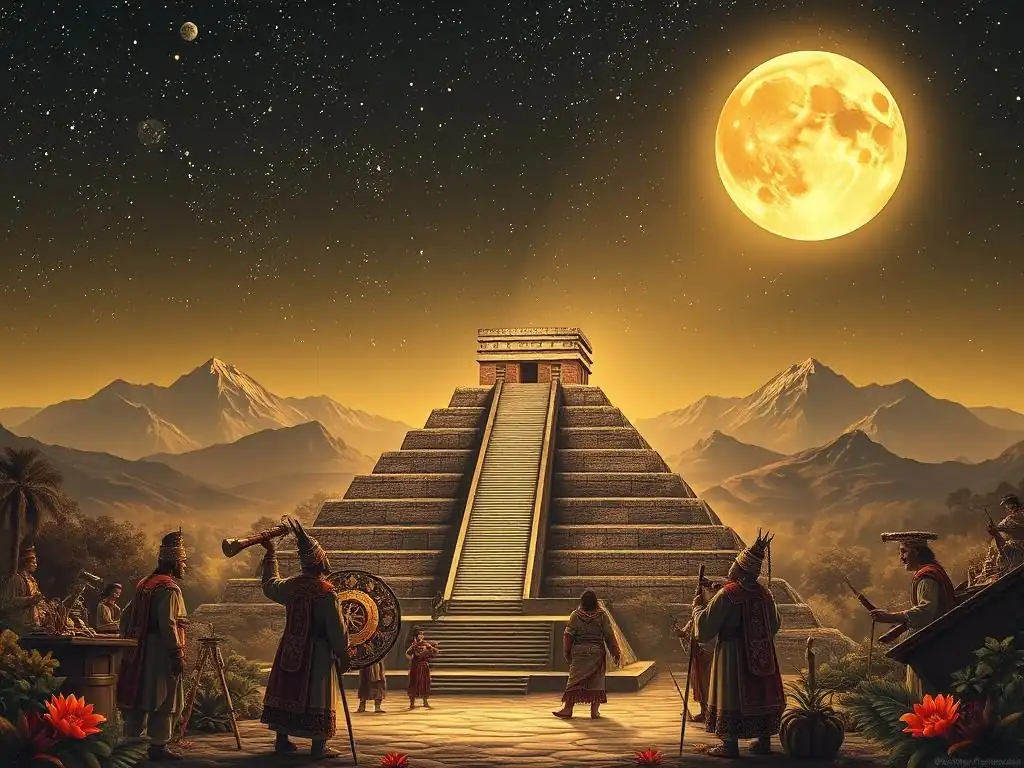
Aztec astronomy is a fascinating blend of observation, mathematics, and spirituality that reflects the civilization's deep connection with the cosmos. The Aztecs showcased a remarkable understanding of celestial phenomena, which they integrated into their daily lives and religious practices. Their astronomical knowledge was pivotal in agriculture, ritual timing, and navigation. Here are some essential features of Aztec astronomy:
- Complex Calendar Systems: The Aztecs developed intricate calendar systems that were astronomical in nature, central to their agricultural and social organization.
- Celestial Events: They meticulously recorded celestial events, such as eclipses and planetary movements, which held significant religious and cultural implications.
- Spiritual Significance: Celestial bodies were not merely objects in the sky; they were imbued with mythological meaning and were often represented as gods or spiritual entities.
Calendar Systems: Tonalpohualli and Xiuhpohualli
Two primary calendar systems defined the Aztec approach to timekeeping: the Tonalpohualli and the Xiuhpohualli.
- Tonalpohualli: This is a 260-day ritual calendar consisting of 20 periods of 13 days. Each day in this calendar had specific attributes and was associated with various deities. The Tonalpohualli was crucial for determining auspicious times for ceremonies, rituals, and agricultural activities.
- Xiuhpohualli: This 365-day solar calendar comprised 18 months of 20 days each, plus an additional 5 "empty" days. The Xiuhpohualli was used to track the solar year and was significant for agricultural cycles, festivals, and civic events.
Together, these calendars illustrate the Aztecs' sophisticated understanding of both solar and ritual time, emphasizing their connection to celestial movements.
Celestial Bodies and Their Significance in Aztec Beliefs
The Aztecs placed great importance on various celestial bodies, each of which was associated with specific gods and cultural meanings.
- The Sun (Tonatiuh): The sun was central to Aztec cosmology, representing life and nourishment. The Aztecs believed that the sun required human sacrifices to sustain its journey across the sky.
- The Moon (Metztli): The moon was perceived as a counterpart to the sun, embodying femininity and night. Festivals were held in its honor, reflecting its significance in agricultural cycles.
- Venus (Tlālōc): Venus was associated with warfare and was observed closely by astronomers. Its rising and setting were linked to key events in Aztec society, including the timing of military campaigns.
These celestial bodies were not only astronomical phenomena; they were integral to the cultural and spiritual identity of the Aztec civilization.
The Role of Observatories in Aztec Astronomy
The Aztecs constructed observatories, known as "teocalli" or ceremonial platforms, that served as sites for astronomical observation. These structures were typically aligned with significant celestial events and allowed priests and astronomers to track the movements of celestial bodies accurately.
- Templo Mayor: Located in Tenochtitlan, the Templo Mayor's dual temples were oriented towards the sun and the moon, reflecting its significance in their religious practices.
- Seasonal Observations: Aztec priests used these observatories to monitor seasonal changes, which were vital for agricultural planning and ritual timing.
The observatories were integral to the Aztec understanding of the cosmos and played a crucial role in their ritualistic and practical applications of astronomy.
Techniques Used in Aztec Astronomy
The Aztecs employed various techniques to observe and record astronomical phenomena, showcasing their advanced understanding of celestial mechanics.
Methods of Celestial Observation by the Aztecs
The Aztecs utilized both direct and indirect methods for celestial observation:
- Visual Observation: Astronomers would observe the sky throughout the night, noting the positions of stars and planets. They meticulously recorded these observations to predict future celestial events.
- Shadow Measurements: They used shadows cast by structures to determine the position of the sun at different times of the year, aiding in the construction of their calendar systems.
- Eclipses and Transits: The Aztecs documented solar and lunar eclipses, recognizing their importance in timekeeping and religious significance.
These methods reveal the Aztecs' keen observational skills and their ability to interpret celestial phenomena meaningfully.
Tools and Instruments Employed in Aztec Astronomical Practices
While the Aztecs did not have telescopes, they utilized various tools and instruments to aid in their astronomical observations:
- Sticks and Stones: Simple devices such as sticks placed in the ground helped measure shadows, assisting in tracking the sun's movement.
- Ecliptic Circles: They created diagrams of ecliptic circles to map the sun's path throughout the year, which was crucial for aligning their calendar systems.
- Astronomical Codices: The Aztecs recorded their astronomical observations in codices, which contained illustrations and glyphs detailing celestial events and cycles.
These tools demonstrate the ingenuity of the Aztec civilization in their quest to understand the cosmos.
Integration of Mathematics in Aztec Astronomy
Mathematics was fundamental to Aztec astronomy, enabling them to create accurate calendars and predict celestial events.
- Base-20 Number System: The Aztecs utilized a vigesimal (base-20) number system, which facilitated complex calculations related to time and celestial cycles.
- Geometric Principles: They applied geometric principles to understand the movements of celestial bodies and to construct their observatories and ceremonial structures.
- Calendrical Calculations: The integration of mathematics in their calendar systems allowed for precise tracking of time, ensuring that agricultural and ceremonial activities aligned with celestial events.
The sophisticated application of mathematics in Aztec astronomy underscores their advanced scientific understanding and cultural significance.
The Impact of Aztec Astronomy on Culture
Aztec astronomy was not merely a scientific endeavor; it was deeply woven into the cultural fabric of Aztec society. The celestial observations and calculations carried out by the Aztecs were crucial in shaping their worldview, influencing everything from agricultural practices to religious ceremonies. The meticulous tracking of celestial bodies allowed the Aztecs to develop a calendar system that was integral to their daily lives.
The Tonalpohualli, a 260-day calendar, and the Xiuhpohualli, a 365-day solar calendar, guided not only agricultural cycles but also social and ritual activities. This alignment of time with celestial events underscored the importance of astronomy in maintaining harmony between the earth and the cosmos, reflecting the profound interconnectedness of their culture and the universe.
How Astronomy Influenced Aztec Religion and Mythology
In Aztec religion, astronomy played a pivotal role in shaping their mythology and spiritual practices. The movements of celestial bodies were interpreted as divine messages, leading to the emergence of various deities associated with specific astronomical phenomena. For instance, the sun god Huitzilopochtli was central to their belief system, representing the sun's journey across the sky and its correlation with the cycles of life and death. The Aztecs believed that the sun required nourishment from human sacrifices to rise each day, intertwining their religious practices with astronomical events.
Furthermore, the observation of planetary movements, such as the appearance of Venus as the morning star, was interpreted as a harbinger of war and conflict. This association led to the timing of military campaigns being aligned with celestial events, illustrating the deep integration of astronomy within their religious framework. The rituals commemorating these celestial events reinforced the belief that the heavens could influence human affairs, establishing a spiritual connection to the cosmos.
The Role of Astronomy in Aztec Agriculture and Rituals
Agriculture was the backbone of Aztec society, and astronomy provided the necessary tools for its successful practice. The Aztecs relied on celestial observations to determine the optimal planting and harvesting times. The position of the sun and the phases of the moon played critical roles in agricultural cycles, ensuring that crops were planted in accordance with the seasons.
Rituals tied to agricultural practices were often synchronized with astronomical events. For example, the spring equinox marked a significant time for planting maize, which was a staple crop. The Aztecs would conduct ceremonies to honor Tlaloc, the rain god, ensuring favorable weather for their crops. This close relationship between astronomy and agriculture not only ensured sustenance but also reinforced societal cohesion through communal rituals that celebrated celestial cycles.
The Legacy of Aztec Astronomy in Contemporary Indigenous Cultures
The astronomical practices of the Aztecs have left a lasting legacy that continues to influence contemporary Indigenous cultures in Mexico and Central America. Many modern Indigenous groups still honor the celestial cycles in their agricultural practices and rituals, reflecting the continuity of ancient knowledge. For instance, some communities maintain traditional calendars that align with the astronomical observations made by their ancestors.
Additionally, the resurgence of interest in Indigenous knowledge systems has prompted a broader recognition of the importance of astronomy in cultural identity. This revival highlights the sophistication of ancient astronomical knowledge and its relevance to contemporary discussions on environmental sustainability and agricultural practices. It serves as a reminder of the deep-rooted connections between Indigenous cultures and their understanding of the cosmos.
Conclusion: The Lasting Influence of Aztec Astronomy and Culture
The intricate relationship between Aztec astronomy and culture reveals the profound impact that celestial observations had on their society. From shaping religious beliefs to guiding agricultural practices, Aztec astronomy was a cornerstone of their civilization. This legacy continues to resonate today, as contemporary Indigenous cultures draw upon these ancient practices to navigate their relationship with the environment and the cosmos.
Reflection on the Importance of Preserving Indigenous Knowledge
Preserving Indigenous astronomical knowledge is crucial not only for cultural heritage but also for enriching modern scientific discourse. The insights gained from ancient practices can inform contemporary environmental stewardship and sustainable agricultural practices. Acknowledging and respecting these knowledge systems fosters a deeper appreciation for the ingenuity of Indigenous peoples and their contributions to our understanding of the world.
The Relevance of Aztec Astronomy in Modern Scientific Discourse
Aztec astronomy remains relevant in modern scientific discourse as it illustrates the advanced understanding of celestial phenomena achieved by ancient civilizations. The methods and observations made by the Aztecs can serve as a foundation for contemporary discussions about astronomy and its applications. By integrating Indigenous knowledge with modern scientific practices, we can create a more holistic understanding of the universe, fostering collaboration and mutual respect between different knowledge systems. This approach not only enriches scientific exploration but also honors the legacy of the Aztec civilization and its contributions to humanity’s quest for knowledge.
- Introduction to Aztec Astronomy and Culture
- Overview of the Importance of Astronomy in Aztec Society
- Connection Between Aztec Astronomy and Daily Life
- Historical Context of Aztec Astronomy
- Key Features of Aztec Astronomy
- Techniques Used in Aztec Astronomy
- The Impact of Aztec Astronomy on Culture
- Conclusion: The Lasting Influence of Aztec Astronomy and Culture
Frequently Asked Questions
What were the key achievements of Aztec astronomy?
The Aztecs developed an intricate understanding of the cosmos, including accurate calendars and celestial observations, which were essential for agricultural and ritual purposes.
How did Aztec culture influence their astronomical practices?
Aztec culture was deeply intertwined with religion and mythology, leading to the belief that celestial events were linked to divine actions, which in turn influenced their astronomical systems.
What tools did the Aztecs use for astronomical observations?
The Aztecs utilized various tools such as the tonalpohualli (a 260-day calendar) and the xiuhpohualli (a 365-day calendar) to track celestial movements and significant seasonal changes.
How did Aztec astronomy impact their agricultural practices?
Aztec astronomy was crucial for determining the timing of planting and harvesting crops, aligning their agricultural activities with celestial events to optimize yield.
What is the legacy of Aztec astronomy in modern times?
The legacy of Aztec astronomy is evident in contemporary studies of indigenous knowledge systems, highlighting their contributions to modern astronomy and the understanding of celestial phenomena.
Final Reflection: The Timeless Legacy of Aztec Astronomy and Culture
The intricate relationship between Aztec astronomy and culture remains profoundly relevant today, as it highlights the importance of understanding our place in the universe. The Aztecs, with their remarkable ability to map celestial bodies and integrate this knowledge into their daily lives, remind us that our connection to the cosmos is not merely scientific but deeply cultural and spiritual. Their legacy serves as a striking reminder of how ancient wisdom can illuminate modern perspectives on our existence.
The influence of Aztec astronomy extends far beyond the historical context; it continues to resonate in contemporary discussions about the cosmos and our cultural narratives. The meticulous observations made by the Aztecs not only shaped their agricultural practices and religious beliefs but also fostered a sense of community and identity that is still felt today. As noted by historian David Carrasco, The stars were not just distant lights; they were the very fabric of Aztec life, weaving together the threads of time, space, and culture.
This ongoing influence invites us to reflect on how our own cultural practices are intertwined with our understanding of the universe.
As we contemplate the lessons of Aztec astronomy, I invite you to consider how you can integrate a deeper awareness of the cosmos into your own life. Take a moment to look up at the night sky and ponder the stories it tells, just as the Aztecs did. Let their ingenuity inspire you to explore your own connection to the universe, fostering a sense of wonder and curiosity that transcends time. Embrace the knowledge that the stars above are not just objects to be studied, but a source of inspiration and a reminder of our shared human experience.
Unveil the Secrets of Aztec Astronomy!
Thank you for taking the time to explore the fascinating world of Aztec astronomy! We hope you discovered the remarkable ways this civilization mapped the cosmos and its impact on their culture and society. Now, it's your turn to dive deeper and connect with the wonders of ancient knowledge.
Here’s how you can continue your journey:
- Engage with the heavens: Visit a local planetarium or participate in a stargazing event to experience the night sky as the Aztecs did. Use their techniques to interpret the stars and planets.
- Share your insights: Discuss your newfound knowledge with friends or in community forums. How can understanding ancient astronomy enhance our modern appreciation of the universe?
- Explore further: Read books or watch documentaries about Mesoamerican civilizations to uncover more about their incredible contributions to science and culture.
What aspect of Aztec astronomy intrigues you the most, and how do you think it can influence our perspective on the cosmos today?