Exploring Astronomical Alignments in Architecture
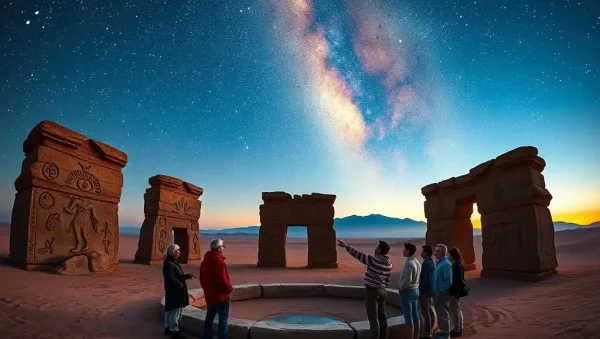
Indigenous civilizations of the Americas achieved extraordinary precision in aligning their monumental structures with celestial events, merging science, spirituality, and engineering. This subcategory delves into how cultures like the Maya, Inca, and Ancestral Puebloans designed temples, pyramids, and observatories to track solstices, equinoxes, and planetary cycles. Discover the architectural genius, cultural significance, and enduring mysteries behind these ancient sky-watching landmarks, optimized for enthusiasts, researchers, and travelers seeking authentic knowledge.
🌞 Solar Solstice Markers and Their Ritual Importance
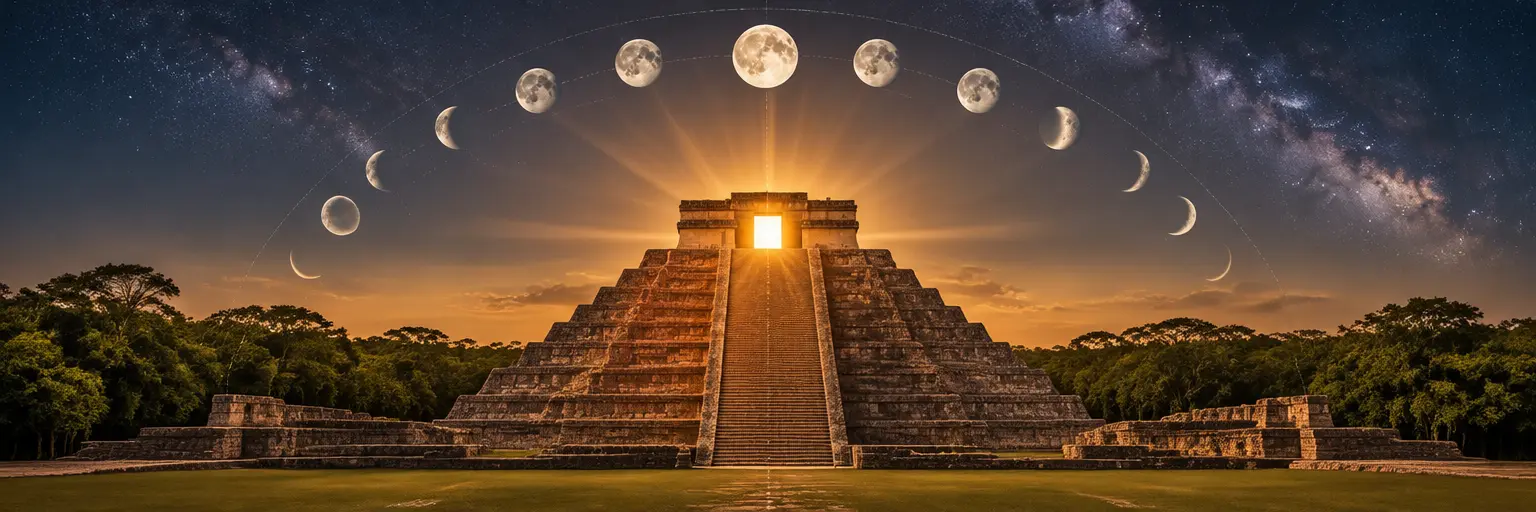
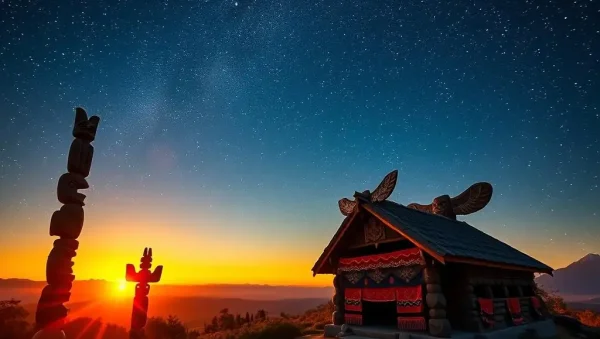
Many indigenous structures, such as the Maya pyramid at Chichén Itzá, are precisely oriented to capture the equinox sunset, creating serpent-like shadows on stairways. These alignments were not accidental; they served as calendars, guiding agricultural cycles and religious festivals. Solar markers like the Intihuatana stone at Machu Picchu anchored royal ceremonies, while the Ancestral Puebloan kivas at Chaco Canyon framed the winter solstice sunrise through window slits. Understanding these markers reveals how precision astronomy governed daily life and cosmic order.
Visitors can witness these events today, as modern archaeologists and indigenous communities preserve the original sightlines. The alignment often reflects a deep knowledge of the horizon’s local geography, not just math. For example, the Sun Dagger at Fajada Butte uses spiral petroglyphs to mark seasonal shifts, demonstrating a sophisticated fusion of art and observation. These sites offer powerful proof that indigenous cosmologies were empirically grounded, yet imbued with mythic meaning—a duality that fascinates scholars and travelers alike.
🌙 Lunar and Planetary Cycles in Temple Layouts
Beyond the sun, lunar standstills and Venus cycles were meticulously encoded. The Caracol observatory at Chichén Itzá features windows aligned to the planet Venus’s extreme positions, crucial for timing warfare and trade. Similarly, the Maya codices correlate with architectural axes, while the Inca’s Qorikancha in Cusco had walls oriented to lunar phases for ceremonial feasts. Such alignments demanded generations of sky-watching, creating a hereditary class of astronomer-priests who linked celestial events with political authority.
These planetary markers also facilitated interregional coordination, as cities like Teotihuacan shared a grid rotated 15.5° east of north, a system echoed across Mesoamerica. By decoding these patterns, researchers can reconstruct ancient cosmologies and social networks. For the modern visitor, standing inside these structures during a moonrise reveals the immense scale of indigenous knowledge—an experience that bridges the awe of astronomy with the intimacy of heritage.
🏛️ Cardinal Orientation and Sacred Geography
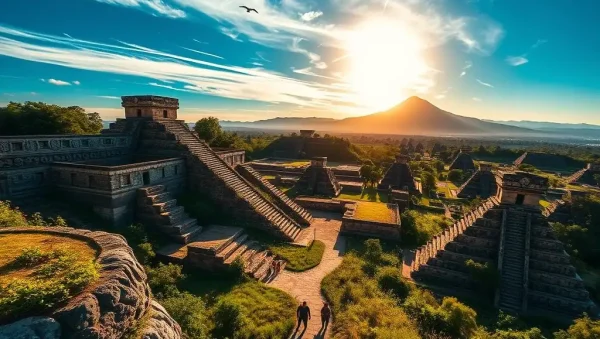
Most pre-Columbian cities were oriented to cardinal directions, but with deliberate offset angles that align with specific horizon markers. The Pyramid of the Sun at Teotihuacan faces the setting sun on August 13, a date linked to the Mayan creation myth. This orientation was not merely symbolic; it structured urban planning, water management, and ceremonial causeways. The Zapotec at Monte Albán used a similar grid, with buildings placed to highlight stellar rises that governed their 260-day calendar.
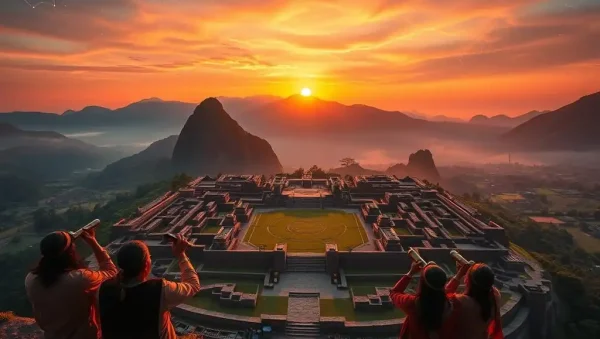
The sacred geography extended to natural features, as seen in the Inca’s ceque system, where lines radiated from Cusco’s central temple to over 300 sacred sites, each aligned with a celestial body. This integration of astronomy, landscape, and social hierarchy demonstrates that indigenous architecture was a dynamic map of the cosmos. By exploring these orientations, one gains insight into how civilizations perceived their place in the universe—neither passive nor superstitious, but deeply rational and adaptive.
🔭 Observatories and Astronomical Toolkits
Standalone observatories like the El Caracol at Chichén Itzá and the Mound 72 at Cahokia were engineered for precise sightlines, often with narrow shafts and niches to isolate celestial events. These structures included groma-like instruments or water-based reflections to refine measurements. The Anasazi’s “Sun Temple” in Colorado incorporates cut-out holes and stone slabs, enabling observers to record lunar and solar events without leaving the enclosure. Such toolkits allowed for the prediction of eclipses, essential for ritual scheduling and agricultural readiness.
For contemporary astronomers, these sites offer a unique cross-check on ancient computational methods. The Hopewell earthworks in Ohio, though less known, contain complex geometric alignments with the Pleiades, serving as a seasonal guide. Exploring these observatories reveals that indigenous science was not isolated but collaborative, with knowledge passed down orally and reinforced through architecture. This subcategory invites readers to appreciate the intellectual rigor behind every stone placement.
🌌 Cultural Continuity and Modern Preservation
Today, many descendant communities continue to use these alignments for ceremonial calendars, such as the Quechua’s solstice celebrations at Machu Picchu or the Mixtec’s year-renewal rituals at Monte Albán. Preservation efforts focus on maintaining sightlines against modern light pollution and urban encroachment. Organizations like UNESCO and local tribal councils collaborate to document alignments using drone surveys and GIS mapping, ensuring that this intangible heritage is not lost. The revival of traditional knowledge also supports sustainable tourism, where visitors learn from indigenous guides.
This subcategory underscores that astronomical alignments are not static relics but living systems. By protecting these structures, we honor the ingenuity of past civilizations and support cultural resilience. For travelers, engaging with these sites through guided tours or star-gazing events offers a profound connection to deep time. The content here emphasizes educational resources, fieldwork opportunities, and community-led initiatives, making it invaluable for educators, historians, and cultural tourists seeking authentic experiences.
Frequently Asked Questions
What is the most famous astronomical alignment in the Americas?
The equinox at Chichén Itzá’s El Castillo is the most famous, where a plumed serpent shadow descends the staircase. This alignment, happening twice a year, draws thousands. It demonstrates the Maya’s advanced understanding of equinoxes and their use of architecture as a public astronomical tool.
How did indigenous builders achieve such precise alignments without instruments?
They used horizon markers, wooden posts, and water reflections to track celestial rises and sets. Generations of observers refined sightlines gradually, encoding patterns into permanent stone. This empirical method, combined with oral traditions, created remarkable accuracy, often within fractions of a degree.
Are these alignments still functional today?
Yes, many remain operational, but modern changes like tree growth or building additions can obscure them. Preservation efforts constantly realign or clear sightlines. Some communities independently rediscover alignments annually, proving the durability of the ancient design principles.
Can I visit these sites and see the events myself?
Absolutely. Sites like Chichén Itzá, Machu Picchu, and Chaco Canyon offer public access during solstices and equinoxes. Local guides provide historical context, and many sites have observation programs. Check park schedules, as some require permits, especially for night events like lunar standstills.
What is the best resource for researching more about this topic?
Start with academic works by Anthony Aveni, such as “Skywatchers,” and visit online databases like NASA’s Astronomy in Culture. For immersive learning, join heritage tours led by indigenous astronomers or attend conferences like the Oxford IX International Symposium on Archaeoastronomy.