Andean Agricultural Systems: The Genius of Highland Farming
Explore how Indigenous Andean civilizations, from the Tiwanaku to the Inca Empire, transformed steep mountain slopes into thriving agricultural hubs. This subcategory delves into the engineered terraces, irrigation canals, and crop diversification that sustained millions, demonstrating a profound understanding of ecology, climate, and soil science. Discover how these ancient techniques continue to inform modern sustainable farming and food security.
🌄 Engineered Terraces and Slope Management
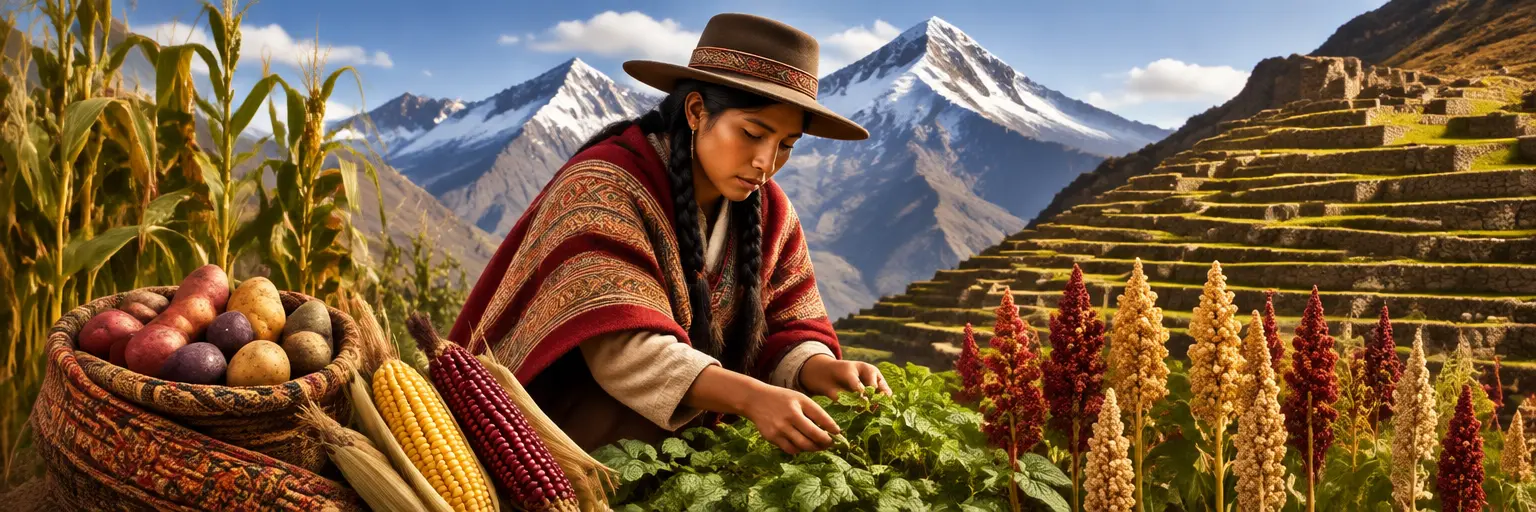
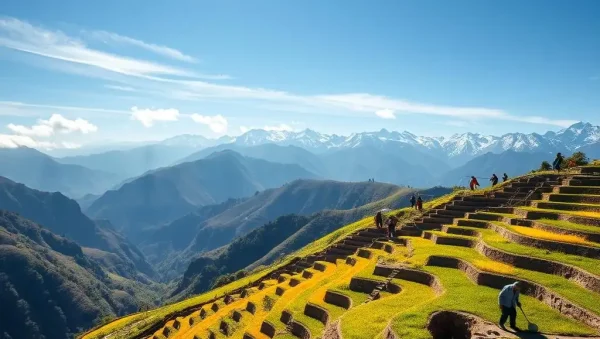
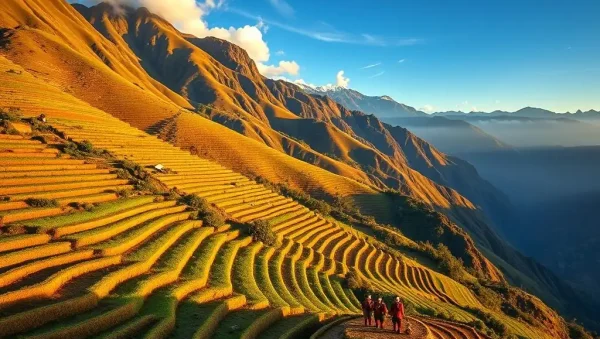
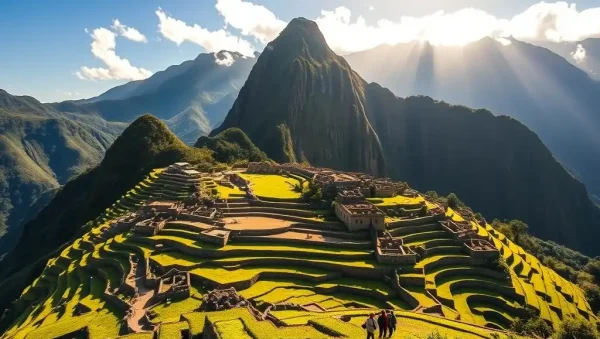
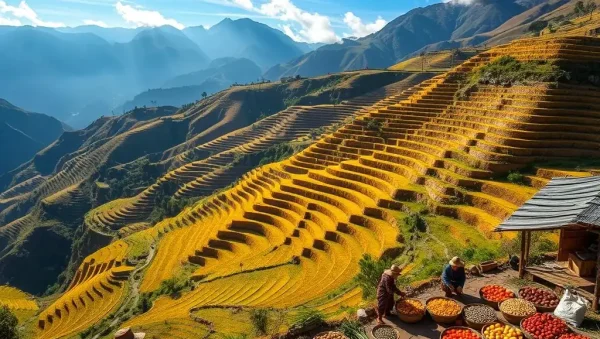
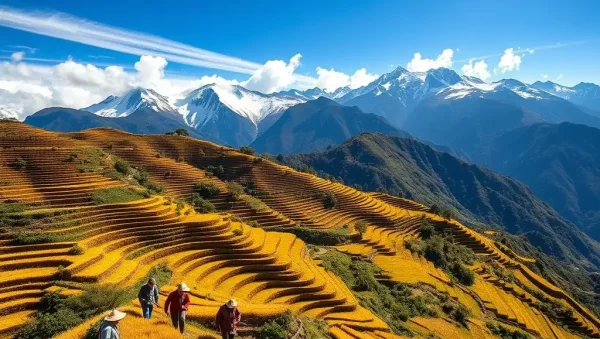
Andean farmers mastered the art of terracing, carving stepped platforms into mountainsides to prevent erosion, capture rainwater, and create microclimates. These stone-walled terraces, known as andenes, allowed cultivation at altitudes up to 4,800 meters, where frost and drought were constant threats. By using a mix of gravel, sand, and topsoil, they optimized drainage and heat retention, enabling year-round growth of staple crops like potatoes, quinoa, and maize.
Terracing also transformed watershed management, channeling snowmelt and rainfall into reservoirs and canals. The Inca’s Moroay circular terraces, for example, were designed to simulate temperature gradients, serving as a living laboratory for crop experimentation. This sophisticated engineering boosted yields by up to 300% compared to flat fields, supporting dense urban populations like Cusco and Machu Picchu.
💧 Advanced Irrigation and Water Management
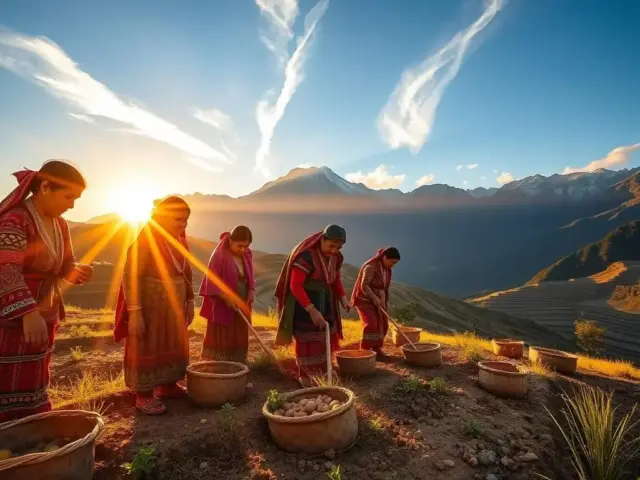
Water was sacred and strategic in the Andes. Civilizations built extensive canal networks, stone-lined aqueducts, and sunken gardens (qochas) to distribute water efficiently across arid highlands. The Tiwanaku used raised-field systems near Lake Titicaca, where elevated planting beds surrounded by water-filled ditches stored solar heat, mitigating nighttime frost and increasing soil moisture.
These systems were not merely functional—they were integrated with cosmology and governance. Inca engineers designed irrigation routes that followed celestial alignments, and water rights were managed by community councils. Key innovations included diversion dams, siphon bridges, and reservoirs that stored seasonal rainfall, ensuring stable supply during dry periods. This hydraulic expertise demonstrates a holistic approach to resource sustainability that modern engineers still study.
🌽 Crop Diversity and Adaptive Breeding
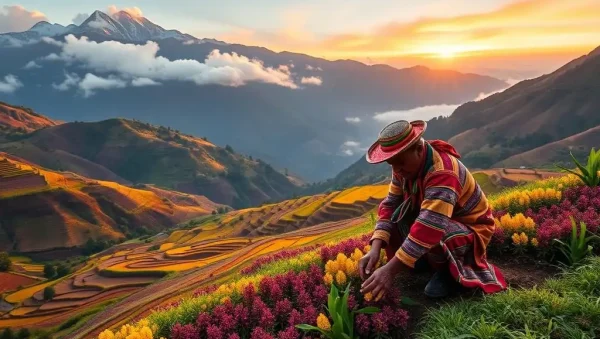
Andean agriculture thrived on an extraordinary genetic library, with over 4,000 potato varieties and dozens of quinoa, amaranth, and root crops like oca and mashua. Farmers used selective breeding and cross-pollination to tailor crops to specific altitudes, soil types, and microclimates. They also practiced crop rotation and intercropping, pairing nitrogen-fixing legumes with heavy feeders like maize.
This biodiversity was a buffer against pests, disease, and climate variability. For instance, the chuño process freeze-dried potatoes for storage, while kiwicha (amaranth) provided high-protein grain. Indigenous farmers also developed frost-resistant varieties by observing natural mutations and using multi-planting pits (chacras). Their agronomic knowledge, passed down orally, is now recognized as a critical resource for global food security under climate change.
🏞️ Ecological Zoning and Vertical Archipelago
A unique feature of Andean farming was the vertical archipelago model, where communities managed plots across multiple ecological floors, from tropical lowlands to high puna grasslands. This allowed access to diverse resources—coca, maize, cotton, and salt—within a single day’s journey, reducing risk from localized disasters. Mitimaes (transplanted groups) were often sent to colonize distant zones, weaving a web of exchange and resilience.
This zoning relied on complex social organization, with each family holding rights to land in different levels, often under shared labor systems like ayni and minka. The Inca state expanded this network, integrating conquered regions into a vast agricultural economy. By replicating nature’s biodiversity, they achieved a balanced subsistence that supported monumental projects—testament to their deep ecological intelligence.
🥔 Storage, Preservation, and Food Security
Surplus management was critical for Andean survival across unpredictable seasons. They built qollqas (stone storehouses) and colcas (warehouses) at high elevations, where cool, dry air naturally preserved grains, tubers, and dried meats for years. The Inca stored enough grain to feed their population for up to three years, safeguarding against famine and supporting armies.
Processing techniques like freeze-drying (patasca) and dehydration extended shelf life. For instance, papa seca (dried potato) could be rehydrated months later without nutritional loss. These systems were managed by state officials who recorded inventories using quipu knot records. Such foresight ensured that even during El Niño events, communities had access to stored calories, demonstrating strategic planning far ahead of European contemporaries.
🌿 Environmental Adaptation and Modern Relevance
Andean techniques are increasingly seen as blueprints for climate-resilient agriculture. Revival projects across Peru, Bolivia, and Ecuador are rebuilding terraces and raised fields to combat soil degradation and water scarcity. Studies show these ancient methods can increase yields by 50% while reducing chemical inputs. Agroecology experts now endorse Andean crop diversity as a safeguard against monoculture failures.
Moreover, traditional knowledge of yam and qollqa storage systems is being adapted for off-grid communities. The Andean worldview—that land is a living being deserving reciprocity—offers a philosophical shift from extractive farming to regenerative stewardship. As global temperatures rise, these millennia-old practices provide tangible, community-led solutions, honoring Indigenous science as a vital part of our shared heritage.
Frequently Asked Questions
What made Andean terracing so effective?
Andean terraces were engineered with stone retaining walls, deep soil beds, and drainage layers that captured rainwater and reduced erosion. They also absorbed solar heat during the day and released it at night, preventing frost damage, enabling agriculture at extreme altitudes.
How did the Inca manage irrigation across such rugged terrain?
They built gravity-fed canals, aqueducts, and reservoirs that followed natural contours, often using stone channels with sluices. Water distribution was organized by community councils, with ceremonial rituals tied to spring thaw, ensuring fair allocation and maintenance.
What crops were most important in Andean agriculture?
Potatoes, quinoa, maize, and amaranth were staples, along with roots like oca and mashua. They also cultivated cotton, coca, and chili peppers. Over 4,000 potato varieties existed, adapted to different altitudes and climates.
Why is Andean agricultural wisdom relevant today?
Their methods promote biodiversity, erosion control, and water conservation, which are key in climate adaptation. Rebuilding terraces and raised fields increases yields and resilience without synthetic inputs, offering sustainable solutions for food security.
What role did storage systems play in Andean society?
Qollqas and colcas stored grains, dried potatoes, and meats in cool high-altitude warehouses, enabling survival during droughts or crop failures. The Inca stockpiled up to three years of food, stabilizing society and supporting large public works.