Unlocking the Genius of Inca Administrative Systems
The Inca Empire, or Tawantinsuyu, was the largest pre-Columbian realm in the Americas, spanning over 2,500 miles along the Andes. Its astonishing success hinged not on superior weapons, but on a sophisticated administrative apparatus that managed millions of people, vast resources, and diverse terrains with pinpoint precision. This subcategory delves into the intricate machinery of Inca governance—from state-sponsored storage facilities to the enigmatic khipu knot records—revealing how bureaucratic efficiency fueled an empire without writing or wheels. Discover the strategies that allowed a small elite to control a sprawling, multicultural population.
🗂️ The Decimal Administration: Organizing the Empire by Tens
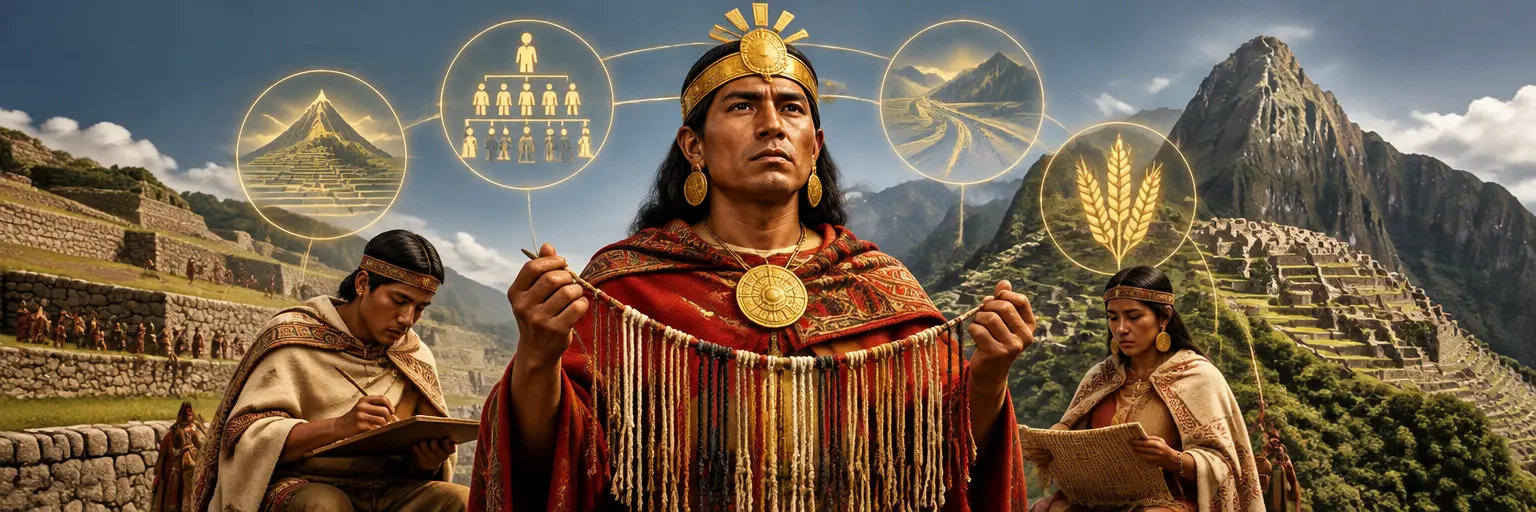
At the core of Inca rule was a decimal hierarchy that divided the population into units of 10, 100, 1,000, and 10,000 households. Each tier had a designated curaca (local chief) who reported upward, creating a chain of command that ensured rapid census-taking, labor drafts, and tribute collection. This system allowed the state to know exactly how many workers were available for public projects like road building or military service.
This structure was not merely bureaucratic; it was social engineering. By assigning every family to a specific unit, the Incas created a sense of collective responsibility and made rebellion nearly impossible. The mit’a labor system rotated workers through state farms, mines, and construction sites, while the yanacona (retainers) served the nobility full-time. This meticulous organization ensured that no community could hoard surplus or evade obligations, making the empire remarkably resilient to famine and internal strife.
🏛️ The Qhapaq Ñan: A Road Network as the Administrative Backbone
The Qhapaq Ñan—a 25,000-mile network of paved roads, bridges, and waystations—was the empire’s circulatory system. It connected the capital of Cusco to provincial centers, enabling the rapid movement of armies, officials, and the famous chasqui relay runners who carried messages at up to 150 miles per day. This infrastructure was not a marvel of engineering only; it was an administrative tool for unity and control.
Along the roads, the Incas built tambos (storehouses) every 12-18 miles, stocked with food, weapons, and clothing for traveling officials and troops. These storehouses also served as emergency relief centers during crop failures. By controlling the flow of people and goods, the Qhapaq Ñan allowed the central government to respond to crises, suppress revolts, and project power across impossible terrain. The road system effectively made distant provinces feel like suburbs of Cusco, cementing loyalty through constant presence.
🔢 Khipu: The Knot-Based Ledger of the Inca Bureaucracy
The Incas lacked a written script, yet they managed complex accounting through the khipu—a system of colored, knotted cotton or camelid fiber cords. These devices recorded not only numerical data (census counts, taxes, harvest yields) but likely also narrative information using a binary-like code of knot placement and color. Specialist khipukamayuq (keepers) were the empire’s auditors, ensuring every province’s tribute matched its quotas.
Far from a primitive tally, the khipu was a highly precise administrative language. Knots were tied in a decimal positional system, with varying types indicating units, tens, and hundreds. The quipu could store data on labor obligations, military logistics, and even ritual calendars. When the Spanish arrived, they were stunned by the khipu’s accuracy—some chroniclers noted that Incas could recount historical events using these cords. Today, scholars are still decoding their complexities, proving that bureaucracy can flourish without alphabets.
🏔️ State Storage and Redistribution: The Economy of Reciprocity
The Inca economy functioned on a principle of reciprocity and redistribution. Provincial farmers and herders produced goods that were transported to massive qullqa (state warehouses) located in every regional capital. These storehouses held maize, potatoes, dried meat, textiles, and weapons—enough to support the state for years. This system was not exploitative by local standards; in exchange for labor (mit’a), the state provided food during famines, feasts on festive days, and resources for public works.
This centralized distribution ensured that even marginalized ethnic groups received benefits, fostering loyalty. The state also mandated that each community maintain its own storehouses for self-sufficiency. The result was a highly resilient economy that could withstand droughts, pests, or military setbacks. When the Spanish conquistadors arrived, they found warehouses overflowing with supplies—a testament to the administrative foresight that kept the empire fed and stable, even during times of crisis.
📜 Provincial Governance and the Mitma Policy
To manage its diverse subjects, the Incas implemented the mitma policy—the forced resettlement of conquered peoples to new territories. This broke up traditional ethnic blocs, reducing rebellion risk while enabling cultural integration. New settlers were taught Quechua, introduced to Inca religion, and assigned to state projects in their new home. Simultaneously, loyal Inca colonists were planted among rebellious groups to serve as spies and examples.
Governors (tocricoc) were appointed from the nobility and held absolute civil and military authority in their provinces, but they answered directly to the Sapa Inca in Cusco. Local curacas retained some power, but only as intermediaries who collected taxes and enforced state regulations. This dual-layered system—centralized directives with local implementation—allowed the Incas to maintain order over 80 distinct ethnic groups, each with its own language and customs, without constant military presence. It was a colonial strategy of unmatched efficiency.
📊 Taxation Without Currency: The Labor Tribute System
The Incas had no money or markets; their tax system was purely labor-based. Every able-bodied adult owed the state a set number of working days per year (mit’a), which could be labor on roads, temples, mines, or agricultural fields. In exchange, the state provided meals, tools, and social services like care for the elderly and disabled. This system ensured that no one starved, and the state received a predictable workforce.
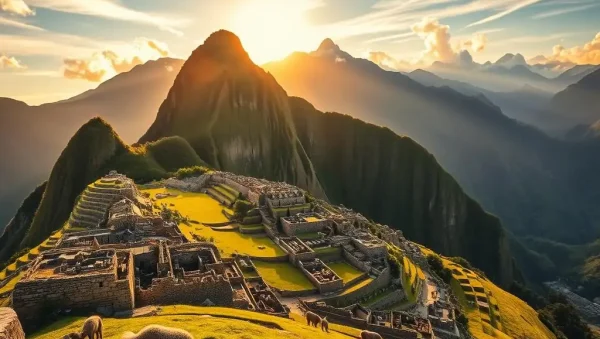
This approach was remarkably equitable—nobles were exempt, but commoners shared the burden evenly. The mit’a also created a sense of shared purpose, as workers often built infrastructure for their own communities. However, it required meticulous records: the khipu tracked who worked, where, and for how long. This labor tax was the engine of the empire, financing everything from the coca-leaf economy to the construction of Machu Picchu. It demonstrated that a state could thrive without coinage, relying instead on social obligation and administrative precision.
Frequently Asked Questions
How did the Incas communicate without writing?
The Incas used the khipu, a system of knotted cords, for numerical records like censuses and taxes. For narrative messages, they relied on trained chasqui runners who memorized information passed orally and via topos (standardized patterns). This combination allowed them to govern long distances effectively, though full decipherment of khipu’s non-numeric aspects remains a mystery.
Were all Inca subjects forced to work for the state?
Yes, the mit’a labor tax applied to nearly all adult male commoners, but it was not arbitrary. Work months were rotated, and laborers were fed and housed during service. The system also supported community projects, and exemptions were granted for elders, the sick, and women. Thus, it was more a civic duty than forced slavery.
What was the role of the Sapa Inca in administration?
The Sapa Inca (emperor) was the ultimate authority, considered a living god. He made final decisions on war, laws, and appointments. However, he relied heavily on a council of four suyu governors who managed the empire’s quarters. The emperor also toured provinces, but routine administration was delegated to trusted lords and curacas.
How did the Inca store food for emergencies?
The Incas built qullqa (storehouses) in every province, often on cool, dry hillsides to prevent spoilage. These facilities held maize, chuño (freeze-dried potatoes), dried llama meat, and textiles. In years of poor harvest, the state opened these warehouses to feed the population, preventing famine and maintaining stability.
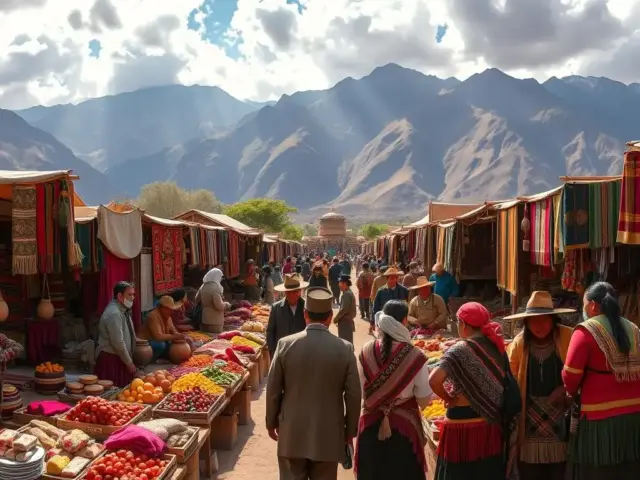
Did the Incas use money or trade?
No, the Inca economy was non-monetary. Labor was the currency, and goods were redistributed by the state. Local barter existed for small exchanges, but long-distance trade was state-controlled. The mit’a system replaced taxes, ensuring that resources flowed to where the empire needed them without coins or markets.