Unlocking the Cosmic Wisdom of Andean Astronomical Observations
Welcome to the fascinating world of Andean astronomical observations, a cornerstone of the intellectual achievements of Indigenous civilizations in South America. Far beyond simple stargazing, the Inca and their predecessors—such as the Tiwanaku and Wari—developed a sophisticated, multi-layered understanding of celestial cycles that governed agriculture, religion, and imperial politics. This subcategory explores how these cultures aligned their cities, temples, and agricultural terraces with the sun, moon, and stars, creating a living observatory across the Andean landscape. Dive into the precise solar alignments of Machu Picchu and the intricate ceque system of Cusco to appreciate a worldview where the cosmos, earth, and human society were intrinsically connected. Our content bridges archaeological evidence, ethnohistorical records, and modern astronomy to reveal a legacy of scientific observation that rivals any ancient civilization.
🌞 Solar Alignments and the Intihuatana
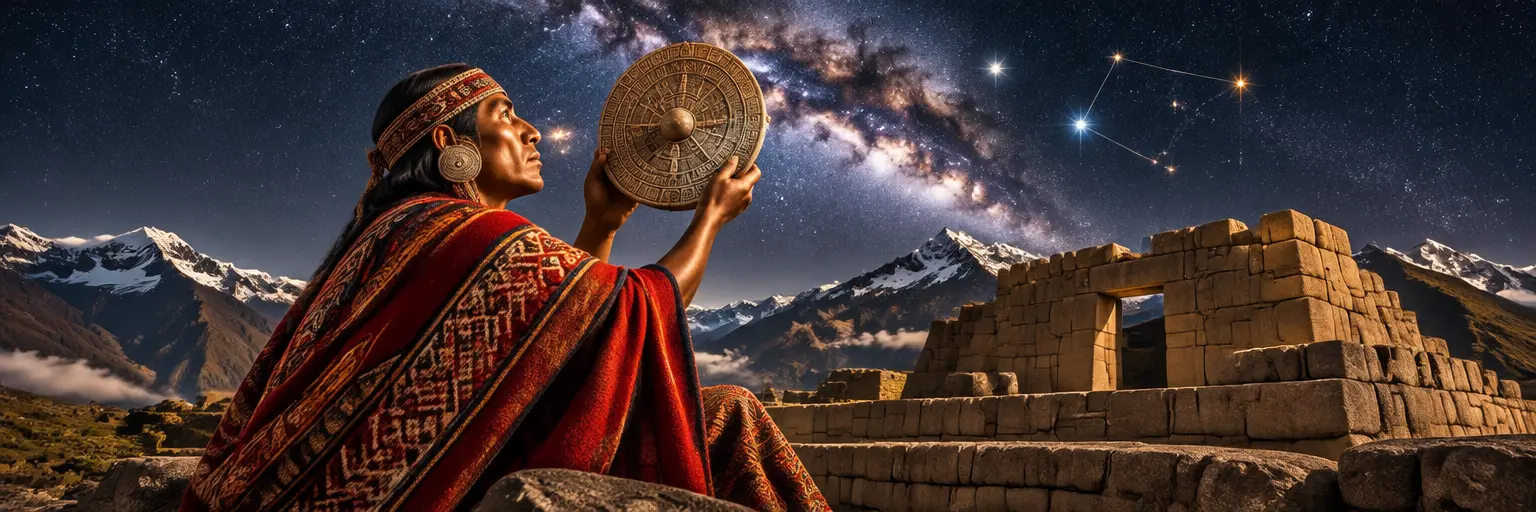
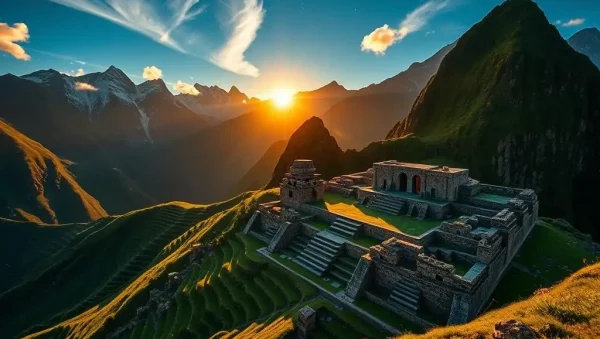
The Inca were master solar astronomers, using fixed observation points known as Intihuatana ("hitching post of the sun") to track solstices and equinoxes with remarkable precision. At Machu Picchu and other royal estates, these carved rock pillars served as gnomon-like devices, casting specific shadows that marked critical planting and harvesting times. Our detailed guides explain how the Intihuatana’s angular planes correlate with the horizon’s mountain peaks, creating a solar calendar that was both sacred and practical.
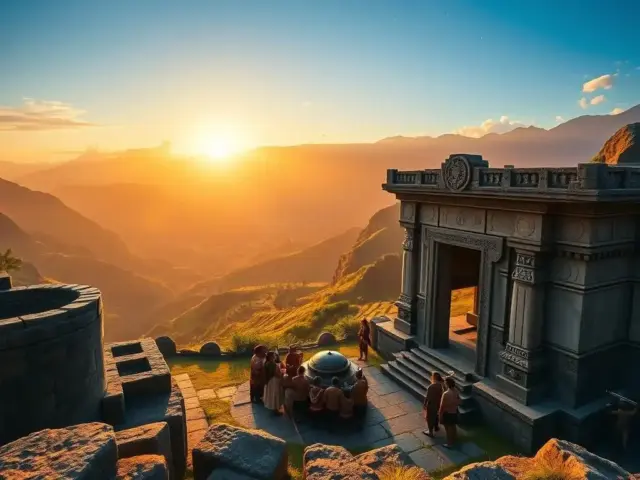
Beyond individual markers, entire urban layouts were oriented to solar events. For instance, the Coricancha (Temple of the Sun) in Cusco was designed so that on the June solstice, sunlight would stream directly into its inner sanctum, symbolically fertilizing the earth. We provide interactive maps and time-lapse simulations to show how these alignments still function today, nearly 500 years after their construction. Understanding these observations reveals the Inca’s deep knowledge of solar declination, atmospheric refraction, and local topography, proving that their astronomy was both empirical and deeply symbolic.
🌌 The Milky Way and Dark Cloud Constellations
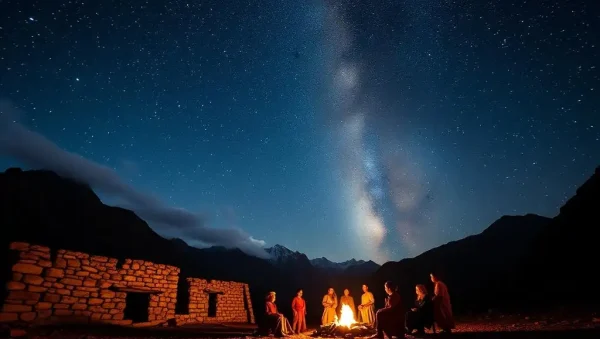
Unlike Western astronomy, Andean star lore centered not on bright stars but on the dark patches of the Milky Way, which they called Yana Phuyu (dark clouds). These seemingly empty spaces were perceived as living creatures—a llama, a fox, a serpent—each linked to seasonal rainfall and animal behavior. For instance, the appearance of the dark cloud “Yutu” (the partridge) above the horizon signaled the start of the planting season in the highlands. Our articles decode this inverted zodiac, showing how the Inca used these patterns to predict weather, not just for ritual but for the survival of their vast empire.
This unique observational system also guided the construction of muyuq (irrigation channels) and andenes (agricultural terraces) whose orientations align with these celestial beings. By examining colonial chronicles from authors like Guaman Poma and moderne ethnographical studies of Quechua communities, we reconstruct how each dark constellation controlled a specific natural resource—water, fertility, or wind. This knowledge was likely encoded in quipus (knotted cords) as astronomical counting devices, though their interpretation remains a thrilling research frontier. Our content invites you to see the night sky as an Andean farmer did, where darkness was full of information, not absence.
🌒 Lunar Cycles and the Chaski Warning System
The Andean lunar calendar was intricately tied to the synodic month, but unlike solar-based systems, the moon’s phases dictated the mit’a labor rotation and religious festivals. The Inca recognized a tropical month of 27.3 days as well as the more visible 29.5-day cycle, using the moon’s position relative to specific villages to schedule ritual sacrifices. Our deep dive explains how lunar eclipses were interpreted as a puma devouring the moon, prompting dramatic ceremonies to scare the beast away—a practice chronicled by early Spanish priests.
Astronomical data was also critical for communication. The famous Chaskis (runners) carried messages along the 40,000-kilometer road system, but their departure times were synchronized with stellar positions. At night, the visibility of specific star clusters, like the Pleiades ( Qollqa), provided a natural clock for dispatch schedules. We map the ten huacas (shrines) that formed a lunar sightline from Cusco’s Coricancha to the horizon, showing how the moon was used to calibrate the imperial calendar. This section offers a rare glimpse into the integration of astronomy with governance, logistics, and state religion.
🏔️ Horizon Astronomy and Sacred Geography
Andean peoples turned their entire landscape into an astronomical instrument by using horizon markers—mountain peaks, caves, and carved stones—to define the solar year. The famous ceque system of Cusco consisted of 41 imaginary lines radiating from the Coricancha, each anchored to a huaca and aligned to a specific solstitial point. Our research reconstructs the exact azimuths of these lines using high-resolution satellite imagery, demonstrating how the Inca used horizon foresights to set the exact day for planting maize or harvesting potatoes, diverging by mere hours from modern calculations.
This practice wasn’t confined to the capital. At the Temple of the Three Windows in Machu Picchu, the solstice sun rises precisely through the central window, casting a beam that illuminates the ceremonial plaza. Beyond that, the Paqarichina, a water mirror in Tiwanaku, reflected the first light of the equinox onto a standing monolith, creating a solar ignition of sacred space. We explore how these observations shaped territorial borders, pilgrimage routes, and even the naming of provinces according to their celestial counterparts. This holistic approach shows that for the Andes, astronomy was not a separate science but the grammar of their entire world.
🛰️ Modern Archaeology & Reanalysis of Andean Astrometry
Recent technological advances have revolutionized our understanding of Andean astronomical observations. Archaeoastronomers now use 3D laser scanning, drone photogrammetry, and computational sky-travel software to test hypotheses that were impossible to verify a decade ago. For example, a 2023 study re-examined the platforms at Chankillo, a pre-Inca solar observatory from 300 BCE, proving that its thirteen towers align perfectly with sunrise and sunset arc boundaries across the year—a feat unmatched in the ancient Americas. Our articles present these cutting-edge findings in plain language, including virtual reality tours of these sites.
We also highlight the growing collaboration with indigenous Quechua and Aymara communities, whose oral traditions preserve observational techniques that Western science is only now confirming. For instance, community elders have long known that the visibility of the Pleiades predicts El Niño rainfall, a relationship validated by climate scientists. This fusion of traditional ecological knowledge and hard data opens new research pathways. By presenting both the rigorous methodology and the ethical repatriation of knowledge, this subcategory positions Andean astronomy as a living, relevant practice—not a dead relic—and a powerful example of indigenous science contributing to global sustainability.
Frequently Asked Questions
What is the Intihuatana stone’s actual astronomical function?
The Intihuatana, often called “the hitching post of the sun,” was not a clock but a fixed point for solar solstice observations. During the December and June solstices, the stone’s top casts no shadow at noon, marking the sun’s maximum declination. Incan priests used this to calibrate agricultural cycles, confirming that the planting season had begun. Its azimuth aligns with the adjacent mountain peaks, providing a precise horizon reference for tracking the sun’s annual drift.
How did the Inca predict rainy seasons using dark constellations?
The Inca tracked the helical rising of dark-cloud constellations, like the llama (Yutu) in the Milky Way. When these shapes appeared just before dawn in specific months, they signaled the onset of rains. For example, when the llama’s head reached the horizon, the wet season began. This observational method allowed for a predictive calendar, guiding irrigation and crop selection without written records.
Were there female astronomers in Andean civilizations?
Yes. Chroniclers and artifact evidence suggest that many mamaconas (sun priestesses) were expert lunar and eclipse observers. They managed the Killa (moon) calendar, which dictated women’s agricultural tasks and weaving cycles. Their observations influenced ritual timing, and they maintained solar and lunar tables alongside male astronomers in Cusco, though Spanish records often obscured their contributions.
How accurate were Andean solar observations compared to modern science?
Andean alignments show an accuracy of within ±0.5 degrees of the true solar extreme, enough to distinguish solstice days within a week. For agricultural purposes, this had a functional precision equivalent to a modern farmers’ almanac. However, their models didn’t calculate angular velocities numerically; instead, they used horizon foresights and shadow lengths, achieving repeatability rather than absolute exactness.
Is there any connection between Andean astronomy and the Nazca Lines?
While the Nazca Lines (200 BCE–600 CE) are more famous, they are geographically and culturally distinct from Inca astronomy. However, some geoglyphs align with solstitial sunrises, suggesting later Andean cultures borrowed horizon-marking concepts. The connection is primarily methodological—both relied on landscape-scale alignment—but direct lineal descent remains debated. Our guides clarify the differences in purpose and technique.