The Significance of Obsidian Tools in Aztec Society and Warfare
🌍 Obsidian tools in Aztec society played a pivotal role in daily life and warfare, showcasing the civilization's advanced craftsmanship and strategic…
Read article
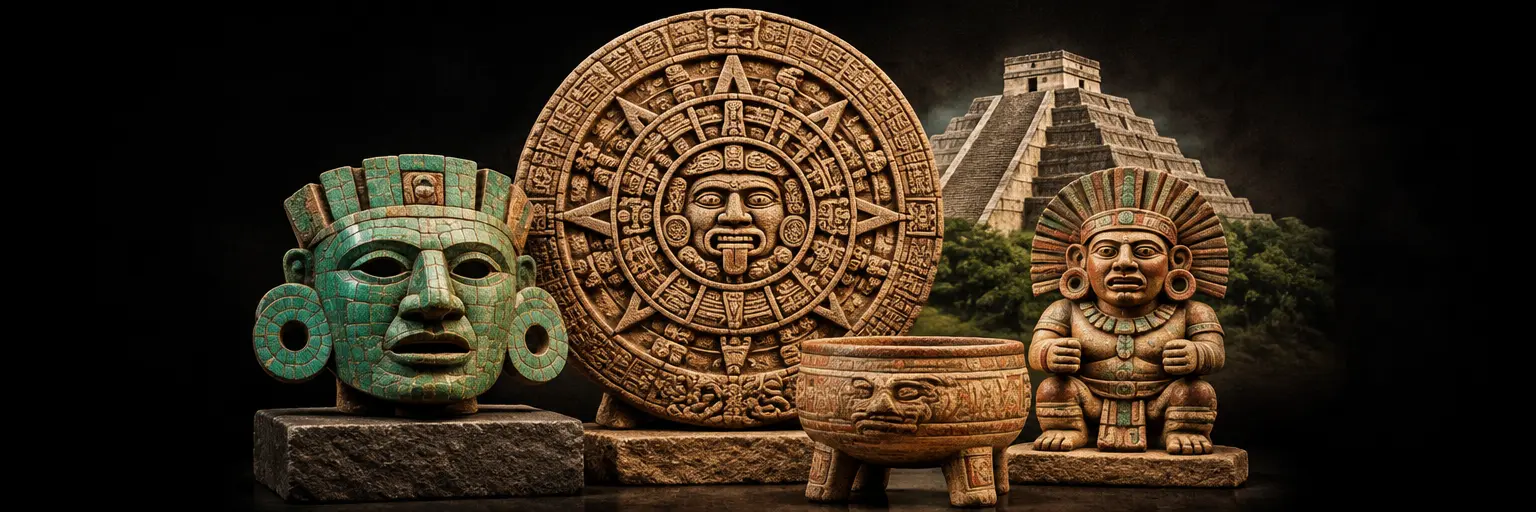
Discover the mystical world of Aztec artifacts—ancient relics that unlock the secrets of one of history’s most powerful indigenous civilizations. From intricately carved stone calendars to obsidian ceremonial blades and jeweled masks, these significant artifacts reveal the artistry, religious depth, and astronomical genius of the Mexica people. Each piece—be it a turquoise mosaic shield or a clay figurine—offers a tangible connection to rituals, daily life, and imperial power before European contact. Whether you’re a history buff, student, or collector, exploring these archaeological treasures illuminates the enduring legacy of Aztec culture in the Americas. Dive into our curated collection to understand how these surviving objects reshape our view of pre-Columbian innovation.
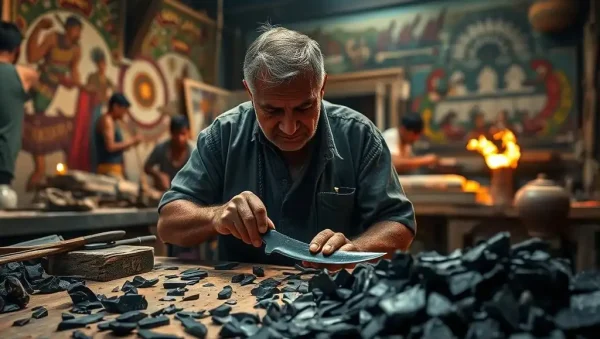
🌍 Obsidian tools in Aztec society played a pivotal role in daily life and warfare, showcasing the civilization's advanced craftsmanship and strategic…
Read article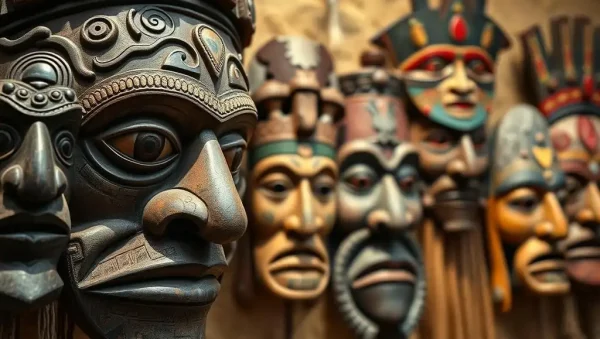
Explore the profound Aztec ritual masks significance, revealing how these intricate creations served as vital expressions of spirituality, identity, and cultural heritage,…
Read article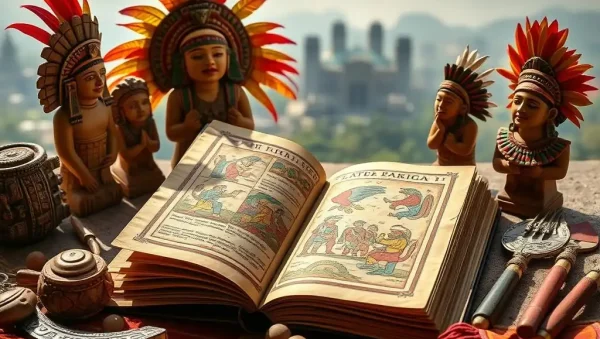
📜 Aztec codices hold immense cultural significance, serving as windows into the beliefs, practices, and history of an advanced civilization. These ancient…
Read article
🌟 Unravel the captivating tales surrounding the Aztec treasure myths and legends, exploring the rich history and cultural significance of these narratives…
Read articleWelcome to our deep dive into Significant Aztec Artifacts, a cornerstone of Archaeological Discoveries within the Indigenous Civilizations of the Americas. Here, we uncover the tangible remnants of the Mexica people—objects that reveal their cosmology, artistry, and daily life. From monumental stone carvings to delicate turquoise masks, these artifacts are not mere relics; they are keys to understanding a sophisticated empire that dominated Mesoamerica. This section is your gateway to the treasures unearthed from Tenochtitlan and beyond, offering rich, SEO-optimized insights for history enthusiasts, students, and collectors alike.
Step into the awe-inspiring world of Aztec monumental stonework, where each carving was a cosmic statement. The Sun Stone (Piedra del Sol), though often mislabeled as a calendar, is a masterful representation of the five eras of creation, with Tonatiuh’s face at its center. Similarly, the Coatlicue statue—with her serpent skirt and necklace of human hearts and hands—embodies the duality of life and death. These artifacts were not decorative; they were ritual focal points for public ceremonies, reinforcing the Aztec worldview of cyclical destruction and rebirth.
For archaeologists, these massive basalt works provide critical evidence of Aztec engineering and religious hierarchy. The Sun Stone, weighing over 24 tons, was originally polychromed, and its precise iconography has been decoded to reveal astronomical computations. Meanwhile, the discovery of Coatlicue in 1790 during Mexico City’s Plaza Mayor construction sparked intense scholarly debate about indigenous identity. By examining the intricate carvings, you’ll understand how the Aztecs integrated astronomy, myth, and imperial propaganda into a single, powerful object.
Among the most fragile yet visually stunning artifacts are Aztec featherwork pieces, particularly the famous Penacho de Moctezuma. This quetzal-feather headdress, housed in Vienna’s Weltmuseum, contains over 400 green feathers from the resplendent quetzal, alongside gold, pearls, and hummingbird skins. It was likely worn by a high priest or emperor as a symbol of divine kingship, connecting the ruler to the god Quetzalcoatl. The craftsmanship involved layering feathers with incredible precision, a skill that took generations to perfect.
Beyond its aesthetic beauty, the headdress offers insights into Aztec trade and environmental stewardship. Quetzal birds were sacred, and their feathers were not killed but plucked during molting. This artifact demonstrates how Aztec elites accessed prized resources from distant regions like Chiapas, highlighting a complex tribute network. For modern researchers, the feather fibers and dyes provide a bioarchaeological fingerprint, revealing origins and preservation techniques that are central to conservation efforts today.
Delve into the micro-artistry of Aztec turquoise work, where tiny tesserae were fitted onto wood or bone to create shimmering masks, pectorals, and shields. The Turquoise Mask of Tezcatlipoca (now in the British Museum) is a prime example, using over 1,000 turquoise pieces to depict the "Smoking Mirror" god. These objects were not mere ornaments; they were living vessels for deities, believed to absorb supernatural power during rituals. The blue-green stone symbolized water, fertility, and the celestial realm.
From a technical standpoint, these mosaics reveal extraordinary precision and material sourcing. Analysis shows turquoise came from mines in New Mexico, over 2,000 km away, proving long-distance exchange. The adhesive used was organic pine resin, and the backing was often made from human skulls or cedar. For historians, these artifacts are testaments to Aztec innovation in non-metal technology, as they achieved colors and durability rivaling European gold. Each mosaic piece offers a microcosm of Aztec social organization and ritual practice, making them invaluable to your archaeological journey.
Beyond elite treasures, Aztec ceramics reveal the heartbeat of daily life. From tripod bowls decorated with geometric patterns to effigy vessels depicting gods like Tlaloc, these clay artifacts are abundant in archaeological sites. The Bracero (incense burner) with its flaring bowl and handle is iconic, used daily to burn copal incense in homes and temples. These vessels were not only functional but carried symbolic imagery, such as the “Aztec lion” (a jaguar) or eagle motifs, linking domestic activities with cosmic order.
For researchers, ceramics are the backbone of chronological dating. Changes in slip colors, temper materials, and rim forms allow stratigraphic dating of site layers. The Aztec III and IV phases are defined by specific ceramic types, helping map the expansion of the empire. Additionally, these artifacts show regional variations and cultural blending—for instance, the influence of earlier Teotihuacan styles on Mexica pottery. By studying wear patterns and food residues, we gain practical insights into Aztec diet, agriculture, and social stratification, making ceramics a hidden treasure trove of information.
Few artifacts evoke the Aztec world as powerfully as obsidian blades, from razor-sharp sacrificial knives (tecpatl) to utilitarian scrapers. The Sacrificial Knife of Tezcatlipoca features a carved wooden handle depicting a crouching figure, its obsidian blade still as sharp today as 500 years ago. These tools were central to human and animal sacrifice, but also to daily tasks like preparing food and crafting wood. Obsidian, volcanic glass, was prized for its ability to fracture into edges much sharper than steel.
Geochemical sourcing of obsidian is a powerful archaeological tool, revealing trade routes. Artifacts from sites like Otumba and Pachuca show distinct green and gray hues, allowing scientists to trace exchanges across Mesoamerica. For military history, obsidian-edged macuahuitl (clubs) are documented in Spanish chronicles, but few survive. These artifacts demonstrate the dual nature of Aztec technology: simultaneously practical and sacred. When you examine a blade, you’re not just seeing a tool, but a symbol of the Aztec connection between sacrifice, sustenance, and cosmic renewal.
The Museo Nacional de Antropología in Mexico City houses the Sun Stone, Coatlicue, and numerous turquoise mosaics. Internationally, the British Museum (London) holds the Tezcatlipoca mask and a mosaic shield, while the Weltmuseum (Vienna) owns the Penacho de Moctezuma. Smaller collections exist in the Smithsonian and the Templo Mayor Museum in Mexico City.
Authentication combines contextual excavation, stylistic analysis, and scientific testing. Thermoluminescence dating for ceramics, obsidian hydration for blades, and ICPOES/MS for trace elements are common. Artifact style must match known Aztec iconography, and provenance documents are verified. Fakes often fail due to incorrect material aging or anachronistic tool marks.
No, gold was relatively scarce in Aztec culture compared to featherwork and turquoise. Gold was used mainly for ornaments like bells, lip plugs, and discs, but was quickly looted by Spanish conquistadors. Most gold artifacts found today are from offering caches; the fragile and richly colored feathers and mosaics were culturally considered higher-value, representing cosmic energy.
The Double-Headed Serpent (British Museum) is a turquoise mosaic sculpture depicting two snake heads on one body. It symbolizes the earthly and celestial realms, associated with Quetzalcoatl. Used as a pectoral or emblem, it represents duality, fertility, and the cyclical nature of time. Its cedar base and resin adhesive highlight Aztec craftsman’s advanced composite material technology.
Authenticity verification of personal items is extremely hard and requires professional expertise. Start by checking for provenance paperwork, then consult a certified archaeologist or museum curator. Scientific tests like X-ray fluorescence for stone or radiocarbon dating for organic remains are essential. Be wary of vendors offering cheap "Aztec relics"—most are modern reproductions from Mexico.