Advances in Archaeology: Unlocking the Hidden Past of the Americas
Welcome to Advances in Archaeology, the frontier of discovery within our Archaeological Discoveries section. Here, we delve into the cutting-edge techniques, revolutionary technologies, and groundbreaking research that are transforming our understanding of Indigenous civilizations across the Americas. From ancient DNA analysis to LiDAR mapping beneath dense rainforests, these innovations are rewriting history books. Explore how modern science collaborates with indigenous knowledge to recover lost cities, decode forgotten scripts, and date artifacts with unprecedented precision, offering a dynamic, ever-evolving portrait of pre-Columbian life.
🔬 LiDAR and Remote Sensing: Seeing Through the Jungle
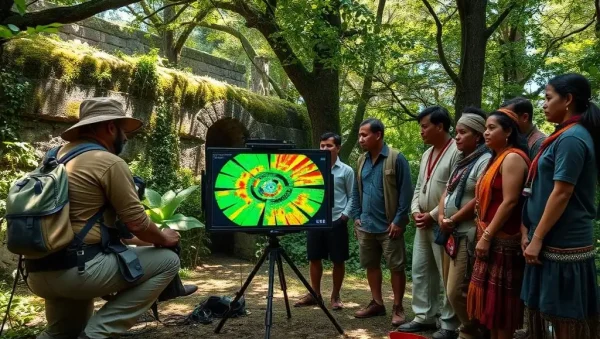
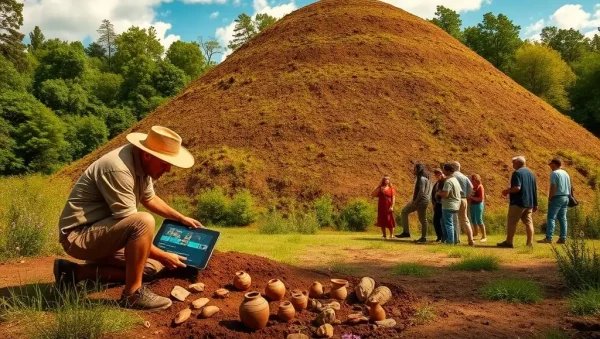
LiDAR (Light Detection and Ranging) is arguably the most transformative tool in modern archaeology, allowing researchers to penetrate thick canopies and reveal vast urban landscapes that were previously invisible. This technology has uncovered sprawling Maya metropolises like Tikal’s hidden suburbs and the intricate earthworks of the Amazonian geoglyphs, reshaping population estimates and settlement patterns. By firing millions of laser pulses, scientists create high-resolution 3D maps of the ground surface, exposing plazas, causeways, and agricultural terraces without a single shovel. For our readers, expect detailed case studies of how LiDAR has rewritten the scale and complexity of indigenous societies, from the Mississippi’s Cahokia mounds to the Andean ceque lines. We also explain the limitations—such as resolution bias and interpretive challenges—ensuring a balanced view of this powerful tech.
Moreover, remote sensing isn’t just about lasers; multispectral satellite imagery and drone-based photogrammetry complement LiDAR, tracking erosion, looting, and climate impacts. These tools enable predictive modeling, helping archaeologists prioritize excavation sites with higher success rates. Discover how combining these datasets reveals settlement hierarchies, water management systems, and trade routes that connected distant cultures. Each article in this subcategory provides interactive maps and visual comparisons, making complex geospatial data accessible to enthusiasts and professionals alike.
🧬 Ancient DNA and Isotopic Analysis: Voices from the Bones
Ancient DNA (aDNA) extraction from skeletal remains and dental pulp is unlocking genetic histories that challenge older migration theories. For example, recent aDNA studies have shown complex population mixtures among Ancestral Puebloans, Maya, and Andean groups, revealing that indigenous societies were far more genetically diverse and interconnected than assumed. Isotopic analysis of strontium, oxygen, and nitrogen in teeth and bones offers a ‘geolocator,’ telling us where individuals grew up, what they ate, and even seasonal mobility patterns. This subcategory will walk you through landmark studies—such as tracing maize’s spread via dental enamel isotopes or proving that sacrificial victims often came from distant regions. Expect clear explanations of contamination controls, ethical considerations regarding repatriation, and how scientists collaborate with descendant communities to ensure respectful research.
Beyond genetics, proteomics (ancient proteins) can identify species remains even when DNA degrades, useful in ceramic residue analysis to detect chocolate, maize beer, or hallucinogenic plants. These molecular archives provide direct evidence of ritual feasting, medicinal practices, and dietary adaptations. We also cover epigenetics, exploring how environmental stressors left chemical marks on ancient genomes, offering insights into health and inequality. Each feature includes a glossary of technical terms, ensuring that even novices can grasp the wonders of biomolecular archaeology.
📜 Digital Epigraphy and AI Decipherment: Reading Lost Scripts
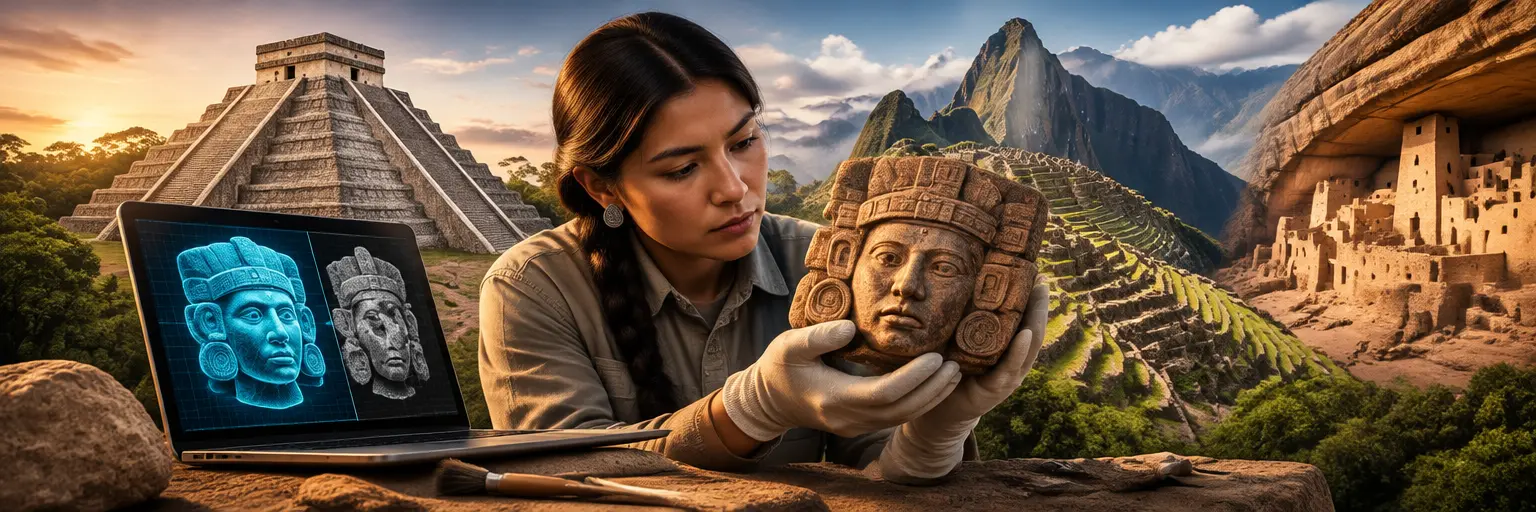
The decipherment of writing systems like Maya hieroglyphs and Zapotec inscriptions has accelerated thanks to digital epigraphy and artificial intelligence. High-resolution 3D scanning captures faint carvings eroded over centuries, while machine learning algorithms match glyph patterns across thousands of artifacts, suggesting new phonetic values and grammatical structures. This subcategory details how researchers are finally reading elite genealogies, tribute lists, and astronomical records carved on stelae and lintels. We showcase projects like the Maya Hieroglyphic Database and AI-driven translation tools that have cracked previously undeciphered components, such as the ‘war serpent’ logogram. You’ll find tutorials on how digital corpora are made open-access, empowering independent researchers and indigenous scholars worldwide.
Moreover, optical character recognition (OCR) adapted for ancient scripts helps digitize colonial-era documents in Nahuatl, Quechua, and Mixtec, revealing indigenous perspectives on conquest and resistance. Advances in structural analysis also aid in understanding non-writing systems like khipus (Andean knotted cords), where AI pattern recognition is suggesting that khipus may encode far more than numerical data—possibly narrative information. Expect interviews with computational linguists and heritage scientists, plus step-by-step walkthroughs of how a broken tablet becomes a readable text. These advances not only recover history but also protect intangible heritage, keeping indigenous languages alive in public consciousness.
🏺 Micro-Archaeology and Residue Analysis: Traces of Daily Life
Micro-archaeology examines the invisible—soil micromorphology, phytoliths (plant silica bodies), starch grains, and even insect remains—to reconstruct daily activities that leave no visible artifacts. For example, analyzing floor sequences in a Maya household reveals where families cooked, slept, and performed rituals, while phytoliths from grinding stones document maize processing and even beer brewing. This subcategory explores how use-wear analysis on stone tools shows whether they cut meat, wood, or plant fibers, linking technology to subsistence strategies. We also highlight sediment ancient DNA (sedaDNA) from cave floors, which has identified extinct megafauna and early human presence without needing bones. These methods are perfect for understanding non-elite communities, seasonal camps, and gendered labor divisions often invisible in monumental records.
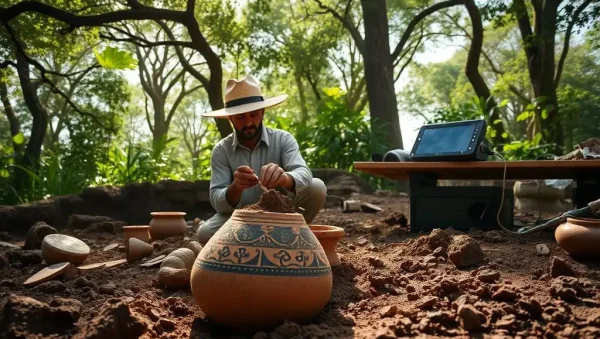
Residue analysis extends to ceramics, with absorbed lipid biomarkers revealing vessels used for cooking cacao-drinks, fish stews, or hallucinogenic enemas—as seen in Maya and Tiwanaku contexts. We cover radiocarbon dating refinements, such as Bayesian modeling, that now place events within decades rather than centuries, allowing better correlation with climate proxy data. Each article includes mini-experiments or virtual labs where readers can simulate starch grain identification or interpret stratigraphic layers. This niche proves that archaeology isn’t just about kings and pyramids; it’s about families, farmers, and foragers whose everyday choices shaped civilizations.
🌎 Collaborative and Indigenous-Led Archaeology: Rethinking Ownership
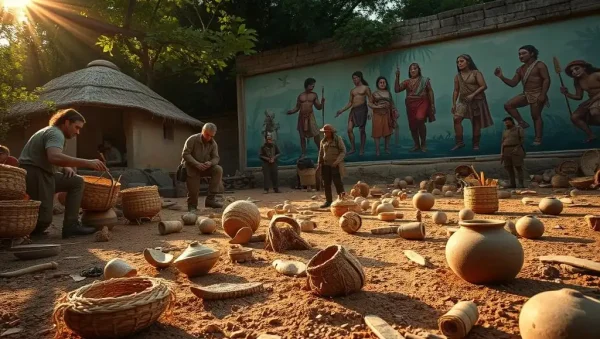
The future of archaeological advancement lies in decolonizing practice, where indigenous communities are not merely consulted but lead research design, excavation, curation, and interpretation. This subcategory showcases successful partnerships, such as the Zuni Cultural Resource Enterprise managing ancestral sites, or the Mapuche co-governance over Ngultura archaeological parks. Learn how community-based participatory research (CBPR) integrates oral traditions, place-based knowledge, and ceremonial protocols into scientific inquiry. For instance, among the Haudenosaunee, archaeologists now use “Dish with One Spoon” agreements to ensure findings benefit the community’s cultural continuity. We also examine repatriation advancements under NAGPRA and the emerging field of Indigenous data sovereignty, where genetic and artifact data are controlled by tribes.
Technology supports this shift: citizen science apps allow communities to document site looting, while 3D printing creates replicas for ceremonial use without disturbing original artifacts. We profile archaeologists from indigenous backgrounds (e.g., Dr. the Hon. Patricia Erikson, Māori archaeologist) who are mentoring the next generation. Expect ethical guidelines, case studies of missteps corrected, and practical steps for non-native archaeologists to build respectful relationships. This section emphasizes that advances are meaningless without ethical grounding—ensuring that discovery honors the living descendants and their ancestors’ dignity. Through interviews and firsthand accounts, discover how collaboration enriches both science and spirituality.
Frequently Asked Questions
What is the most impactful recent advance in New World archaeology?
The widespread adoption of LiDAR is arguably the most impactful, revealing massive urban sprawl in the Maya lowlands and Amazon, increasing estimated populations by millions. It shifted focus from elite centers to laborers’ neighborhoods, changing demographic models. Combined with sediment DNA, LiDAR has also mapped earthworks that suggest large-scale landscape engineering previously undetected.
How does ancient DNA change our understanding of indigenous migrations?
Ancient DNA overturns simple one-wave migration stories, showing multiple back-and-forth movements, admixture, and genetic continuity over thousands of years. For example, it revealed that the Ancestral Puebloans are directly ancestral to modern Pueblo peoples, supporting land claims. Also, it identified gene flow from Amazonian groups into the Caribbean, complicating initial settlement narratives.
Can AI really translate an entire extinct language?
No, AI cannot fully translate extinct languages alone; it assists human epigraphers by suggesting candidate readings based on statistical patterns and context. For Maya hieroglyphs, AI matches known glyph collocations to phonetic and logographic values, accelerating decipherment of remaining unread syllables. However, cultural context and historical analogies are still necessary for accurate interpretation.
What are the ethical concerns with destructive testing like bone DNA extraction?
Key concerns include disrespect for burial practices, potential damage to skeletal remains, and lack of consent from descendant communities. Scientists now follow strict protocols: minimally invasive sampling, repatriation of remains, and co-authorship with tribal representatives. Some tribes outright refuse destructive analysis, instead favoring non-invasive imaging and isotopic approximations. International guidelines like the Vermillion Accord aim to balance scientific gain with cultural sensitivity.
How can amateurs contribute to archaeological advances?
Amateur enthusiasts can help by reporting newly exposed sites (e.g., post-storm erosion) to local authorities, participating in crowd-sourced graph matching in projects like GlobalXplorer, and transcribing colonial-era manuscripts via platforms like Smithsonian Digital Volunteers. Additionally, supporting ethical tourism and buying authentic indigenous crafts (not looted artifacts) protects sites. Always obtain permits and training—never dig unsupervised, as amateur excavation can destroy context.