Rituals and Ceremonies: The Spiritual Practices of Cahokia's Inhabitants
🌟 Dive into the rich tapestry of Cahokia spiritual practices and rituals, where ceremonies fostered community bonds and reverence for nature. Discover…
Read article
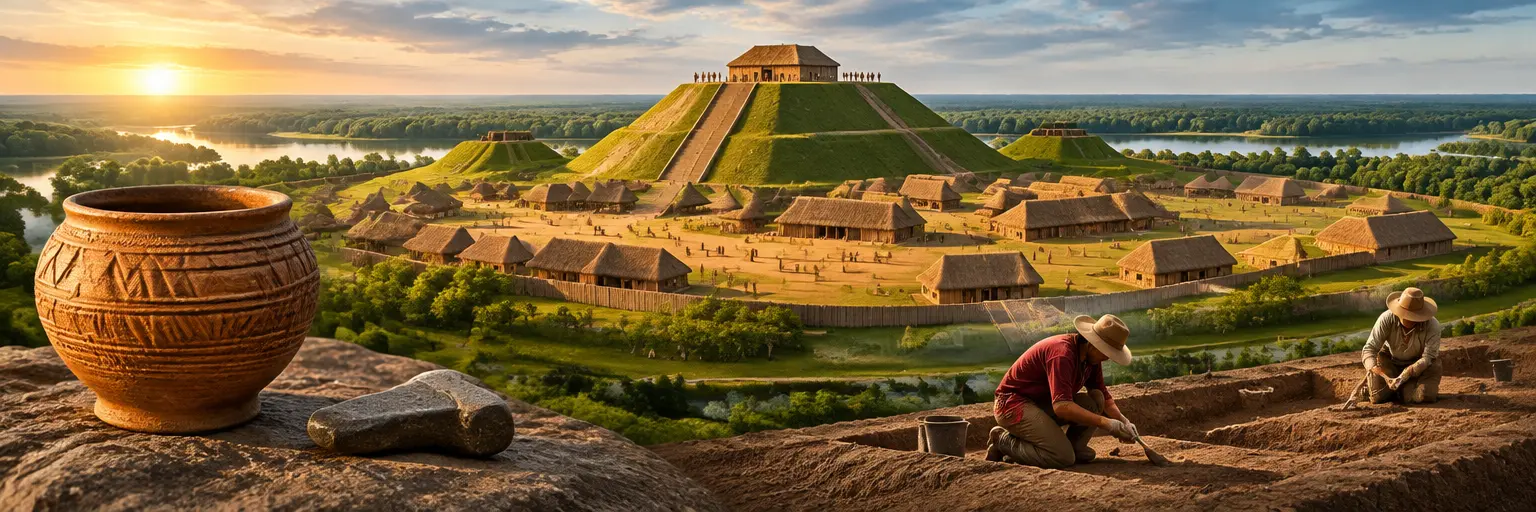
Cahokia, the largest pre-Columbian settlement north of Mexico, stands as a monumental testament to the sophisticated engineering, urban planning, and social complexity of the Mississippian culture. Rising along the Mississippi River near modern-day St. Louis, this ancient metropolis once housed tens of thousands of people, its skyline dominated by earthen pyramids and vast plazas that rivaled contemporary European cities in scale. For archaeology enthusiasts and historians alike, Cahokia reveals a thriving indigenous civilization with advanced astronomical knowledge, extensive trade networks, and a centralized political structure—long before European contact. Discover how this awe-inspiring city, now a UNESCO World Heritage Site, challenges conventional narratives of pre-Columbian America and offers deep insights into the ingenuity and resilience of native peoples. Explore the mysteries of its woodhenges, the ceremonial grandeur of Monks Mound, and the cultural legacy that still resonates across the Americas today.
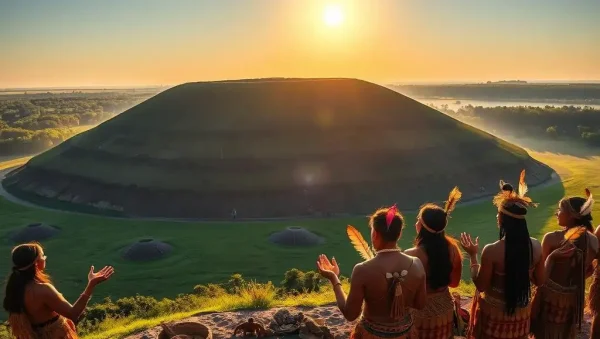
🌟 Dive into the rich tapestry of Cahokia spiritual practices and rituals, where ceremonies fostered community bonds and reverence for nature. Discover…
Read article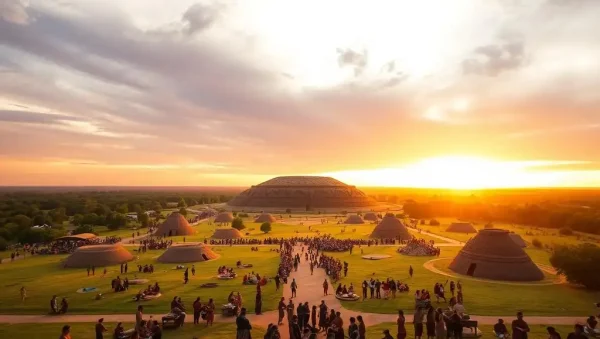
The Great Plaza of Cahokia stands as a testament to the vibrant Cahokia indigenous culture's significance, serving as a bustling center for…
Read article
Cahokia influence on indigenous cultures extended far beyond its borders, shaping trade, governance, and social structures among neighboring societies. This study reveals…
Read article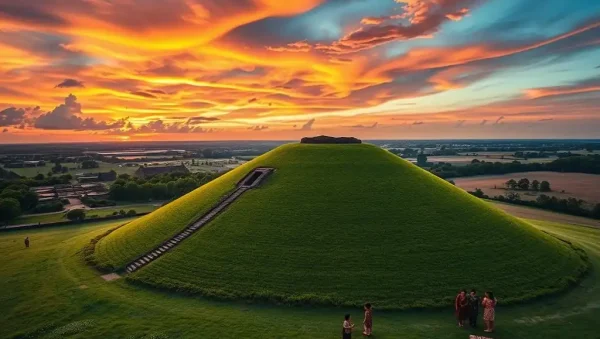
Cahokia's indigenous cultural significance is profound, as this monumental city not only exemplified advanced societal structures but also shaped the identities of…
Read articleWelcome to the subcategory of Monumental Cities – Cahokia, a deep dive into the largest pre-Columbian settlement north of Mexico. As part of our Archaeological Discoveries section, this page explores the engineering marvels, social complexity, and spiritual life of the Mississippian culture. Here, you will find meticulously researched insights into the city’s earthen mounds, its strategic location near the Mississippi River, and the powerful chiefdom that orchestrated its rise and fall. Discover how modern archaeology is reshaping our understanding of indigenous urbanism, offering a rich tapestry of history that challenges Eurocentric narratives.
Cahokia’s defining features are its monumental earthen mounds, with Monk’s Mound towering at over 100 feet high and covering 14 acres. These were not haphazard piles but precisely engineered platforms built over centuries using woven baskets of soil. The purpose varied: some supported elite residences, others were ceremonial platforms, and a few served as burial sites. Excavations reveal layered construction stages, indicating a centralized authority capable of mobilizing thousands of laborers. The alignment of mounds with solar events—such as the Woodhenge calendar—demonstrates advanced astronomical knowledge integrated into urban planning. Expect to learn how these colossal structures were built without draft animals or metal tools, relying on human muscle, organizational skill, and deep spiritual conviction.
For visitors and researchers, the mounds are more than dirt; they are narratives of power and cosmology. The Grand Plaza, bounded by mounds, likely hosted public rituals and games, reinforcing social hierarchy. Recent lidar scans have revealed hidden sub-mounds and causeways, suggesting a cityscape far more complex than earlier maps showed. This section guides you through the primary mound types—platform, conical, and ridge—and their specific uses, from chieftain homes to charnel houses. By understanding the scale of earth-moving, you’ll appreciate how Cahokia rivaled contemporaneous European cities in population and organizational complexity, making it a true prehistoric metropolis.
Beyond the monumental core, Cahokia was a sprawling urban center covering over six square miles, with an estimated population of 10,000 to 20,000 at its peak around 1050-1250 CE. This section uncovers the residential neighborhoods, craft areas, and agricultural fields that surrounded the ceremonial precinct. Houses were built of wattle and daub, arranged in clusters around courtyards, with evidence of specialized craft districts for pottery, shell bead-making, and copper working. Daily life revolved around maize agriculture, hunting, and fishing, but also included vibrant markets and long-distance trade networks reaching the Gulf Coast and Great Lakes. Expect to see how trash pits and hearths provide a micro-history of diet, health, and social inequality.
The layout was not random but reflected a cosmological order, with the city oriented to the cardinal directions and the Mississippi River as a spiritual artery. Palisade walls, rebuilt multiple times, enclosed the central precinct, suggesting both defense and elite status. You’ll learn about the “suburban” mound centers like East St. Louis and St. Louis, which were part of Greater Cahokia’s urban sprawl. This section also addresses the daily routines of commoners—from food preparation to tool making—emphasizing that Cahokia was not just a ceremonial ghost town but a living, breathing community of diverse peoples. By examining household archaeology, we reconstruct the rhythms of work, play, and belief that defined ordinary Mississippian life.
Cahokia’s burial mounds, especially Mound 72, offer dramatic evidence of its rigid social hierarchy and ritual violence. Excavations uncovered hundreds of burials, including a central elite male laid on a bed of over 20,000 shell beads, accompanied by young retainers—likely sacrificed—and exotic grave goods like rolled copper and stone points. This section interprets these findings through the lens of chiefly power, where rulers claimed divine ancestry and controlled life and death. Expect to compare these practices with other Mississippian sites and understand the cultural meaning of burial goods, from marine shells to mica, as symbols of connection to distant lands and supernatural forces.
However, not all burials were elite. Many were simple pit graves with modest offerings, revealing pronounced status differences in death that mirrored life. Isotopic analyses of bones show dietary variation—elites consumed more protein and maize—while skeletal trauma indicates some lived lives of hard labor. This section explores evidence of human sacrifice, which challenged earlier romantic views of peaceful mound builders, and discusses debates about whether those interred were captives, servants, or willing participants in a religious drama. By examining mortuary practices, we gain a raw, unflinching look at the costs of Cahokian civilization, where religion, politics, and violence were inseparable.
Cahokia was the hub of a vast cultural network stretching across eastern North America. Its influence is seen in the spread of Mississippian pottery styles, platform mound architecture, and the cultivation of maize, beans, and squash. This section traces the trade routes that brought copper from the Great Lakes, shells from the Gulf Coast, and chert from Oklahoma into Cahokian workshops. Expect to explore the role of Cahokia as an idea center, where religious iconography—like the falcon dancer and the underwater panther—was codified and exported. Learn how political alliances were forged through gift exchange and intermarriage, creating a loose confederacy of chiefdoms.
Yet, this network was not static. The “Mississippianization” of the Southeast was uneven, with some regions adopting only select traits. This section addresses how Cahokia’s decline around 1350 CE led to the fragmentation of this network, with power shifting to other centers like Moundville and Etowah. We also examine the iconographic links to Mesoamerica, which some scholars argue show indirect cultural diffusion, though direct contact is unproven. By understanding this broader context, you’ll see Cahokia not as an isolated anomaly but as the apex of a dynamic, interconnected indigenous world that transformed the North American continent long before Columbus.
This section highlights the breakthrough finds that have redefined our knowledge of Cahokia, from the 1960s salvage excavations to cutting-edge scientific analyses. Discover the Woodhenge—a circle of post holes that tracked solstices—and the copper workshops where skilled artisans hammered meteoric iron and copper into ceremonial regalia. Expect to learn about recent soil chemistry studies that reveal food preparation areas and refuse patterns, and how ground-penetrating radar maps unseen structures without excavation. We’ll cover the debate on Cahokia’s population peak, which some estimate as high as 30,000, though others argue for less, and the evidence for environmental degradation—deforestation, soil depletion, and flooding—that contributed to its abandonment.
Modern research is also collaborative and decolonized, with the Osage Nation and other descendant communities partnering in stewardship and interpretation. This shift ensures that indigenous voices are central to the narrative, moving beyond purely Western scientific paradigms. Expect insights into DNA and isotopic migration studies that trace the origins of Cahokians, revealing a diverse population that included migrants from as far as the upper Midwest. By following the evolution of archaeological techniques—from shovel-shining to satellite imagery—you’ll appreciate how each new invention peels back another layer of this lost city’s secrets, making its study a vibrant, ongoing field.
Cahokia is located in Collinsville, Illinois, across the Mississippi from St. Louis, Missouri. Its core covers about 2,200 acres, but the full urban landscape, including outlying mound groups, spans over six square miles. The site contains roughly 120 mounds, with Monk’s Mound being the largest. In 1982, it was designated a UNESCO World Heritage Site.
They used woven baskets to carry soil—one basketful at a time—deposited in layered stages over generations. Estimates suggest Monk’s Mound contains about 22 million cubic feet of earth. Labor was organized through tribute and religious obligations, with thousands working in rotating crews. No draft animals or metal tools were needed, only human strength and coordination.
The collapse was likely multifaceted: severe flood events, deforestation leading to erosion, soil salinity, and potential political overreach. Climate data shows a cooling period that hurt maize yields. After the decline, the population dispersed into smaller communities, though some mounds remained in use for ceremonies. A major palisade rebuild around 1300 suggests social unrest or external pressure.
Yes, Cahokia Mounds State Historic Site is open to the public. You can climb 154 steps to the top of Monk’s Mound, walk the Woodhenge reconstruction, and visit the interpretive museum. Ongoing archaeological work means some areas are restricted, but the site offers a world-class visitor center with artifacts and a multimedia theater. It’s free, with donations appreciated.
Evidence from Mound 72 indicates at least 62 young women and 39 men were buried in mass graves, likely as retainers or sacrificial victims. However, this appears to be a rare, high-status event, not a routine practice. Such rituals may have accompanied chiefly funerals, reinforcing divine kingship. Most burials at the site were simple, indicating sacrifice was reserved for special occasions.