Exploring Teotihuacan: The Monumental City of the Gods
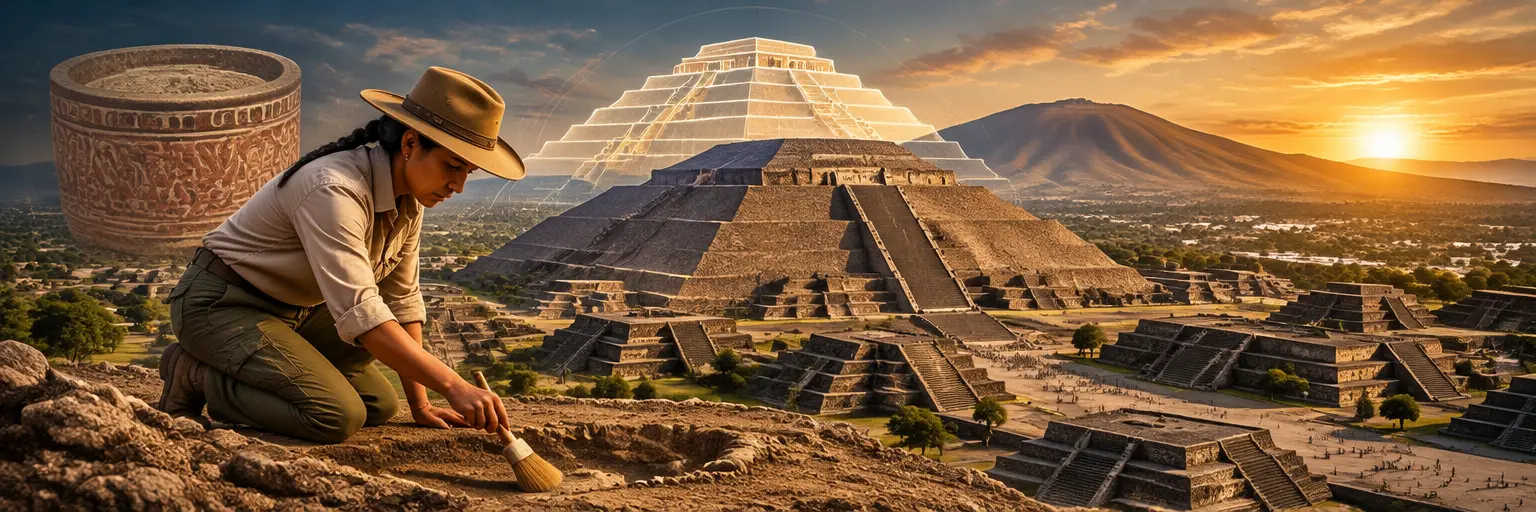
Welcome to our deep dive into Teotihuacan, one of the most awe-inspiring archaeological sites in the Americas. Located in the highlands of central Mexico, this Monumental City was once the largest urban center in the pre-Columbian world, with a population estimated at over 125,000 at its peak around 450 CE. Known as the "City of the Gods" by the Aztecs, Teotihuacan’s towering pyramids, intricate murals, and sophisticated urban planning continue to fascinate archaeologists and travelers alike. In this subcategory, we uncover the mysteries of its origins, its monumental architecture, daily life, and the enduring legacy of a civilization that shaped Mesoamerican history.
🏛️ The Rise and Fall of Teotihuacan’s Urban Core
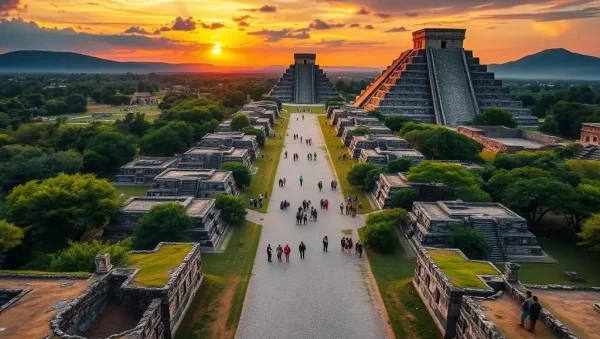
Teotihuacan emerged around 100 BCE and grew into a sprawling metropolis by 250 CE, dominating central Mexico for nearly seven centuries. Its grid layout, oriented to the cosmos, included the famous Street of the Dead, a 2.5-kilometer avenue flanked by elite compounds and ceremonial plazas. The city’s success was built on trade, agriculture, and obsidian mining, which fueled its expansion and attracted migrants from across Mesoamerica. However, by 550-650 CE, evidence of fire and destruction suggests internal unrest or invasion, leading to its gradual decline and abandonment by 750 CE. This section explores the factors behind its meteoric rise and mysterious collapse, drawing on recent excavations and isotopic studies.
🗿 The Pyramids of the Sun and Moon: Engineering Marvels
The Pyramid of the Sun, standing 65 meters high, is the third-largest pyramid in the ancient world, built over a natural cave believed to be a portal to the underworld. The Pyramid of the Moon anchors the northern end of the Street of the Dead and was the stage for ritual sacrifices and astronomical observations. These structures were not merely tombs; they were cosmic mountains, representing the axis mundi where heaven, earth, and the underworld converged. Through detailed analysis of construction phases, we show how these monuments were expanded over generations, using millions of tons of volcanic stone and mud mortar. Interactive diagrams and 3D reconstructions help readers visualize the original painted facades and ceremonial functions.
🎨 Murals, Art, and Symbolism in Teotihuacan
Unlike many Mesoamerican cultures, Teotihuacan did not rely on written texts; instead, its people told stories through vibrant murals covering palace walls, apartment compounds, and temple facades. These paintings depict processions of priests, feathered serpents, jaguars, and the iconic Storm God, who presided over rain and warfare. Red, ochre, and turquoise pigments were derived from local minerals and applied with remarkable precision. This section decodes the iconography, revealing a complex cosmology centered on fertility, sacrifice, and the cyclical rebirth of nature. We also compare Teotihuacan’s artistic style with contemporary Maya and Zapotec traditions, highlighting trade and cultural exchanges across Mesoamerica.
🏠 Daily Life and Social Hierarchy in the Multi-Ethnic City
Teotihuacan’s population was remarkably diverse, with neighborhoods of Zapotec, Mixtec, and Maya immigrants coexisting alongside local elites. Residential compounds, such as the Palace of the Jaguars and the Compound of the Quetzal Butterfly, housed extended families, artisans, and priests, each with their own courtyards, shrines, and workshops. Excavations of trash middens and living floors reveal a society stratified by class, where nobles wore jade, shell, and exotic feathers, while commoners produced obsidian tools, pottery, and textiles. This section uses archaeological evidence, including burial patterns and chemical analysis of skeletons, to reconstruct diet, health, and social mobility in this vibrant urban center.
🌍 Teotihuacan’s Influence Across Mesoamerica and Beyond
Even after its decline, Teotihuacan remained a cultural touchstone for later civilizations. The Aztecs revered its ruins as a pilgrimage site, naming it Teotihuacan, meaning "the place where men became gods." Its distinctive talud-tablero architectural style, thin orange pottery, and feathered serpent motif appear in Maya cities like Tikal and Copán, suggesting deep diplomatic and trade links. This section traces the dissemination of Teotihuacan’s iconography and technology, showing how its legacy permeated Aztec, Toltec, and even colonial-era art. We also discuss modern preservation efforts by UNESCO, which designated Teotihuacan a World Heritage Site in 1987, and the ongoing research using LiDAR and ground-penetrating radar to uncover buried structures.
Frequently Asked Questions
What is the best time of year to visit Teotihuacan?
The ideal time is during the dry season from November to April, when skies are clear and temperatures range from 15-25°C. Avoid the rainy season (May-October) when muddy paths and sudden downpours can disrupt exploration. Arrive early at 8 AM to beat crowds and experience the sunrise over the Pyramid of the Sun, a truly magical experience.
Were human sacrifices performed at Teotihuacan?
Yes, archaeological evidence confirms ritual human sacrifice, particularly at the Pyramid of the Moon and the Sun. Excavations have found mass graves of decapitated individuals, likely prisoners of war, alongside offerings of obsidian blades and animal remains. These sacrifices were tied to agricultural cycles and the renewal of cosmic order, not to casual violence.
How did Teotihuacan get its name?
The original name of the city was lost to time. The Aztecs, who discovered the ruins centuries later, named it Teotihuacan, meaning "the place where the gods were created" or "city of the gods." In Nahuatl, "teotl" means god and "huacan" means place of. The exact pre-Aztec name remains unknown.
What caused the collapse of Teotihuacan?
Most scholars agree that a combination of severe drought, internal political turmoil, and ecological degradation led to its downfall around 550-650 CE. Evidence of burning in elite compounds suggests rebellion or foreign invasion, while skeletal remains show signs of malnutrition and disease. The city was abandoned, but its cultural influence endured.
Can visitors climb the pyramids at Teotihuacan?
As of recent years, climbing the Pyramid of the Sun is allowed, but access to the Pyramid of the Moon is restricted to preserve the structures. Visitors can ascend the hundreds of stone steps for panoramic views, but must follow posted rules, such as no climbing during storms and wearing non-slip footwear. Always respect the site’s conservation guidelines.