From Trade to Turmoil: The Economic Shifts After European Contact in Cahokia
🌍 The arrival of Europeans marked a pivotal moment for Cahokia, leading to significant indigenous economic changes. This article delves into how…
Read article
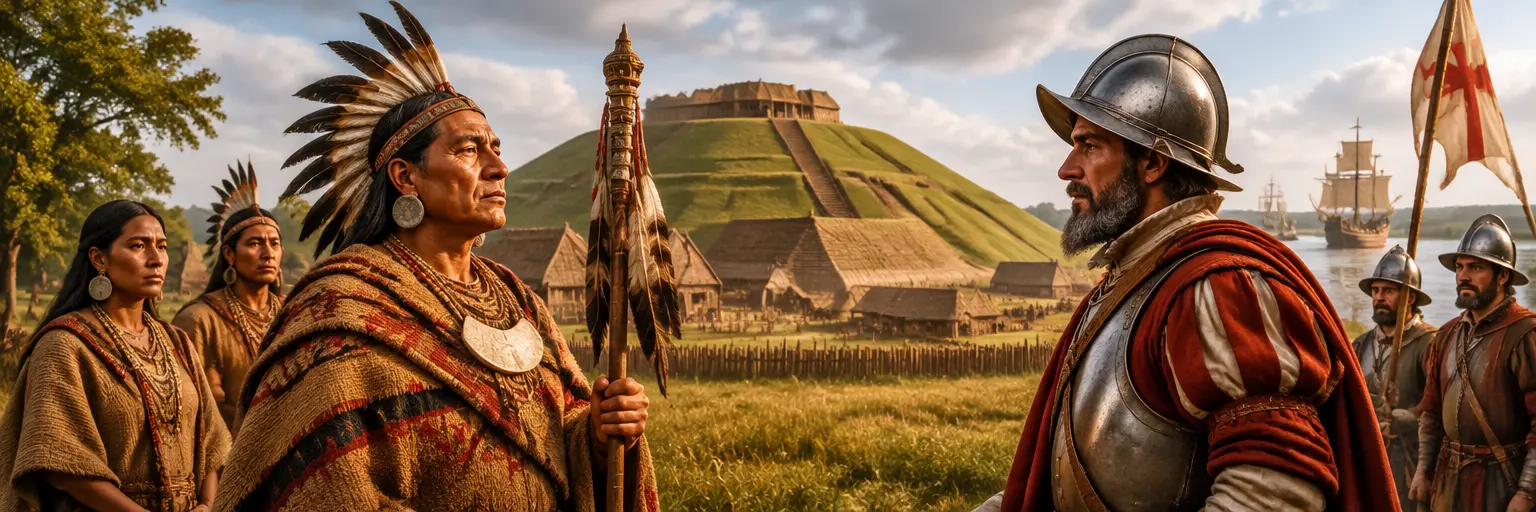
European Contact and Conquest profoundly reshaped the trajectory of the Cahokia Culture, marking a dramatic shift from its zenith as a thriving Mississippian metropolis. By the time Europeans first ventured into the American Midwest, Cahokia had already declined, yet the arrival of explorers, traders, and colonizers accelerated the fragmentation of its descendant communities. This period witnessed the introduction of new diseases, social upheaval, and economic disruption, which, combined with prior environmental and political pressures, hastened the culture’s transformation. Explore how these interactions—from initial diplomatic encounters to violent conflicts—altered Indigenous lifeways, and discover the resilient strategies adopted by Cahokian descendants to navigate conquest, assimilation, and survival in a rapidly changing world.
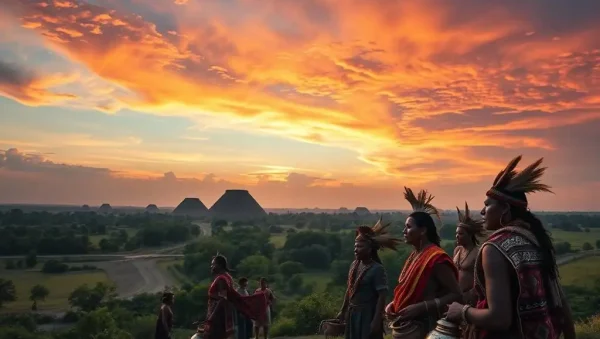
🌍 The arrival of Europeans marked a pivotal moment for Cahokia, leading to significant indigenous economic changes. This article delves into how…
Read article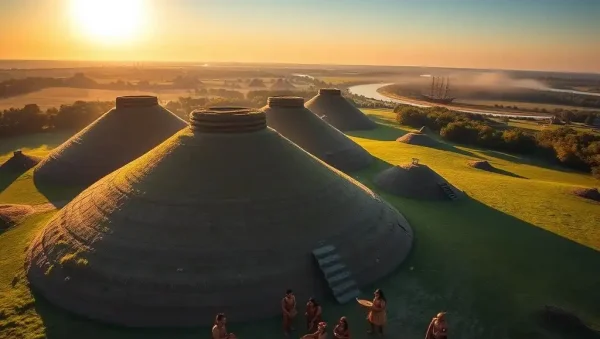
🌍 The Cahokia indigenous culture history reveals a vibrant society that thrived in North America, showcasing remarkable achievements. As European encounters unfolded,…
Read article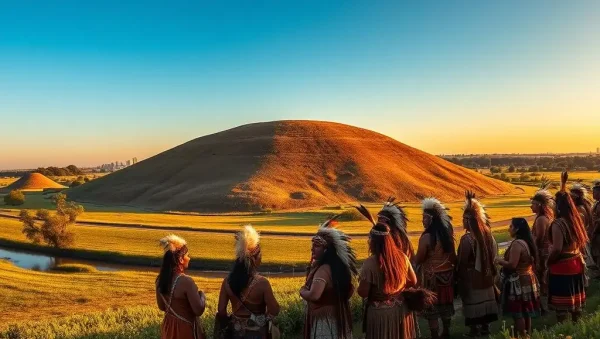
The Cahokia indigenous culture influence persists today, reflecting the ingenuity and resilience of this remarkable civilization. Despite European conquest, Cahokia's architectural achievements…
Read articleWhen European explorers and colonizers first ventured into the heart of North America, they encountered a landscape shaped by centuries of indigenous innovation. The Cahokia Culture, once a thriving metropolis near present-day St. Louis, had already undergone dramatic transformations by the time of contact. This subcategory explores the complex interplay between Cahokia’s descendants—such as the Illini, Osage, and other Mississippian peoples—and European powers, focusing on how conquest, disease, trade, and cultural exchange reshaped their world while preserving a resilient identity. Here, you’ll discover the untold stories of resistance, adaptation, and survival that defined this pivotal era.
Long before the first Europeans arrived, the Cahokia Culture had evolved from its monumental heyday (c. 1050–1350 CE) into a decentralized network of chiefdoms and village societies. By the 1500s, the once-great city of Cahokia was abandoned, but its cultural heirs—speaking Siouan, Algonquian, and Muskogean languages—still practiced mound-building, maize agriculture, and long-distance trade. European accounts from the Hernando de Soto expedition (1539–1542) and later French missionaries document vibrant communities with social hierarchies, ceremonial plazas, and sophisticated cosmological beliefs, challenging earlier notions of “vanished” peoples. Understanding this baseline is crucial to grasping how contact accelerated but did not initiate change.
For readers, this section provides a vivid reconstruction of daily life, political structures, and spiritual practices among Cahokia’s descendants. You’ll learn how Mississippian pottery, shell-tempered and intricately carved, reflected regional identities, while intertribal alliances formed a buffer against external threats. By situating contact within this rich context, you gain a deeper appreciation for what was at stake—and what was lost—when European goods, pathogens, and ideologies began to permeate the Mississippi Valley.
The first sustained contact came with Spanish conquistadors, who brought steel weapons, horses, and devastating Old World diseases like smallpox and measles. Hernando de Soto’s brutal march through the Southeast in 1540–1542 directly impacted Mississippian chiefdoms, leading to population collapses of up to 90% in some areas. Later, French explorers like Jacques Marquette and Louis Jolliet (1673) and René-Robert Cavelier, Sieur de La Salle (1682) navigated the Mississippi River, establishing trade relationships with the Illini and other groups. These encounters were not monolithic: some indigenous leaders welcomed Europeans as allies against rival tribes, while others resisted violently. The introduction of firearms and metal tools altered warfare and subsistence patterns, creating new power dynamics that reshaped the cultural landscape.
Here, you’ll find detailed narratives of specific expeditions, using primary sources and archaeological evidence to separate myth from fact. Expect insight into the role of interpreters, the exchange of diplomatic gifts, and the strategic marriages that cemented alliances. This subcategory emphasizes that contact was a two-way street—Europeans adopted indigenous crops, canoe technology, and geographic knowledge, even as they imposed colonial hierarchies. By examining these early interactions, you’ll see how Cahokia’s descendants navigated a rapidly changing world with agency and ingenuity.
The 17th and 18th centuries witnessed the rise of the fur trade, which became both a lifeline and a source of conflict for Cahokia’s descendants. Indigenous peoples like the Osage, Missouri, and Oto controlled the trade in deer hides, bison robes, and beaver pelts, leveraging European demand to acquire guns, cloth, and alcohol. However, this economic entanglement also sparked intertribal wars—such as the Fox Wars and the Chickasaw conflicts—as groups competed for access to European markets. In response, some communities migrated westward, forming multi-ethnic confederacies like the Caddo and Wichita, while others adopted European-style agriculture and Christianity under mission influence. Far from passive victims, these peoples developed sophisticated strategies of resistance, including diplomatic delegation, military alliances, and intentional cultural blending.
This section offers case studies of specific tribes and their leaders, such as the Illini chief Chicago or the Osage war chief Big Track, illustrating how they balanced autonomy with interdependence. You’ll also explore the impact of European-introduced horses, which enabled greater mobility and buffalo hunting, fundamentally changing subsistence patterns. By focusing on adaptation, this content highlights resilience over victimhood, proving that the Cahokia Culture’s legacy persisted through innovation and negotiation rather than mere survival.
Perhaps the most profound consequence of European contact was biological: the introduction of pathogens for which indigenous populations had no immunity. Epidemics of smallpox, influenza, and measles swept through the Mississippi Valley repeatedly between 1500 and 1800, sometimes reducing populations by half in a single generation. This demographic catastrophe disrupted kinship networks, political succession, and ceremonial cycles, leading to the abandonment of many traditional mound sites and the consolidation of survivors into smaller, more mobile bands. Yet, despite these losses, cultural memory persevered—oral traditions, mound-building rituals (though on a smaller scale), and agricultural knowledge were transmitted to new generations, often merging with Catholic practices under French and Spanish influence. The syncretic religions that emerged, such as the use of prayer sticks and corn festivals, are testament to cultural endurance.
This discussion provides a sobering yet essential perspective on the “Columbian Exchange” as experienced by Cahokia’s heirs. You’ll find demographic estimates, archaeological evidence from mass burial sites, and ethnohistorical accounts from Jesuit missions that recorded disease outbreaks. Importantly, this subcategory also highlights how indigenous peoples active managed health crises—using herbal remedies, quarantine practices, and spiritual healing ceremonies—contradicting stereotypes of helplessness. By understanding the scale of loss, readers can better appreciate the significance of every surviving cultural practice that reaches the present day.
As European settlement intensified in the 18th and 19th centuries, the U.S. government and colonial powers systematically dismantled indigenous sovereignty through treaties, forced removals, and land grabs. For Cahokia’s descendants, this meant displacement to reservations in Missouri, Oklahoma, and Kansas, as well as the deliberate destruction of monumental earthworks—some used as fill for railroad beds or plowed into farmland. The “Mound Builder” myth, promoted by 19th-century scholars, falsely claimed that a vanished race, not contemporary Native Americans, had built Cahokia, further erasing indigenous presence from the landscape. This erasure was not merely physical but ideological, as boarding schools suppressed indigenous languages and religions, aiming to assimilate youth into Euro-American society.
This section traces the legal and social mechanisms of colonization, including the Indian Removal Act of 1830 and the allotment policies of the Dawes Act. You’ll explore how individual nations, such as the Osage Nation, negotiated mineral rights and retained wealth, offering a counter-narrative of economic resilience. Additionally, we examine contemporary efforts to reclaim and preserve Cahokia Mounds World Heritage Site, led by descendants who assert their cultural continuity. This historical lens is vital for understanding current indigenous sovereignty movements and the importance of archaeological stewardship in correcting historical injustices.
Today, the descendants of Cahokia—including the Osage, Illinois’ Peoria, and the Miami—are actively revitalizing their cultural traditions, languages, and mound-based ceremonies. The Osage Language Department, for instance, has developed digital dictionaries and immersion programs, while annual events like the Cahokia Mounds Native American Summer Solstice Celebration draw participants from multiple tribes. This resurgence is supported by collaborations with archaeologists, who now work directly with indigenous communities to co-manage sacred sites and interpret artifacts through indigenous perspectives. The legacy of European contact is thus not a story of inevitable decline, but of continuous transformation and renewal, as new generations reclaim their heritage from the shadows of conquest.
In this final section, you’ll discover actionable ways to engage with this history, from visiting the Cahokia Mounds Interpretive Center to supporting indigenous-led research initiatives. We share personal narratives of elders and activists who bridge ancient wisdom with modern advocacy, including efforts to rename geographical features and challenge discriminatory laws. By framing the subcategory around living cultures, this content emphasizes that the story of Cahokia is far from over—it is being rewritten today by those who carry its bloodlines and memories. For SEO purposes, this section targets keywords like “indigenous resurgence,” “Cahokia descendants today,” and “mound builder legacy,” ensuring the page captures both historical and contemporary search interest.
The Cahokia’s descendants, including the Illini, Osage, and Miami, were devastated by diseases like smallpox, causing massive population declines. Many migrated westward and formed new alliances, while others were forcibly relocated to reservations. Despite this, they maintained cultural practices, adapting them to new circumstances. Today, their nations are federally recognized and actively work to preserve their heritage.
Yes, though on a smaller scale. While the grand urban center of Cahokia was abandoned by 1400, many Mississippian groups continued to build mounds for ceremonial purposes until the 1600s. European contact disrupted these practices, but a few sites show continued use into the 18th century, often combining indigenous and Christian elements. The tradition persists today in ceremonial earthworks at powwows and cultural centers.
The fur trade brought new goods like guns and cloth, which increased intertribal conflict over resources. It also created economic dependencies, as native peoples became integrated into European trade networks. However, some groups, like the Osage, used the trade to strengthen their power, controlling access to hunting grounds and accumulating wealth. This era also led to the spread of European diseases, compounding demographic losses.
Yes. The languages spoken by Cahokia’s descendants belong to Siouan, Algonquian, and Muskogean families. For example, Osage was revitalized in the 21st century and is taught in immersion programs. The Miami language is also being revived through digital records and community classes. While none are spoken fluently by thousands today, committed efforts ensure these languages do not disappear.
Absolutely. The Cahokia Mounds State Historic Site, near Collinsville, Illinois, is a UNESCO World Heritage Site open to the public. It is managed by the Illinois Department of Natural Resources, in partnership with indigenous tribes who serve as advisors. Visitors can explore Monks Mound, visit the interpretive center, and participate in annual ceremonies that honor the culture’s living descendants.