Exploring the Agriculture and Economy of the Cahokia Culture
Welcome to the Agriculture and Economy subcategory of our exploration into the Cahokia Culture, a pre-Columbian Mississippian society that flourished near present-day St. Louis. Here, we delve into the sophisticated farming techniques, trade networks, and economic systems that underpinned Cahokia’s rise as the largest urban center north of Mexico. From maize-dominated fields to the long-distance exchange of exotic goods, this page uncovers how this indigenous civilization sustained a population of up to 20,000 people and built a powerful regional economy. Whether you are a student, history enthusiast, or researcher, you will find SEO-rich insights into crop cultivation, resource management, and the social structures that connected agriculture to power.
🌽 Maize Cultivation and Agricultural Innovations
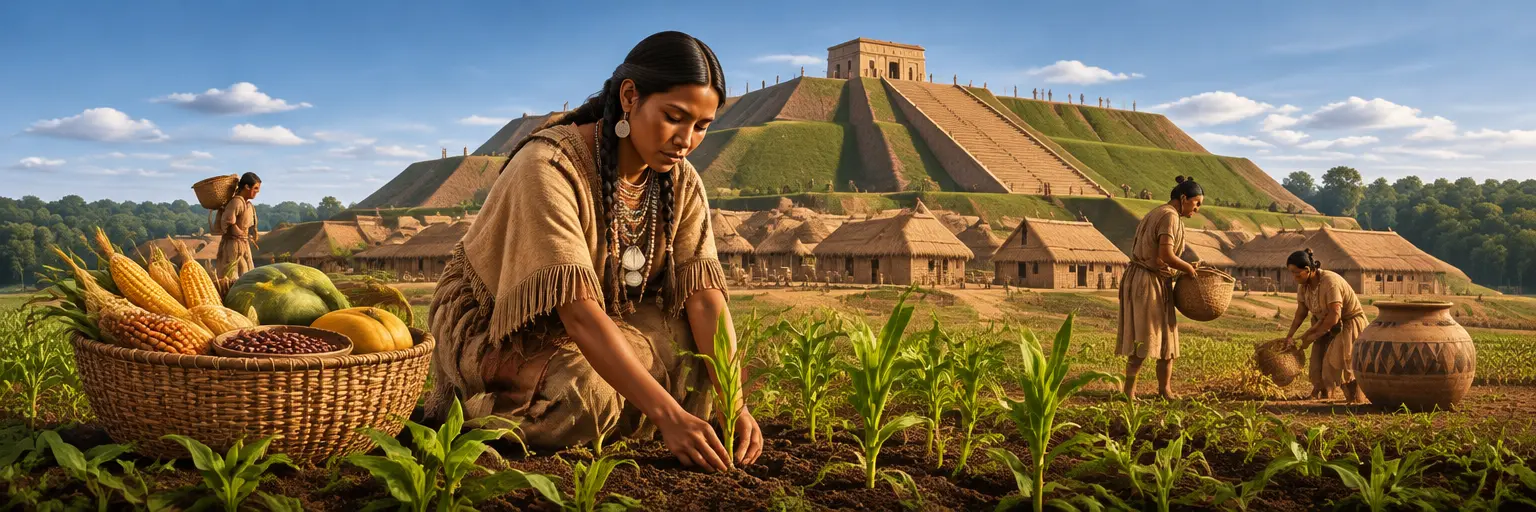
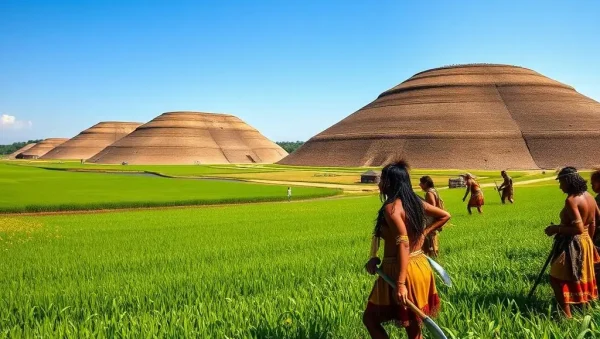
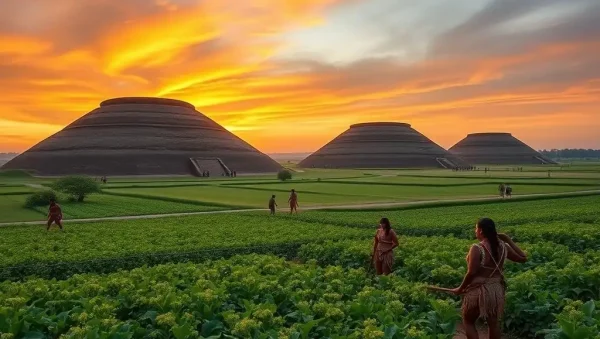
At the heart of Cahokia’s economy was maize (corn), a crop that transformed local food systems around 900 CE. This subcategory explains how Cahokians developed floodplain agriculture along the Mississippi and Missouri rivers, using natural levees and seasonal flooding to enrich soils without modern fertilizers. They also cultivated beans, squash, and sunflowers, creating a balanced diet and crop rotation that mitigated soil depletion. Innovations like raised field mounds and intercropping maximized yields, while storage pits and granaries ensured surplus for trade and feasting.
You will discover archaeological evidence, including charred plant remains and garden plots, that reveals how farming was organized. Labor was likely communal, with kin groups managing specific plots. This section also covers the role of climatic variability, showing how droughts or floods could disrupt harvests, leading to social stress. By understanding these methods, you gain insight into how Cahokia sustained its dense population and supported craft specialists, priests, and elites who did not farm directly.
🛶 Trade Networks and Exchange Systems
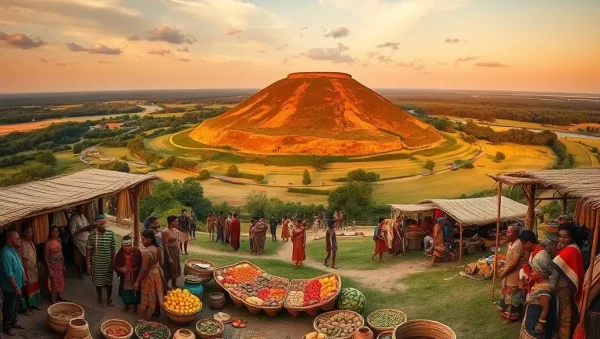
Cahokia was a central node in a vast trade network stretching from the Great Lakes to the Gulf of Mexico and from the Rockies to the Appalachians. This subcategory outlines the exotic goods that flowed into the city, including marine shell beads from the Gulf, copper from the Great Lakes, mica from the Carolinas, and chert from Oklahoma. These materials were not just utilitarian but held spiritual and status significance, often deposited in elite burials or mound contexts.
You will learn about canoe transport along river systems as the primary mode of bulk trade, supplemented by overland footpaths. The marketplace economy is debated, but evidence from pottery styles and raw material distribution suggests a complex system of down-the-line exchange and possibly centralized redistribution by elites. By analyzing artifacts like Mill Creek chert hoes and shell-tempered pottery, we trace how Cahokia’s economic influence radiated outward, integrating distant communities into its sphere.
🏛️ Surplus, Storage, and Social Hierarchy
The agricultural surplus generated by Cahokia’s farmers was not merely for subsistence—it fueled a stratified society with distinct roles. This subcategory explores how corn and other staples were collected, stored in granaries within palisaded compounds, and redistributed during feasts or ceremonies. The control of surplus likely empowered a chiefly elite, who managed labor for monumental construction and ceremonial events. Excavations at sites like Mound 72 reveal elite burials accompanied by food offerings, indicating that access to agricultural wealth was uneven.
You will find analysis of faunal remains and storage pit features that show differential consumption—elites ate more deer and waterfowl, while commoners relied heavily on maize and small game. This economic disparity did not lead to collapse immediately but created vulnerabilities. The fiscal system likely relied on tribute or communal labor (corvée) rather than currency, with obligations tied to kinship and ritual. Understanding this hierarchy helps explain why Cahokia’s power waned around 1350 CE, possibly due to resource depletion and overcentralization.
🌾 Seasonal Cycles and Environmental Adaptation
The Cahokians were masters of seasonal scheduling, adapting their farming, hunting, and gathering to the annual flood pulse of the river. This subcategory details how spring floods enriched soil for planting, while summer growing peaked with maize and beans, and autumn harvests were followed by winter hunting of deer and bison. Crucially, they practiced fallow rotation and used fire management to clear underbrush, creating edge habitats that attracted game. Wetland resources like cattails and lotus provided supplementary nutrition.
You will learn about paleoclimatology—dendrochronology and sediment cores—that shows Cahokia experienced both wet and dry periods. The city’s infrastructure, including causeways and water catchment basins, helped mitigate drought. However, a severe megadrought from 1200–1250 CE likely stressed food supplies, prompting increased reliance on trade and possibly conflict. This section emphasizes the resilience and fragility of indigenous economies, offering lessons for modern sustainable agriculture.
📦 Craft Specialization and Economic Roles
Beyond farming, Cahokia’s economy included a vibrant craft sector producing tools, ornaments, and ritual objects. This subcategory examines artisans who shaped Mississippian pottery with shell temper for cooking and storage, knapped Stone discoidals used in the game of chunkey, and carved stone effigy pipes of animals and humans. Marine shell was crafted into beads and gorgets, while copper repoussé plates depicted mythological motifs, likely for elite use. These specialized goods were not mass-produced but expertly crafted in workshops near mound centers.
You will discover workshop debris and tool kits found at sites like Mound 34, indicating a division of labor: some households specialized in chipped stone tool production, others in ceramic or shell work. This allowed for economic interdependence, where farmers traded surplus maize for crafted items. The gift economy also played a role, as exchanges of prestige goods cemented alliances. By understanding these roles, you see how Cahokia functioned as a pre-market economy, balancing subsistence and ritual needs.
Frequently Asked Questions
What crops did the Cahokia people primarily grow?
The Cahokia mainly cultivated maize (corn), beans, squash, and sunflowers. Maize was the staple, providing high calories, while beans added protein and nitrogen to soil, and squash offered vitamins and preserved well. They also grew native plants like goosefoot and marshelder, using floodplain farming and intercropping to boost yields.
How did Cahokia’s trade network function?
Cahokia was a hub of long-distance trade via rivers and overland trails. They exchanged local resources like chert tools and pottery for exotic items such as marine shells, copper, and mica. Trade was likely managed by elites through gift-giving and redistribution, rather than formal markets, with canoes as primary transport.
Why did Cahokia’s economy decline?
Scholars believe a combination of climate change (megadroughts), resource exhaustion, and overcentralization caused decline. Agricultural stress reduced surplus, undermining elite authority and trade. Population pressure led to deforestation and soil degradation, while political collapse around 1350 CE disrupted economic networks.
Did Cahokia use money or currency?
No, Cahokia did not use coined money. Their economy was non-monetary, relying on barter, gift exchange, and tribute. Surplus food and crafted goods were redistributed through social obligations and ceremonial feasts, with value based on labor, prestige materials, and spiritual significance.
What evidence supports our knowledge of Cahokia’s agriculture?
Archaeological evidence includes macrobotanical remains like charred seeds, pollen analysis, and coprolite studies revealing diets. Excavations of storage pits and garden plots show planting patterns. Stable isotope analysis of human bones confirms maize consumption, while phytoliths in soil indicate specific crops.