Understanding Political Structure and Governance in Cahokia Culture
Dive into the fascinating world of Cahokia, the largest pre-Columbian settlement north of Mexico, and uncover how its political structure and governance shaped one of the most sophisticated indigenous societies in the Americas. This subcategory explores the complex chiefdoms, societal hierarchies, and administrative systems that enabled Cahokia to flourish as a major urban center between 1050 and 1350 CE. Optimized for history enthusiasts, students, and researchers, this page offers deep insights into the political organization, leadership roles, and governance practices that defined the Cahokia culture, enhancing your understanding of indigenous civilizations and their lasting governance legacy.
🏛️ The Chiefdom System and Centralized Authority
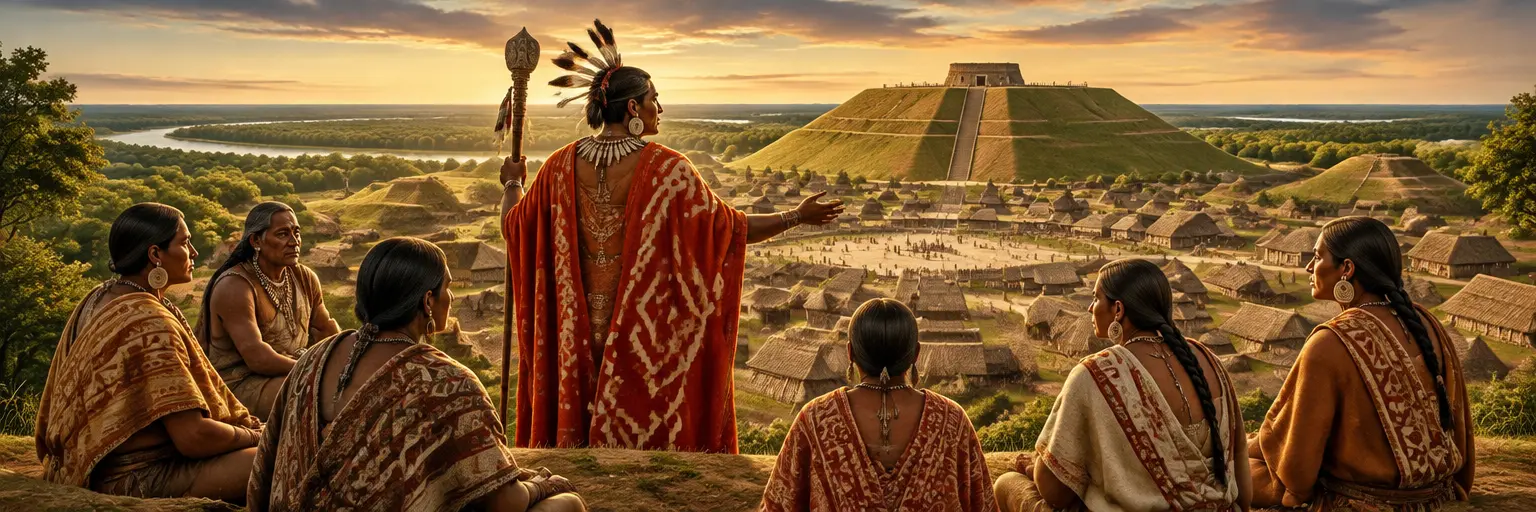
Cahokia’s political structure centered on a powerful chiefdom system, with authority concentrated in a single paramount leader who oversaw a network of subordinate chiefs and local elites. This hierarchical governance allowed for the mobilization of thousands of workers for monumental construction projects, such as Monks Mound and the Grand Plaza. The paramount chief likely held both religious and political power, acting as an intermediary between the people and the spiritual world, which legitimized their rule. Excavations at Cahokia reveal elite residences and burial goods that reflect a clear social stratification, supporting the theory of a hereditary leadership that controlled resources, trade, and tribute.
This system of governance was not static; it evolved over time in response to demographic growth and environmental challenges. At its peak, Cahokia influenced a vast region through a network of allied communities and trading partners, extending from the Great Lakes to the Gulf Coast. The chief’s authority was reinforced through public ceremonies, feasts, and the redistribution of surplus goods, fostering loyalty and cohesion. By analyzing archaeological evidence, such as the layout of plazas and the positioning of mounds, researchers have pieced together a governance model that balanced centralized control with local autonomy, ensuring stability across a sprawling polity.
🌾 Economic Governance and Resource Management
The political structure of Cahokia was intrinsically linked to economic governance, particularly the management of maize agriculture, hunting, and trade networks. Leaders oversaw the storage and distribution of surplus food, which was essential for supporting a large non-farming population, including artisans, priests, and administrators. This centralized economic control enabled the growth of specialized crafts, such as pottery making, shell bead production, and copper work, which were traded across the Mississippi River Valley. Governance of these economic activities was likely conducted through a combination of tribute collection, marketplaces, and state-sponsored workshops, ensuring that resources flowed efficiently to support public works and ceremonial events.
Resource management also included the regulation of timber, stone, and water, which were vital for construction and daily life. Archaeological studies reveal that Cahokia’s leaders implemented systematic land-use planning, including the creation of defensive palisades and the leveling of large areas for urban development. This level of organization suggests a sophisticated bureaucratic apparatus capable of planning, coordinating, and enforcing economic policies. The governance of trade routes, especially along the Mississippi River, allowed Cahokia to become a hub for exotic goods like marine shells, copper, and chert, further consolidating political power and economic prestige. Understanding these systems provides a clearer picture of how indigenous governance sustained urban life.
👥 Social Hierarchy and Political Roles
Within Cahokia’s political structure, social hierarchy played a crucial role in defining political roles and responsibilities. At the apex stood the paramount chief, followed by a class of nobles and elites who held administrative, military, and religious duties. Below them were commoners, farmers, and laborers, who contributed to the state’s economy through taxes, labor, and military service. This stratified society was visually reinforced through settlement patterns, with elites residing on or near mounds and commoners in surrounding villages. Evidence from burial mounds, such as Mound 72, indicates that elite status was often hereditary, with high-status individuals buried with elaborate grave goods, including shell beads and copper ornaments, signifying their political importance.
Political roles were also gendered and age-specific. Men often served as warriors, hunters, and political leaders, while women managed agriculture, food processing, and textile production, which were economically vital. Some women may have held positions of spiritual authority, as suggested by the presence of female figurines and ceremonial objects. The governance system likely included councils of elders and lineage heads who advised the chief, ensuring that decisions were made with community input. By examining these roles, scholars gain insight into the daily functions of Cahokia’s government, including conflict resolution, public works oversight, and ritual calendar management, all of which required a well-organized political cadre.
🏺 Ritual and Religious Authority in Governance
Religious authority was deeply intertwined with political governance in Cahokia, as leaders often claimed divine lineage and acted as chief priests. This fusion of sacred and secular power allowed rulers to justify their decisions through spiritual mandates, making rebellion both a political and religious offense. Public rituals, such as the Green Corn Ceremony and solstice observances, were orchestrated by the elite to reinforce cosmological order and social cohesion. The construction of Woodhenge, a circular arrangement of posts used for astronomical observations, demonstrates how leaders used celestial knowledge to predict agricultural cycles and schedule governance activities, further cementing their role as mediators between the heavens and the earth.
The central plazas and mound tops served as stages for religious-political spectacles, including human sacrifices, feasts, and dances, which were attended by thousands. These events were not only ceremonial but also served as mechanisms for tribute collection, alliance building, and the public display of wealth and power. Over time, religious practices evolved, with evidence of a shift toward more exclusive and elaborate rituals, possibly reflecting growing political centralization and elite competition. By studying ritual spaces and artifacts, researchers can trace the dynamic relationship between religion and governance, showing how belief systems were used to maintain order, legitimize authority, and integrate a diverse population into a unified Cahokian identity.
🌆 Urban Planning and Political Administration
Cahokia’s urban planning serves as tangible evidence of its sophisticated political administration. The city was laid out with a grid-like pattern, featuring a central plaza oriented to cardinal directions, surrounded by dozens of earthen mounds used for residential and ceremonial purposes. This deliberate design required a centralized planning authority capable of overseeing land clearance, earthmoving, and construction over several decades. The placement of mounds, roads, and stockades indicates a strong governmental control over public space, reflecting priorities such as defense, religious observance, and social segregation. The presence of a stockade wall, rebuilt several times, suggests that political administration included military defense and the management of potential conflicts with neighboring polities.
The administrative structure also included a hierarchy of settlements, with Cahokia as the primary center and smaller mound centers like St. Louis and East St. Louis as secondary hubs. This settlement hierarchy facilitated the administration of a large territory, with local chiefs governing satellite villages and reporting to the paramount chief. Artifact distribution, such as the presence of specialized pottery and tools, indicates that craft production and resource extraction were regulated at a regional level. This governance model allowed for efficient tax collection, legal dispute resolution, and emergency management, ensuring the city’s resilience. As archaeologists continue to map and excavate, our understanding of Cahokia’s administrative genius grows, revealing a governance system comparable in complexity to many ancient civilizations worldwide.
Frequently Asked Questions
Who was the ruler of Cahokia?
The exact ruler is unknown, but evidence suggests a paramount chief, often called the "Great Sun" or similar, who held supreme political and religious authority. This leader ruled from the top of Monks Mound, controlling tribute, trade, and monumental construction. Succession was likely hereditary, passed through elite ruling families, as inferred from elite burials.
How did Cahokia maintain political control over a large area?
Cahokia used a combination of military might, religious legitimacy, and economic dependency to maintain control. It provided protection and trade goods to allied settlements, while imposing tribute and labor obligations. Local leaders were integrated into the Cahokian elite network through marriages and ceremonial alliances, ensuring loyalty across the Mississippi Valley.
What role did slavery or forced labor play in Cahokia’s governance?
There is evidence of human sacrifice at Mound 72, but the extent of slavery is debated. Many citizens contributed via corvée labor, working on mound construction and public works as a form of taxation. Some captives from warfare may have been forced into labor, but most labor was likely voluntary or based on social obligation.
Did Cahokia have a written legal code?
No, Cahokia did not develop a written language. Governance laws and customs were transmitted orally, likely passed down through generations of leaders and priests. Disputes were resolved through mediation, lineage councils, and possibly trials by ritual or ordeal, with the chief acting as final arbiter.
Why did Cahokia’s political structure collapse?
Cahokia’s decline around 1350 CE is attributed to a mix of environmental stress, such as flooding and deforestation, political factionalism, and external conflicts. Overpopulation may have strained resources, while elites failed to adapt to changing conditions, leading to the breakdown of centralized authority and eventual depopulation.