Decoding the Olmec Legacy: Artifacts that Tell the Story of Their Origins
Campo_por_completar
Read article
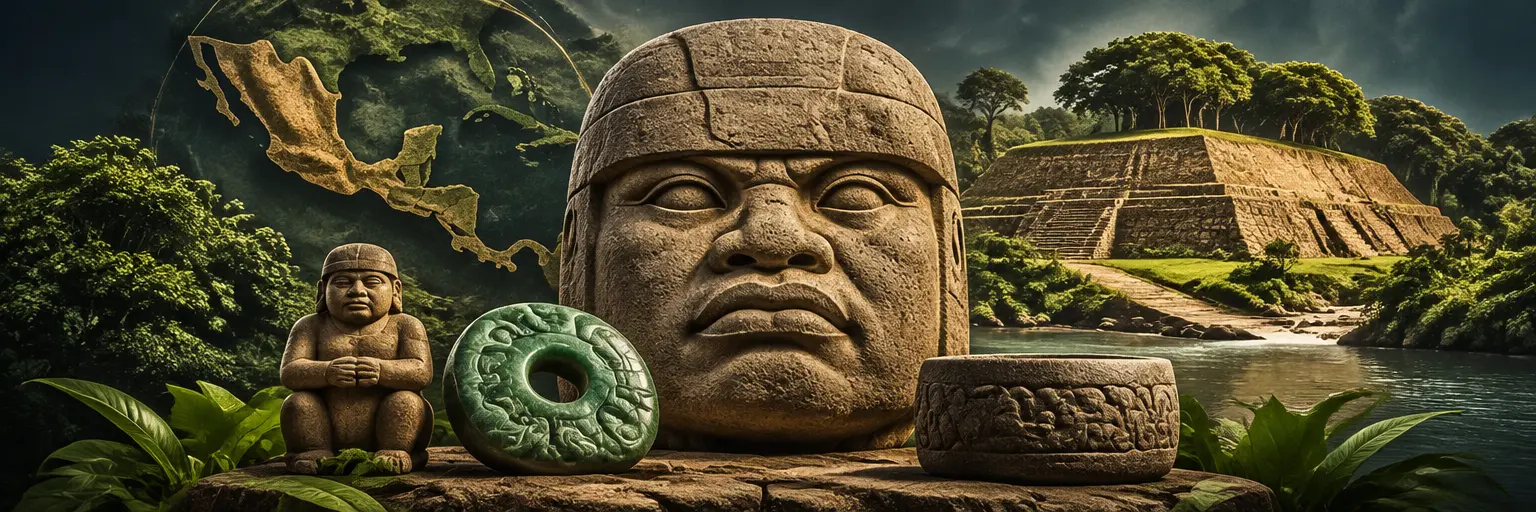
Discover the fascinating story of the Olmec civilization, often hailed as the “Mother Culture” of Mesoamerica, through our deep dive into its history and origins. Flourishing along the Gulf Coast of modern-day Mexico between roughly 1500 and 400 BCE, the Olmecs laid the foundational stones for later great societies like the Maya and Aztec. Our exploration uncovers how this enigmatic people developed monumental architecture, intricate art, and early writing systems, all emerging from a rich blend of social, environmental, and cultural forces. Unearth the latest archaeological findings, decipher the significance of colossal stone heads, and trace the roots of their religious and political systems. Whether you’re a student, enthusiast, or traveler, this section illuminates the profound legacy of the Olmec, connecting their ancient innovations to the broader tapestry of indigenous American heritage. Uncover how their trade networks, agricultural techniques, and ritual practices shaped a civilization that still captivates historians today. Join us as we journey back to the dawn of Mesoamerican greatness and reveal why the Olmec remain pivotal to understanding pre-Columbian life.
Campo_por_completar
Read article
Campo_por_completar
Read article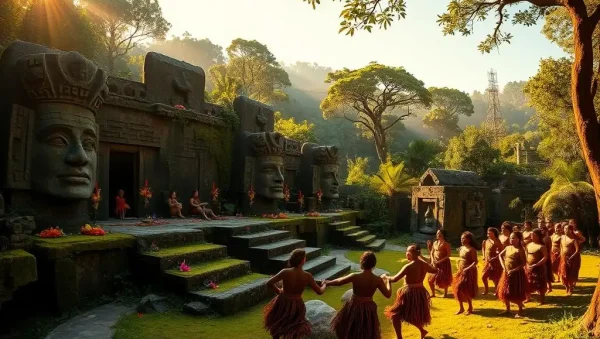
🌍 The Olmec rituals and ceremonies reveal a rich tapestry of cultural practices, showcasing their spiritual beliefs and social structures. This historical…
Read article
Campo_por_completar
Read article
Campo_por_completar
Read article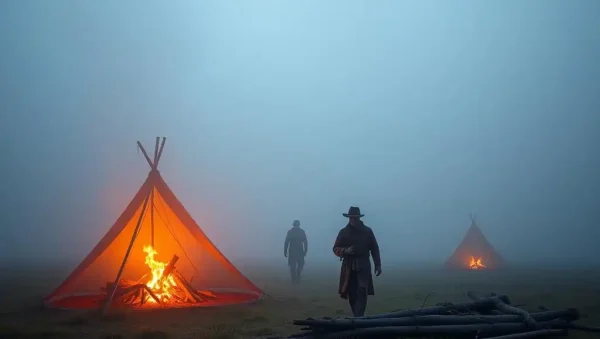
Campo_por_completar
Read articleWelcome to the History and Origins subcategory of the Olmec Civilization, where we uncover the archaeological, linguistic, and cultural evidence that defines the Mother Culture of Mesoamerica. Here, you will journey from the early Archaic settlements along the Gulf Coast of Mexico to the rise of San Lorenzo, La Venta, and Tres Zapotes, discovering how this enigmatic society shaped the foundations of later Maya, Zapotec, and Aztec traditions. Our content is designed for students, history enthusiasts, and travelers seeking authoritative yet accessible narratives, packed with SEO-rich keywords like Olmec timeline, Preclassic period, Gulf Coast archaeology, and ancient Mexican origins.
This section traces the archaeological timeline from 1500 BCE to 400 BCE, highlighting the gradual transition from nomadic hunter-gatherers to settled agricultural communities near the Coatzacoalcos and Grijalva rivers. Expect to learn about the earliest ceramic traditions, maize domestication, and the emergence of social hierarchy that preceded monumental stonework.
Key discoveries here include the San Lorenzo phase (1200-900 BCE) and the La Venta phase (900-400 BCE), where you will see how climate, riverine trade, and volcanic basalt sourcing were harnessed to build colossal heads and altars. The narrative explains how population growth led to craft specialization, long-distance exchange of obsidian and jade, and the creation of ceremonial centers that served as political and religious hubs.
Focusing on the oldest known Olmec capital, this section details the plateau-top site with its artificial terraces, drainage systems, and the ten colossal basalt heads, each weighing up to 40 tons. Understand how hydraulic engineering, labor organization, and the control of floodplain agriculture made San Lorenzo a pioneering example of urban planning in the Americas.
Readers will also explore the monumental art—thrones, altars, and stelae—that encoded royal power and shamanic authority. We provide stratigraphic evidence of intentional destruction and reburial, suggesting ritual cycle resets. The causes of San Lorenzo’s decline, likely due to environmental stress and internal conflict, set the stage for the rise of La Venta.
This segment covers the island city of La Venta, situated in a swampy lowland, which became the most lavish Olmec ceremonial center with its 30-meter tall pyramid, mosaic masks of serpentine, and massive basalt column tombs. Here, you will see the crystallization of the Olmec religious pantheon, including the feathered serpent, jaguar were-creatures, and rain deity precursors.
Emphasis is placed on the shamanistic transformation motifs and the use of magnetite mirrors for divination. The site’s meticulous east-west axis and buried offerings of jade, pottery, and rubber balls reveal a complex cosmology. We explain how La Venta’s elite managed a vast trade network extending to central Mexico and Guatemala, shaping iconographic conventions that spread across Mesoamerica long after its collapse around 400 BCE.
Here, we dive into ongoing scholarship about whether the Olmec were truly the Mother Culture or merely one of several contemporary sibling cultures. Expect summaries of the “Sister Culture” theory (e.g., Monte Albán) and the evidence for early Zapotec and Tlatilco interactions, challenging the linear narrative of diffusion.
We examine new genomic and isotopic studies, plus recent excavations at sites like El Manatí, where wooden busts and rubber balls offer clues to early ritual practices. This section also addresses the debated origins of writing, the Long Count calendar, and the Epi-Olmec script, presenting balanced perspectives on how Olmec contributions to maize, ballgames, and pyramid building influenced later civilizations.
This portion analyzes the terminal phases after La Venta’s fall, focusing on Tres Zapotes and the rise of the epi-Olmec culture (including the Stele C with a Long Count date of 31 BCE). Learn about the disruption of trade routes, environmental degradation, and political fragmentation that transformed the region.
We detail the emergence of new settlement patterns, smaller chiefdoms, and the continued use of Olmec motifs in successor cultures like the Chontal Maya. The lesson highlights how resistance to centralized power, combined with volcanic eruptions and river shifts, prompted adaptive strategies that ultimately seeded the Late Preclassic Maya cities. By mapping these continuities, you will understand the resilience of Olmec heritage in later centuries.
The Olmec came to modern attention in the 1860s when explorer José Melgar y Serrano published reports of a colossal head near Tres Zapotes. However, systematic archaeological work began in the 1930s under Matthew Stirling, who excavated San Lorenzo and La Venta, establishing the Olmec as the earliest complex civilization in Mesoamerica.
Most scholars place the formative Olmec horizon at around 1500 BCE, with the San Lorenzo phase beginning circa 1200 BCE. However, recent radiocarbon dating of early ceramics and mound structures pushes settlement back to 1750 BCE, yes, but the monumental Olmec culture is generally defined as 1200–400 BCE.
The term “Mother Culture” is used because many traits—massive stone sculpture, pyramid platforms, the ballgame, and iconographic motifs like the jaguar-deity—appear first among the Olmec and then spread through trade and warfare to later Maya, Zapotec, and central Mexican cities. Some researchers prefer “sister culture” to emphasize simultaneous interactions, but the dominant theory still credits Olmec primacy.
The Olmec left fragmentary evidence of early glyph systems, such as the Cascajal Block (900 BCE) with 62 signs, though its full translation remains unresolved. The Epi-Olmec or Isthmian script, appearing around 300 BCE at sites like La Mojarra, contains strings of symbols interpreted as proto-writing, likely a precursor to later Mesoamerican scripts like Maya hieroglyphs.
The heartland was along the humid Gulf Coast of Mexico, primarily in modern-day Veracruz and Tabasco. Key ceremonial centers included San Lorenzo, La Venta, and Tres Zapotes, while their trade networks extended far inland to the Valley of Oaxaca, the Basin of Mexico, and as far south as El Salvador, as evidenced by jade and obsidian artifacts.