Comparing Olmec Governance with Other Mesoamerican Cultures: Unique Features and Similarities
Campo_por_completar
Read article
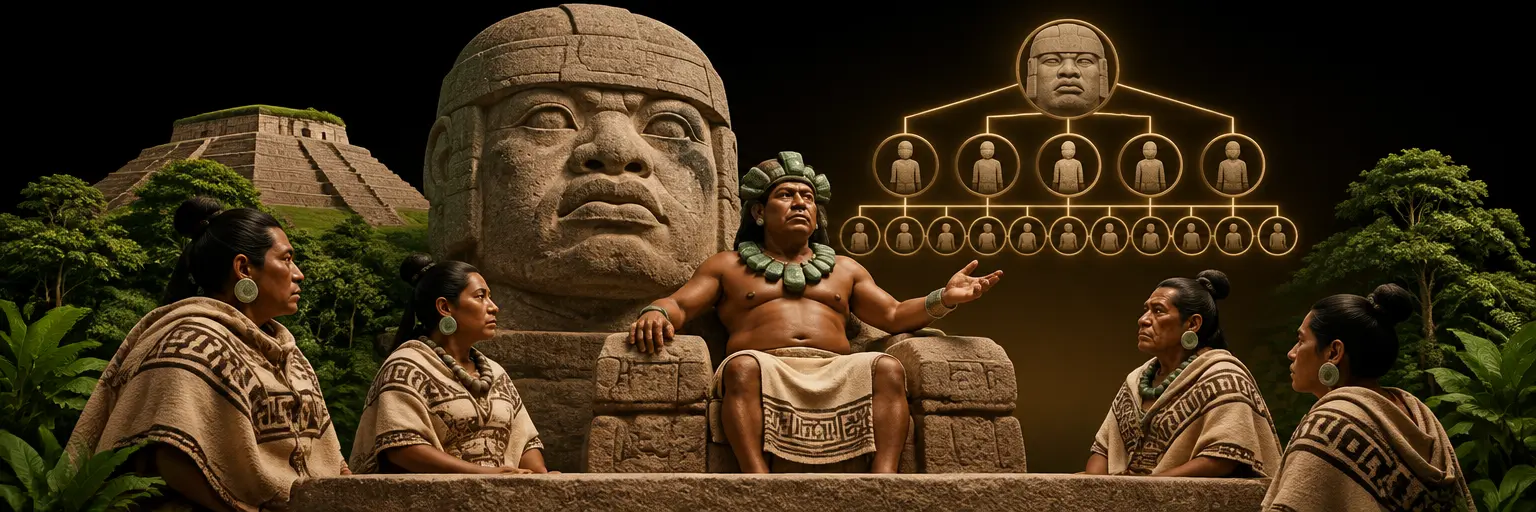
Explore the intricate political structure and governance of the Olmec civilization, often hailed as the “mother culture” of Mesoamerica. This advanced society, flourishing between 1500 and 400 BCE, developed one of the earliest complex state systems in the Americas, characterized by centralized authority, elite rule, and strategic urban centers like San Lorenzo and La Venta. Discover how rulership was intertwined with religious and cosmological power, where leaders were believed to possess supernatural connections, legitimizing their control over resources, labor, and trade networks. The Olmec’s governance model laid the foundational blueprint for later civilizations, including the Maya and Aztec, influencing concepts of kingship, monumental architecture, and social hierarchy. Delve into how this early political organization balanced power, ritual, and administration to sustain large populations and foster unprecedented cultural achievements. Uncover the enduring legacy of Olmec governance, which shaped the political landscape of ancient America, offering a fascinating glimpse into human ingenuity and societal evolution.
Campo_por_completar
Read article
Campo_por_completar
Read article
Campo_por_completar
Read article
Campo_por_completar
Read article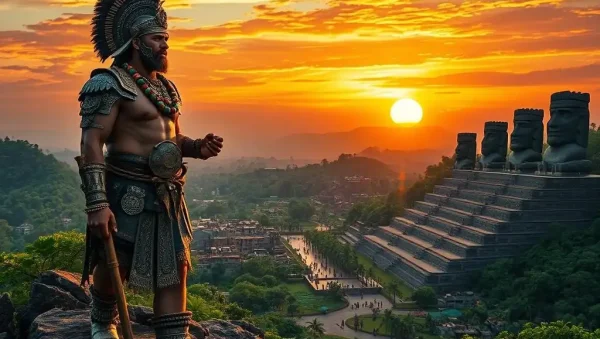
The Olmec civilization expertly employed warfare as a political strategy, utilizing conquest and control to expand their influence and secure resources. This…
Read articleDelve into the intricate political structure and governance of the Olmec Civilization, often hailed as the "Mother Culture" of Mesoamerica. This subcategory uncovers how the Olmecs organized power, leadership, and societal control between 1200 and 400 BCE in the tropical lowlands of modern-day Veracruz and Tabasco, Mexico. From colossal heads to centralized ceremonial centers, explore the mechanisms of authority that influenced later Maya and Aztec political systems.
The Olmec political structure revolved around powerful ceremonial centers like San Lorenzo and La Venta, which functioned as hubs of religious, economic, and administrative power. These sites featured monumental architecture, including earthen mounds, plazas, and the famous colossal stone heads, indicating a highly organized labor force and centralized decision-making. Elites likely controlled resource distribution, trade networks, and ritual calendars, reinforcing their divine mandate to rule.
Governance was not based on a single unified empire but rather on a network of city-states or chiefdoms, each with its own ruler who claimed legitimacy through ancestral ties and supernatural connections. The scale of public works—such as transporting basalt boulders over 60 miles—demonstrates a coercive or persuasive authority capable of mobilizing thousands. This hierarchical model set a precedent for later Mesoamerican states, blending theocratic ideals with pragmatic administrative control.
Olmec society was sharply stratified, with a ruling elite that included rulers, priests, and hereditary nobles at the apex. These elites distinguished themselves through access to exotic goods like jade, obsidian, and serpentine, as well as through distinctive attire, body modification, and elaborate burials. Artifacts such as thrones and figurines depict rulers in commanding poses, often with jaguar motifs symbolizing power and shamanic transformation.
Below the elite were artisans, merchants, farmers, and laborers, whose taxes or tribute funded monumental projects and elite lifestyles. Evidence of workshops and standardized craft production suggests state sponsorship of specialists, while residential patterns at sites show wealth disparities. This stratification was reinforced through ideological systems—ceremonies, mythologies, and calendar systems—that presented social order as cosmologically inevitable, ensuring stability across generations.
Political authority in Olmec governance was intrinsically fused with religion, as rulers were believed to possess supernatural powers and direct communication with deities. The iconic were-jaguar motif—a blend of human and jaguar features—appears on thrones and altars, symbolizing the ruler's shamanic ability to mediate between earthly and spiritual realms. Rituals involving bloodletting, hallucinogens, and human sacrifice likely validated political decisions and agricultural cycles.
This theocratic model meant that governance was not purely secular but a divine mandate, where laws, wars, and tribute demands were framed as celestial orders. Ceremonial centers were oriented to celestial events, and rulers presided over public rituals that reinforced their role as cosmic intermediaries. This fusion of religion and politics created a durable framework that later civilizations, notably the Maya, adopted and adapted, emphasizing the Olmecs' foundational role in Mesoamerican political thought.
Economic governance was a cornerstone of Olmec political structure, as rulers controlled access to critical resources and long-distance trade routes. The Olmecs managed exchange networks stretching from the Gulf Coast to highland Mexico, importing basalt, jade, and cacao while exporting ceramics, rubber, and ceremonial goods. This trade required coordinated state-level diplomacy, storage facilities, and standardized weights or measures, indicating bureaucratic sophistication.
Rulers likely oversaw redistribution systems, storing surplus agricultural produce to support elites, artisans, and laborers during public works. This economic centralization not only funded monumental architecture but also consolidated political power, as dependence on elite-managed trade created social obligations. Wealth derived from trade and tribute enabled leaders to commission monuments that perpetrated their legacy, intertwining economic success with political legitimacy and hereditary succession.
The political structure and governance of the Olmec Civilization left an indelible mark on subsequent Mesoamerican cultures, including the Maya, Zapotec, and Aztec. Concepts such as divine kingship, centralized ceremonial centers, and tribute systems were directly inherited, while the Olmec calendar and writing precursors influenced later intellectual elites. The collapse of Olmec centers around 400 BCE did not erase their political innovations but rather dispersed them through successor states.
Archaeological evidence shows that later polities in the Isthmus and highlands adopted Olmec-style thrones, iconography, and architectural layouts, indicating active political emulation. This legacy suggests that Olmec governance was not merely a primitive precursor but a sophisticated template for regional power. By understanding Olmec political structure, researchers gain insight into the origins of statecraft in the Americas, highlighting how early complex societies negotiated authority, resource distribution, and collective identity.
Olmec rulers maintained control through a combination of religious authority, economic redistribution, and coercive labor management. By claiming divine descent and performing public rituals, they legitimized their rule, while controlling trade and surplus food created dependency. Monumental architecture also served as a display of power, requiring organized labor that reinforced hierarchical command structures.
The Olmecs were not a unified empire but rather a network of independent ceremonial centers, such as San Lorenzo and La Venta, that shared cultural and political traditions. Each center likely governed its own surrounding territory through local elites, though they may have engaged in alliances or rivalries. This decentralized yet culturally cohesive model influenced later Mesoamerican political fragmentation.
Colossal heads, weighing several tons, are believed to represent specific rulers, often wearing helmet-like headgear. They served as political propaganda, projecting the ruler's individual power, lineage, and military or ceremonial achievements. Placed at prominent locations, they reinforced the ruler's presence and legitimacy across the polity, acting as permanent markers of governance.
No evidence exists for a written legal code in Olmec civilization, as their writing system was largely pictographic and poorly deciphered. Governance likely relied on oral customs, ritual dictates, and the ruler's pronouncements, which were considered divinely inspired. This contrasts with later Aztec and Maya systems that developed more codified legal and administrative records.
The Maya directly adopted several Olmec political features, including divine kingship, ceremonial pyramid complexes, and the use of iconography to legitimize rule. The Olmec emphasis on shamanic rulers and celestial alignment in architecture became foundational to Maya city-states. Additionally, Olmec trade networks and tribute patterns laid groundwork for Maya economic administration and inter-polity dynamics.