The Role of Agriculture in Olmec Social Structure and Economy
🌱 Olmec agriculture and society were intricately linked, forming the backbone of their economy and social hierarchy. The cultivation of staple crops…
Read article
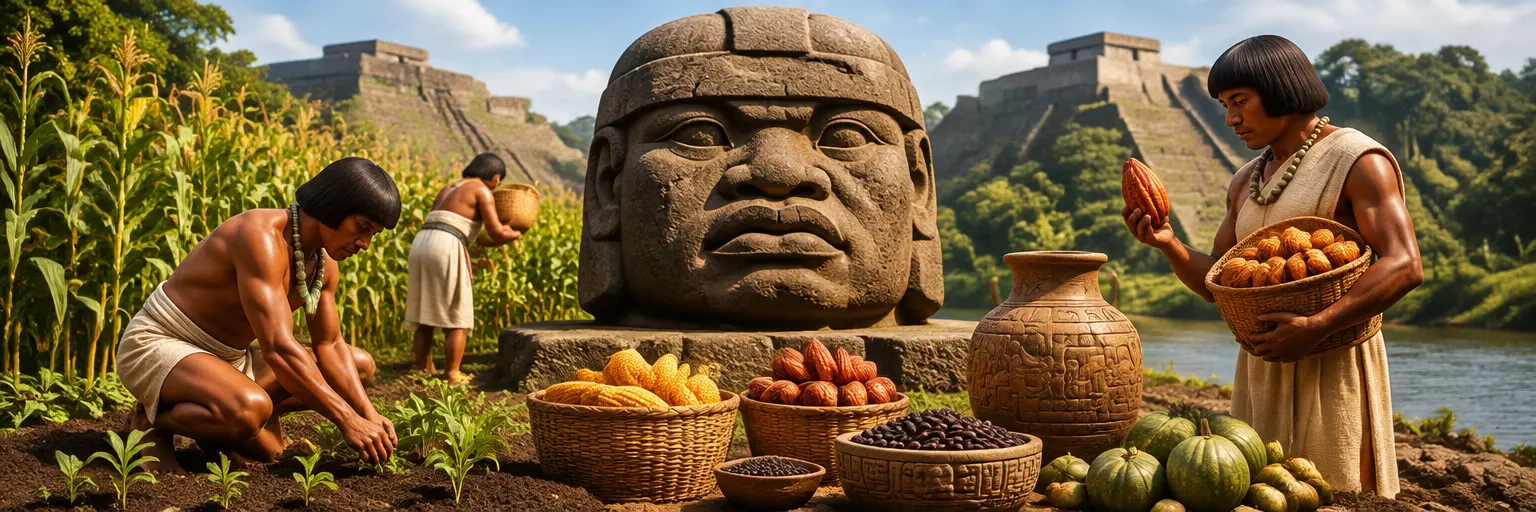
Discover how the Olmec civilization, often hailed as the “Mother Culture” of Mesoamerica, masterfully intertwined agriculture and economy to build a thriving society along Mexico’s Gulf Coast. From innovative farming techniques like raised-field agriculture and riverine irrigation that supported dense populations to a robust trade network exchanging jade, obsidian, and rubber, the Olmecs laid foundational economic systems that influenced later cultures. Their agricultural surplus fueled specialized craft production, while their strategic control of key resources and trade routes established early commercial hubs. Explore how this ancient people’s symbiotic relationship with the land and market shaped their social hierarchy, political power, and enduring legacy—a story of resilience and ingenuity that echoes across centuries.
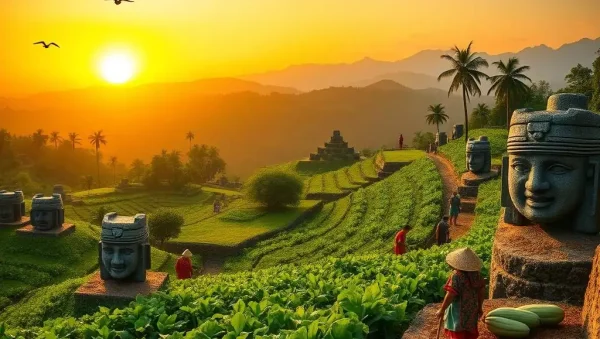
🌱 Olmec agriculture and society were intricately linked, forming the backbone of their economy and social hierarchy. The cultivation of staple crops…
Read article
Campo_por_completar
Read article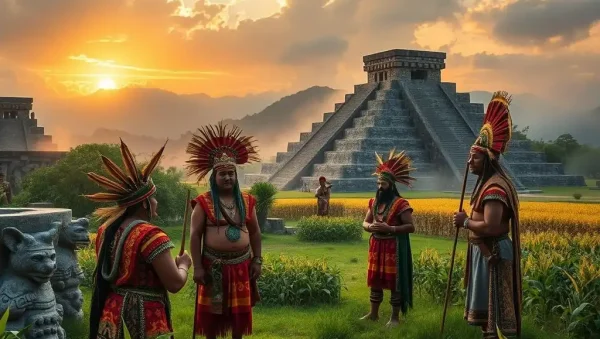
🌱 The Olmec agricultural rituals significance is deeply intertwined with their reverence for nature, reflecting the profound connection between spirituality and farming.…
Read articleExplore how the Olmec, often called the "mother culture" of Mesoamerica, engineered a thriving economy through innovative farming techniques, resource management, and long-distance trade. This subcategory delves into the maize-based agriculture, wetland cultivation, and exchange networks that fueled monumental construction and social stratification, providing a foundation for later civilizations like the Maya and Aztec.
The Olmec economy hinged on maize (corn), beans, squash, and chili peppers, cultivated using slash-and-burn methods and raised-field agriculture in the floodplains of the Coatzacoalcos River basin. Their strategic use of natural levees and seasonal flooding allowed for high-yield harvests without complex irrigation systems. Archaeological evidence from sites like San Lorenzo and La Venta shows cobs grew progressively larger through selective breeding, indicating advanced agronomic knowledge. This surplus production wasn’t just for subsistence; it fed artisans, priests, and laborers who constructed colossal basalt heads and earthen pyramids.
Beyond staples, they grew cacao (the source of chocolate), cotton for textiles, and rubber from latex trees—used for ceremonial balls and adhesives. Wetland raised beds, known as "chinampas" in later times, increased arable land and reduced risk of drought. This diversity created a resilient food system, ensuring that even with population densities reaching 200 per square kilometer in core areas, the society sustained complex political structures. The success of these farming methods directly correlated with the accumulation of wealth, enabling elites to control surplus and redistribute it to maintain loyalty, thus laying the economic groundwork for urbanization.
Olmec economy was not self-contained; it thrived on extensive trade routes stretching from the Gulf Coast to central Mexico and the Pacific coast. They imported obsidian from the highlands (Guatemala and central Mexico) for sharp cutting tools, while exporting finished jade ornaments, serpentine figurines, and stingray spines used in bloodletting rituals. The famous basalt columns for monumental thrones came from the Tuxtla Mountains, transported over 100 kilometers by rafts and rollers—an organizational feat that required labor coordination and surplus food to feed workers. Ports like Tres Zapotes served as hubs where Gulf Coast salt, marine shells, and fish were exchanged for inland commodities.
This trade was not simply barter; it involved standardized exchange values, likely using cacao beans as a proto-currency. Long-distance exchange fostered political alliances and cultural diffusion, spreading Olmec artistic motifs like the dragon and were-jaguar across Mesoamerica. The presence of non-local goods in elite burials indicates that access to exotic items reinforced social hierarchy, while commoners accessed local materials for daily tools. The efficiency of these networks allowed the Olmec to amass wealth beyond subsistence, funding craft specialization and public works, and establishing a commercial template that later civilizations emulated, from Teotihuacan to the Postclassic Aztec pochteca traders.
Olmec economy supported full-time specialists, including lapidaries who carved jade into masks, ear spools, and beads, requiring superior hardness and grinding skills. Excavations at San Lorenzo uncovered workshop floors with raw chunks of jade and chert, signaling controlled production zones. Ceramic production also became standardized, with fine orange and gray wares used for bowls and figurines, sometimes fired in two-chamber kilns. Textile weaving, basket making, and featherwork met both utilitarian and ceremonial demands, with cotton textiles dyed using indigo and cochineal insects. These crafts generated surplus trade goods, enhancing the regional export portfolio.
Labor organization was cyclical; during dry seasons, able-bodied men rotated into construction crews for earthworks or monument transport, while farming resumed after rains—a corvée system managed by elites. This ensured no single project depleted the workforce. The scale is evident at La Venta’s Complex A, involving thousands of cubic meters of clay fill. Such coordination implies a centralized authority, possibly a hereditary chief, who distributed food rations, pottery, and obsidian blades to laborers. This integration of craft, agriculture, and public works created a self-reinforcing economic cycle: surplus fed specialists, specialists produced prestige goods, prestige goods attracted trade, and trade brought wealth back to reinforce political power.
The Olmec economy produced significant inequality, visible in burial practices and residential architecture. Elite burials at La Venta contained jade mosaics, iron-ore mirrors, and copious offerings, while commoner internments had few pottery vessels. Elevated residential mounds with stone retaining walls contrast with simple clay-and-pole houses of farmers. This stratification was legitimized through ceremonial centers—like the colossal heads depicting rulers—that reified the elite's connection to supernatural forces. Economic surplus enabled elites to commission monuments, theoretically redistributing wealth, but in practice consolidating power through control over exotic goods and labor.
Access to high-value resources was restricted; cacao, jade, and ritual items were largely reserved for rulers, priests, and nobility. Commoners, however, owned productive land and gardens, selling surplus at local markets—evidence of a dual economy: state-administered prestige trade plus private household exchanges. This duality fostered social mobility; skilled crafters could attain some wealth, but ultimate economic power remained with the throne. The visual language of monuments and figurines, depicting nobles in ornate attire, reinforced that economic status was divinely sanctioned. This stratification sets a precedent for later Mesoamerican states, where tribute and taxation became institutionalized, but the Olmec model—based more on kin-based reciprocity than coercive extraction—persisted in modified form for centuries.
Olmec agriculture, while advanced, had environmental vulnerabilities. Dependence on flooding required stable river courses; heavy sedimentation from deforestation led to periodic floods around 1000 BCE, damaging raised fields. The massive demand for wood for fires and construction caused soil erosion and lowered crop yields in hinterlands. Additionally, overhunting for deer and tapir, plus draining wetlands for farm, reduced biodiversity. Isotopic studies of Olmec skeletons show increased maize consumption with decreased animal protein, indicating dietary homogenization—a sign of resource stress. These ecological pressures likely contributed to the decline of San Lorenzo around 900 BCE, with power shifting to La Venta.
Yet the Olmec legacy includes adaptive resilience. They developed slash-and-mulch techniques, where vegetation was cut and left to decompose, improving soil organic matter without burning. They rotated fields and intercropped maizes with legumes to fix nitrogen. This knowledge buffer slowed catastrophe but couldn’t prevent eventual polities from collapsing due to warfare and resource exhaustion. Understanding these limits provides modern parallels: precapitalist economies can outstrip local ecosystems, foreshadowing classic Maya disintegration. For readers, this subcategory offers insights into how ancient societies balanced innovation with ecological risk, and why sustainable resource management remains as critical today as it was 3,000 years ago.
The Olmec relied on maize as their staple, along with beans, squash, chili peppers, and amaranth. They also cultivated cacao, cotton, and rubber trees, using raised fields and floodplain farming to enhance yields. Crop diversification allowed them to support dense populations and complex social structures.
They maintained overland and riverine trade routes, exchanging local goods like jade, basalt, and salt for obsidian, shells, and exotic feathers. Trade was managed by elites but involved commoner porters and merchants. Cacao beans likely served as a medium of exchange, facilitating long-distance commerce.
No coinage existed, but cacao beans functioned as a currency for high-value transactions. Local markets operated in villages, while elite-controlled prestige goods circulated through gift exchange and tribute. Thus, they utilized a mixed system of reciprocity, redistribution, and primitive barter.
Environmental degradation, including soil exhaustion, deforestation, and severe flooding, reduced agricultural yields. This undermined surplus production, weakened elite authority, and likely triggered internal rebellion or warfare. Shifts in river courses forced relocation, contributing to the fall of major centers by 400 BCE.
The Olmec pioneered raised-field farming, long-distance trade, and craft specialization, which later Maya, Zapotec, and Teotihuacan cultures adopted. Their template of surplus-driven urbanization, elite control of exotic goods, and ritual economy persisted for millennia, making them the foundational economic model for Mesoamerica.