European Contact and Conquest: The Olmec Legacy Under Pressure
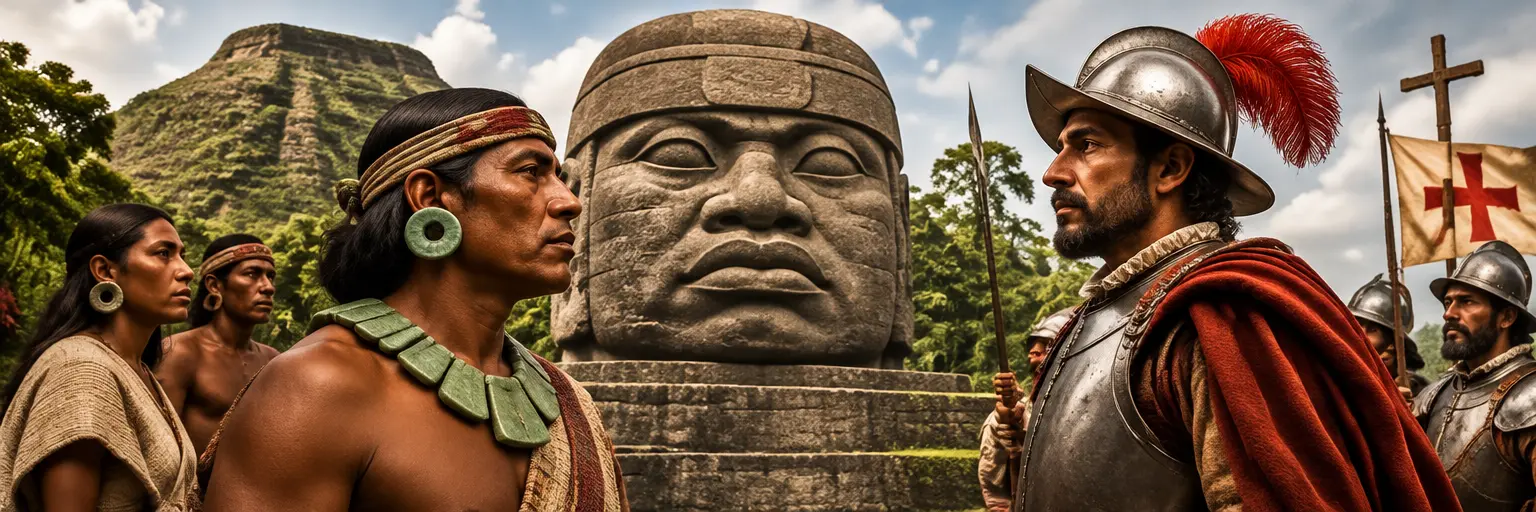
While the Olmec civilization flourished between 1200 and 400 BCE—long before European arrival—the term "European Contact and Conquest" within this subcategory explores the *posthumous* impact of Spanish colonization on Olmec sites, artifacts, and descendant communities. This page examines how 16th-century conquest disrupted indigenous knowledge systems, led to the misidentification of colossal heads, and triggered the looting of ancient monuments. Here, you’ll uncover the complex interplay between pre-Columbian heritage and colonial-era destruction, including how modern archaeology has pieced together Olmec history from fragmented, colonially-scattered evidence.
🗺️ How Spanish Colonization Altered Olmec Site Preservation
When conquistadors arrived in the Gulf Coast region (modern Veracruz and Tabasco), they unknowingly encountered the remnants of the Olmec heartland—massive earthen mounds, buried jade masks, and throne-like altars. However, colonial land redistribution for cattle ranching and sugarcane plantations led to the flattening of ceremonial centers like La Venta, whose clay pyramids were recycled as fill for colonial roads. Additionally, Spanish religious zeal led to the destruction of ruin mounds perceived as "pagan" monuments. This meant that by the time 19th-century explorers documented Olmec sites, only a fraction of original structures remained preserved beneath tropical vegetation and colonial-era modifications.
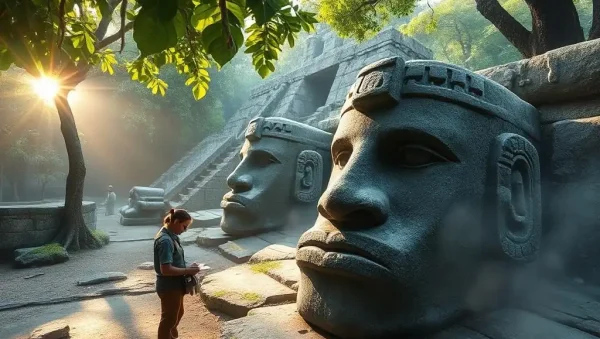
Today’s archaeologists rely on colonial land records and 16th-century chronicles to reconstruct mound shapes and alignments that were erased. For example, the 1590 account by Fray Juan de Torquemada mentions "huge stone heads" near Tres Zapotes, but he misattributed them to the Aztec or "giants." This colonial-era bias delayed recognition of Olmec uniqueness for centuries, proving that even conquest’s interpretive layer shaped how we understand this ancient culture. Visitors to the subcategory will also learn how modern remote sensing is now uncovering colonial pit-looting pits that scattered Olmec pottery across Spanish haciendas.
🛡️ The Role of Colonial Extractive Economies in Artifact Loss
Spanish colonial demand for rubber (from regional trees) and vanilla drove infrastructure projects that inadvertently exposed Olmec artifacts—but without scientific context. Peasants digging drainage channels often unearthed nephrite axes and serpentine figurines, which were melted down or sold as low-grade jade to colonial goldsmiths. The most tragic loss was the systematic crushing of basalt colossal heads for road-building ballast between 1560 and 1700, as documented by hacienda inventories listing "molejones" (millstones) cut from ancient sculpture. Consequently, fewer than 20 intact heads survive from what may have been dozens, per modern quarry analysis.
This subcategory also details how the mita labor system forced indigenous communities to quarry new basalt while ignoring older Olmec quarries, creating a false historical narrative that Olmec stonework was "impossible" for local people. By cross-referencing colonial lexicons against Olmec iconography, researchers have identified motifs in Spanish colonial textiles that were copied from looted Olmec seals—an underreported pathway of cultural appropriation. You’ll find downloadable maps showing colonial-era roads overlaying Olmec causeways, revealing how conquest physically overwrote pre-Columbian infra-structure with Spanish imperial grid patterns.
📜 Misinterpreting the Olmec: Colonial and Post-Colonial Narratives
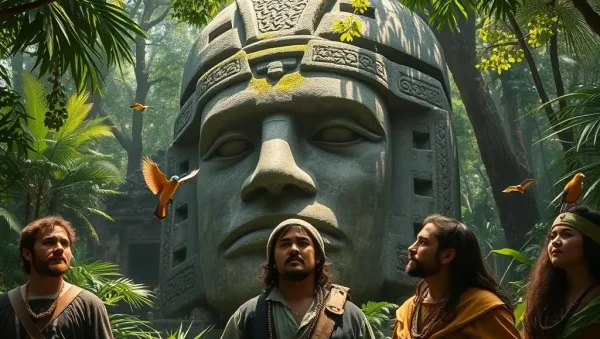
European chroniclers such as Bernardino de Sahagún cataloged Aztec references to an older "Olmeca" people but incorrectly described them as nomadic barbarians from the north. This false etymology entered Spanish historiography, and by the 1600s, Olmec colossal heads were publicly displayed as "Ethiopian relics" in colonial museums, perpetuating racist tropes. In the 18th century, Mexican criollo scholars, influenced by Enlightenment classifications, reclassified Olmec as a "decadent" offshoot of Maya—an error only corrected in the 1940s with stratigraphic excavations at San Lorenzo. This subcategory provides a critical historiography: how conquest-era linguistic suppression erased Olmec language remnants, pushing later researchers to rely solely on material culture.
Furthermore, the Bourbon Reforms (1700s) led to state-sponsored removal of Olmec sculptures to Mexico City, where they were arranged in "Aztec-themed" plazas, further mangling public perception. Through primary-source letters from colonial administrators, you’ll see how they demanded indigenous workers describe Olmec carvings, and their answers were deliberately mistranslated to fit biblical flood myths. In short, this section demonstrates that European contact did not merely destroy Olmec physical remains—it also corrupted their historical memory, making modern decolonial archaeology an essential corrective force.
🏛️ Colonial Looting Networks and the Modern Black Market
The 16th-century Spanish crown granted "treasure rights" to encomenderos who could legally excavate indigenous burials for gold. While Olmec sites had less gold than Aztec ones, the search for it led to the extraction of jade masks, which were shipped to Spain as "curiosities." After Mexican independence (1821), diplomatic gifts of Olmec figurines to European museums encouraged a colonial-era looting pipeline that lasted through the Porfiriato (1876–1911). This page analyzes how steamship manifests from Veracruz to Europe listed "stone idols" alongside agricultural exports—a paper trail modern customs agencies now use to trace looted artifacts back to colonial-era villas.
Today, the subcategory examines restitution efforts by Mexican institutions to recover Olmec pieces held in Spanish, French, and British private collections—many acquired under dubious colonial treaties. For example, the “Olmec jaguar god” statue at the British Museum was purchased in 1864 from a Spanish noble who obtained it during the royalist era without provenance. By understanding these networks, readers gain practical knowledge of how to identify colonial-era molds vs. authentic Olmec carvings in auction catalogs. This H3 section also presents interactive timelines linking colonial decrees to spikes in artifact theft, offering a chronological map that helps museums publish ethical provenance statements.
🧩 Descendant Communities and Colonial Legal Legacies
Modern indigenous groups (Nahuatl, Popoluca, Zoque) in the Olmec heartland still face the consequences of colonial-era land tenure systems that alienated them from ceremonial sites. Spanish ejido laws awarded large estates to criollo elites, barring indigenous access to ritual springs and basalt outcrops—a restriction that persisted into the 20th century. This subcategory highlights how colonial *cofradías* (religious brotherhoods) absorbed Olmec-era ceremonial cycles, blending them with Catholic feast days, thereby preserving fragmented rituals but under Spanish supervision. Legally, the 1972 Federal Law on Archaeological Monuments finally recognized indigenous collective rights, but colonial-era claims still complicate ownership disputes at Tres Zapotes.
In response, the website explores community-driven archaeology where descendant elders partner with researchers to re-trace colonial survey lines that cut through Olmec plazas. Oral histories record that conquistadors forced locals to bury their own ceremonial drums under colonial chapels—a practice verified by excavations after 2010. By emphasizing consent and repatriation, the subcategory shows how decolonizing methodologies can repair historical injustices. Readers will find practical guidelines for how museums can consult with these communities, not just as informants but as co-curators of Olmec heritage, ensuring that the conquest’s legal shadows no longer erase living connections.
Frequently Asked Questions
Did the Spanish ever directly encounter the Olmec civilization?
No—the Olmec culture had vanished by about 400 BCE, over 1,500 years before Spanish arrival. However, the Spanish encountered their ruined cities and artifacts. They misidentified these as Aztec, Toltec, or the work of "giants," which gravely distorted early historical accounts. This subcategory clarifies that "contact" applies to colonial-era interactions with Olmec *material remains*, not living Olmec people.
How did colonial logging affect Olmec sites?
Spanish demand for mahogany and cedar led to slash-and-burn clearing of tropical forests covering Olmec ceremonial centers. This exposed buried monuments to erosion but also made them visible for looting. Colonial logging trails inadvertently cut through site plazas, causing structural damage. Modern LiDAR scans now reveal stump pits and log skid marks that are actively erasing Olmec basalt alignments.
Are there any Olmec artifacts in Spain from colonial times?
Yes—several basalt heads and jade masks were shipped to Spain as royal gifts or curiosity objects during the 16th–18th centuries. For example, the Museo de América in Madrid holds a small Olmec-style granite figure acquired in 1789. However, exact provenance is often uncertain because colonial documents list them as "pagan idols" without site-specific records.
Why did the Spanish call Olmec sculptures "Ethiopian heads"?
Sixteenth-century chroniclers noting the thick lips and wide noses of colossal heads applied racial stereotypes from Africa, stating they resembled "Ethiopian" faces. This racist labeling ignored indigenous oral history. The misnomer persisted into some museum catalogs until the 1940s, when archaeological evidence confirmed that the carvings represent Olmec kings, not Africans.
Can modern indigenous communities reclaim colonial-era looted Olmec objects?
Yes, under Mexican federal law (1972 and 1985 revisions), all pre-Columbian artifacts are national property. However, private foreign collections acquired before 1972 are legally murky. Community groups now lobby for voluntary repatriation via diplomatic channels. Only two colonial-era looted pieces have been returned to Mexico since 2010—one from Spain and one from France—marking a slow but positive trend.