Agricultural Innovations of the Olmec: Techniques That Shaped Mesoamerican Farming
Campo_por_completar
Read article
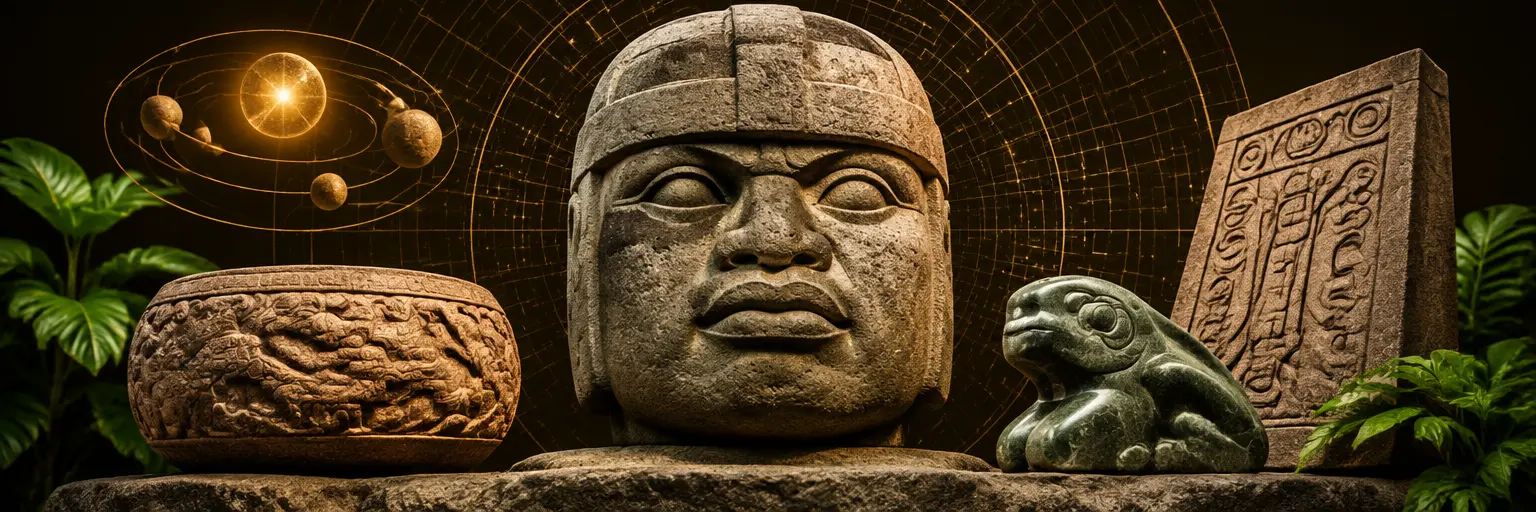
Discover the groundbreaking scientific achievements of the Olmec civilization, often hailed as the “mother culture” of Mesoamerica. These ancient innovators mastered advanced astronomy, creating precise calendars and aligning their ceremonial centers with celestial events. Their deep understanding of mathematics, including the concept of zero, laid the foundation for later Maya and Aztec knowledge. Olmec engineers and artisans developed sophisticated hydraulic systems for water management, while their monumental basalt sculptures, like the colossal heads, showcase remarkable engineering and quarrying skills. Explore how their innovations in timekeeping, agriculture, and material science not only shaped their own society but also left an enduring legacy across the Americas. Uncover the roots of indigenous scientific thought and its profound impact on the world.

Campo_por_completar
Read article
Campo_por_completar
Read article
Campo_por_completar
Read articleExplore the extraordinary scientific accomplishments of the Olmec, often hailed as the "mother culture" of Mesoamerica. This subcategory delves into their pioneering innovations in astronomy, mathematics, calendrics, and engineering that laid the intellectual foundation for later civilizations like the Maya and Aztec. Discover how these ancient engineers and sky-watchers shaped human understanding with remarkable precision.
The Olmec were masterful observers of the night sky, using natural landmarks and constructed alignments to track the movements of the sun, moon, and planets. They identified key zenithal passages and solstices, which guided agricultural cycles and ritual calendars. Their astronomical knowledge was encoded in monumental architecture, such as the complex at San Lorenzo, where specific orientations correspond to celestial events, proving an advanced empirical methodology.
This scientific foresight allowed the Olmec to predict eclipses and seasonal shifts with surprising accuracy, using a base-20 numerical system to record time. By integrating celestial observations with terrestrial planning, they created a cohesive worldview where science and spirituality intertwined. Their legacy in astronomy directly influenced later Mesoamerican codices and observatories, making their contributions essential to understanding pre-Columbian science.
Within their scientific toolkit, the Olmec developed a sophisticated vigesimal (base-20) counting system, which included the concept of zero—a revolutionary abstract idea that enabled complex calculations. This mathematical prowess was applied to create a cyclical calendar system, likely the precursor to the Maya Long Count. They tracked lunar cycles, solar years, and Venus’s synodic period, demonstrating an integrated understanding of numerical relationships and time-reckoning.
Their calendars did not operate in isolation; they merged with ritual and governance to legitimize rulers and plan monumental construction. The Olmec’s use of bar-and-dot notation for numbers and their zero placeholder highlight a logical rigor unprecedented for their era. These mathematical achievements enabled precise land surveying, resource allocation, and tribute tracking, sustaining large urban centers. For modern researchers, these artifacts reveal a culture deeply invested in quantitative reasoning as a tool for societal advancement.
Scientific innovation among the Olmec extended to hydraulic engineering, where they constructed extensive drainage systems and artificial reservoirs. Excavations at San Lorenzo uncovered basalt stone conduits, carved with precise channels, that directed rainwater away from elite residences and ceremonial areas. These systems prevented flooding, managed seasonal water scarcity, and supported intensive agriculture, showcasing an early understanding of fluid dynamics and urban planning.
Additionally, the Olmec built earthen mounds and raised fields that optimized water retention and soil fertility, a technique that sustained dense populations. Their engineering decisions were informed by empirical observation of local hydrology and topography, underscoring a pragmatic approach to environmental challenges. This mastery of water resources not only ensured survival but also enabled the development of monumental public works, demonstrating that scientific principles were applied directly to improve quality of life and social stability.
Although less documented, Olmec scientific achievements included rudimentary medical knowledge and surgical practices. Archaeological evidence suggests they used natural antiseptics like herbal resins and performed dental modifications, including filing and inlaying stones, which required knowledge of oral anatomy and pain management. They also utilized medicinal plants, such as tobacco and hallucinogenic compounds, in ritual healing, blending empirical remedies with spiritual belief systems.
Their understanding of human physiology, though limited by ancient context, reflected a systematic approach to treating wounds, infections, and chronic conditions. Skeletal remains show evidence of healed fractures and trepanation—a surgical procedure to relieve intracranial pressure—indicating successful postoperative care. This medical science was likely passed down through specialized practitioners, forming an early professional class. While not as advanced as later Mesoamerican medicine, these practices illustrate a proactive and observation-based approach to health that deserves recognition.
While the Olmec did not develop full metallurgy, they excelled in material science, particularly the manipulation of stone and minerals. They sourced and transformed basalt, jade, and serpentine, requiring vast knowledge of geology, quarrying, and abrasion techniques. The colossal basalt heads, carved without iron tools, demonstrate advanced lithic technology and a keen understanding of rock fracture patterns. They also developed high-temperature kilns for ceramics, using controlled firing to produce durable and decorative pottery.
Furthermore, the Olmec pioneered early use of iron ore mirrors and magnetite, which required polishing to precision and likely had ritual and scientific uses, possibly for reflection in astronomical observations. Their expertise in identifying and exploiting mineral resources reveals a sophisticated grasp of chemistry and material properties. This empirical science allowed them to create tools, art, and infrastructure that enhanced societal complexity, leaving a technical heritage that influenced subsequent civilizations’ craft and engineering.
The Olmec tracked celestial cycles to plan agricultural planting and harvesting, schedule religious ceremonies, and align architectural structures with solstices and zenithal passages. Their observations were integrated into a ritual calendar, ensuring that critical farming and societal events occurred at optimal times, demonstrating a practical application of science to daily survival and governance.
While direct evidence is sparse, the Olmec’s base-20 numerical system and bar-and-dot notation likely included a placeholder for zero, as later Maya systems inherited from them. This abstract concept allowed for complex calculations and positional math, marking a foundational scientific leap in the Americas. Their influence is widely accepted among archaeologists.
Excavations at San Lorenzo uncovered extensive basalt drainage conduits, carved with U-shaped channels, which collected and redirected rainwater. These systems, alongside earthen platforms and reservoirs, demonstrate deliberate planning for flood control and water storage. Evidence of raised fields also indicates that the Olmec managed water for intensive agriculture.
Yes, skeletal evidence and ceramic figurines suggest the existence of specialized healers. They practiced trepanation, dental modification, and used herbal remedies. While written records are absent, the successful healing of fractures and complex surgeries implies trained individuals with empirical knowledge of anatomy and sanitation, forming an early medical profession.
Olmec mastery of stone carving and mineral use established techniques like abrasive polishing and quarrying that the Maya and Aztec later adopted and refined. Their development of ceramic firing and iron ore mirrors also set technical precedents. This material knowledge became a shared technological language across Mesoamerica, enabling monumental art and infrastructure.