Artistic Innovations of the Olmec: Pioneers of Mesoamerican Aesthetics
Campo_por_completar
Read article
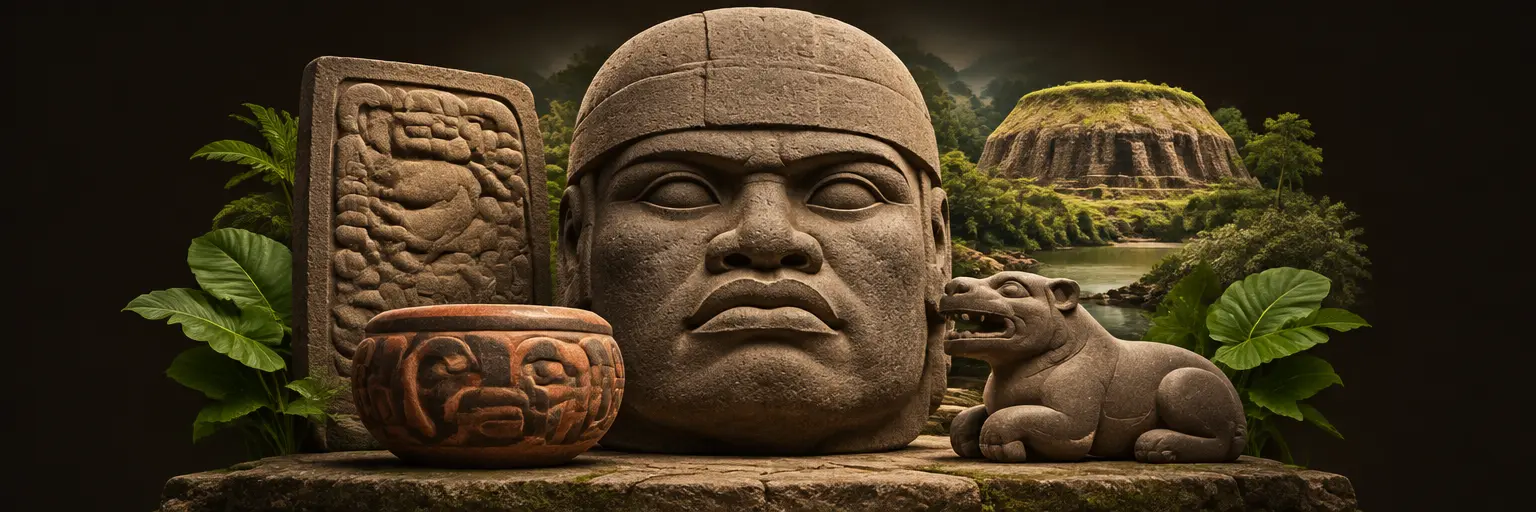
The Olmec civilization, often hailed as the “Mother Culture” of Mesoamerica, left an indelible mark on art and culture that still captivates historians and enthusiasts alike. This subcategory delves into the colossal stone heads, intricate jade carvings, and ceremonial artifacts that define their rich aesthetic legacy. Discover how the Olmecs pioneered artistic styles—from expressive figurines to iconic were-jaguar motifs—that influenced later Maya and Aztec traditions. Unearth the symbolism embedded in their sculptures, altars, and stelae, reflecting a complex society with deep spiritual beliefs. Whether you’re a student of ancient history or an art lover, this curated content illuminates the innovative craftsmanship and cultural narratives that make Olmec art a cornerstone of pre-Columbian heritage. Explore their world through vivid descriptions and expert insights, connecting the past’s creative genius to today’s understanding of indigenous civilizations.

Campo_por_completar
Read article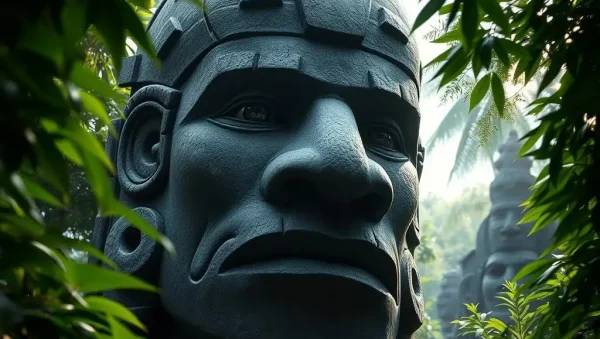
The exploration of Olmec sculpture techniques and themes reveals the profound artistry and cultural significance behind these ancient works. This analysis highlights…
Read article
Campo_por_completar
Read article
Exploring the significance of Olmec ritual objects reveals their vital role in religious practices and societal structure. These artifacts not only reflect…
Read article
Campo_por_completar
Read articleThe Olmec civilization, often hailed as the “Mother Culture” of Mesoamerica, left an indelible mark through its profound artistic expressions and cultural innovations. This subcategory delves into the intricate world of Olmec artistry, from colossal stone heads to intricate jade carvings, and explores the religious, social, and ceremonial life that shaped their society. Here, you’ll uncover how their visual language influenced later Maya and Aztec traditions, making this a vital resource for students, historians, and enthusiasts of pre-Columbian heritage.
The most iconic Olmec artifacts are the colossal basalt heads, each weighing up to 40 tons and standing over 3 meters tall. These sculpted portraits, likely representing powerful rulers, feature distinct facial features, helmet-like headgear, and individualized expressions. Carved from volcanic stone transported over 80 kilometers, their creation demanded sophisticated engineering and communal labor. Visitors can expect explanations of the quarrying, carving techniques, and the symbolic significance of these heads as markers of political authority and ancestral veneration.
Beyond the heads, Olmec artists produced monumental thrones, altars, and stelae depicting mythological scenes, were-jaguars, and figures in shamanic transformation. These reliefs provide a window into their cosmology, where rulers acted as intermediaries between humans and supernatural forces. By examining these works, you’ll grasp the technical mastery and ideological power embedded in stone, revealing a civilization that prioritized communal identity, ritual performance, and the legitimization of elite rule through enduring public art.
Olmec lapidary artistry reached its zenith in the carving of jadeite, a stone they valued more than gold for its green hue, symbolizing water, fertility, and life itself. Their jade figurines, masks, and celts display extraordinary precision, using abrasives and tubular drills to create intricate details. Central to this imagery is the were-jaguar—a hybrid of jaguar and human—which recurs across Olmec art, representing rain deities, shamanic power, and the transformation of rulers into spiritual beings. Expect insights into the sourcing of jade from distant Guatemala and its role in trade networks.
These miniature masterpieces were not mere ornaments; they served as ritual offerings, burial goods, and marks of elite status. The were-jaguar motif, with its snarling mouth and almond-shaped eyes, was likely a clan emblem or a mythic ancestor. By studying the iconography, you’ll learn how Olmec artists encoded complex narratives about creation, rulership, and the natural world into compact objects. This section also clarifies how jade’s hardness demanded innovative techniques, showcasing the Olmec as pioneers in precision lapidary work that later cultures emulated.
Olmec pottery and clay figurines offer a more intimate view of everyday life, religious practice, and social roles. Their ceramics include vessel types used for cooking, storage, and ritual feasting, often embellished with incised motifs, rocker-stamping, and appliqué figures. Hollow baby-faced figurines, found in household and offering contexts, are particularly striking, possibly representing infants, ancestors, or supernatural beings. This section highlights the diversity of forms, from simple utilitarian pots to elaborate effigy jars shaped as animals or deities.
Beyond aesthetics, these artifacts reveal dietary habits, agricultural practices, and the organization of craft production. Figurines depict individuals in elaborate attire, headdresses, and body paint, indicating status differentiation and ceremonial roles. They also show women in domestic scenes, men in ritual acts, and the prominence of maize—a staple crop. By examining these pieces, you’ll appreciate the Olmec’s ability to translate daily experiences into durable art, providing a bridge between the monumental and the mundane. Such objects also suggest that art was not confined to elites but permeated community life.
The Olmec built earthen mounds and plazas at hubs like San Lorenzo and La Venta, creating planned ceremonial centers that served as sites for public rituals, astronomical observation, and political gatherings. Their architecture featured pyramid-like mounds, sunken courtyards, and aligned orientations, often following cardinal directions or celestial events. This subcategory explains the construction methods, including layered clay fills and basalt drainage systems, which prevented erosion and demonstrated advanced hydraulic engineering. You’ll also learn about the buried offerings of jade, serpentine, and pottery placed beneath these structures as dedicatory rituals.
These centers were not cities in the modern sense but pilgrimage nodes that unified dispersed populations. The layout of La Venta, with its red clay floors and mosaic pavements, reflects a cosmology where the center symbolized the axis mundi. Ritual practices included bloodletting, hallucinogenic rituals, and the disposal of sculpted monuments in special pits. By exploring this architecture, you’ll see how the Olmec manipulated space to reinforce social hierarchy, collective identity, and sacred narratives—a blueprint that shaped later Mesoamerican urban planning.
The Olmec are credited with some of the earliest known writing and calendrical systems in the Americas, though their scripts remain partially undeciphered. Artifacts like the Cascajal Block, dated to 900 BCE, bear 62 symbols that may represent phonemes or logograms. Additionally, the “Long Count” calendar, later perfected by the Maya, likely has Olmec roots, as evidenced by carved dates on stelae and monuments. This section examines these artifacts, their possible meanings, and the debate over whether the Olmec truly invented writing or influenced neighboring groups like the Epi-Olmec.
Iconographic motifs—such as the “Olmec dragon,” the “bird monster,” and the “maize god”—appear across media, suggesting a shared symbolic lexicon. These figures represent cosmic forces, agricultural cycles, and royal lineages. By analyzing the syntax of these images, researchers interpret mythological narratives and ritual calendars. This facet is crucial for understanding how the Olmec codified knowledge, enabling the transmission of astronomical, agricultural, and political information. Expect a critical evaluation of evidence, including recent excavations that push back the origins of Mesoamerican literacy and timekeeping to this early era.
Olmec art and culture did not vanish but were adaptively inherited by the Maya, Zapotec, and Aztec civilizations. Iconographic elements like the feathered serpent, the jaguar deity, and the use of jade in royal regalia appear prominently in later periods. Architectural principles of ceremonial plazas, pyramids, and ball courts became hallmarks of Mesoamerican urbanism. This section traces these continuities, showing how the Olmec’s artistic grammar formed a foundational vocabulary for later political and religious expression.
Moreover, the Olmec’s emphasis on kingship, shamanic rulership, and divine ancestors set precedents for royal iconography across Mexico and Central America. The concept of the “earth monster,” the rain god Chaac, and the Maya’s Hero Twins echo Olmec prototypes. Through comparative analysis, you’ll see how trade routes facilitated the spread of Olmec-style goods and ideas over 1,000 years. This perspective positions the Olmec not as a remote curiosity but as the cultural bedrock of Mesoamerica, making their art crucial for understanding the entire region’s development.
The most famous are the colossal stone heads, eighteen discovered so far, each weighing up to 40 tons. They depict individual rulers with unique facial features and helmets. These heads were carved from volcanic basalt and likely served as political propaganda, reinforcing the ruler’s divine authority and legacy.
The were-jaguar represents a hybrid of a jaguar and a human, symbolizing shamanic power, rain, and the transformation of rulers into deities. It likely reflects a myth of a divine union between a woman and a jaguar. This motif pervades Olmec art, signaling the supernatural connection of elites.
Evidence suggests they had an early form of writing, as seen on the Cascajal Block dating to 900 BCE. While not fully deciphered, it contains signs that may represent language. The Olmec also likely developed the Long Count calendar that the Maya later refined, making them pioneers in Mesoamerican literacy.
They flourished along the Gulf Coast of Mexico, primarily in present-day Veracruz and Tabasco. Their major sites include San Lorenzo, La Venta, and Tres Zapotes. This tropical lowland region provided abundant resources, including rubber, obsidian, and riverine transportation, enabling their cultural flowering.
They used basalt and other volcanic rocks for large sculptures, jadeite and serpentine for small precious objects, and clay for pottery and figurines. They also worked with obsidian, shell, and bone. These materials were often imported via long-distance trade, showing their extensive networks and technical skill.