European Chronicles: The First Encounters with Toltec Civilization
🌍 The article delves into the Toltec civilization encounters history, unveiling the complexities of early European interactions with this remarkable culture. Discover…
Read article
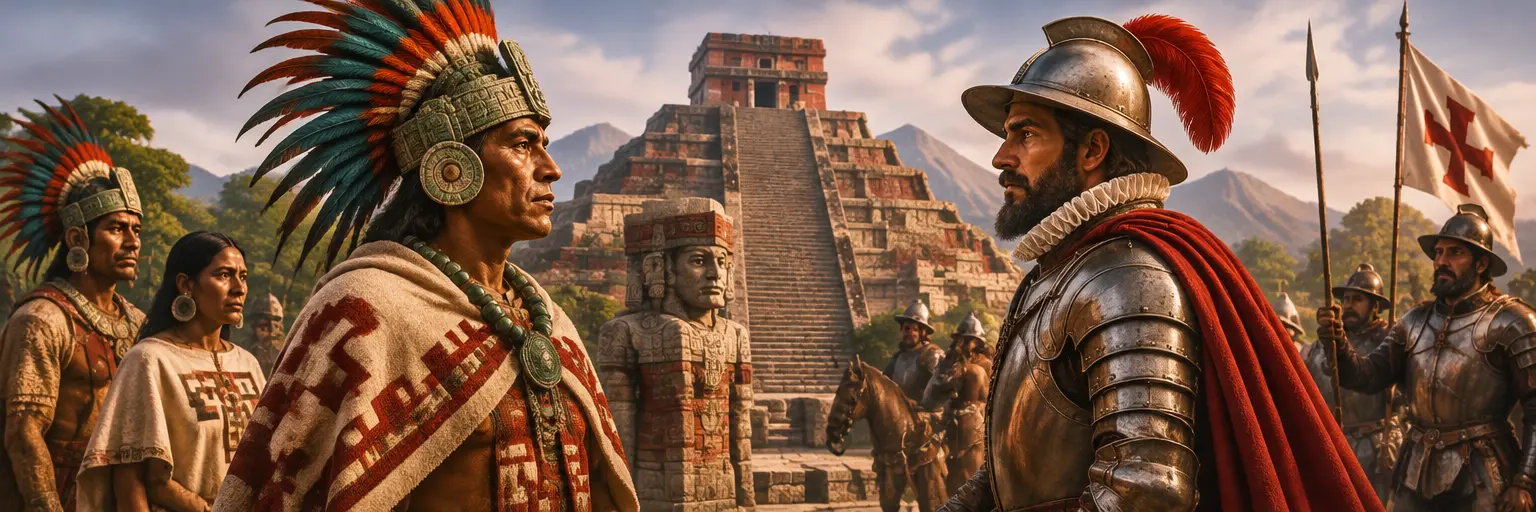
European Contact and Conquest reshaped the trajectory of the Toltec civilization, marking a dramatic zenith and eventual dissolution of their once-mighty influence across Mesoamerica. When Spanish conquistadors arrived in the early 16th century, they encountered a landscape where Toltec legacies—from architectural prowess to religious symbolism—had been absorbed by later empires like the Aztecs, yet the original heartland lay fragmented. The devastating impact of disease, forced labor, and military subjugation dismantled remaining political structures, while colonial policies systematically suppressed indigenous knowledge, rewriting history through a European lens. Despite this, surviving codices and oral traditions preserve fragments of Toltec warfare, trade networks, and cosmological beliefs, offering a poignant testament to their resilience. This era of contact and conquest irrevocably altered demographics, governance, and cultural continuity, yet it also ignited a legacy of resistance and adaptation that echoes in modern indigenous identity.
🌍 The article delves into the Toltec civilization encounters history, unveiling the complexities of early European interactions with this remarkable culture. Discover…
Read article
The exploration of Toltec achievements and European conquest reveals how advanced indigenous cultures influenced societal structures and resistance strategies. Understanding these contributions…
Read article
🌎 The Toltec culture and legacy exemplify the profound impact of conquest and cultural exchange in pre-Columbian Americas, revealing how their innovative…
Read article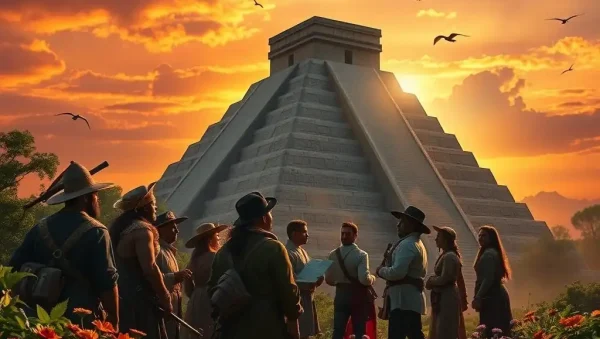
🌍 The Toltec civilization and European explorers represent a profound encounter of cultures, showcasing the rich achievements of indigenous societies in the…
Read articleWhen European explorers and conquistadors arrived in Mesoamerica, the Toltec civilization had already faded from its Classic-period height, yet its influence permeated the Aztec and other Postclassic societies that Europeans encountered. This subcategory delves into how the Toltec cultural legacy—its architecture, mythology, and political symbols—was interpreted, absorbed, and ultimately transformed during the Spanish conquest. Understanding this contact period is crucial for grasping how indigenous knowledge survived colonial disruption, and how the Toltec name became both a historical reality and a powerful colonial-era myth.
When Hernán Cortés and his men landed, the Aztec elite traced their legitimacy to the Toltecs, calling themselves “heirs of Tula.” European chroniclers, like Bernardino de Sahagún, recorded these indigenous histories, preserving Toltec stories but filtering them through a European lens. This section reveals how the Toltec were transformed into quasi-mythical “civilizers” in colonial codices, often used by the Spanish to justify conquest by portraying indigenous societies as decadent successors to a purer, older culture.
Moreover, the Toltec legacy complicated Spanish efforts to impose European feudalism. Native nobles leveraged their Toltec ancestry to negotiate privileges under colonial rule, while friars repurposed Toltec symbols in religious syncretism. You’ll discover how these narratives shaped early colonial policy, land grants, and the very vocabulary of conquest—terms like “Toltec” became synonymous with skilled artisan or wise ruler, a distinction that both protected and marginalized native elites.
Though Toltec militarism had waned centuries earlier, their weapons, fortifications, and tactical traditions were inherited by successor states like the Aztec and Tlaxcalan. This section examines how European steel, horses, and gunpowder met Toltec-derived warfare—obsidian-edged swords, atlatls, and defensive causeways. The conquest of Tenochtitlan, often retold as an Aztec event, was deeply shaped by Toltec-era alliances and rivalries that predated 1519.
Understanding these military interactions reveals why certain Toltec-influenced city-states, like Cholula, surrendered preemptively, while others mounted resistance using Toltec-inspired earthworks. We’ll analyze primary accounts from conquistadors like Bernal Díaz del Castillo, who noted the “Toltec-style” craftsmanship of native armor and siege equipment. You’ll see that European victory was not simply technological superiority, but a strategic exploitation of old Toltec-linked factional splits.
Spanish friars and administrators produced a vast corpus of documents—the Florentine Codex, Memoriales, and Relaciones Geográficas—that attempted to systematize Toltec history for colonial governance. This section explores how these texts mixed genuine Toltec oral traditions with European biblical chronologies, often placing the Toltecs as a “lost tribe” or as a civilization corrupted by idolatry. Such distortions had real consequences for land rights, as colonial courts used these documents to determine indigenous noble lineages.
You’ll learn about the “Toltec problem” in historiography: scholars today must parse which records reflect pre-contact Toltec reality versus colonial invention. For example, the Toltec ruler Ce Acatl Topiltzin Quetzalcoatl became a legendary figure in colonial writings, blending historical facts with messianic myths that the Spanish used to rationalize evangelization. This section provides a critical framework to separate archaeological evidence from colonial embellishment, enabling a more accurate understanding of the Toltec’s actual reach and decline.
European conquest did not erase Toltec deities; instead, they merged with Catholic saints and demons. The god Quetzalcoatl, for instance, was conflated with Saint Thomas or the Devil, depending on the friar’s agenda. This section traces how Toltec religious iconography—feathered serpents, jaguar thrones, and calendar stones—survived within syncretic practices like the cult of the Virgin of Guadalupe, which borrowed Mesoamerican sacred geometry originating from Tula.
We’ll examine colonial church records that show indigenous communities continuing Toltec rituals under the guise of Catholic festivals, preserving astronomical knowledge embedded in Toltec architecture. You’ll also find case studies of colonial resistance movements, such as the 16th-century Mixtón War, where leaders invoked Toltec-era deities to rally rebellion. This demonstrates that while conquest altered public worship, the Toltec spiritual framework persisted as a subterranean current of indigenous identity and resilience.
The Spanish encomienda system and tribute demands dismantled the economic networks that had sustained Toltec-descended artisan communities, particularly in luxury goods like obsidian mirrors, turquoise mosaics, and featherwork. This section analyzes how colonial extraction replaced indigenous trade routes, leading to the decline of Toltec-style workshops that had once supplied elite goods across Mesoamerica. Yet, some skills survived through adaptation—for example, Toltec metallurgy techniques were merged with European methods to produce new hybrid objects for colonial markets.
You’ll explore archaeological evidence from post-conquest sites showing continuity in pottery and textile production, but with altered motifs reflecting European aesthetics. The shift from tribute to wage labor also eroded the social status of Toltec-lineage craftsmen, who were reclassified as “indios” laborers. By examining colonial tribute lists and workshop inventories, you’ll gain a nuanced view of how conquest reshaped Toltec economic power, sometimes fostering resilience through informal markets that operated beyond Spanish control.
No, the Toltec civilization collapsed around 1150 CE, centuries before European arrival. However, the Spanish conquered successor states like the Aztec Empire, which heavily claimed Toltec heritage. European chroniclers thus documented Toltec history indirectly, through Aztec and local sources, preserving elements but also distorting them for colonial purposes.
Toltec knowledge survived through oral traditions, indigenous codices that were hidden or adapted, and syncretic practices. Some colonial friars recorded Toltec histories in works like the Codex Chimalpopoca. Additionally, native communities preserved astronomical, agricultural, and craft knowledge in everyday practices, often blending them with Christian customs to evade suppression.
By the 16th century, Tula was largely ruined but remained a sacred site for indigenous groups. Spanish accounts, like those of Cortés, mention pilgrims visiting Tula’s ruins. The Spanish used these sites for stone quarrying, but also documented them, inadvertently preserving valuable details about Toltec architecture and iconography for later historians.
Contemporary indigenous groups in central Mexico, such as the Nahua and Otomi, carry genetic and cultural legacies from the Toltec. While no distinct “Toltec” ethnic group survives, many communities still practice rituals and crafts traced to Toltec origins, and oral histories link them to Toltec ancestry, keeping the legacy alive in a transformed manner.
Historians use archaeological evidence—monuments, pottery, and settlement patterns—as primary verification. They cross-reference colonial documents with earlier indigenous pictographic sources and linguistic analysis. By identifying anachronisms or European tropes, scholars can strip away colonial embellishments, reconstructing a more grounded understanding of Toltec history and its posthumous influence.