The Enigmatic Origins of the Toltec Civilization: Unraveling the Mysteries
🌍 The Origins of the Toltec Civilization remain shrouded in mystery, captivating historians and archaeologists alike. Through an in-depth exploration of their…
Read article
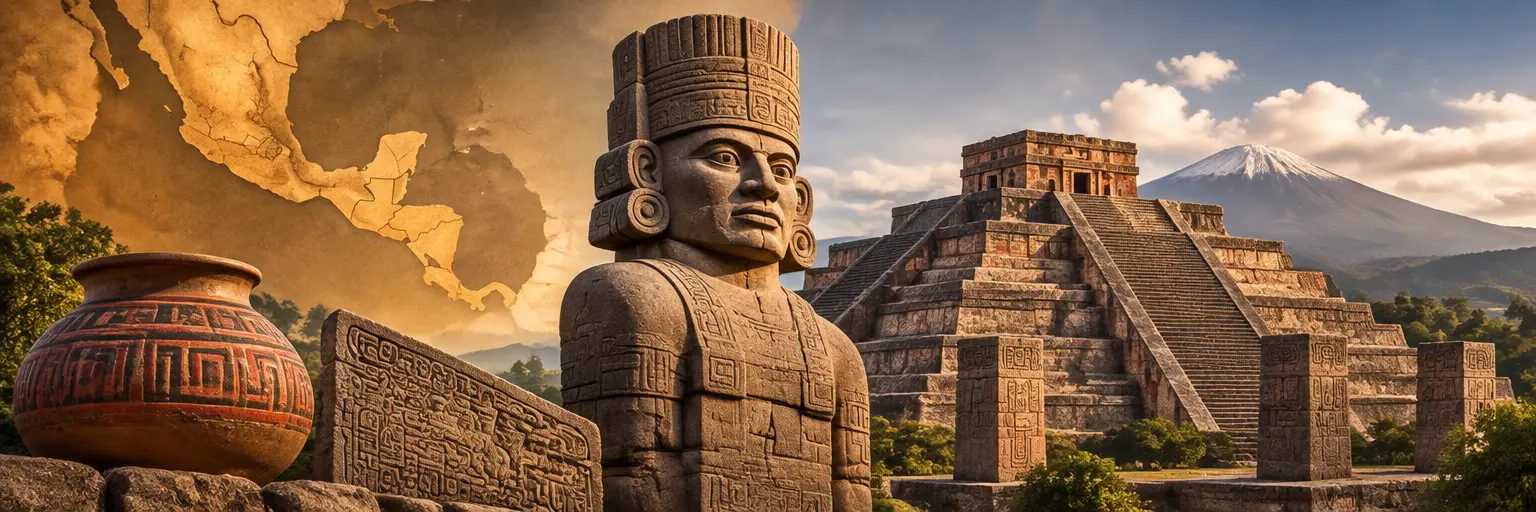
Explore the enigmatic roots of one of Mesoamerica’s most influential cultures with our deep dive into the Toltec civilization’s history and origins. Uncover how this formidable society, often shrouded in myth and legend, rose to prominence in the arid highlands of central Mexico between the 10th and 12th centuries. Learn about the legendary city of Tula (Tollan) , its architectural marvels, and the warrior–priest rulers who shaped its destiny. We trace the Toltecs’ ancestral migrations, their cultural synthesis of earlier Teotihuacan and Chichimec traditions, and how their philosophical and artistic achievements became a benchmark for later civilizations, including the Aztecs, who revered the Toltecs as master builders and wise sages. By examining archaeological evidence, codices, and oral histories, we separate fact from folklore, revealing a complex society of skilled artisans, ambitious traders, and formidable conquerors. Understand the factors behind their sudden decline, from internal strife to climatic shifts, and their lasting legacy that still echoes across modern Mexican identity.
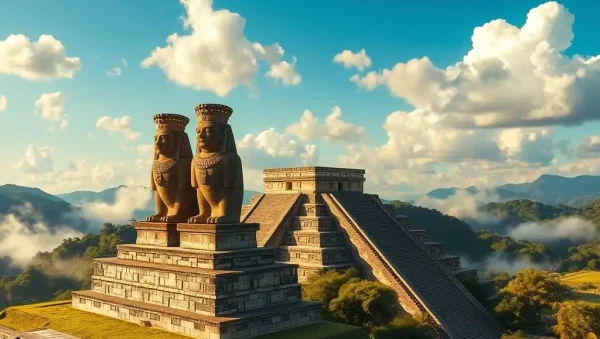
🌍 The Origins of the Toltec Civilization remain shrouded in mystery, captivating historians and archaeologists alike. Through an in-depth exploration of their…
Read article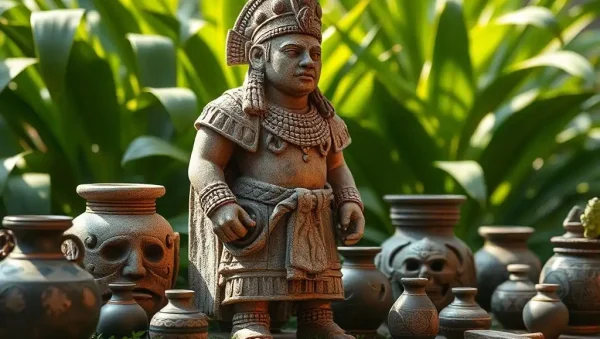
🌟 Toltec art and cultural identity reflect a rich tapestry of symbolism, revealing the profound beliefs and values of this ancient civilization.…
Read article
🌟 Discover the fascinating world of Toltec written records and artifacts, as we delve into the intricate codices that reveal the rich…
Read article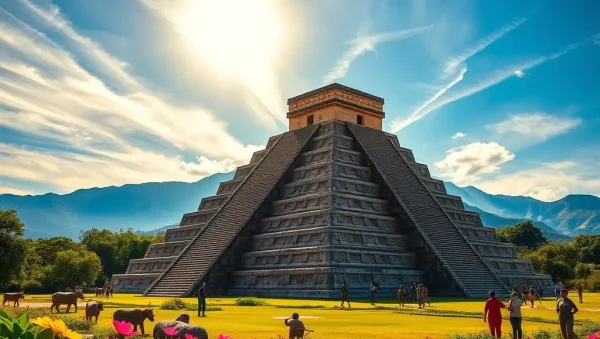
🌄 The Toltec civilization history and achievements highlight a transformative era in Mesoamerica, marked by remarkable advancements in art, architecture, and governance.…
Read article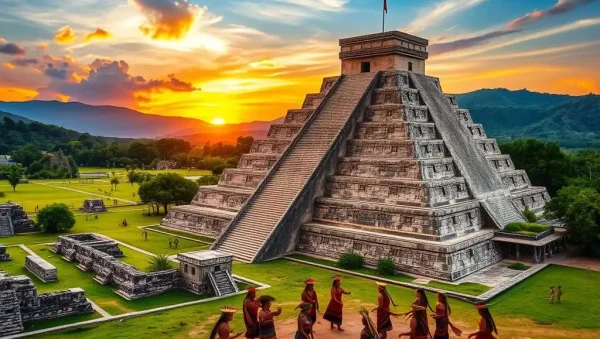
🌍 The Toltec civilization, a remarkable indigenous culture, intricately blends myth and reality, showcasing advanced achievements in art, architecture, and societal organization.…
Read article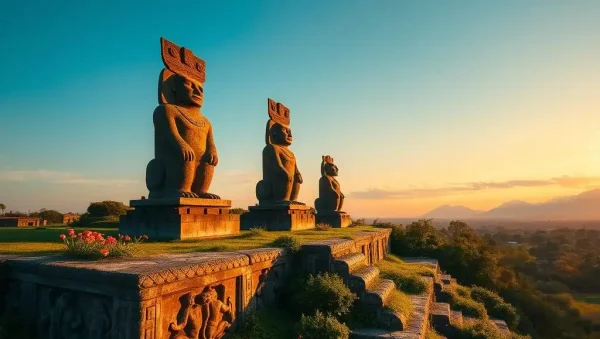
🌎 The Toltecs and Mesoamerican cultures share intricate ties that shaped ancient civilizations. By examining their architectural, artistic, and spiritual contributions, we…
Read article
The Toltec civilization's impact today resonates deeply within modern Indigenous cultures, reflecting their architectural, artistic, and spiritual legacies. This article delves into…
Read articleDive into the enigmatic world of the Toltec civilization, a paramount Mesoamerican culture that flourished in central Mexico between the 10th and 12th centuries. This subcategory unravels the intricate tapestry of their beginnings, migrations, and the socio-political forces that forged an empire later revered by the Aztecs. Here, you will discover how the Toltecs transformed from nomadic hunter-gatherers into master builders, artists, and warriors, setting a cultural benchmark for generations. From the mythical city of Tollan (Tula) to the shadowy origins of their ruling dynasties, we separate historical facts from legendary embellishments, providing a rich foundation for understanding this influential civilization.
The Toltec ascendancy is rooted in the chaotic aftermath of Teotihuacan’s collapse. Around 900 CE, various Chichimec groups from the northern deserts migrated into the Valley of Mexico, merging with settled agricultural peoples. This fusion gave birth to the Toltec identity, with their capital at Tula (Hidalgo) rising as a planned urban center. Archaeological evidence reveals a militaristic society, where ruling elites combined religious authority with martial prowess, creating a tribute-based state that dominated trade routes from the Gulf Coast to the Pacific.
What sets the Toltec rise apart is their rapid urban expansion. Within two centuries, Tula grew to cover over 15 square kilometers, housing an estimated 60,000 people. The city’s iconic warrior columns and pyramid of Quetzalcoatl reflect a society obsessed with cosmic order and martial display. By examining settlement patterns and ceramic sequences, historians trace how the Toltecs adopted and adapted earlier Mesoamerican traditions, creating a synthetic culture that legitimized their power through ancestral ties to Teotihuacan, thus positioning themselves as heirs to a glorious past.
Central to Toltec origins is the semi-mythical figure of Ce Acatl Topiltzin, born in the year 1-Reed, who allegedly founded the city of Tula and merged the role of high priest and king. Traditional accounts, recorded by later Aztec chroniclers, describe him as a benevolent ruler who banned human sacrifice, only to be exiled by followers of the war god Tezcatlipoca. This narrative has sparked intense scholarly debate: was he a real king, a composite of multiple rulers, or purely a mythological archetype? Recent epigraphic finds suggest a historical core, with evidence of a reformist leader in the early 10th century.
For researchers, disentangling fact from fable is crucial. The story of Topiltzin Quetzalcoatl profoundly influenced Toltec political theology, elevating their dynasty to semi-divine status. The Aztecs later claimed descent from him, using Toltec ancestry to justify their own imperial ambitions. By analyzing colonial manuscripts like the Annals of Cuauhtitlan and comparing them with iconographic motifs on Toltec stelae, this subcategory encourages a nuanced reading—acknowledging that while the chronicles contain allegorical elements, they also preserve genuine historical memories of migration, conflict, and state formation.
The physical remnants of Toltec civilization offer the most reliable window into their origins and daily existence. Tula’s monumental architecture, including the Pyramids of Quetzalcoatl and Tlahuizcalpantecuhtli (Morning Star), exhibits stark, militaristic aesthetics with bold reliefs of jaguars, coyotes, and eagles devouring human hearts. Unlike the flowing naturalism of the Maya, Toltec art is angular and martial, reflecting a society where war was the primary engine of social mobility. Domestic sites reveal a stratified hierarchy: elite compounds with painted benches and imported luxury goods, contrasting with modest commoner dwellings.
This material evidence challenges old stereotypes of the Toltecs as mere bloodthirsty warriors. Excavations at Tula have unearthed advanced hydraulic systems, obsidian workshops, and evidence of extensive long-distance trade in turquoise from present-day New Mexico. Ceramic analyses show a surprising diversity, indicating a cosmopolitan capital that absorbed influences from the Gulf Coast, Central Mexico, and even the Maya lowlands. By studying these artifacts, we reconstruct not only origins but also the everyday rhythms of farming, craft production, and ritual feasting that sustained Toltec society for over two centuries.
Around 1150-1200 CE, Tula was systematically burned and abandoned, marking the sudden end of Toltec hegemony. Fiery destruction layers at the ceremonial center point to internal rebellion or foreign invasion, possibly by the Aztec ancestors (Mexica) or other Chichimec groups. Drought, overpopulation, and resource depletion may have aggravated social tensions, leading to a violent rupture. Interestingly, the Toltec collapse did not erase their cultural influence; instead, surviving elites dispersed across Mesoamerica, carrying their artistic styles, religious concepts, and political ideologies to cities like Chichén Itzá in Yucatán and Cacaxtla.
Understanding the collapse requires a multi-causal approach. Paleoclimate data from lake sediments show a severe drought in the 12th century, likely reducing agricultural yields and undermining the legitimacy of rulers who claimed to control rain. Concurrently, the rise of competing city-states, such as Atotonilco, fragmented Toltec trade monopolies. This subcategory stresses that the Toltec “fall” was not absolute—their diaspora seeded a cultural renaissance, with later peoples adopting the title “Toltec” to mean “master artist” or “civilized person.” Thus, the end of their political power ironically amplified their symbolic legacy, shaping Mesoamerican identity for centuries.
The primary challenge in studying Toltec history is the scarcity of contemporaneous written records. Unlike the Maya, the Toltecs left no extensive hieroglyphic corpus, forcing scholars to rely on later Aztec codices, Spanish colonial accounts, and fragmentary inscriptions. These sources often blend historical fact with cosmological myth, presenting the Toltecs as a “golden age” civilization. The Relaciones Geográficas and the Codex Telleriano-Remensis describe Toltec migrations from Aztlan, a legendary place of origin, but pinpointing this location remains elusive. Archaeological surveys have identified possible migration routes through the Bajío region, yet definitive proof is lacking.
To bridge this gap, modern researchers employ a multidisciplinary approach. Lidar scans of the Tula region reveal extensive field systems and irrigation canals that match ethnohistorical descriptions. Strontium isotope analysis of human remains at Tula indicates that many residents were not locals, supporting the migration narrative. Meanwhile, linguistic studies link the Nahua language of the Toltecs to Uto-Aztecan groups from the north. This subcategory encourages critical evaluation: while we may never know the exact origins, triangulating archaeological, linguistic, and documentary evidence paints a credible picture of a multi-ethnic society forged in migration and conflict.
The Teotihuacan civilization (100 BCE–550 CE) predates the Toltecs and is famed for the massive Pyramid of the Sun and a highly urbanized, multi-ethnic capital. The Toltecs (900–1150 CE) emerged later, viewing themselves as inheritors of Teotihuacan’s legacy. While Teotihuacan’s society was less militaristic and more theocratic, the Toltecs emphasized warfare and tribute extraction, with Tula featuring warrior columns and heart-eating motifs.
Yes, archaeological evidence from Tula confirms human sacrifice, though possibly on a smaller scale than later Aztecs. Charmool figures and skull racks (tzompantli) suggest ritual decapitation and heart removal. However, the myth of Topiltzin Quetzalcoatl banning sacrifice likely reflects a historical reform movement that later lost, with military factions restoring the practice. The victims were often war captives.
The Aztecs claimed Toltec ancestry for political legitimacy, asserting that their kings descended from the Toltec ruling house of Tula. Historians see this as ideological, not biological. While some Toltec elites may have intermarried with early Mexica groups, genetic studies show the Aztecs were a distinct population. The claim was strategic, linking them to a revered, civilized past.
Our understanding comes from three sources: archaeological excavations at Tula, post-conquest indigenous chronicles like the Florentine Codex, and Spanish friars’ ethnographic accounts. These later sources, written centuries after the Toltec collapse, preserve oral traditions but must be cross-checked with material evidence. Ongoing excavations and isotope analyses continue to refine the historical narrative.
The premier site is Tula, Hidalgo, with its iconic Atlantean warrior statues and Pyramid of Quetzalcoatl. Other important locations include Tula’s nearby Palacio Quemado (Burnt Palace) and the mythical island of Mexcaltitán, proposed as Aztlan. In addition, Chichén Itzá in Mexico’s Yucatán shows strong Toltec influence, notably its Temple of the Warriors, indicating Toltec architectural diffusion across Mesoamerica.