Exploring Toltec Architecture and Urbanism
Dive into the monumental stone cities and cosmic planning of the Toltec civilization, a Mesoamerican culture that flourished in central Mexico between 900 and 1150 CE. Our Architecture and Urbanism subcategory reveals how the Toltecs engineered sacred spaces, ceremonial centers, and defensive layouts that influenced the Aztecs and Maya. From the iconic Atlantean figures of Tula to the grid-like alignments of their capitals, discover how architectural forms expressed political power, religious cosmology, and astronomical knowledge. This guide is crafted for history enthusiasts, archaeology students, and travelers seeking deep cultural context before visiting sites like Tula de Allende.
🏛️ Ceremonial Centers and Sacred Geometry
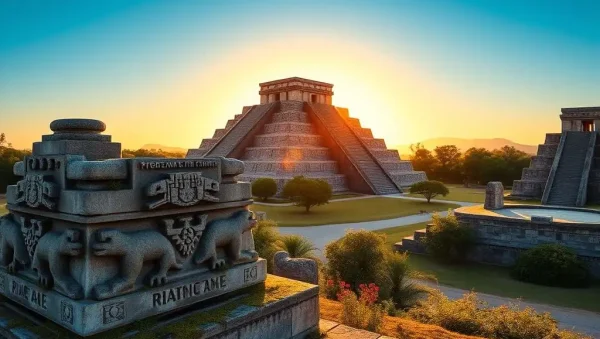
The Toltec capital, Tollan (Tula), was not a random settlement but a carefully designed ritual landscape. Pyramids, plazas, and ball courts were arranged according to cardinal directions, with the Pyramid of Quetzalcoatl (Tlahuizcalpantecuhtli) as the focal point. Structures were oriented to solstices and equinoxes, aligning with celestial events to reinforce the ruler’s divine mandate. Visitors can expect to learn how urban space mirrored the cosmos—each platform, staircase, and colonnade served both practical and symbolic functions, creating a stage for public ceremonies, human sacrifice, and tribute displays that legitimized Toltec hegemony across Mesoamerica.
Beyond aesthetics, these centers were engineered for crowd control and dramatic processions. Wide causeways funneled pilgrims toward the main pyramid, while sunken patios created acoustic amplification for priestly chants. The coatepantli (serpent wall) and carved jaguar benches visually narrated myths, turning stone into a political manifesto. By studying these layouts, you’ll understand how Toltec architects blended militarism with spirituality, making every building a three-dimensional codex of their worldview.
🗿 Atlantean Figures and Iconic Sculptures
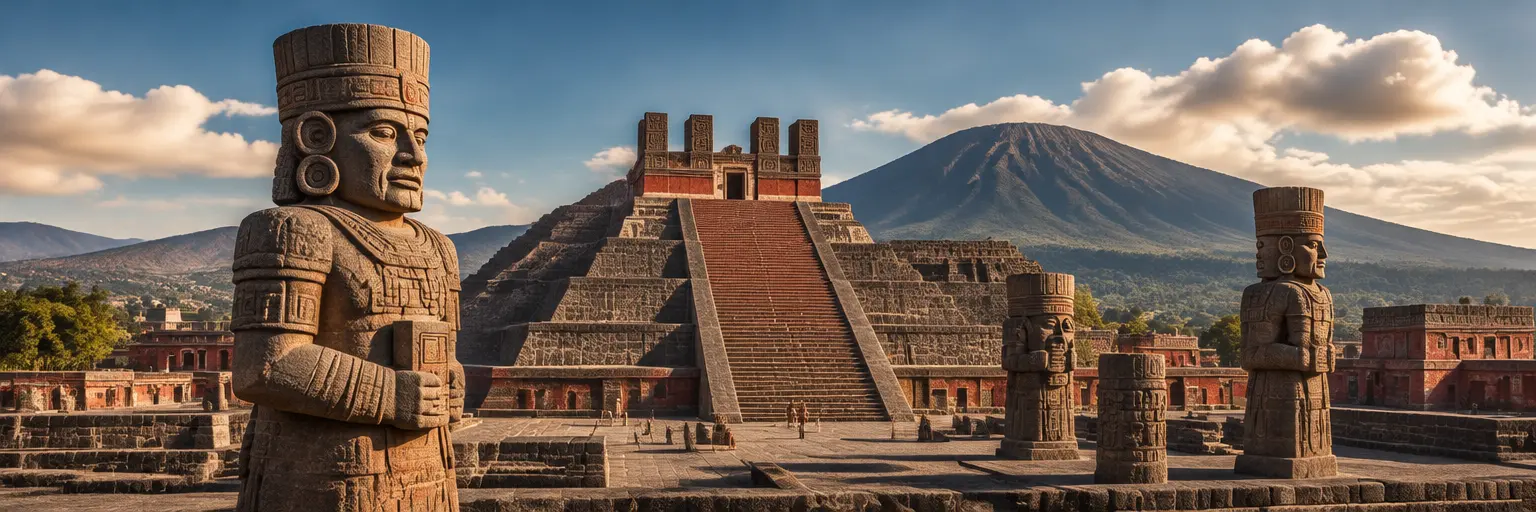
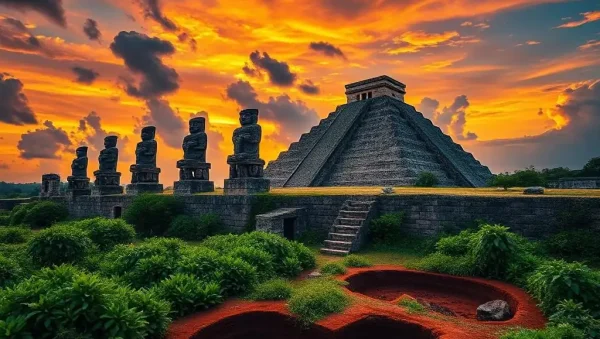
No Toltec ruin is more famous than the four Atlantean warrior columns atop Pyramid B at Tula. These 4.6-meter-tall basalt figures, armed with spear-throwers and shields, represent Toltec warriors or deified ancestors. Carved with intricate details—feathered headdresses, butterfly pectorals, and solar disks—they functioned as structural supports for the temple roof while immortalizing military elite. Our section explores their construction techniques, symbolic armor, and the possible use of stucco and paint to enhance their imposing presence. You’ll also discover other sculptural forms: chacmools (reclining figures), standard-bearers, and carved serpent columns that adorned entryways.
These sculptures were not merely decorative; they were powerful ideological tools. The Atlanteans’ upward gaze toward the heavens, combined with their weapons, communicated the ruler’s connection to celestial forces and martial superiority. Archaeologists have noted that similar figures appeared in Chichén Itzá, indicating Toltec cultural exports. Expect detailed analyses of quarrying, stone-carving techniques, and how these statues were re-erected after centuries of collapse—offering a glimpse into pre-Columbian engineering and artistic mastery that still captivates modern viewers.
🏙️ Urban Planning and Defensive Strategies
Toltec cities like Tula were fortified administrative hubs, not sprawling metropolises. The urban core featured a grid of stone-paved streets, residential palaces for nobles, and workshops for obsidian and ceramics. Residential areas were segregated by class, with commoner homes made from adobe and elite compounds from cut stone, often with internal courtyards and steam baths. Defensive walls, moats, and elevated causeways protected against nomadic Chichimec raids from the north. Our content details how site selection—on a ridge overlooking the Tula River—provided natural surveillance and water access, while terraced slopes prevented easy assault.
Urbanism also reflected economic engineering. Large granaries and storage pits indicate centralized food redistribution, while wide plazas doubled as marketplaces for long-distance trade in turquoise, cacao, and feathers. Water management included aqueducts and cisterns, channeling seasonal rains for agriculture and domestic use. By examining excavation maps and settlement patterns, you’ll grasp how Toltec planners balanced defense, commerce, and ritual in a compact area, making their capital a model for later Aztec Tenochtitlán—a lineage we trace in comparative studies.
🔮 Astronomical Alignments and Cosmograms
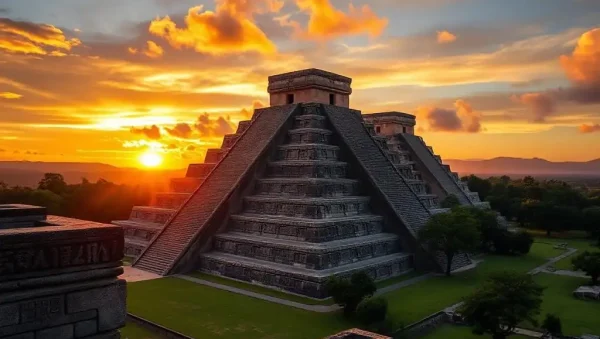
Toltec architecture served as a terrestrial mirror of the sky. Buildings were, aligned to solar zenith passages, lunar standstills, and the Pleiades’ heliacal rise—events that marked agricultural cycles and warrior festivals. The Pyramid of Quetzalcoatl features a west-facing staircase that receives sunset illumination during equinoxes, casting shadows that mimic serpent movements along the balustrades. This section explains how urban layouts encoded a calendar, with 260-day and 365-day counts integrated into stairways, pillars, and niche counts. For example, the Palace of Quetzalcoatl has columns arranged in groups of 52, referencing the Mesoamerican century.
These alignments were not accidental; they were verified by modern archaeoastronomers using digital reconstructions. Rulers used this knowledge to time ceremonies, predict solar eclipses, and schedule military campaigns. We’ll delve into specific site orientations at Tula Chico and Tula Grande, showing how shifts in founding layouts mirrored dynastic changes. By merging astronomy with architecture, the Toltecs created a “cosmos in stone” that reinforced their role as intermediaries between human and supernatural realms—a fascinating lens for understanding their intellectual achievements beyond mere construction.
🏺 Construction Materials and Techniques
Toltec builders mastered volcanic basalt, limestone, and adobe, adapting to available resources without sacrificing durability. Walls were often double-faced: a rubble core sandwiched between dressed stone slabs, covered with lime plaster and vivid polychrome frescoes. Roofs used wooden beams and flat stone slabs, with corbelled arches reserved for elite tombs. Tools were basalt hammers, obsidian blades, and wooden levers, while ramps and earth berms facilitated moving colossal blocks. Our section details quarrying methods, mortar recipes (lime, sand, and plant fibers), and how builders achieved precise 90-degree corners using plumb bobs and sighting lines.
Notably, the Toltecs adapted to seismic risk in central Mexico. Foundations were shallow but broad, and walls featured slight inward batter for stability. Drainage channels prevented water damage, and wooden lintels were replaced by stone corbels in later phases—indicating iterative engineering. We also cover evidence of recycling older structures: earlier pyramid platforms were buried and rebuilt upon, a common Mesoamerican practice. This technical focus helps modern readers appreciate the labor organization and skilled craftsmanship that allowed a pre-industrial society to erect monuments lasting over a millennium, many still standing today.
📜 Legacy and Influence on Later Cultures
Toltec architectural forms became a template for Mesoamerican urbanism. After Tula’s decline around 1150 CE, its iconography—Atlantean figures, chacmools, warrior columns—reappeared at Chichén Itzá, Tulum, and Tenochtitlán. The Aztecs openly claimed Toltec lineage, adopting their dual-pyramid complexes and skull racks (tzompantli). Our section traces these influences through trade routes, military conquests, and mythic narratives, showing how architecture served as a tool of cultural hegemony. You’ll learn about specific copying: the Templo Mayor’s twin shrines mimic Tula’s Pyramid B and C, while Aztec palaces used similar courtyard layouts.
Beyond direct copying, Toltec planning principles like axial symmetry and ritual causeways permeated Postclassic Maya highlands. Even after the Spanish conquest, colonial chroniclers described Tollan as a golden age city, encoding its memory in indigenous codices. Our content highlights archaeological discoveries—such as the 2007 finds at Tula’s Palacio Quemado—that reveal burning and destruction, complicating the “peaceful influence” narrative. For heritage enthusiasts, this section ties together conservation efforts and UNESCO considerations, emphasizing why preserving Toltec urbanism remains vital to understanding indigenous resilience and adaptation.
Frequently Asked Questions
What is the most iconic Toltec architectural site?
The most iconic is Tula de Allende in Hidalgo, Mexico, specifically the Pyramid of Quetzalcoatl (Pyramid B) with its four Atlantean warrior columns. This site served as the Toltec capital, Tollan, and showcases temples, ball courts, and the coatepantli serpent wall. It’s the benchmark for understanding Toltec design and influence.
How did the Toltecs align their buildings astronomically?
They used solar and lunar observations via sightlines from doorways, stelae, and horizon markers. Buildings were oriented to solar events like equinox sunrise and zenith passages, and to Pleiades’ rising. Staircases and pillars counted calendar days, integrating ritual time into physical structure.
Did the Toltecs invent the Atlantean figure?
No, but they popularized and standardized the form. Earlier examples exist at Teotihuacan and Maya sites, but Toltec Atlanteans are the most monumental and symbolically complex. They were copied later by Mixtec and Aztec cultures, securing them as a Mesoamerican archetype.
What materials were used for Toltec pyramids?
Toltecs primarily used basalt and limestone for facades, with adobe brick and rubble cores for interiors. Plaster made from lime covered surfaces for painting. Wooden beams supported roofs, while basalt columns were reused or carved for structural and decorative purposes.
Why did Toltec urban centers decline?
The decline around 1150 CE is linked to internal warfare, drought, and overpopulation. Evidence shows burning of elite palaces, suggesting rival factions or Chichimec invasions. Economic disruption from failed trade routes and social unrest likely contributed, leading to abandonment and eventual Aztec reinterpretation.