Exploring Toltec Scientific Achievements
The Toltec civilization, often hailed as the “master builders” of Mesoamerica, left a profound legacy in science and technology that influenced the Aztecs and later cultures. This subcategory delves into their advanced knowledge of astronomy, engineering, mathematics, and medicine, revealing how they harnessed celestial cycles, constructed monumental architecture, and developed practical tools that shaped daily life. By understanding their scientific achievements, we gain insight into a society that blended empirical observation with spiritual belief, creating innovations that still resonate in modern archaeology and indigenous heritage.
🔭 Astronomical Observation and Calendar Systems
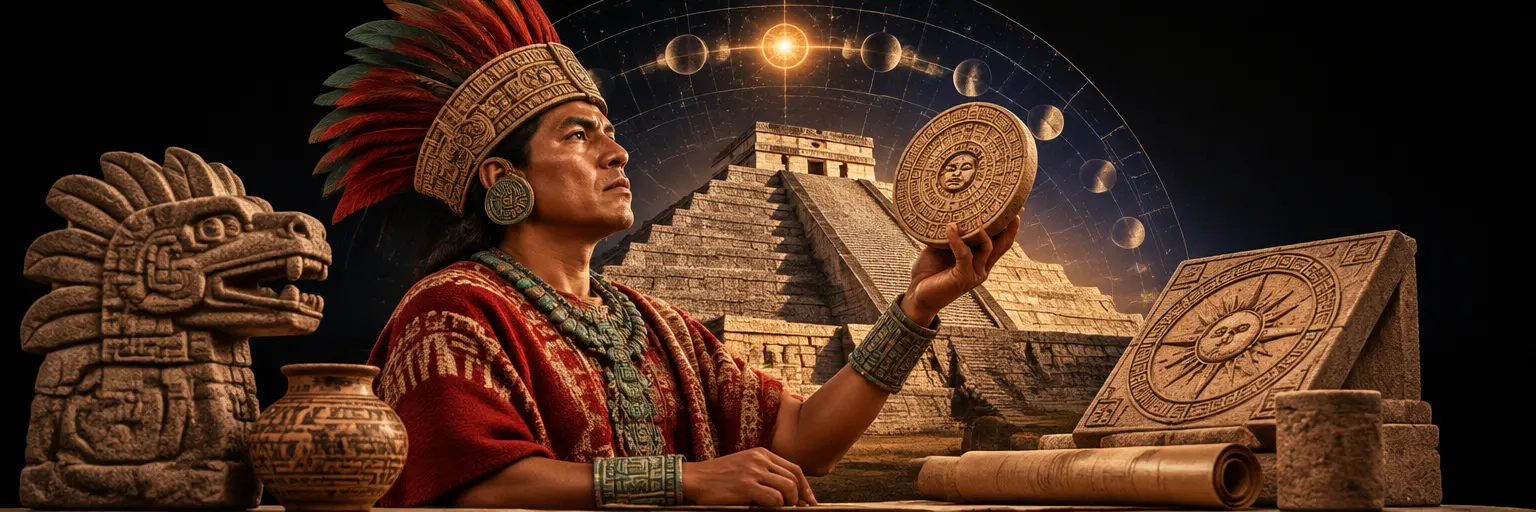
The Toltecs were meticulous sky-watchers, aligning their cities—especially Tula—with cardinal directions and key celestial events like solstices and equinoxes. They developed a 260-day ritual calendar (Tonalpohualli) and a 365-day solar calendar (Xiuhpohualli), interlocking these cycles to predict eclipses, agricultural seasons, and ceremonial dates. Their observatories, often embedded in temple complexes, tracked Venus and the Pleiades, which guided warfare and planting schedules. This precision reflects a deep understanding of cyclical time, enabling them to synchronize social, religious, and agricultural life with cosmic rhythms—a feat that required generations of recorded observations and mathematical interpolation.
Excavations at Tula reveal carved reliefs of feathered serpents and star motifs, suggesting that astronomical knowledge was encoded in public art. The Toltecs also invented a “long count” style of dating, though less refined than the Maya’s, which allowed them to record historical events with astronomical references. For modern researchers, these calendar systems provide a framework to date monuments and understand political alliances, as rulers claimed divine sanction through celestial alignments. Visitors to this subcategory will learn how these calendars were not merely scientific tools but living documents that validated Toltec authority and connected their society to the cosmos.
🏛️ Engineering and Hydraulic Innovations
Toltec engineering prowess is visible in their massive temples at Tula, including the Pyramid of Quetzalcoatl, built with precisely cut basalt blocks weighing several tons. They pioneered the use of rubble-filled cores with veneer stone facades, a technique that distributed weight and resisted seismic activity. Their cities featured advanced drainage systems, aqueducts, and raised causeways, often integrated with natural topography to manage seasonal floods. The famous Atlantean statues—four-meter-tall warrior figures—demonstrate their skill in quarrying, transporting, and carving hard volcanic rock without metal tools, relying instead on stone hammers and abrasives.
The Toltecs also engineered extensive terracing and irrigation canals for agriculture, transforming arid plateaus into productive farmland. They understood soil fertility, rotating crops and using chinampas-like raised beds in wetland edges. Their hydraulic knowledge extended to creating artificial lagoons for ritual use, as seen at Tula Grande’s palatial complexes. This subcategory explains how these innovations supported a dense urban population, facilitated trade, and allowed for monumental construction that remains structurally intact after a millennium. By studying their methods, engineers today gain insights into sustainable building practices adapted to challenging environments.
🧮 Mathematics and Numerical Systems
The Toltecs employed a vigesimal (base-20) mathematical system, inherited from earlier Mesoamerican cultures, which they refined for practical applications in commerce, tribute, and calendrics. They used a dot-and-bar notation for numbers, where dots represented units and bars represented fives, enabling quick calculations for large quantities. Their mathematical knowledge included concepts of zero, although its formal use may have been less developed than among the Maya. However, they applied arithmetic to astronomical predictions, architectural proportions, and land surveying, demonstrating a functional understanding of geometry and ratio.
Toltec merchants and tribute collectors used these systems to manage extensive trade networks stretching from central Mexico to Guatemala, recording quantities of cacao, cotton, and obsidian. Mathematical concepts also underpinned their calendar interlocking, where multiples of 13, 20, and 365 were combined to create a 52-year “bundle” cycle. This subcategory highlights how their mathematics was not abstract but deeply tied to economic and ritual life. Readers will discover surviving codices—though few—that show Toltec-style numerals, and how Aztec scribes later adopted and expanded these methods, proving the Toltec legacy fostered numerical literacy across Mesoamerica.
🌿 Medical Knowledge and Plant-Based Remedies
Toltec healers, known as ticitl, developed a pharmacopoeia using native plants, minerals, and animal products. They treated wounds with antimicrobial resins from copal and tepezcohuite bark, reduced fevers with willow extracts (rich in salicylic acid), and used hallucinogenic plants like ololiuqui in ritual healing for psychological disorders. Their surgical practices included trepanation—drilling holes in the skull to relieve pressure or extract bone fragments—with evidence of patient survival from healed bone edges. They also practiced herbal contraception, using cohuatl seeds and other plants to regulate fertility, a sophisticated understanding of reproductive biology.
Medical knowledge was codified in oral traditions and painted manuscripts, with specialized roles for midwives, bone-setters, and herbalists. Toltec doctors recognized the interconnection of spiritual and physical health, often performing rituals to appease deities while administering empirical remedies. Their anatomical knowledge was surprisingly advanced; they identified internal organs and used anatomical models made of clay for teaching. This subcategory explores how their medicinal practices were later documented by Spanish friars, preserving valuable ethnobotanical knowledge. Modern researchers have analyzed Toltec remedies and confirmed their antimicrobial and anti-inflammatory properties, bridging ancient wisdom with contemporary pharmacology.
⚙️ Metallurgy and Material Science
While Toltec metallurgy was limited compared to Andean cultures, they pioneered the use of copper and gold for ornamental and ritual objects, not tools. They mastered lost-wax casting to create intricate bells, pectorals, and beads, sometimes alloying copper with tin to produce bronze-like hardness. Their artisans developed techniques for hammering gold into thin sheets and combining turquoise, shell, and obsidian into mosaics, showcasing a refined understanding of material properties. They also produced obsidian blades with edges sharper than modern steel scalpels, using controlled flaking techniques that required deep knowledge of stone fracture mechanics.
Toltec material science extended to ceramics, creating polychrome pottery with lead-based pigments that maintained vivid colors after firing. They built kilns that achieved temperatures over 900°C, enabling vitrification of clays for waterproof vessels. Their construction materials included lime plaster—made by burning limestone—which they used to coat pyramids, creating luminous surfaces that reflected sunlight. This subcategory examines how these innovations were locally sourced and crafted, reflecting an empirical approach to trial and error. By studying Toltec metallurgy, researchers trace trade routes for tin and copper, revealing connections with West Mexico and Central America that challenged early assumptions of isolation.
Frequently Asked Questions
What was the most important Toltec scientific achievement?
The interlocking calendar system combining 260-day and 365-day cycles was arguably their most impactful scientific achievement, as it governed agriculture, religion, and governance. This precise method allowed them to predict eclipses and seasonal changes, making them appear divinely connected to the cosmos and ensuring social cohesion across large territories.
Did the Toltecs invent the concept of zero?
No, the concept of zero is more clearly attributed to the Maya, who used a shell glyph for zero in positional notation. The Toltecs, however, likely understood the concept operationally, using place values in their vigesimal system for calendrics and trade, but they did not formalize it as a written symbol.
How did Toltec engineering survive earthquakes?
Toltec builders used a technique of laying stone blocks without mortar, allowing slight flexibility during seismic events. They also sloped temple walls inward (battered sides) and used lightweight rubble cores to reduce overall mass. This earthquake-resistant design has allowed structures like Tula’s Pyramid of Quetzalcoatl to stand for over a millennium.
What plants did the Toltecs use for medicine?
They used willow bark for pain and fever, copal resin for wound disinfection, and tepezcohuite for skin regeneration. Hallucinogenic plants like ololiuqui (morning glory seeds) were used in rituals to treat psychological ailments, while cacao was considered a medicinal tonic for fatigue and heart health.
Why is obsidian important in Toltec science?
Obsidian was central to their tool technology, yielding blades sharper than steel. Toltecs developed pressure flaking to create razor-edged knives for surgery, rituals, and cutting tools. They also traded obsidian across Mesoamerica, and its volcanic nature made it a symbol of their connection to the earth’s fiery forces.