Rituals and Ceremonies in Tikal: Spiritual Life in a Monumental City
✨ Tikal rituals and ceremonies were central to the spiritual life of this monumental city, reflecting the rich cultural tapestry of the…
Read article
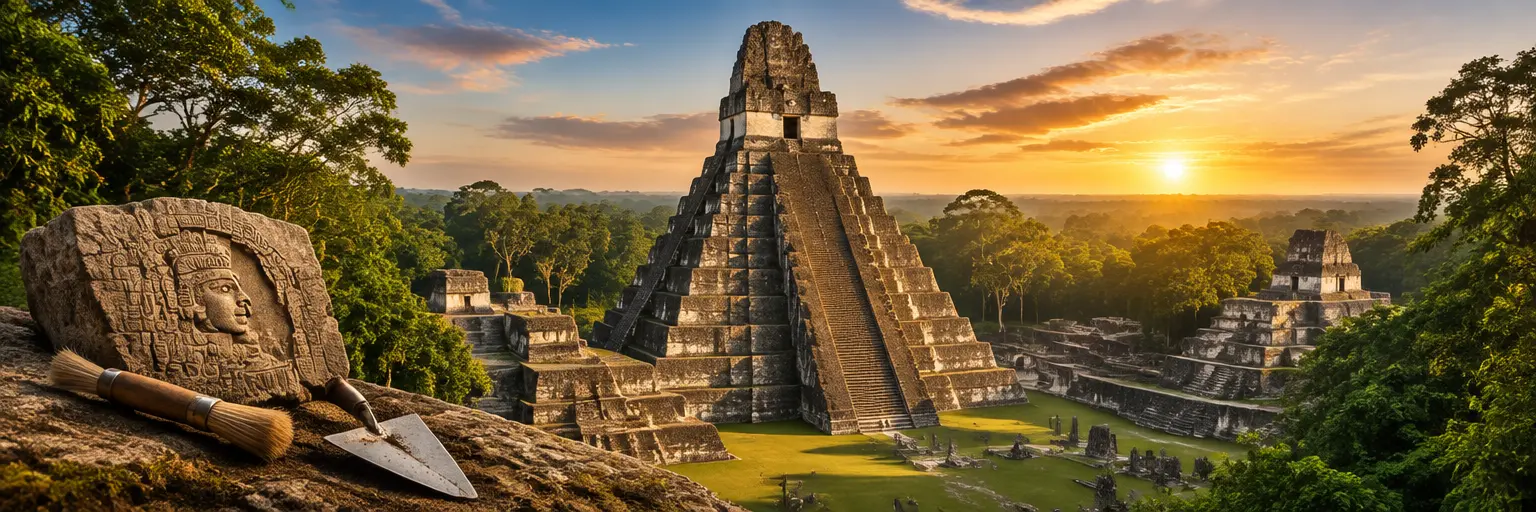
Discover the awe-inspiring legacy of Tikal, one of the most powerful monumental cities of the ancient Maya civilization, hidden deep within the Guatemalan rainforest. As a cornerstone of archaeological discoveries, Tikal reveals a complex urban center that flourished for over a millennium, boasting towering temples, expansive plazas, and advanced engineering feats that rival any ancient metropolis. This site offers an unparalleled window into indigenous ingenuity, showcasing how the Maya mastered astronomy, water management, and monumental architecture without modern tools. From the iconic Temple of the Great Jaguar to the enigmatic stelae that chronicle royal dynasties, Tikal stands as a testament to a sophisticated society that shaped the Americas long before European contact. Dive into the ruins to uncover a world of ceremonial grandeur, political power, and ecological adaptation, where every stone tells a story of resilience and brilliance. Perfect for history enthusiasts and travelers alike, this exploration illuminates why Tikal remains a pivotal key to understanding the indigenous civilizations of the Americas and their enduring cultural footprint.
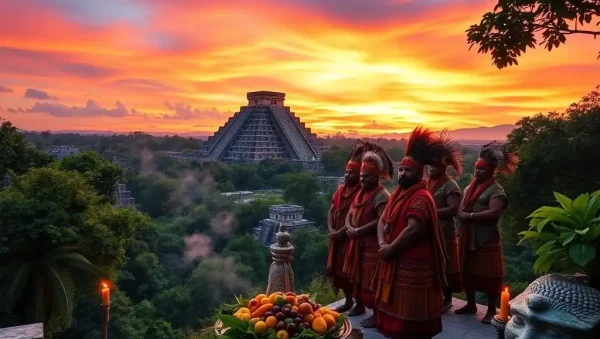
✨ Tikal rituals and ceremonies were central to the spiritual life of this monumental city, reflecting the rich cultural tapestry of the…
Read article
🌄 The Tikal temples stand as monumental testaments to indigenous significance, reflecting the architectural prowess and spiritual beliefs of the Maya civilization.…
Read article
Tikal's legacy endures as a powerful symbol of the Mayan civilization's impact, shaping contemporary indigenous identities. This monumental city serves as a…
Read article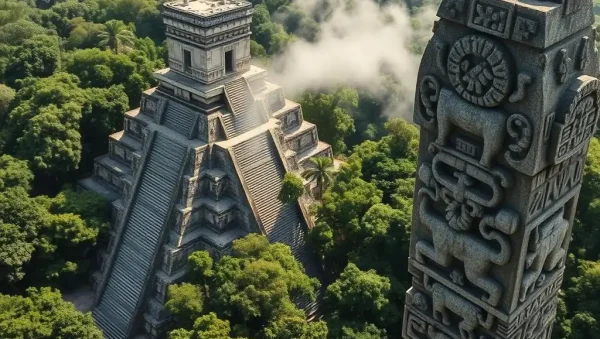
Discover the rich tapestry of Tikal ancient Mayan art symbols, where intricate iconography reveals the profound beliefs and societal structures of a…
Read articleWelcome to the heart of the ancient Maya civilization, where towering limestone temples pierce the jungle canopy and the echoes of a powerful city-state still resonate. Tikal, one of the largest and most influential archaeological sites of the pre-Columbian Americas, offers a stunning glimpse into the political, spiritual, and architectural genius of the Maya people. This subcategory delves deep into the ruins, revealing the story of a city that thrived for over a millennium, from its humble beginnings to its dramatic collapse and eventual rediscovery. Prepare to uncover the secrets of this UNESCO World Heritage site, where every carved stela and soaring pyramid tells a story of kings, gods, and astronomical mastery.
The Great Plaza is the ceremonial and political epicenter of Tikal, flanked by the iconic Temple I (Temple of the Great Jaguar) and Temple II (Temple of the Masks). Here, you will discover how the Maya engineered structures that have survived centuries of tropical weather. The steep pyramid staircases, adorned with intricate lintels and roof combs, were not just aesthetic; they were symbolic mountains connecting the earthly realm to the heavens. Expect to learn about the precise alignment of these buildings with celestial events, showcasing the Maya’s advanced understanding of astronomy and mathematics.
Beyond the two main temples, the Great Plaza houses the North Acropolis and the Central Acropolis, a maze of residential and administrative rooms. This area reveals the daily life of the elite, from royal burials to ritual ballgames. As you navigate this subcategory, you’ll gain insight into how the plaza was designed for massive public gatherings, reinforcing the divine authority of the Ajaw (king). The sheer scale of the limestone blocks, transported without wheels or draft animals, underscores the immense labor force and organizational skill of the ancient Maya.
Tikal is not just a collection of ruins; it is a living landscape where the jungle has reclaimed much of the city, creating a dramatic backdrop for exploration. This section focuses on the causeways (sacbeob) that connected different parts of the city, elevated white stone roads that facilitated trade and ceremonial processions. These raised pathways allowed the Maya to navigate the swampy lowlands and demonstrate their control over the environment. Expect to see how modern archaeologists use LiDAR technology to map these hidden routes, revealing a sprawling urban network far larger than previously imagined.
Furthermore, you’ll explore the Lost World Complex and Temple IV, the tallest pre-Columbian structure in the Americas at over 70 meters. Climbing Temple IV offers a breathtaking view of the jungle canopy, where you can spot the tops of other temples emerging like islands in a green sea. This vantage point helps explain why Tikal’s rulers chose this location, controlling both trade routes and water resources. The interplay between architecture and nature is a recurring theme, illustrating how the Maya harmonized their monumental ambitions with the surrounding tropical forest.
Tikal’s history is a saga of powerful dynasties, strategic alliances, and bitter rivalries. This subcategory introduces you to the founding kings, such as Yax Ehb' Xook, and the later great rulers like Jasaw Chan K'awiil I, who defeated Calakmul in 695 AD. The stucco friezes and carved stelae are our primary sources, detailing genealogies and military victories. You will learn how the practice of k'atun (time cycles) was used to legitimize rule, with each royal accession marked by elaborate ceremonies and the erection of commemorative monuments.
Expect to discover the political complexities of the Maya lowlands, where Tikal formed alliances with cities like Copán and Palenque while waging war against others. The hiatus period (562-692 AD) reveals a time when Tikal was defeated and possibly abandoned, only to rise again with renewed vigor. This narrative of resilience is crucial to understanding Maya culture, demonstrating that their civilization was not static but dynamic, adapting to internal strife and external pressures. The dynastic history of Tikal is a testament to the enduring human spirit of ambition and revival.
The Maya were master astronomers, and Tikal’s layout is a celestial map in stone. This section explores how the E-Group complexes served as solar observatories, marking solstices and equinoxes with precision. The Mayan calendar, including the 260-day Tzolk’in and 365-day Haab’, was not just for keeping time but for predicting agricultural cycles and religious festivals. Expect to see how the temples’ alignment with Venus, the Milky Way, and the moon influenced everything from warfare to royal naming ceremonies.
Additionally, you’ll understand the concept of sacred geometry, where the number nine (representing the underworld) and thirteen (representing the heavens) recur in temple steps and plaza dimensions. The cornerstone ceremonies involved burying offerings, such as jade and obsidian, to honor the gods and ensure cosmic harmony. By decoding these symbolic numbers, we gain a deeper appreciation for how the Maya saw their world as an interconnected web of time, space, and divinity, where every stone had a purpose beyond mere construction.
Tikal is as much a natural preserve as an archaeological site, forming part of the Maya Biosphere Reserve. This subcategory highlights the rich biodiversity—howler monkeys, toucans, jaguars, and over 300 bird species call the ruins home. Expect to learn about conservation efforts that balance tourism with ecological preservation. The ancient Maya’s agroforestry practices, such as cultivating ramón trees, are now being studied for modern sustainable agriculture. This fusion of archaeology and biology offers a holistic view of Tikal as a living, breathing ecosystem.
Modern excavation and restoration projects, led by institutions like the University of Pennsylvania and the Guatemalan government, continue to uncover new findings. Recent discoveries, including a series of underground water channels and reservoirs, reveal how the Maya managed water scarcity during droughts—a critical survival skill. This section provides up-to-date information on ongoing research, public access details, and how travelers can responsibly visit the site. By connecting ancient ingenuity with modern science, Tikal serves as a beacon for interdisciplinary learning and cultural heritage preservation.
The best time to visit Tikal is during the dry season (November to April), when rains are minimal, and trails are more accessible. Expect sunny days but be prepared for high humidity and possible heat. Early morning visits (6 AM) are ideal for wildlife spotting and cooler temperatures, plus you can catch a spectacular sunrise over Temple IV.
Temple IV is the tallest, standing at 70 meters (230 feet). Yes, you can still climb its wooden staircase to the top, which offers the best panoramic view. However, some other temples like Temple I are closed for climbing due to preservation concerns. Please follow all park rules for safety and conservation.
Yes, Tikal had extensive trade networks and cultural exchanges with cities across Mesoamerica, including Teotihuacan in central Mexico. Evidence includes architectural influences, pottery styles, and even the presence of obsidian from central Mexico. However, direct contact with South American civilizations like the Inca was highly unlikely given vast distances.
Tikal was not abandoned suddenly but declined over centuries due to a combination of factors. Primary causes include prolonged droughts, overpopulation, resource depletion, warfare, and political instability. By around 950 AD, the city was mostly deserted as the Maya migrated to other regions, though their descendants still live in Guatemala and Mexico today.
No, Tikal is located in Guatemala, while Chichén Itzá is in Mexico’s Yucatan Peninsula. Both are Maya cities, but they belong to different time periods and regional styles. Tikal is known for its massive vertical temples and classic period architecture (250-900 AD), while Chichén Itzá reflects post-classic Toltec-Maya fusion (900-1200 AD).