Iconic Moche Pottery: Exploring the Techniques and Themes of Ancient Artists
Discover the intricate Moche pottery techniques and themes that reveal the rich cultural heritage of ancient Peru. This exploration highlights the artistry…
Read article
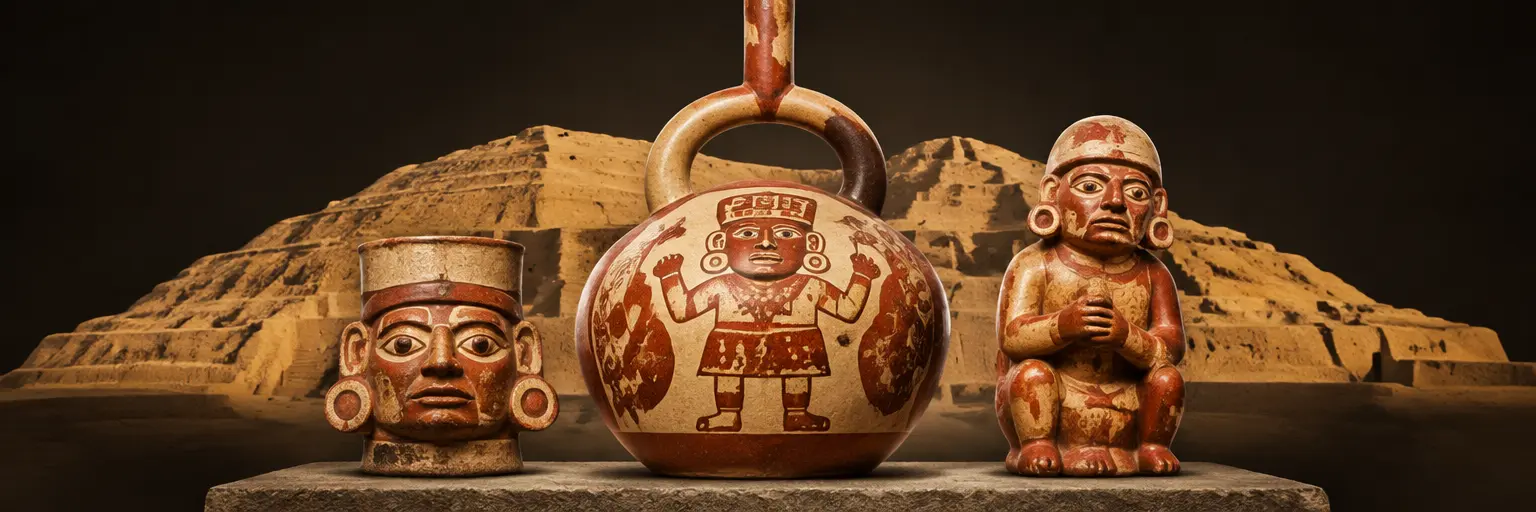
Unearth the enigmatic world of the Moche civilization through their significant artifacts, where intricate pottery, vibrant murals, and precious metalwork reveal a sophisticated society that flourished along Peru’s northern coast. These archaeological treasures—from portrait vessels capturing individual faces to ceremonial tombs laden with gold—offer an intimate glimpse into Moche rituals, daily life, and cosmology. Each piece tells a story of power, sacrifice, and artistic mastery, making them essential keys to understanding pre-Columbian America. Discover how these enduring relics illuminate the ingenuity of an indigenous civilization whose legacy continues to captivate historians and collectors alike. Perfect for enthusiasts of ancient history, Andean archaeology, and indigenous heritage, this exploration bridges the past with modern curiosity, ensuring these artifacts remain celebrated symbols of human achievement.
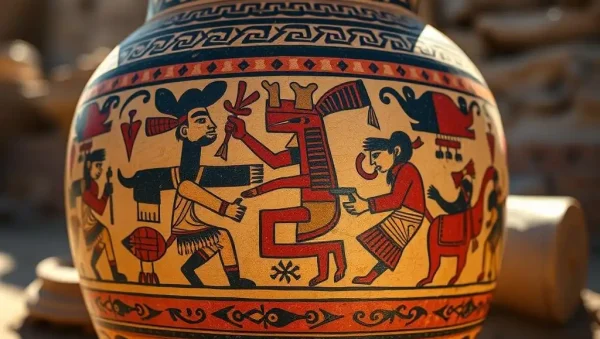
Discover the intricate Moche pottery techniques and themes that reveal the rich cultural heritage of ancient Peru. This exploration highlights the artistry…
Read article
😊 Preserving Moche archaeological artifacts presents unique challenges for researchers, requiring innovative techniques and collaboration. This article delves into the efforts to…
Read article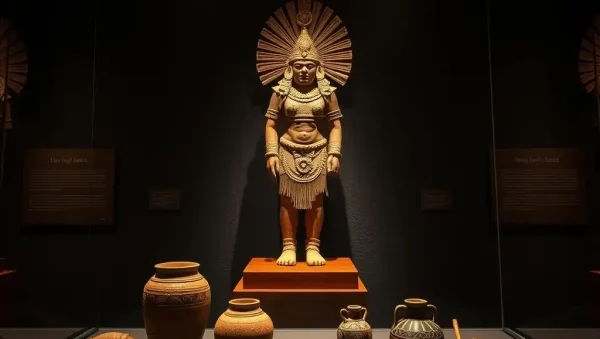
🌟 Moche sculpture cultural significance reveals the intricate relationship between power and religion in ancient Peru. These artifacts not only showcase artistic…
Read article
The Moche artifacts hold profound cultural significance, reflecting the intricate beliefs, social structures, and artistic achievements of this ancient civilization. By exploring…
Read article
🌟 Discover the intricate Moche civilization daily life through captivating artifacts that reveal their social structures, rituals, and artistic expressions. These remnants…
Read articleWelcome to our curated exploration of Moche artifacts, one of the most breathtaking artistic legacies of the ancient Andes. The Moche civilization (c. 100–800 CE) flourished along Peru’s northern coast, leaving behind ceramic masterpieces, goldwork, and textiles that reveal a complex society of warriors, priests, and skilled artisans. Here, you’ll discover how these archaeological discoveries—from portrait vessels to erotic pots—decode Moche ritual life, political power, and daily existence. Each artifact is a tangible link to a people who mastered clay, metal, and iconography, offering invaluable insights for historians, collectors, and enthusiasts of indigenous civilizations.
The Moche are famed for their stirrup-spout portrait vessels, which function as three-dimensional biographies in clay. These ceramics depict individual faces with astonishing realism—wrinkles, scars, and even emotional states—suggesting they commemorated specific rulers, warriors, or captives. Unlike generic idols, these portraits were likely used in elite exchanges or funerary rites, cementing the identity of the person represented. For archaeologists, each vessel offers a dataset: cranial modifications, ear ornaments, and headdresses reveal social rank and regional styles. Studying them helps us understand how Moche leadership was legitimated through visual memory, not just myth. Expect to learn how these objects blur the line between art and historical document, making them among the most studied Moche artifacts worldwide.
Beyond likeness, portrait vessels also encode ritual practices—many show nose ornaments or face paint tied to specific ceremonies like the “Sacrifice Ceremony.” The technical skill required to produce such individualized pieces implies a workshop tradition passed down through generations. Their discovery in elite tombs, such as at Sipán, confirms their role as markers of status. When you view these pieces, you’re not just seeing a face; you’re witnessing how a civilization codified leadership and ancestry in durable form. This subcategory helps you decode the subtle cues that differentiate a ruler from a warrior-priest, enriching your appreciation of Moche political theater.
The Moche’s profound connection to the Pacific Ocean is immortalized in their marine-themed artifacts, often incorporating Spondylus shells—a spiny oyster found in Ecuador’s warm waters. These shells were more than ornaments; they symbolized rain, fertility, and the sea’s life-giving power, and their presence in high-status burials indicates long-distance exchange networks. Moche potters shaped crabs, fish, and seabirds with anatomical precision, while shell inlays adorned pectorals and ear flares. By analyzing these items, archaeologists trace trade routes that linked the Moche with highland and northern coastal groups, revealing a complex economy of prestige goods. Expect to explore how marine icons, like the “Sea Wolf” (sea lion), represented supernatural forces controlling agriculture and human fate.
These artifacts also reveal the Moche’s environmental knowledge—they accurately depicted species that flourish during El Niño events, suggesting an adaptive relationship with climatic anomalies. Spondylus was often crushed and offered in irrigation canals to invoke rainfall, blurring the line between practical water management and spiritual supplication. For SEO-focused content, this is a rich vein: keywords like “Moche marine religion,” “Spondylus trade,” and “ancient Peruvian coastal ecology” emerge naturally. Here, you’ll find that these artifacts are not passive relics but active agents in understanding how the Moche mitigated environmental uncertainty, a lesson still relevant for modern sustainable practices.
No Moche discovery captivates more than the grave goods of the Lord of Sipán, unveiled in 1987. These included full gold funerary masks, nose ornaments, and backflaps crafted from hammered gold, silver, and gilded copper. Such objects were not mere decoration—they transformed the deceased into a divine ancestor, with each metal symbolizing solar (gold) and lunar (silver) powers. The masks often feature feline fangs and stylized eyes, merging human and supernatural traits. Excavations show that these pieces were layered in a specific order, reflecting a ritual sequence meant to guide the soul. This subcategory illuminates how Moche metallurgy reached a peak—using lost-wax casting and alloying—that astonished even Spanish chroniclers. You’ll gain insight into the hierarchy of burial offerings, where warriors received copper, while rulers wore gold-layered regalia.
These artifacts also challenge simplistic views of pre-Columbian technology. The gilded copper technique—a surface treatment that mimics gold—demonstrates sophisticated resource management, reserving pure gold for elite burials. Scholars have used X-ray fluorescence to identify exact metal sources, linking them to northern Peruvian mines. For enthusiasts, this is a dual story: the opulence of royalty and the skill of anonymous artisans. Detailed iconography on masks often depicts the same “Decapitator God” seen on ceramics, proving a shared religious framework across media. When you explore this facet, you’ll appreciate why Sipán is often called the “Tutankhamun of the Americas,” and why its artifacts redefined our understanding of Moche social stratification.
Moche artifacts frequently depict ceremonial warfare, with maces, spears, and shield designs appearing on both ceramics and metalwork. Yet these were not ordinary weapons—many were too fragile for battle, implying they served ritual duels where captives were taken for sacrifice. The iconic “Trophy Head” vessels show severed heads with closed eyes and bound hair, symbolizing the defeat of supernatural enemies. Recent isotopic analyses of excavated remains confirm that many sacrificed individuals were local warriors, not foreigners, upending earlier narratives of inter-group conflict. This subcategory examines how Moche artifacts encode a cosmic battle between order and chaos, where the ruler reenacted mythic victories to ensure agricultural renewal. By dissecting the iconography, you’ll learn to distinguish symbolic depictions from real events—a crucial skill for interpreting any ancient culture.
Moreover, these objects reveal the political theater of public spectacle—likely performed in large plazas at sites like Huaca de la Luna, where murals show captives being led to sacrifice. The weapons themselves often bore the image of the “Spoil Head,” a deity associated with death and regeneration. For researchers, the combination of weapon and human remains in specific deposits offers evidence of a structured ritual calendar. In practical terms, this subcategory helps you understand why violence was not chaotic but highly codified, serving both religious and state functions. Keywords like “Moche sacrifice ceremony,” “trophy head iconography,” and “Andean ritual warfare” naturally emerge, making this a rich area for enthusiasts of deep history.
Beyond the elite, Moche artifacts also celebrate everyday life in remarkable detail. Vessels depict farmers carrying maize, fisherfolk on reed boats, weavers at looms, and even people suffering from ailments like goiter or clubfoot. These “genre scenes” are a goldmine for understanding subsistence strategies and social divisions of labor. For instance, the presence of llama figurines indicates caravan trade, while clay models of houses show multi-family compounds. Unlike the idealized royal portraits, these pieces often employ humor—one famous pot shows a man with a swollen hand, possibly a medical guide. This subcategory argues that Moche art was a visual encyclopaedia, documenting everything from crop types to craft specialization. By studying these artifacts, we reconstruct the daily rhythms—how maize beer (chicha) was brewed, how cotton was spun, and how the coastal fog-fed valleys sustained dense populations.
These humble objects are equally critical for archaeological dating—the chronological seriation of Moche pottery relies on changes in stirrup-spout shapes and painted motifs. They also reveal gender roles: women are often shown as priestesses or textile producers, while men appear as warriors or fishermen. For modern indigenous descendants, these pieces validate a rich heritage of technical innovation, such as the use of molds for mass-producing vessels. This perspective shifts the narrative from “lost civilization” to “living legacy.” Explore how these artifacts connect to contemporary Peruvian identity, making them not just museum pieces but symbols of cultural continuity. Keywords such as “Moche agriculture,” “pre-Columbian fishing,” and “ancient Andean daily life” will enrich your search journey.
Moche artifacts are unique for their hyper-realism and narrative complexity. Unlike the stylized geometric art of the Wari or Inca, Moche pots and metalwork depict faces, animals, and activities with anatomical fidelity, including emotional expressions and medical conditions. This allows archaeologists to “read” social history directly from the objects, a rarity among pre-Columbian civilizations.
The largest collections are at the Museo Tumbas Reales de Sipán in Lambayeque, Peru, and the Museo Arqueológico Nacional in Lima. International museums like the Metropolitan Museum of Art (New York) and the British Museum (London) also hold significant Moche ceramics and goldwork, often featured in traveling exhibitions.
Dating relies on seriation (chronological ordering of pottery styles) and stratigraphy. More recently, absolute dates come from radiocarbon testing of organic residues inside vessels and from tomb contexts. The fifth-century Sipán find provided well-dated trade goods, anchoring the relative chronology.
These vessels, depicting sexual acts, are not pornographic but ritual symbols of fertility and cosmic renewal. They often pair sex with images of plants, animals, or skeletal figures, reinforcing themes of life-death-rebirth central to Moche religion. They were likely used in private elite ceremonies, not public display.
Since colonial times, Moche pyramids (huacas) were known as gold repositories. Huaqueros (tomb robbers) targeted them, often destroying ceramics to reach metal. The 1987 Sipán excavation was a race against looters, and modern legislation now protects sites, while museums collaborate with communities to stop illicit trade.