Unique Indigenous Artifacts That Have Stood the Test of Time
Discover timeless indigenous artifacts that reveal the rich history of pre-colonial Americas. These unique creations not only showcase the artistic brilliance of…
Read article
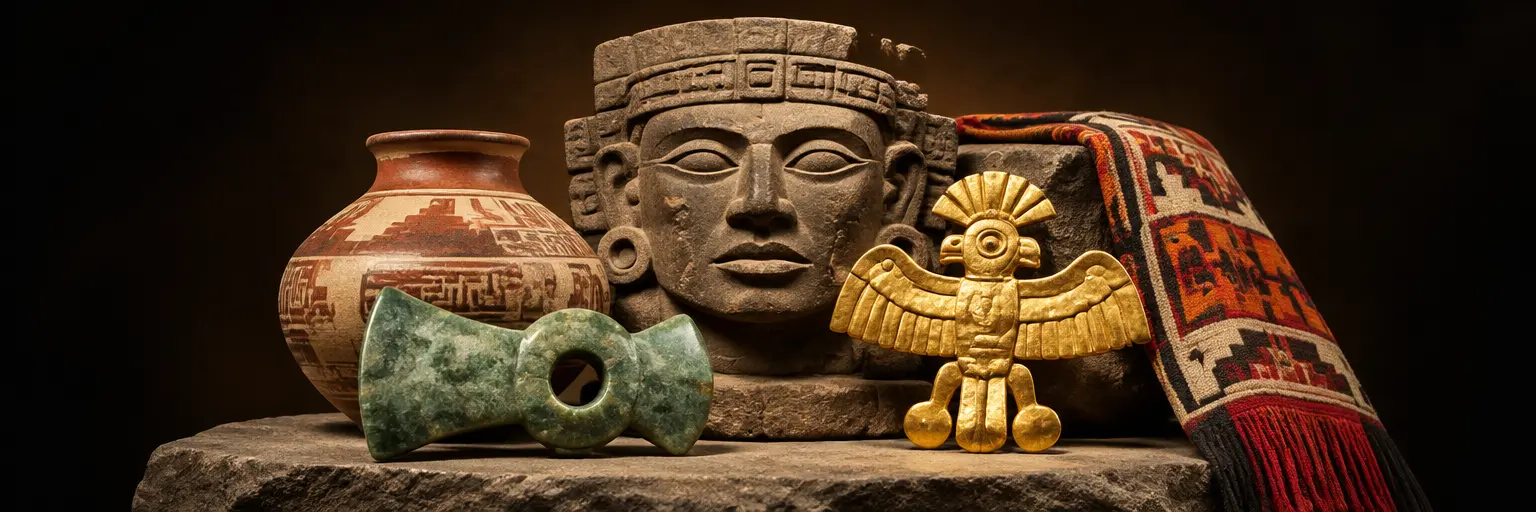
Unearth the enigmatic relics that defy easy classification—from intricately carved stone spheres and ceremonial jade masks to baffling metalwork and ritual offerings that hint at lost technologies and spiritual depths. These significant artifacts, often overshadowed by famous monuments, reveal the boundless creativity and complex worldviews of pre-Columbian peoples across the Americas. Each object tells a silent story of trade routes, astronomical knowledge, social hierarchies, or sacred ceremonies, offering a rare, tangible connection to civilizations that thrived long before European contact. Whether it’s a perplexing geoglyph, a delicately woven textile, or an enigmatic effigy pipe, these treasures challenge our assumptions and deepen our appreciation for the ingenuity, resilience, and cultural richness of Indigenous ancestors. Dive into this curated collection to discover the unexpected masterpieces that illuminate daily life, myth, and power—proving that the greatest archaeological wonders often lie in the details others overlook.
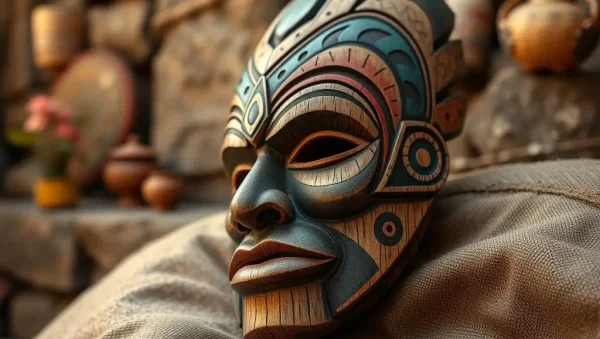
Discover timeless indigenous artifacts that reveal the rich history of pre-colonial Americas. These unique creations not only showcase the artistic brilliance of…
Read article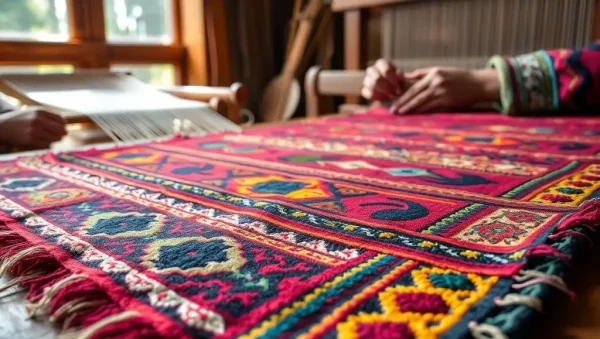
🌍 Ancient textiles serve as a vibrant testament to indigenous cultures, weaving stories that reflect their values, traditions, and identity. Understanding the…
Read article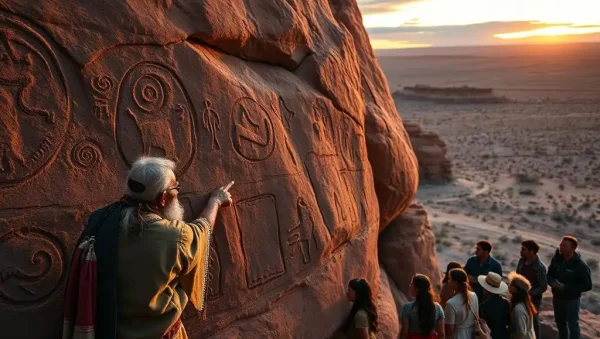
🌍 Indigenous rock art symbols and meanings reveal profound insights into the spiritual and social lives of pre-colonial cultures. This exploration uncovers…
Read article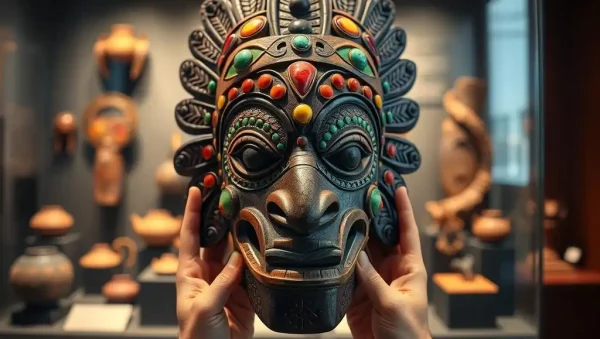
🌍 Pre-Columbian indigenous cultures artifacts reveal a rich tapestry of innovation and artistic expression, challenging misconceptions about these societies. By examining their…
Read articleWhen we think of archaeological treasures from the Americas, gold masks, giant stone heads, and intricately woven textiles often come to mind. But what about the lesser-known, enigmatic objects that defy easy categorization? The subcategory "Significant Artifacts - Others" within Archaeological Discoveries is dedicated to those remarkable finds that don’t fit neatly into familiar groups—items that reveal unexpected technologies, spiritual practices, and daily life of Indigenous civilizations. Here, we uncover the hidden gems that reshape our understanding of pre-Columbian history, from strange ceremonial instruments to everyday tools with extraordinary craftsmanship.
This section highlights artifacts believed to have been used in sacred ceremonies but whose exact function remains debated. Examples include carved chacmool figures from Mesoamerica, bone tubes possibly used for inhaling hallucinogens, and obsidian mirror disks associated with divination among the Aztecs. These objects often bear intricate iconography that points to complex cosmological beliefs, yet their absence from standardized typologies makes them fascinating outliers.
Readers will appreciate how these artifacts challenge the assumption that we fully understand Indigenous ritual life. Each piece provides a tactile link to intangible heritage—music, dance, and trance states—that seldom survives in the archaeological record. By examining their materials, wear patterns, and deposition contexts, researchers infer everything from elite power dynamics to shamanic healing practices. This exploration encourages a more nuanced view of how spirituality and politics intertwined in ancient American societies.
Many “other” significant artifacts are practical items refined to perfection: fishing weights carved from jade, clam-shell scrapers with ergonomic grips, or rubber balls made from native latex. These objects reveal sophisticated engineering without being monumental. For instance, the Olmec’s use of bitumen waterproofing on woven baskets shows an early mastery of composite materials, while Inca khipu (knotted cords) served as a binary-like data system for census and tribute—far from merely “simple” tools.
Focusing on these pieces shifts attention from elite tombs to household economies and regional trade networks. By analyzing raw material provenance (e.g., marine shell inland), we reconstruct long-distance exchange routes. Moreover, experimental archaeology—replicating these tools—demonstrates their efficiency, offering a tangible appreciation for Indigenous ingenuity. This subcategory thus celebrates the unsung heroes of daily survival: the durable, adaptable, and often overlooked implements that sustained entire civilizations.
A surprisingly rich vein of “other” artifacts includes rattles, whistles, trumpets, and wind chimes crafted from clay, bone, and shell. Maya ceramic flutes tuned to pentatonic scales and Aztec death whistles that mimic human screams are prime examples. These sound tools weren’t just entertainment; they were used in rain-making ceremonies, war signaling, and funerary rites. Their acoustic properties were deliberately engineered, often tested in modern labs to reveal resonant frequencies that could alter brainwave states.
For enthusiasts, this subcategory offers an immersive sensory experience through digital audio reconstructions and iconographic analysis. Scholars compare these items to ethnographic records of contemporary Indigenous music, identifying continuities over millennia. The presence of tuning notches and mouthpiece wear suggests standardized pitch systems, implying formal music education. Understanding these artifacts expands our appreciation of pre-Columbian performative arts and their role in social cohesion, making past civilizations feel startlingly alive.
Some of the most intellectually demanding “other” artifacts are small, portable devices used to track celestial cycles—unlike massive observatories. Examples include the Aztec Sun Stone’s miniature replicas, Inca quipus with calendar knots, and Moche stirrup jars decorated with star maps. These objects encoded complex astronomical knowledge in materials like gold, shell, or wood, allowing priests or chieftains to predict solstices, eclipses, and agricultural seasons away from permanent structures.
By studying these items, we see that Indigenous science was not isolated but woven into daily governance. The alignment of carved glyphs with specific star clusters, verified via archaeoastronomy, demonstrates empirical observation. Moreover, their portability suggests itinerant specialists who carried knowledge across communities, facilitating cultural exchange. This subcategory demystifies how timekeeping and cosmology operated in non-literate societies, proving that abstract thought translated into tangible, wearable objects—a testament to cognitive sophistication.
Finally, “Significant Artifacts - Others” includes items made from non-local materials or in foreign styles, such as Macaw feathers in the Andean highlands, shark teeth in the Midwest, or Olmec-style figurines found in Costa Rica. These anomalies reveal long-distance pilgrimages, gift exchanges, or even diplomatic marriages. The mere presence of a jade bead from Guatemala in an Ohio burial mound necessitates complex explanations involving intermediary networks and shared symbol systems.
For researchers, these outliers are critical for mapping economic geography. Through trace element analysis, we can pinpoint quarries or mines, reconstructing maritime and overland routes. Simultaneously, stylistic mimicry indicates ideological influence, not just trade. This subcategory challenges the notion of isolated cultures, painting instead a dynamic web of interconnectedness across vast distances. It’s a reminder that even “odd” artifacts are pieces of a larger puzzle—each one telling a story of human migration, adaptation, and resilience.
The “Others” category is a scientific catch-all for objects that don’t fit established typologies. It includes items of unknown function, hybrid styles, or those found out of context. This label is temporary—upon further study, they may be reclassified, but it ensures they aren’t overlooked in academic records.
Significance is assessed via multiple criteria: rarity, intactness, contextual information (e.g., burial association), material value, and artistic skill. Additionally, experimental replication, iconographic comparison, and residue analysis help infer function. Even fragmentary pieces are significant if they provide unique data on trade, ritual, or technology.
Absolutely. Everyday tools—like grinding stones, fishhooks, or loom weights—often fall into “Others.” Their wear patterns reveal diet, craft specialization, and household labor. By combining them with bioarchaeological data, we reconstruct gender roles, health, and social organization, making daily life tangible.
Yes. The Smithsonian’s National Museum of the American Indian and the Peabody Museum house extensive “miscellaneous” collections. Online platforms like the Digital Archaeological Record (tDAR) allow keyword searches for “unclassified” artifacts. University repositories also publish catalogs with detailed photographs and provenance data.
Citizen scientists can help by reporting stray finds to local archaeological surveys, engaging in 3D scanning projects (e.g., via Sketchfab), or transcribing field notes. Public archaeology initiatives often welcome volunteers to catalog, conservate, or photograph “Others.” However, always follow legal and ethical guidelines—avoid looting or invasive testing.