Stone and Sky: The Symbolism Behind Tiahuanaco's Iconic Monuments
🌄 The Tiahuanaco monuments symbolize the profound connection between stone and sky, reflecting the history of indigenous cultures in the Americas. This…
Read article
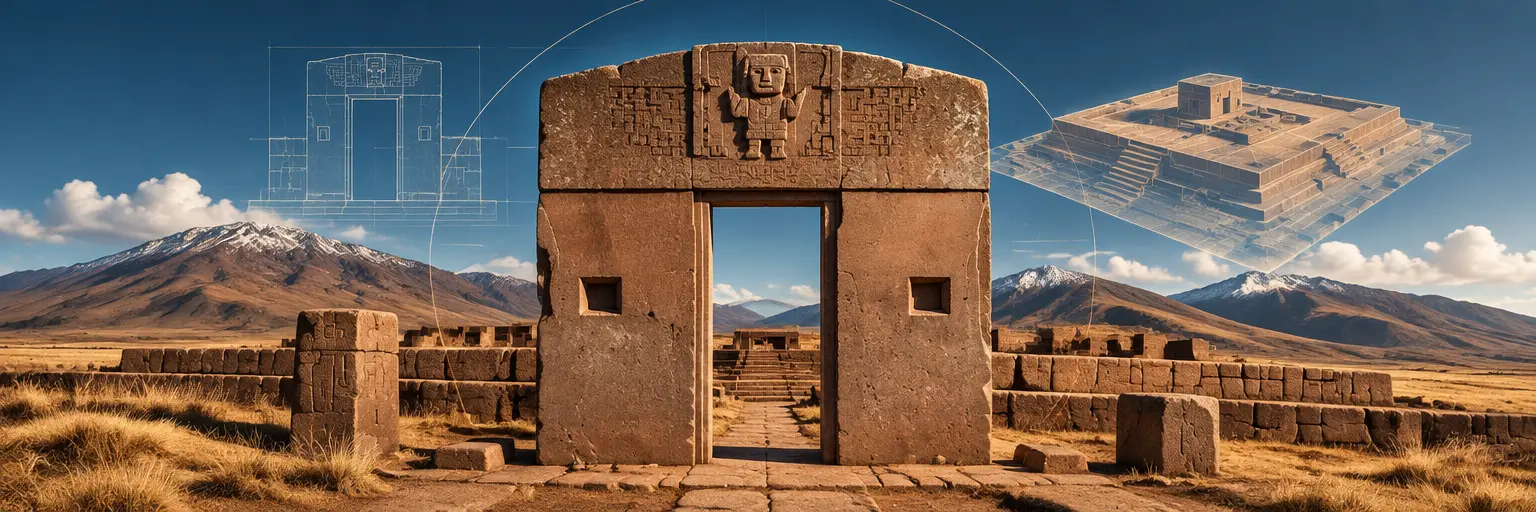
Tiahuanaco’s architecture and urbanism stand as a breathtaking testament to pre-Columbian engineering and cosmic vision, set high in the Andean altiplano. This ancient city, near Lake Titicaca, showcased monumental stonework—precisely cut and fitted blocks, often weighing dozens of tons, assembled without mortar. Its planned layout, aligned with astronomical events, featured ceremonial plazas, the iconic Gateway of the Sun, and terraced platforms like the Akapana pyramid, reflecting a deep integration of sacred geography and social hierarchy. The urban grid, with its canal systems and sunken courts, reveals advanced hydraulic knowledge and a sophisticated understanding of urban resilience. For scholars and travelers alike, Tiahuanaco’s ruins offer a powerful glimpse into a highly organized society that influenced later Andean cultures, including the Inca. Discover how its polygonal masonry, drainage engineering, and symbolic carvings continue to inspire awe and research, making it a cornerstone of indigenous American heritage.
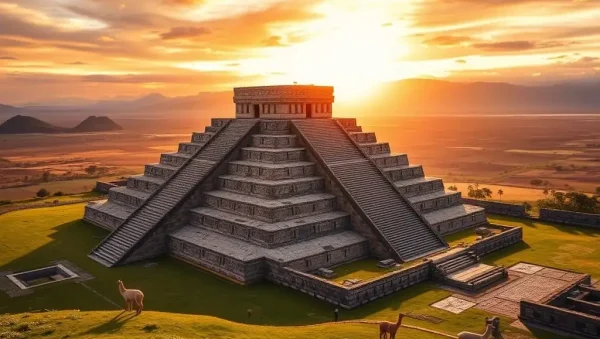
🌄 The Tiahuanaco monuments symbolize the profound connection between stone and sky, reflecting the history of indigenous cultures in the Americas. This…
Read article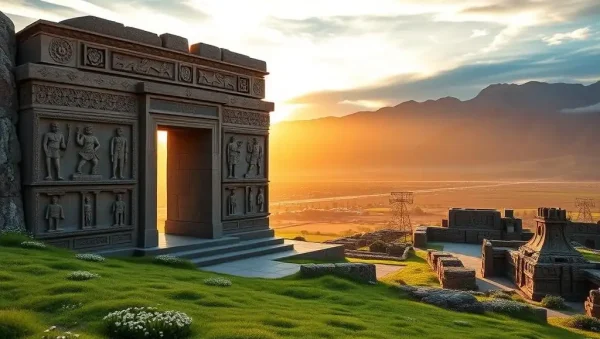
🌍 The Aymara architecture cultural significance at Tiahuanaco reveals a profound connection to the region's indigenous heritage, showcasing advanced engineering and cosmological…
Read article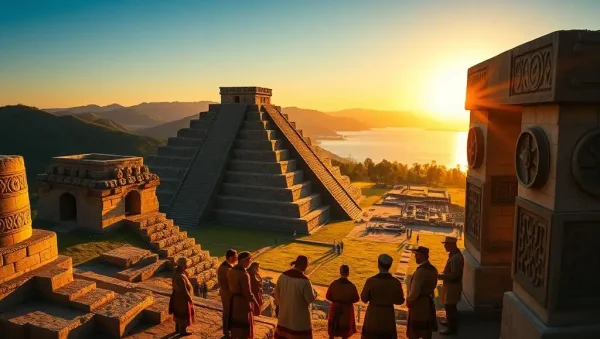
🌍 Discover the intricate tapestry of Tiahuanaco urban life history, where ancient rituals seamlessly intertwined with daily living. This exploration unveils the…
Read articleWelcome to the Architecture and Urbanism subcategory, where we delve into the monumental stone cities, ceremonial centers, and engineered landscapes of the Tiahuanaco (Tiwanaku) civilization, a pre-Columbian powerhouse that flourished near Lake Titicaca in modern-day Bolivia. Here, you’ll uncover how this Andean society mastered cyclopean masonry, precise astronomical alignment, and sophisticated urban planning—achievements that continue to astonish archaeologists and visitors alike. This page is your gateway to understanding how Tiahuanaco’s built environment reflected its cosmology, social hierarchy, and agricultural ingenuity.
Explore the iconic Gateway of the Sun, a single block of andesite carved with intricate iconography, alongside the Akapana Pyramid—a seven-tiered artificial mound that dominated the city’s skyline. Tiahuanaco architects used interlocking stone blocks without mortar, a technique that withstood earthquakes for over a millennium. You’ll learn how these structures served not only as religious and administrative hubs but also as solar observatories, with doorways and niches aligned to solstices and equinoxes. Expect detailed analyses of quarrying, transport, and the symbolic use of stone as a medium of imperial power.
Beyond famous landmarks, discover lesser-known but equally significant structures like the Semi-Subterranean Temple, whose sunken courtyard boasts carved heads embedded in walls—perhaps representing conquered peoples or ancestors. The Kalasasaya platform, with its massive upright pillars, exemplifies the precision of Tiahuanaco’s stone-cutting, with joints so tight that a blade cannot pass between them. This section reconstructs construction sequences, using recent LiDAR and excavations to show how the city evolved over centuries, adapting to climatic shifts while maintaining cosmic orientation.
Understand how Tiahuanaco’s urban layout mirrored its worldview, with a central ceremonial core surrounded by residential zones, workshops, and agricultural terraces. The city was deliberately placed at the southern shore of Lake Titicaca, a sacred water body associated with creation myths. Urban planners engineered raised fields (sukakollos) that mitigated frost damage, boosting crop yields—a testament to their integrating architecture with agronomy. Grid-like streets, drainage canals, and plazas reveal a society that valued order, ritual processions, and communal assembly.
This section also examines the periphery, where satellite settlements like Lukurmata and Pajchiri replicated core architectural styles, indicating cultural diffusion or political control. You’ll see how the city’s orientation toward the Andean mountains and lake created a symbolic axis mundi, connecting the earthly realm with the celestial. Through maps, virtual reconstructions, and case studies, we highlight how Tiahuanaco’s urban footprint influenced later cultures, including the Inca, who revered its ruins as sacred ancestral sites.
Dive into the hydraulic engineering that sustained Tiahuanaco’s population of perhaps 20,000–40,000. Stone-lined canals, aqueducts, and reservoirs channeled water from the altiplano’s seasonal rains, while sukakollos used elevated planting beds with water channels to regulate soil temperature. These systems were so effective that they are being revived today to combat climate change in Andean agriculture. Engineering analysis reveals how the builders accounted for seismic activity—using trapezoidal doorways and flexible corner joints to absorb tremors, a technique documented in modern earthquake engineering studies.
Beyond hydrology, explore the quarrying and logistics of moving multi-ton blocks from quarries up to 40 kilometers away. No wheels or draft animals existed, so teams likely used ramps, ropes, and wooden rollers, perhaps exploiting frozen ground for sliding. Experimental archaeology has replicated these methods, showing that a 10-ton block could be moved by 200 workers in a few days. This section includes diagrams, time-lapse animations, and comparative studies with other ancient civilizations, giving you a practical grasp of Tiahuanaco’s unmatched stonemasonry prowess.
Uncover the celestial blueprint embedded in Tiahuanaco’s layouts. The Kalasasaya platform aligns with the sunrise on the equinox, while the Gateway of the Sun is oriented to the December solstice. Carvings on its lintel depict a creator deity flanked by winged messengers, interpreted as a solar calendar. Discover how the architect’s used shadow casting and stone alignments to mark planting and harvesting times, integrating religion with agriculture. Recent archaeoastronomical surveys have identified sightlines to Pleiades and other stars, suggesting a sophisticated knowledge of celestial cycles.
This section also explores the iconography of staff gods, condors, and feline motifs, linking them to Andean cosmological beliefs of duality (above/below, wet/dry). The Monolithos (stone statues) in the temple courtyard may represent ancestors or mythical beings, each with distinct postures and headdresses that encoded social status. By analyzing these symbols, you’ll appreciate how Tiahuanaco’s architecture was not just functional but a living text—a narrative of creation, power, and the cyclical renewal of life.
Trace how Tiahuanaco’s architectural language spread across the Andes after its decline around 1000 CE. The Inca, who considered Tiahuanaco a legendary birthplace of their own rulers, adopted its trapezoidal doors, stepped motifs, and platform mounds in their own constructions, such as at Sacsayhuamán. This section compares Tiahuanaco’s urbanism with Wari (a contemporary culture in Peru), showing both shared and divergent styles. You’ll also learn how modern indigenous communities in Bolivia and Peru continue to revere Tiahuanaco as a sacred site, integrating its ruins into their rituals and identity.
Beyond direct influence, Tiahuanaco’s techniques of monumental construction—including precise stone fitting and terrace agriculture—persisted in later societies, from the Colla people to the Inca Empire. This section reviews archaeological evidence from post-Tiahuanaco sites, such as the use of recycled Tiahuanaco stones in Inca buildings, and discusses how the site’s preservation challenges (e.g., pollution, looting) threaten our ability to learn further. By understanding this legacy, you’ll see why Tiahuanaco remains a cornerstone of Andean heritage, honored by UNESCO and a source of national pride in Bolivia.
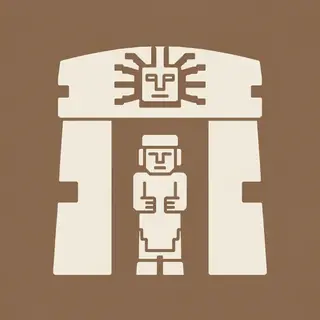
The Gateway of the Sun is the most iconic, a single 3-meter-tall andesite block weighing about 10 tons, carved with a central deity figure and 48 smaller winged effigies. It likely once stood atop the Kalasasaya platform and may have served as a solar calendar, with its carvings marking seasonal ceremonies.
They used copper and bronze tools, along with abrasive sand and water, to grind stones to tolerances within millimeters. Interlocking blocks with L-shaped clamps (metal or stone) held them together, while foundation stones were cut with stepped edges to distribute weight and resist earthquakes.
It was both. It functioned as a political and religious capital with a permanent population of tens of thousands, evidenced by residential compounds, craft workshops, and large-scale agricultural fields. Its ceremonial core, however, dominated the urban layout, suggesting that ritual life was central to daily activity.
A combination of prolonged drought (around 950–1000 CE), which disrupted the raised-field agricultural system, and internal social upheaval likely spurred its collapse. Environmental data from lake sediment cores shows a sharp drop in rainfall, which would have reduced crop yields, weakened elite authority, and led to abandonment or conquest.
Yes, the site is open to visitors as a UNESCO World Heritage Site in Bolivia, about 70 km west of La Paz. You can walk among the Akapana Pyramid, Kalasasaya Temple, and the Gateway of the Sun, and visit the on-site museum with artifacts and monoliths. Beware of high altitude (3,800m) and plan for a day trip.