European Contact and Conquest: The Enduring Legacy of Tiahuanaco’s First Encounters
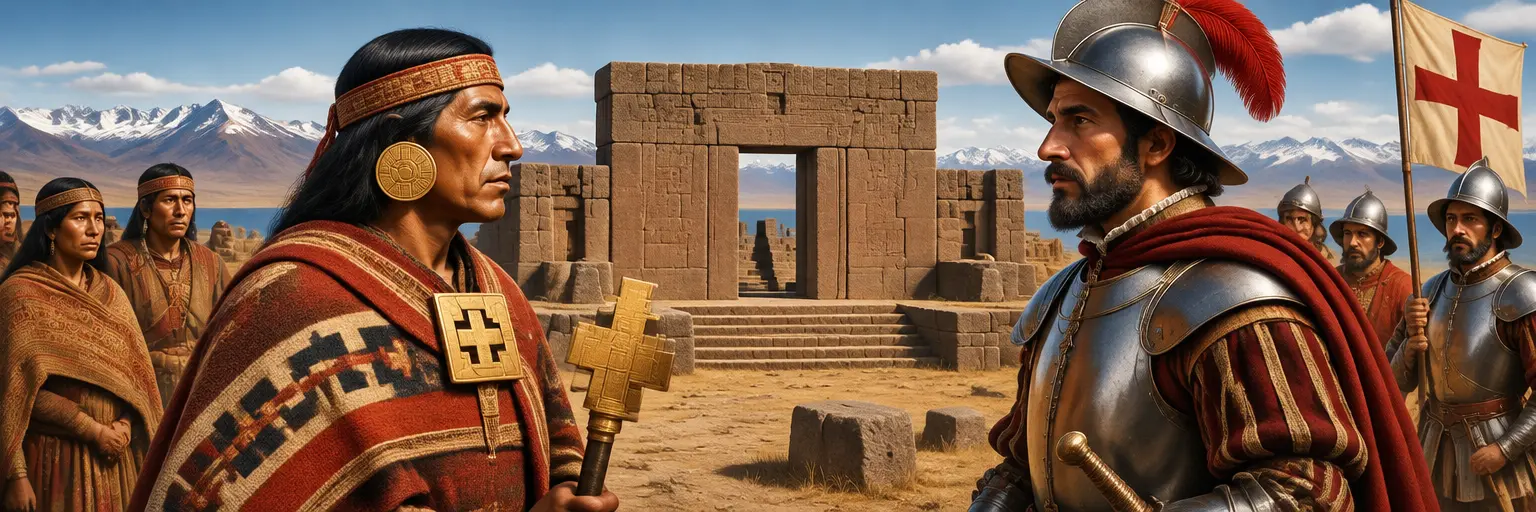
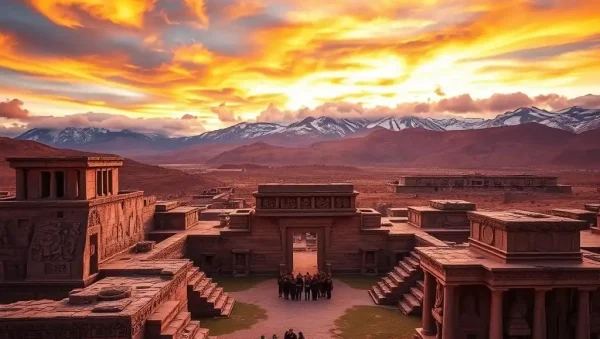
When Spanish conquistadors and chroniclers first ventured into the high Andes in the 1530s, they encountered a landscape dotted with monumental ruins that defied contemporary explanation. The Tiahuanaco (Tiwanaku) culture, which had flourished between 500 and 1000 CE near Lake Titicaca, was already centuries collapsed, yet its colossal stone gates, terraced temples, and intricate irrigation systems profoundly shaped how Europeans interpreted indigenous history—and how Indigenous peoples resisted, adapted, and reasserted their identities under colonial rule. This subcategory explores the pivotal moments, misinterpretations, and survival strategies that defined European contact and conquest in the Tiahuanaco heartland.
🏛️ The Spanish Arrival: Chroniclers and the Myth of Origins
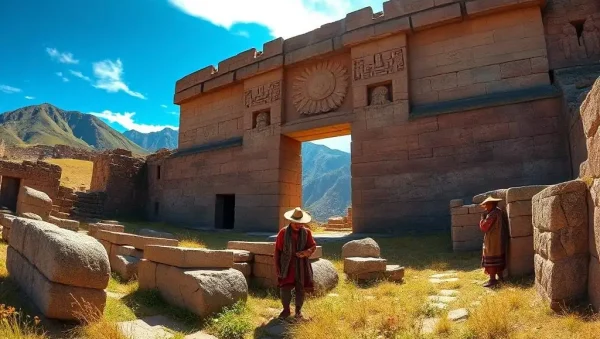
Upon reaching the Bolivian altiplano, Spanish chroniclers like Pedro Cieza de León and Garcilaso de la Vega were astonished by the precision-cut stones of Puma Punku and the Gateway of the Sun. They recorded indigenous oral traditions that attributed these constructions to a time before the Inca, often framing Tiahuanaco as a “workshop of humanity” where the creator god Viracocha shaped the first peoples. These accounts, heavily filtered through Christian and European lenses, created a lasting colonial narrative that misrepresented Tiahuanaco as a mysterious, lost civilization rather than the thriving political and religious center it had been. This mythologizing had real consequences, as it enabled Spanish authorities to claim spiritual justification for conquest, viewing the ruins as evidence of pre-Christian divine providence—and simultaneously downplaying the sophisticated engineering and astronomical knowledge of the actual Tiahuanaco people.
For modern researchers, these chronicles are both treasure and trap. They provide the earliest written descriptions of the site, including details about monoliths, ceramics, and ritual practices that were later looted or destroyed. However, they also embedded colonial biases that persisted for centuries, such as the assumption that indigenous peoples could not have built such structures without outside help. Understanding this bias is crucial for separating historical fact from European projection. By critically reading these sources against archaeological evidence—such as radiocarbon dating of the Kalasasaya temple and isotope analysis of human remains—scholars now reconstruct a very different Tiahuanaco: a cosmopolitan city of perhaps 30,000 inhabitants, with specialized artisans, state-managed agriculture, and long-distance trade in camelid fiber and hallucinogenic snuff.
⚔️ The Conquest of the Altiplano: From Inca Subjection to Spanish Encomienda
Before the Spanish arrived, the Tiahuanaco heartland had already been under Inca dominion for nearly a century, with the Inca incorporating the ruins into their own origin myths. This prior conquest shaped the region’s political fragmentation, making it easier for Spanish forces under Diego de Almagro (1535) and later Pedro de Anzures (1538) to subjugate local Aymara lords. The Spanish quickly instituted the encomienda system, granting conquistadors rights to indigenous tribute and forced labor in mines and textile workshops. The once-sacred site of Tiahuanaco itself was used as a quarry—colonial churches in nearby Tiwanaku village still contain carved blocks repurposed from the ancient temples, a visible symbol of cultural erasure and architectural appropriation.
Resistance was neither uniform nor passive. Some Aymara caciques (chiefs) negotiated alliances with Spanish authorities, leveraging their traditional authority to secure reduced tribute quotas or exemptions for their communities. Others, like the famous Uru peoples of the lake region, retreated to floating islands, maintaining autonomy through social isolation. Even under brutal extraction, Tiahuanaco’s descendants preserved core elements of their cosmology—such as the veneration of Pachamama (Earth Mother) and the taypi, a sacred center-point concept embedded in the site’s layout—by syncretizing them with Christian saints and feast days. This resilience meant that while the conquest dismantled political structures, it did not extinguish the living cultural memory connected to the ancient site.
📜 Colonial Transformations: Agriculture, Religion, and the Remaking of Landscape
Spanish colonization fundamentally altered the Tiahuanaco landscape, far beyond the stone quarrying. The introduction of Old World crops such as wheat, barley, and sheep transformed agricultural cycles, disrupting the raised-field farming system (waru waru) that had supported the ancient city’s vast population. Colonial records show that by the 1570s, many raised fields were abandoned, filled with silt, or converted to pasture, leading to soil erosion and a drop in food production. Simultaneously, the reducción program, initiated under Viceroy Francisco de Toledo in 1572, forcibly resettled dispersed indigenous communities into grid-patterned villages, severing traditional land tenure and sacred relationships with specific hills, springs, and ancestral burial sites.
Religious conquest was equally disruptive. Catholic missionaries, particularly Jesuits and Franciscans, destroyed huacas (sacred objects and shrines) and banned ritual practices, including the use of coca for divination and the veneration of ancestors through mummified remains. However, indigenous people adapted brilliantly: they hid miniature stone carvings of chullpas (burial towers) under altars, transformed the Tiahuanaco Sun Gate into a Christian cross icon, and wove pre-Columbian geometric patterns into church vestments. This religious syncretism created a new, hybrid cosmology that persists today, visible in the celebration of Aymara New Year (June 21) at the archaeological site, where a priest and an yatiri (shaman) jointly bless thousands of pilgrims—a living testament to resistance through adaptation.
🗿 Archaeological Reinterpretation: Decolonizing Tiahuanaco’s History
Twentieth-century archaeology, led by Wendell Bennett, Carlos Ponce Sanginés, and later Alan Kolata, began to overturn colonial-era myths. Using stratigraphy and radiocarbon dating, they established that Tiahuanaco was not a “temple of civilization” built by outside migrants, but an indigenous development rooted in the Lake Titicaca basin, with urban expansion peaking around 800 CE. This scholarly shift was not merely academic—it empowered modern Aymara activists to reclaim Tiahuanaco as a symbol of pre-colonial greatness and used to counter narratives of indigenous inferiority. Recent excavations at the Akapana pyramid reveal complex water management systems and ritual offerings of gold, ceramic vessels, and human sacrifices, indicating a highly organized state with advanced knowledge of engineering and astronomy.
Yet, decolonizing the narrative also means acknowledging uncomfortable continuities. Spanish colonial extractive practices anticipated contemporary issues: today, unregulated tourism, road construction, and agricultural encroachment threaten the site’s integrity. Local Aymara communities now co-manage Tiahuanaco with UNESCO (designated a World Heritage Site in 2000), demanding that any archaeological interpretation include their oral histories and ritual protocols. This collaborative approach has led to the rediscovery of ancient quinoa varieties cultivated in the raised fields, as well as community-led restoration of the temple’s drainage system. The story of Tiahuanaco under European contact is thus not a closed book but an ongoing negotiation between past material evidence and present indigenous sovereignty—a lesson in how history is always contested and rewritten.
🛡️ Survival and Legacy: Aymara Identity and the Fight for Memory
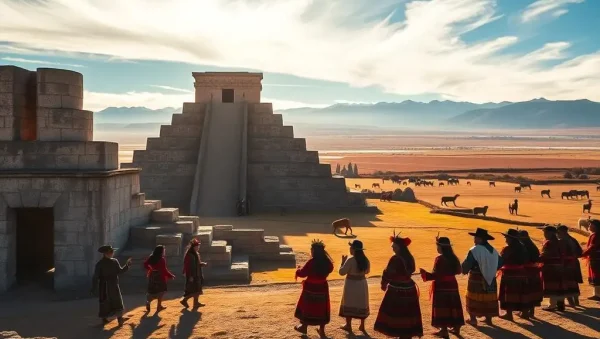
Despite centuries of conquest, disease (which reduced the altiplano population by up to 80% by 1600), and forced assimilation, the Aymara-speaking descendants of Tiahuanaco have preserved a vibrant identity rooted in the very landscape their ancestors sculptured. The annual Urinpacha festival, held at the ruins, blends Catholic processions with ancestral offerings to the achachilas (mountain spirits), demonstrating that cultural resilience is not binary—either pure or lost—but hybrid and dynamic. Contemporary Aymara intellectuals, such as the politician Fernando Huanacuni Mamani, explicitly invoke Tiahuanaco’s taypi philosophy of duality and complementarity in debates about indigenous autonomy and environmental stewardship, framing the site as a model for sustainable living that challenges Western development paradigms.
This legacy extends beyond the Andes. The Tiahuanaco iconography of the Gateway of the Sun—carved with a figure often called the “Staff God”—has become a pan-indigenous emblem, appearing on flags of the Andean nations and in political movements like Bolivian President Evo Morales’s (2006–2019) rituals at the site. European conquest attempted to sever the connection between people and place, but it ultimately failed. The stone canals still carry water, the monoliths still stand guard, and every June solstice, thousands of Indigenous people gather to honor the sun’s return—proving that even after 500 years of contact and conquest, Tiahuanaco remains a living center of identity, resistance, and hope. The lesson for all readers is that history is not just what happened, but what people choose to remember and re-enact.
Frequently Asked Questions
Did the Spanish ever conquer the actual Tiahuanaco city, or was it already abandoned?
By the time the Spanish arrived in the 1530s, Tiahuanaco’s major urban phase had ended around 1000 CE, and the site had been largely depopulated for centuries, though it remained a pilgrimage center for regional Andean peoples. The Inca had often used the ruins for ceremonies, but no major population resided there. The Spanish did not “conquer” the city militarily—instead, they quarried its stones and overwrote its meaning, treating it as a quarry and as evidence of a pre-Christian past.
What is the encomienda system and how did it affect Tiahuanaco descendants?
The encomienda was a Spanish colonial institution granting conquistadors control over indigenous labor and tribute in exchange for “protection” and religious instruction. In the Tiahuanaco region, local Aymara lords were forced to provide laborers for silver mines in Potosí and agricultural work, often under brutal conditions. This disrupted traditional farming and led to depopulation, but some caciques used the system to consolidate their own power, negotiating reduced quotas.
How do modern Aymara people view the Tiahuanaco ruins today?
Modern Aymara communities view Tiahuanaco as a living ancestor—a waka (sacred place) that embodies their origin and guardianship of the land. They perform annual rituals of thanks and petition, such as the offering of coca leaves and cooked maize at the Akapana pyramid. They also claim rights to participate in archaeological decisions and reject interpretations that isolate the site from its cultural continuity, advocating for co-management with authorities.
What material evidence reveals the true nature of Tiahuanaco’s society before conquest?
Excavations have uncovered residential complexes with specialized pottery workshops, metallurgy (copper and gold), textile dyeing, and diverse food remains including llama bones and fish from Lake Titicaca. Isotopic analysis of human teeth from burial mounds shows a stratified diet, with elites consuming more maize, while commoners relied on quinoa and potatoes. The famous Akapana pyramid contains a complex water drainage system, suggesting hydraulic engineering skills comparable to those of other ancient civilizations.
Can visitors still see traces of Spanish colonial impact inside the Tiahuanaco archaeological site?
Yes, several stones in the Kalasasaya temple and the Semi-Subterranean Temple show clear evidence of being cut, damaged, or reworked during the colonial period. Some carved blocks with Christian crosses or colonial-era inscriptions are still visible, placed alongside original Tiahuanaco carvings. The nearby village of Tiwanaku has a colonial church built directly over a pre-Columbian pyramid, and its foundations contain repurposed Tiahuanaco andesite blocks—an everyday reminder of conquest carved in stone.