Discover the History and Origins of the Tiahuanaco Culture
Welcome to the History and Origins subcategory of the Tiahuanaco Culture, part of our deep dive into the Indigenous Civilizations of the Americas. Here, you will uncover the mysterious beginnings, chronological development, and foundational myths of one of South America’s most influential pre-Columbian societies. This page is your gateway to understanding how the Tiahuanaco (also spelled Tiwanaku) emerged on the high Andes plateau, shaped by Lake Titicaca’s shores, and became a spiritual and political powerhouse long before the Inca Empire. Explore timelines, archaeological evidence, and cultural evolution in this SEO-rich guide designed for history enthusiasts, students, and travelers.
🏛️ The Rise of Tiahuanaco: A High-Altitude Cradle
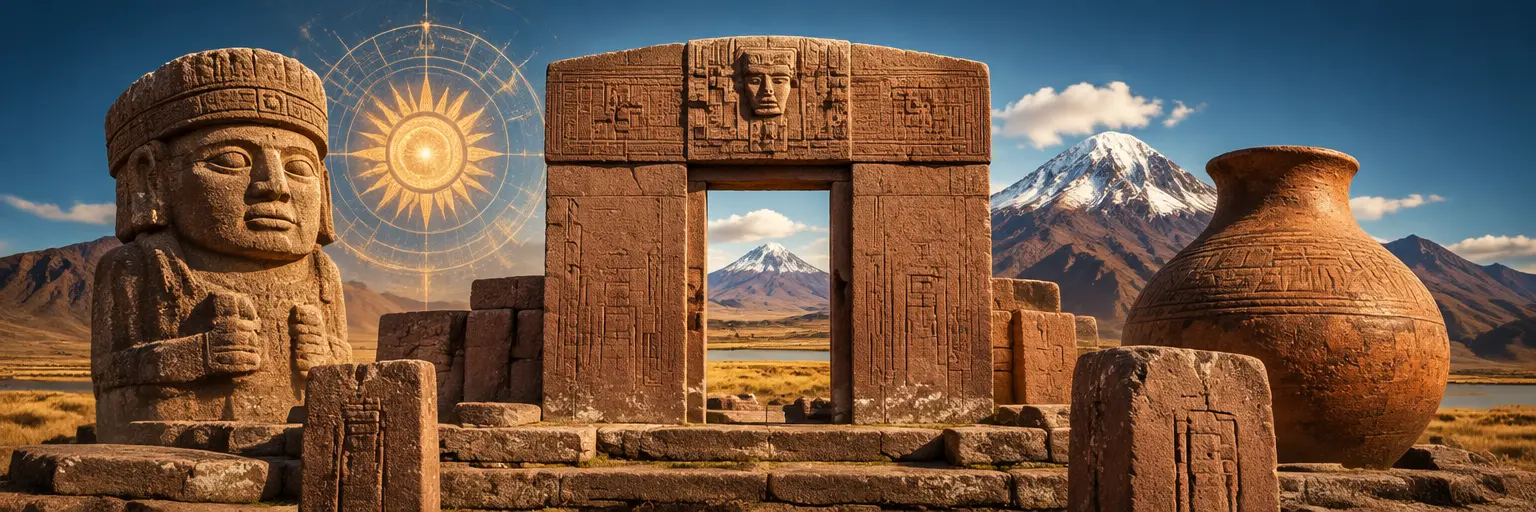
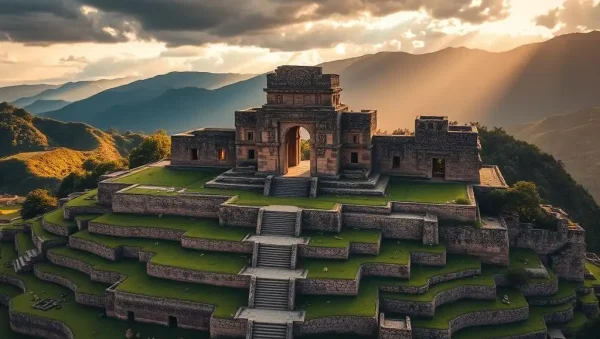
The Tiahuanaco culture originated around 1500 BCE near the southern shore of Lake Titicaca, in modern-day Bolivia, at an altitude exceeding 12,000 feet. This region’s harsh climate and fertile lakebed fostered early agricultural communities, which gradually coalesced into a complex society. By 300 CE, Tiahuanaco had become a major ceremonial center, with monumental stone architecture like the Akapana pyramid and the Gate of the Sun, reflecting sophisticated engineering and astronomical knowledge. The city’s strategic position enabled trade networks reaching the Pacific coast and Amazon basin, cementing its role as a regional hub.
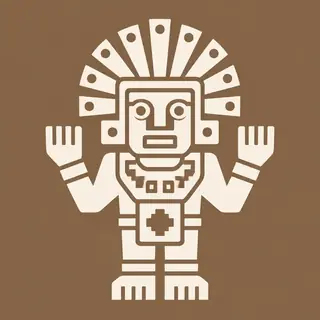
Archaeologists believe the culture’s rise was tied to climatic stability and the management of water resources, including raised-field farming (waru waru) that boosted crop yields. Unlike the later Inca, Tiahuanaco did not expand militarily but through cultural and religious influence, spreading its iconic iconography—such as the Staff God—across the Andes. This period marks the formation of a shared identity that would endure for over a millennium, making Tiahuanaco a foundational culture for subsequent Andean civilizations.
⏳ Chronology: From Village to Empire (1500 BCE–1200 CE)
The Tiahuanaco timeline is divided into distinct phases: the Early Period (1500–300 BCE) saw small farming villages, while the Middle Period (300–800 CE) witnessed urban expansion and monumental construction. The Classic Period (500–800 CE) is the zenith, with the city covering over 4 square kilometers, housing tens of thousands, and featuring elaborate terraced platforms, sunken temples, and colossal stone statues. This era also saw the culture’s influence extend to present-day Peru, Chile, and Argentina through enclaves and pilgrimage routes, as evidenced by ceramics and textiles found far from the core.
After 800 CE, a severe drought likely triggered decline, leading to urban abandonment and fragmentation by 1200 CE. However, Tiahuanaco’s legacy persisted—the Inca revered its ruins as a sacred origin point, incorporating its stonework and myths into their own imperial narrative. Understanding this chronology helps contextualize the cultural exchanges that shaped the Andes, from the Wari empire to the Inca, making Tiahuanaco a crucial link in pre-Columbian history.
🌀 Founding Myths and Spiritual Cosmology
Tiahuanaco’s origins are steeped in Andean creation myths, most notably the legend of Viracocha, the creator god who emerged from Lake Titicaca to humans, then journeyed across the land. According to myth, Viracocha sculpted the first people at Tiahuanaco and gave them life, establishing the city as a “center of the world” and a place of cosmic regeneration. These stories, recorded by Spanish chroniclers like Cieza de León, reflect the culture’s deep connection to water, mountains, and celestial cycles, reinforcing Tiahuanaco as a pilgrimage site for spiritual renewal.
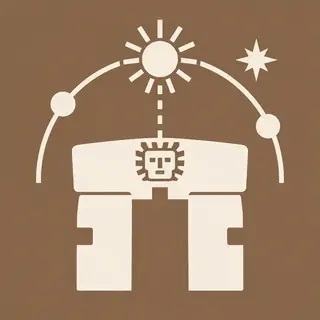
The physical layout of Tiahuanaco mirrors this cosmology: the Kalasasaya temple aligns with solstices, and the Gateway of the Sun features a frieze depicting a sun deity presiding over celestial messengers. Ritual offerings, including camelid sacrifices and hallucinogenic snuff trays, have been found in ceremonial contexts, indicating a complex priestly hierarchy. These myths and practices not only unified local populations but also attracted distant followers, spreading Tiahuanaco’s worldview across the Andes—a cultural DNA that survives in contemporary Aymara and Quechua traditions.
🔍 Archaeological Evidence and Key Discoveries
Modern archaeology has revolutionized our understanding of Tiahuanaco’s origins, with excavations by Wendell Bennett, Carlos Ponce Sanginés, and Alexei Vranich revealing stratified layers of habitation. Key finds include the massive monoliths (the Bennett Monolith and Ponce Monolith) carved with intricate figures, as well as the Semi-Subterranean Temple’s embedded stone heads, likely representing conquered peoples or ancestors. Radiocarbon dating and stratigraphy have refined the chronology, showing that monumental construction began earlier than once thought, around 700 BCE, challenging older narratives.
Recent lidar surveys and sediment analysis have uncovered raised-field systems extending far beyond the city, indicating a sophisticated agricultural state that supported a large population. Isotopic studies of human remains reveal diverse diets and migration patterns, proving long-distance trade and cultural exchange. These discoveries not only illuminate Tiahuanaco’s origins but also its resilience and adaptability, offering lessons in sustainable high-altitude living. For visitors, the on-site museum and ongoing excavations provide a tangible link to this ancient heritage.
🌎 Connections to Other Andean Civilizations
Tiahuanaco’s origins are not isolated; they share deep roots with the contemporaneous Wari culture of central Peru, both emerging from earlier Late Formative traditions. Scholars debate whether Tiahuanaco influenced Wari or vice versa, but clear parallels exist in iconography (the Staff God, condor and puma motifs) and architectural styles (sunken courts). The collapse of Tiahuanaco around 1000 CE coincided with the Wari decline, suggesting mutual environmental stresses or trade disruptions. Later, the Inca Empire (1400–1533 CE) claimed Tiahuanaco as a “remembered” ancestral site, incorporating its mythology into their royal lineage.
Despite these connections, Tiahuanaco maintained a distinct identity, characterized by its lake-centric worldview and monumental openness. Its influence extended to coastal cultures like the Chiribaya and highland groups such as the Colla and Lupaca, who adopted its agricultural techniques and religious symbols. By understanding these interconnections, we see Tiahuanaco not as a lost city but as a dynamic node in a vast network of indigenous innovation. This perspective enriches the broader narrative of the Americas before colonization, highlighting shared knowledge and resilient cultural exchange.
Frequently Asked Questions
What does the name “Tiahuanaco” mean?
The name likely derives from the Aymara words “tia” (stone) and “wanaku” (guanaco), possibly meaning “stone of the guanaco,” though colonial interpretations vary. The original site name was “Tiwanaku,” still used in modern Bolivia. It may have referred to a sacred place where the creator god placed a stone, but exact etymology remains debated among linguists and historians.
How old is the Tiahuanaco culture?
The culture’s origins trace back to around 1500 BCE as agricultural communities, but monumental urban development began circa 300–500 CE. The classic peak occurred between 500 and 800 CE, with decline after 800 CE and final abandonment by 1200 CE. This makes Tiahuanaco roughly 3,500 years old in its formative stages.
Was Tiahuanaco an empire or a city-state?
Scholars classify Tiahuanaco as a “complex chiefdom” or “early state” with religious-political hegemony rather than a territorial empire. It exerted control via trade, pilgrimage, and ideological influence, not military conquest. Its core area included Lake Titicaca’s basin, with colonies and enclaves spread across the Andes, but no centralized bureaucratic empire like the Inca.
Why did the Tiahuanaco civilization collapse?
The leading theory points to a prolonged drought (around 800–1000 CE) that disrupted raised-field agriculture, causing food shortages and social unrest. Combined with internal strife and trade decline, the urban center was abandoned. However, some populations persisted in rural areas, and cultural elements survived into Inca times, showing resilience rather than total collapse.
Can I visit Tiahuanaco today?
Yes, the site is a UNESCO World Heritage Site near La Paz, Bolivia, open to visitors year-round. You can explore the Kalasasaya temple, Akapana pyramid, and the on-site museum housing monoliths and ceramics. Guided tours explain ongoing excavations, and local Aymara communities share living traditions, making it a profound cultural experience.