Scientific Achievements of the Tiahuanaco Culture
The Tiahuanaco (Tiwanaku) civilization, flourishing between 500–1000 CE on the high Andean plateau near Lake Titicaca, stands as one of the most intellectually advanced pre-Columbian societies. Their scientific achievements—from astronomy and agriculture to engineering and hydrology—demonstrate a profound understanding of their environment. This subcategory explores how their innovations shaped not only their own survival at 3,800 meters above sea level but also influenced later cultures like the Inca. For enthusiasts of indigenous science, these discoveries reveal a sophisticated blend of observation, experimentation, and spiritual belief. Read on to uncover the precise techniques, monumental tools, and celestial knowledge that define Tiahuanaco’s legacy.
🔭 Astronomical Observatories and Calendrical Precision
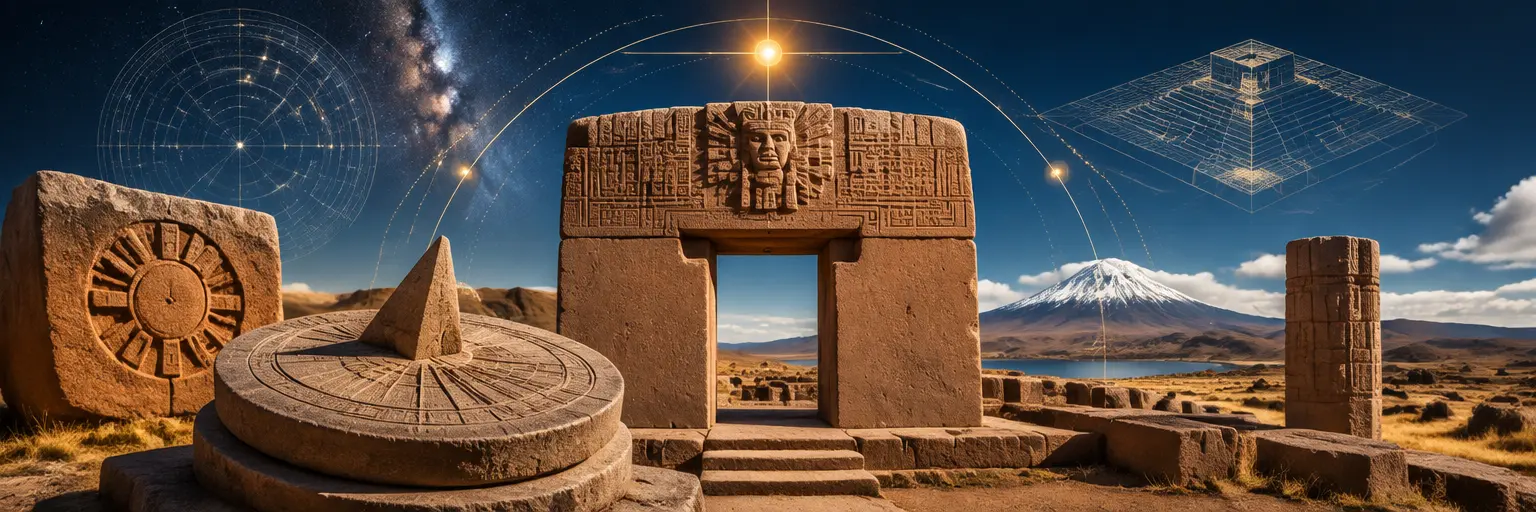
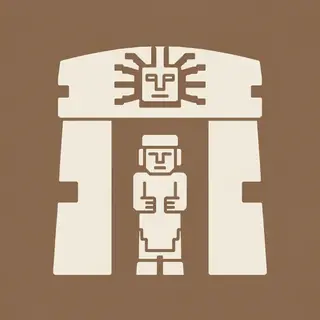
Tiahuanaco’s scientific prowess shines through its astronomical alignments, particularly at the Kalasasaya temple and the Gateway of the Sun. These structures were not merely ceremonial; they functioned as sophisticated observatories. The civilization tracked solstices, equinoxes, and the Pleiades star cluster to create a precise agricultural calendar. Their measurements of the solar year, calculated with remarkable accuracy, allowed them to predict seasonal floods and droughts on the Titicaca basin. This celestial knowledge was embedded in their architecture, with carved iconography on the Gateway of the Sun encoding astronomical cycles for future generations.
Visitors to this subcategory will learn how Tiahuanaco’s priests used horizon markers and shadow casting to maintain communal order. Their calendar—a complex blend of solar and lunar cycles—guided planting, harvesting, and religious festivals. Modern researchers have verified that the orientation of key structures deviates less than one degree from true astronomical positions. This precision, achieved without telescopes, underscores their remarkable observational skills. The integration of astronomy with daily life exemplifies a science driven by practical needs and cosmic curiosity, making it a cornerstone of their intellectual heritage.
🌾 Advanced Agricultural Technologies on the Altiplano
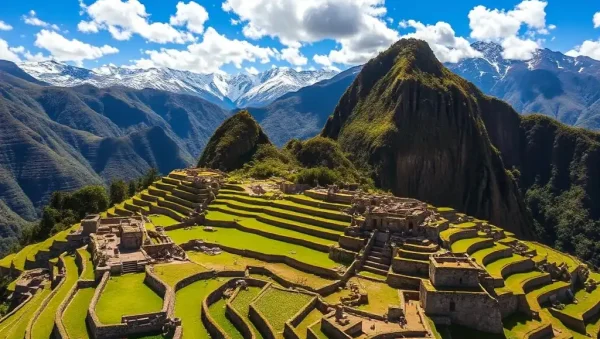
The harsh altiplano environment—with frost, drought, and poor soil—forced Tiahuanaco to pioneer sustainable farming techniques. Their most celebrated invention is the suka kollus: raised agricultural terraces surrounded by water canals. These systems mitigated frost damage by storing solar heat in the water during the day and releasing it at night, extending growing seasons by nearly 200 days. The canals also supplied nutrient-rich sediment, while the raised beds improved drainage. This engineering marvel allowed for surplus production of potatoes, quinoa, and maize, supporting a population that peaked at over 100,000 in the surrounding valley.
In this section, discover how Tiahuanaco’s agronomists selected crop varieties that tolerated high-altitude UV radiation and cold snaps. They employed crop rotation and fallowing cycles that maintained soil fertility for centuries. The raised-field system also acted as a reservoir, buffering against the unpredictable El Niño events. Recent archaeological experiments have shown that reconstructing these fields can triple yields in modern Bolivia. This ancient wisdom offers valuable lessons for contemporary climate-resilient agriculture. By studying their water management and soil engineering, readers gain insight into how indigenous knowledge solved existential challenges with elegant, low-tech solutions.
🔧 Monumental Stone Engineering and Hydraulics
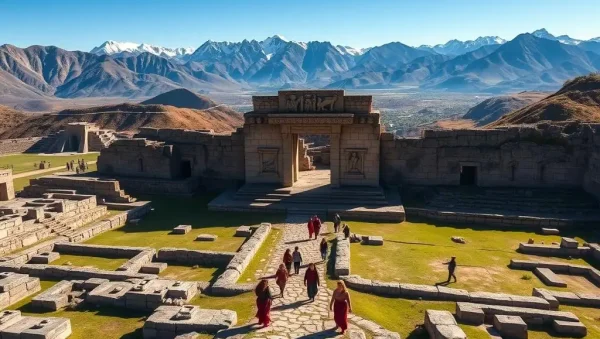
No scientific list of Tiahuanaco would be complete without their masterful stonework. They quarried and transported massive blocks—some weighing over 100 tons—across distances of up to 40 kilometers without wheels or draft animals. The precise interlocking joints of their walls, cut with astonishing accuracy (less than a millimeter tolerance), suggest the use of copper or bronze tools and advanced surveying methods. But their true genius lay in hydraulics: they built an extensive network of underground channels, aqueducts, and reservoirs that supplied clean water to the city and irrigated their raised fields. The Pumapunku complex features intricately carved water conduits that still baffle engineers today.
Explore how Tiahuanaco’s engineers solved the problem of seismic vulnerability—their trapezoidal doorways and buttressed walls absorbed tremors. Their hydraulic systems used filters and settling basins to reduce sediment, demonstrating a grasp of fluid dynamics. The alignment of drainage channels with natural slopes minimized erosion. Evidence suggests they even manipulated water pressure to operate ceremonial fountains. These achievements required systematic planning, standardized units of measurement, and a workforce trained in geometry and physics. This H3 section uncovers the intersection of manual labor and theoretical knowledge, proving that monumental architecture was as much a scientific endeavor as an artistic one.
🧪 Metallurgy and Chemical Innovations
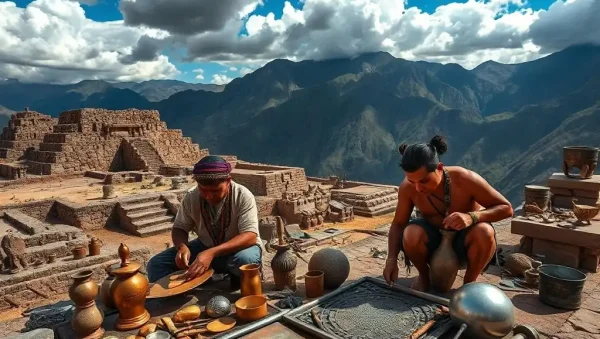
Tiahuanaco’s metallurgical achievements extended beyond simple alloying. They were masters of bronze metallurgy, adding arsenic or tin to copper to create harder, more durable tools. Their smelting techniques, conducted in high-altitude furnaces, reached temperatures exceeding 1,000°C using natural wind drafts. They also developed gilding methods—applying gold and silver to copper objects via electrochemical or amalgam processes—long before Europeans. Chemical analysis reveals precise control of alloy composition for different uses: axes for agricultural work, tupu pins for textiles, and ceremonial ornaments. Their kilns produced vitrified ceramics with unique glazes, hinting at experimental chemistry.
This subsection details their mastery of alloying ratios, which varied by artifact type, demonstrating empirical knowledge of material properties. They sourced ores from multiple regions, indicating a trade network based on mineralogist-level identification. The production of micro-alloyed gold-silver-copper objects used for solar rituals suggests an understanding of electrochemistry, though the exact method remains debated. Beyond metals, they developed natural dyes from plants and insects, and their mummification practices involved resins with antibacterial properties. These chemical innovations show a culture that systematically experimented with materials, documenting results through trial and error—a foundational scientific method.
🩺 Medical Knowledge and Surgical Practices
While less documented, Tiahuanaco’s medical science was remarkably advanced for its time. Skull analysis from excavated cemeteries reveals a high rate of successful trepanation—surgical opening of the skull—with survival rates near 70%, far exceeding contemporary European practices. This indicates deep knowledge of infection control, anesthesia (likely using coca leaves and hallucinogenic plants), and anatomical landmarks. Their healers, known as yatiri, combined herbal remedies with surgical skill. They also practiced cranial deformation for aesthetic and status purposes, which required precise pressure application, showcasing an understanding of bone plasticity.
Readers will discover how they treated infections with antibiotic-rich molds (like Penicillium-like fungi) found in their soil, a form of empirical medicine. They developed splints and wraps for fractures, evidenced by healed bone calluses in correct alignment. Their use of quinine-rich plants to treat malaria predates Western discovery. Furthermore, they practiced dental modification and dental fillings using resins. This scientific branch was deeply intertwined with spirituality, yet the empirical success rates speak to validated knowledge. The subcategory offers a window into a medical system that valued outcomes, making it a pioneering example of applied biology and anatomy in ancient America.
Frequently Asked Questions
What was the most significant scientific achievement of the Tiahuanaco culture?
Their most significant achievement was the raised-field agricultural system (suka kollus), which combined hydrology, soil science, and microclimate engineering to feed a large population in a hostile environment. Its efficiency is still studied today for sustainable farming solutions.
How did Tiahuanaco predict astronomical events without modern instruments?
They used precise architectural alignments, horizon observatories, and shadow-casting techniques. By tracking the sun’s position during solstices and equinoxes against fixed stone markers, they developed a calendar accurate within a few minutes per year.
Did Tiahuanaco use metal tools for their massive stone constructions?
Yes, they used copper and bronze tools, including chisels, hammers, and saws. Though softer than iron, these alloys were hardened through specific tin and arsenic mixtures, allowing precise cutting and carving of sandstone and andesite.
Was Tiahuanaco’s medical knowledge ahead of its time?
Absolutely. Their trepanation survival rates (around 70%) exceeded those of 19th-century Europe. They practiced aseptic techniques, used herbal anesthetics, and had a working knowledge of cranial anatomy, integrating botanical pharmacology with surgical precision.
How did Tiahuanaco’s science influence later civilizations like the Inca?
The Inca adopted their terracing, irrigation canals, and astronomical alignments. They also inherited metallurgical techniques, road engineering, and administrative calendars, making Tiahuanaco a foundational scientific legacy for Andean empires.