Symbols of Power: Decoding Tiahuanaco Religious Iconography
🌍 Discover how Tiahuanaco religious symbols explained illuminate the spiritual beliefs and societal structures of this ancient civilization. Unravel the meanings behind…
Read article
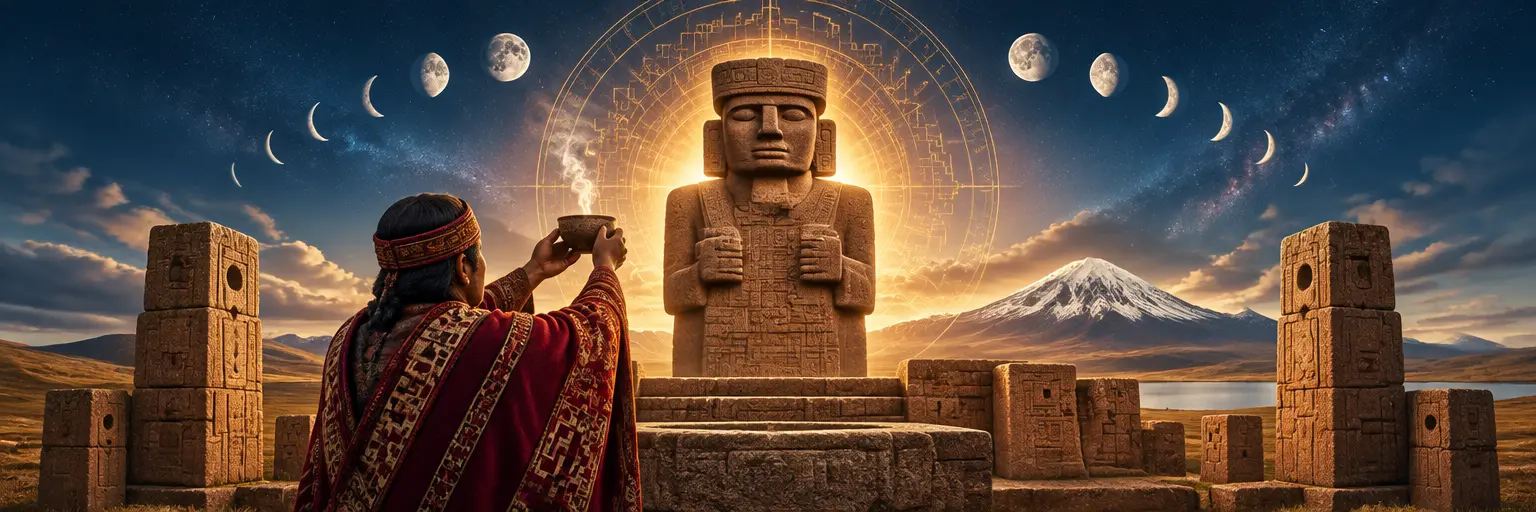
Explore the profound spiritual world of the Tiahuanaco civilization, where religion and mythology were the very fabric of societal order and monumental architecture. This ancient Andean culture, flourishing around Lake Titicaca, wove a rich tapestry of cosmic beliefs, celestial deities, and creation myths that not only shaped their awe-inspiring temples and monoliths but also influenced later empires like the Inca. Delve into the sacred role of the *Gateway of the Sun*, the enigmatic staff-bearing gods, and the powerful forces of nature they revered, revealing how their intricate cosmology connected the earthly realm with the heavens. Uncover the legends of Viracocha, the creator deity, and the symbolic animals—pumas, condors, and serpents—that anchored their mythology, offering an unrivaled glimpse into the spiritual heartbeat of one of South America’s most mysterious pre-Columbian cultures. Perfect for enthusiasts of ancient history, archaeology, and indigenous belief systems, this knowledge base brings the sacred narratives of Tiahuanaco to life for modern seekers.
🌍 Discover how Tiahuanaco religious symbols explained illuminate the spiritual beliefs and societal structures of this ancient civilization. Unravel the meanings behind…
Read article
Exploring Tiahuanaco ancestral religious beliefs reveals how the connection to ancestors shaped cultural identity and practices. This ancient civilization exemplifies the profound…
Read article
🌞 The Tiahuanaco Sun God significance is pivotal in understanding the spiritual beliefs and cultural practices of this ancient civilization, symbolizing life,…
Read article
Discover the enchanting Tiahuanaco mythical creatures legends that reveal the rich tapestry of indigenous beliefs. These tales, steeped in history, illustrate the…
Read article
🌟 The Tiahuanaco spiritual practices rituals were integral to their society, reflecting profound connections to nature and the cosmos. These ceremonies not…
Read articleDelve into the spiritual heart of the Tiahuanaco civilization, an ancient Andean culture that flourished near Lake Titicaca between 500 and 1000 CE. This subcategory uncovers the deities, creation myths, and ritual practices that shaped Tiahuanaco society, revealing how their cosmology influenced later empires like the Inca. Through archaeological evidence and ethnographic parallels, we piece together a belief system that revered celestial bodies, sacred geography, and transformative ancestors.
Central to Tiahuanaco religion was the veneration of the Viracocha, a creator god often depicted on the Gateway of the Sun, alongside celestial deities tied to the sun, moon, and stars. This worship was not abstract—it structured their calendar, agriculture, and political authority. The Staff God, a figure holding staffs, appears across monoliths and textiles, symbolizing cosmic order and rainfall control.
Visitors to this subcategory will learn how astronomical alignments at sites like Kalasasaya tracked solstices and equinoxes, synchronizing rituals with planting and harvest cycles. Archaeological finds, such as carved stone heads and feline motifs, suggest shamanic transformations and the worship of weather deities. This section clarifies that Tiahuanaco’s pantheon was adaptive, absorbing local beliefs into a cohesive state religion that justified elite power.
For the Tiahuanaco people, Lake Titicaca was the navel of the universe, where the sun first emerged from the waters. This belief shaped their settlement patterns, temple orientations, and pilgrimage routes. The Island of the Sun and the Island of the Moon were considered earthly abodes of celestial deities, with ceremonial platforms and offering sites discovered on their shores.
This section explains how sacred mountains (apus) and the lake itself were personified as living beings, requiring offerings of textiles, ceramics, and even llama sacrifices. Researchers have found caches of miniature stone boats and figurines, suggesting ritual navigation to sacred islands. By understanding Tiahuanaco’s geography, you’ll see how their mythology justified territorial expansion and resource control, linking the physical landscape to divine will.
Tiahuanaco’s myths are encoded in intricate stone carvings, such as the Gateway of the Sun’s central relief portraying Viracocha flanked by winged angels and condor-headed figures. These narratives describe the creation of humanity, a great flood, and the establishment of distinct ethnic groups, which served to legitimize social hierarchies. The Monolith of Ponce and Bennett Monolith depict anthropomorphic beings with tears, perhaps rain rituals or ancestral mourning.
Here, you will discover how iconographic motifs—such as the step-fret, staff bearers, and feline attributes—recur in textiles, gold objects, and keros (ritual cups). These symbols carried multivalent meanings: fertility, military power, and celestial cycles. By comparing these images with later Inca myths, scholars note that Tiahuanaco’s mythology served as a foundation narrative, a “mythic charter” that later cultures deliberately invoked to claim ancestral legitimacy.
Ritual activity at Tiahuanaco focused on the Akapana pyramid and Kalasasaya temple, where priests conducted public ceremonies involving music, dance, and the consumption of fermented maize beer (chicha). Excavations have uncovered sacrificial offerings, including human remains, llama bones, and golden artifacts, deposited in layers within platform mounds. The pit of offerings near the Semi-Subterranean Temple contained hundreds of vessels, suggesting periodic calendrical feasts.
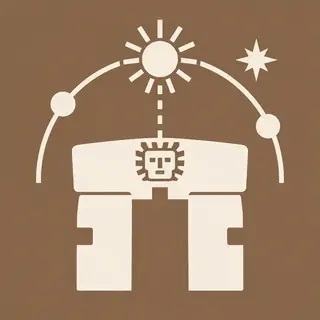
This section explores how ritual astronomy aligned with building architecture; for instance, during the equinox, sunlight streams into the Kalasasaya’s doorway, illuminating a carved pillar. Priests likely used these light effects to “activate” divine presence. Additionally, evidence of trophy heads and modified crania hints at warfare rituals and ancestor veneration. Understanding these practices reveals that Tiahuanaco religion was not just belief but active performance, reinforcing social cohesion and political control.
Tiahuanaco’s religion did not vanish with its collapse around 1000 CE; it permeated later Andean cultures, especially the Inca, who revered Tiahuanaco as a sacred site of origin and rebirth. Inca kings claimed descent from Viracocha, and their myths incorporate Tiahuanaco’s flood and salvation story. The Staff God motif appears in Wari and Tiwanaku-influenced textiles, while rural Andean communities still venerate mountain spirits (apus) echoing Tiahuanaco’s cosmology.
Here, you’ll see how contemporary Aymara and Quechua rituals, such as the annual pilgrimage to the Island of the Sun, perpetuate ancient offering practices. Archaeoastronomers have also noted that the Qhapaq Ñan (Inca road) passed near Tiahuanaco, integrating it into a pan-Andean sacred landscape. This legacy shows that religion and mythology were not static relics but living traditions, continuously reimagined to adapt to new political realities while preserving core cosmological ideas.
The principal deity was Viracocha, a creator god associated with the sun and cosmic order. He appears on the Gateway of the Sun, holding staffs and surrounded by angel-like figures. Viracocha was believed to have emerged from Lake Titicaca to create the world, humans, and animals, and later cultures adopted him as the supreme deity.
The Inca viewed Tiahuanaco as the mythical birthplace of their own civilization. They incorporated Viracocha into their pantheon, claimed ancestral descent from Tiahuanaco’s elites, and adopted architectural styles and iconography, such as the Staff God motif. This ideological link helped legitimize Inca rule by connecting them to an ancient, sacred past.
The Gateway of the Sun is a massive stone arch carved with a central figure often identified as Viracocha, flanked by winged attendants. It likely functioned as a ceremonial entrance in Kalasasaya. Its carvings depict solar and calendrical symbolism, possibly used for astronomical observations and to mark important agricultural rituals linked to solstices.
Yes, evidence suggests ritual human sacrifice, primarily through excavated offerings in platform mounds. Partial remains of individuals, often with cut marks, hint at decapitation or heart extraction. These sacrifices likely accompanied major ceremonies, such as temple dedications or solar events, and were intended to appease deities for agricultural fertility and political stability.
Lake Titicaca was cosmologically central because Tiahuanaco believed the sun, moon, and stars originated from its waters. This made the lake a portal between worlds, where deities emerged and where ancestors could be contacted. Sacred islands, like the Island of the Sun, hosted shrines, and the lake’s shoreline became a focal point for pilgrimage and offerings, cementing its status as a holy landscape.