Recent Excavations at Inca Sites: Unearthing New Secrets of the Empire
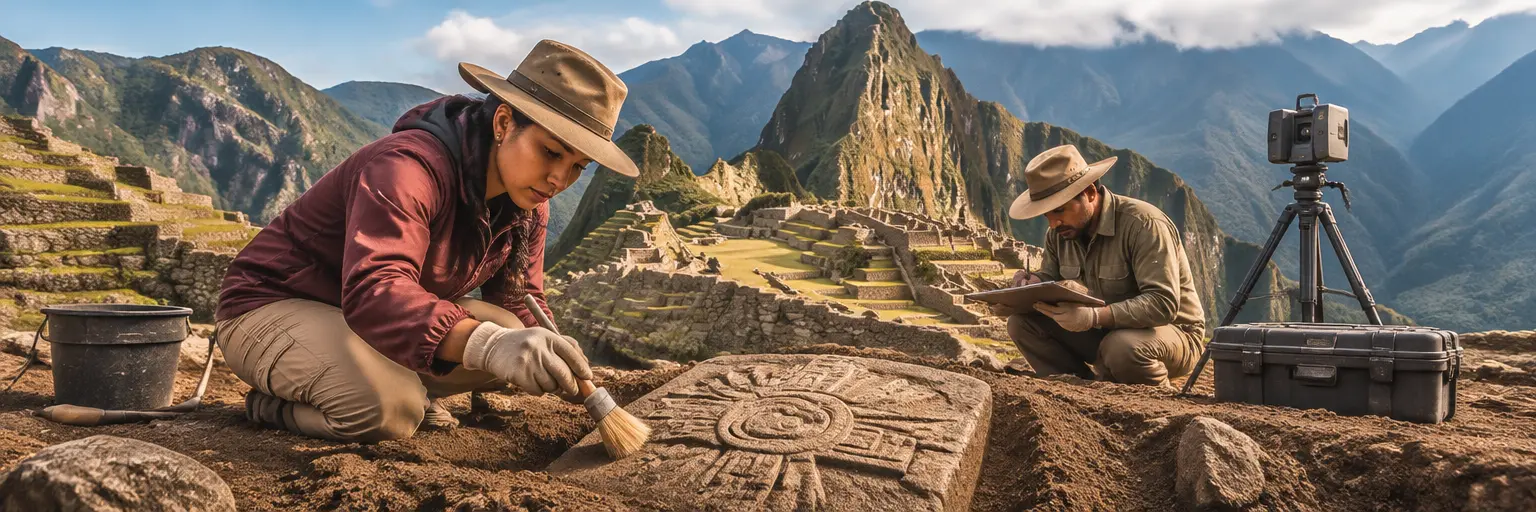
Recent excavations at Inca sites are rewriting history books, revealing sophisticated engineering, ritual practices, and daily life that were previously obscured by colonial narratives. From the high Andes to the cloud forests, archaeologists are using cutting-edge technology like LiDAR and ground-penetrating radar to uncover hidden structures beneath dense vegetation and soil. For enthusiasts of indigenous civilizations, these digs offer a thrilling glimpse into how the Inca Empire adapted to extreme environments, managed vast resources, and built a society that still inspires awe. Below, we explore the most compelling facets of these ongoing discoveries, with a focus on actionable insights for travelers, students, and history buffs.
🏔️ Machu Picchu’s Hidden Substructures: Beyond the Citadel
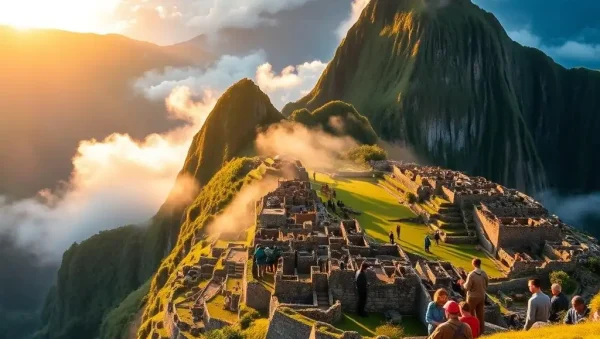
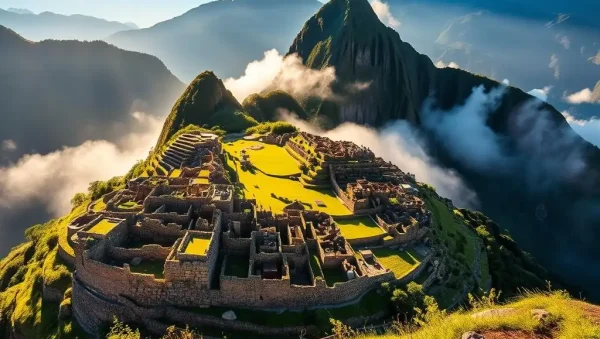
Recent excavations around Machu Picchu’s periphery have uncovered a network of agricultural terraces, water channels, and ceremonial platforms that were previously undocumented. Using non-invasive geophysical surveys, researchers identified a series of underground chambers and a possible sun temple complex beneath the main plaza, dating to the reign of Pachacuti. These finds suggest the site was not only a royal estate but a living religious center, with evidence of ritual offerings of coca leaves, ceramics, and metal figurines. Excavations in the nearby Llactapata sector have revealed a large “mirror” structure aligned with the winter solstice, likely used for astronomical observation and water management. For visitors, these discoveries mean new trails and viewpoints are opening, but conservation remains a priority; hence, access is limited to guided archaeological tours. The ongoing work is also using 3D photogrammetry to create digital twins, allowing remote exploration and preserving fragile layers for future study.
One of the most striking recent finds is a ceremonial bathtub carved from a single block of granite, adorned with niches and water spouts, suggesting a ritual purification area used by Inca elites. Additionally, excavations under the Torreon (temple of the sun) revealed a sealed cache of khipus—knotted cords used for record-keeping—along with fragments of sancay (spondylus shells) from coastal Ecuador, indicating long-distance trade networks. These artifacts are helping historians understand how Machu Picchu functioned as a microcosm of the Inca state, integrating highland and lowland traditions. For the general reader, these finds underline the complexity of Inca engineering: they used gravity-fed aqueducts to channel spring water precisely to the plaza fountain, a feat that modern hydrologists still admire. The excavation team has also published open-access reports, so amateurs can follow the stratigraphy and dating of each layer, from pre-Inca occupation (Wari culture) to the Spanish colonial period.
🔍 Choquequirao’s New Terraces: The “Sacred Sister” Unveiled
Recent excavations at Choquequirao, often called the “sister of Machu Picchu,” have exposed an additional 200 hectares of terraces, stairways, and waterworks, pushing the site’s total area to over 400 hectares. Archaeologists used drone-based LiDAR to detect a series of agricultural and ceremonial platforms hidden under thick cloud forest, which are now being carefully cleared and stabilized. The most surprising discovery is a walled complex with 14 circular buildings, possibly serving as a granary for potatoes, maize, and quinoa, but also containing ritual offerings of llama bones and obsidian arrowheads. This suggests Choquequirao was a major supply hub for the Inca state, feeding both Machu Picchu and Vilcabamba, the last Inca stronghold. The excavation also revealed a double-walled enclosure with niches painted in red ochre, a color associated with high-status architecture, implying the presence of a royal or priestly class here. For travelers, the site remains more remote and less crowded than Machu Picchu, but plans for a cable car have stalled due to environmental impact studies. Hence, the best way to visit is via a multi-day trek, which is now even more rewarding with the newly opened “upper terrace circuit” that offers panoramic views of the Apurimac canyon.
Another significant find is a ceremonial fountain group that channels water through 16 sequential basins, each carved with different zoomorphic shapes, including pumas, condors, and snakes. This hydraulic system was likely used for rituals tied to crop fertility, and isotopic analysis of soil samples has revealed traces of maize beer (chicha) splashed as offerings. Moreover, excavations near the eastern cliff have uncovered a small lookout tower fitted with stone mirrors, possibly used to signal with sunlight to nearby forts. The site team is collaborating with local Quishuara-speaking communities to integrate oral traditions into the interpretation, such as the legend that Choquequirao was the birthplace of Manco Inca, the rebel ruler who led the resistance against the Spanish. This inclusive approach not only enriches the narrative but also generates sustainable tourism revenue, helping to fund further digs. For the academically inclined, the project publishes an annual field report, complete with radiocarbon dates and pollen analysis, which you can download for free from the Peruvian Ministry of Culture’s repository.
🌋 Vilcabamba’s Last Capital: Excavating the Rebel Stronghold
The site of Vilcabamba (Espiritu Pampa) in the Cusco region is famous as the final refuge of the Inca Empire after the Spanish invasion, but only recent excavations have revealed its true scale and complexity. Using magnetometry and soil conductivity surveys, archaeologists have mapped over 90 buildings, including royal palaces, temple platforms, and storage warehouses (qolqa). A key finding is a large rectangular plaza surrounded by colonnaded galleries, which may have served as the audience hall for Atahualpa’s successor, Túpac Amaru I. Beneath this plaza, diggers found a burial chamber containing the remains of several individuals with skull elongation, a mark of Inca nobility, along with bronze tumi knives and silver plaques. This suggests that even in retreat, the Inca maintained elaborate funerary rites. The excavations also confirmed that the site was not abandoned abruptly; there is evidence of gradual transformation into a colonial mission, with a Spanish church built over an Inca sanctuary, illustrating cultural syncretism. For scholars, this site is key to understanding the Inca’s last years, including their guerrilla tactics and resource management in a tropical forest environment.
One of the most poignant discoveries is a cache of documents—though most were lost to humidity—alongside khipus that record tribute from local ethnic groups, indicating that the rebel state still collected taxes. Moreover, excavation of the “House of the Sun” revealed a series of windows oriented to the Pleiades, which the Inca used to time the planting season, suggesting that astronomical knowledge persisted even in exile. The site’s remote location (a 3-day trek from the nearest road) has limited looting, but also slows research. However, a new partnership with the National Geographic Society has funded a lidar scan, which has uncovered hidden roads connecting Vilcabamba to the Amazon basin, implying trade with indigenous groups beyond the Inca sphere. For the general reader, this is a reminder that the Inca empire was not a monolithic state but a dynamic mosaic of alliances, and its collapse in 1572 was not a clean break but a gradual, contested transition.
⚙️ Water Management Innovations at Tipón
Recent excavations at Tipón, near Cusco, have focused on its famous hydraulic complex, a series of canals, fountains, and aqueducts that still function today. While previous studies focused on the monumental terraces, new digs have uncovered a hidden reservoir carved into the bedrock, with a capacity of about 40,000 liters, which likely regulated water flow even during droughts. Using mineralogical analysis of sediment, researchers determined that the Inca engineered a sophisticated filtration system using layers of gravel, sand, and charcoal, ensuring clean drinking water for elite residents. Additionally, excavations at the top of the hill revealed a sun temple with a carved stone outcrop, along with a ceremonial drain that directed water into a giant basin, perhaps used for ritual purification before major feasts. This demonstrates that Tipón was not just an agricultural site but a sacred water shrine, possibly dedicated to the deity Illapa (thunder). The project has also restored the original stone channels, allowing visitors to see water flowing as it did 500 years ago—a rare opportunity in Andean archaeology.
Further, recent excavations uncovered a domestic quarter for the laborers who maintained the water system, with small houses, hearths, and storage pits containing tools such as hoes, trowels, and agricultural knives. These findings reveal the social hierarchy: workers were provided with standardized rations of maize and llama meat, but also had access to coca leaves, suggesting they were not slaves but mitmaqkuna (resettled colonists) with certain privileges. Moreover, the team discovered a ceremonial platform with a carved rock that resembles a puma head, which aligns with the winter solstice sunrise, adding a celestial dimension to the water cult. For those interested in ancient engineering, the site offers a rare “living museum” where you can see working aqueducts, and the excavation team has built an interpretive trail with QR codes linking to 3D models of each hydraulic feature. This is especially instructive for comparing Inca water systems with those of other indigenous civilizations, such as the Maya cenotes or the Aztec chinampas.
📜 Khipu Records and Recent Finds at Pachacamac
The coastal pilgrimage site of Pachacamac, near Lima, is known for its massive adobe temples, but recent excavations have shifted focus to its khipu records—the color-coded strings that stored census data, tribute, and possibly narratives. A stunning discovery was a sealed offering under the Temple of the Sun (Inca construction), containing 32 khipus, each with different lengths, colors, and knot patterns, along with a decorated wooden staff. Using high-resolution photography and 3D scanning, researchers decoded that some khipus recorded the number of storage houses in each administrative unit, while others seem to indicate tribute in quantities of spondylus shells and coca leaves. This is the first time that such a large cache has been found in situ, and it is helping linguists and anthropologists understand the “reading” of khipus—whether they were mnemonic devices or indeed a form of narrative writing. Excavation also revealed a pillared hall adjacent to the offering, possibly a place for administrative scribes to rehearse the records before presentation to the priests. For the public, the site now has a new museum room dedicated to khipus, with interactive touchscreens allowing you to unravel their meanings.
Moreover, excavations of the Sacred Plaza exposed a sequence of pre-Inca and Inca floors, including a pre-Inca altar of the Ychsma culture, made of carved stone and red pigment, which was later buried under a larger Inca platform. This shows that the Inca intentionally adopted and monumentalized local sacred spaces, a strategy for political integration. Additionally, archaeologists found a ceremonial canoe buried nearby, possibly used to transport pilgrims across the ocean, as well as offerings of exotic parrot feathers from the Amazon, indicating long-distance exchange networks. For the SEO-savvy traveler, the site is accessible from Lima, making it a perfect half-day trip, and the recent finds have led to updated guided tours that emphasize the multicultural history—from the pre-Inca Ichma to the Inca overlords and the Spanish chroniclers who later recorded the site’s legends. This excavation is also noteworthy for its community engagement, employing local workers and training them in conservation, which creates a model for sustainable archaeology.
Frequently Asked Questions
What is the best season to visit recent excavation sites at Inca sites?
The dry season (May to September) is ideal for visiting sites like Machu Picchu, Tipón, and Vilcabamba, as trails are firmer and rain does not hinder access. However, some excavations are more active during the dry months because backfilling and analysis happen in the off-season. Check official excavation blogs for monthly updates on visitor access.
Are any recent excavations open to the public?
Yes, many sites, including Tipón and some circuits of Pachacamac, allow visitors to observe active trenches from designated paths. However, areas under excavation are often off-limits to protect fragile contexts. Always check with the site’s official office or a licensed tour guide for current open areas.
How can I follow recent discoveries without a professional background?
Follow the official social media accounts of the Ministry of Culture of Peru (e.g., @CulturaPeru) and the projects like the Machu Picchu Digital Archive. Many publish free open-access articles, short webinars, and virtual site tours, making cutting-edge research understandable for lay readers.
What are the most common artifacts found in recent Inca digs?
Common finds include decorated pottery, spindle whorls for textiles, bone tools, maize kernels, and fragments of khipus. However, recent excavations have also uncovered rare items like ceremonial bathtubs, bronze tumi knives, and even preserved coca leaves, which are often organic and require immediate conservation.
Can I volunteer or participate in an excavation?
Some projects, especially at Tipón and Choquequirao, occasionally accept volunteers for non-scientific tasks like pottery washing or surveying, but they require prior archaeological experience or coursework. Check with the Archaeological Field School of Cusco or the universities that conduct these diggings, as most are coordinated with accredited programs.