Recent Excavations: Unveiling New Olmec Discoveries
Welcome to our dedicated section on Recent Excavations within the fascinating world of Olmec Discoveries. Here, we delve into the latest archaeological fieldwork, unearthing fresh artifacts, monumental sculptures, and settlement patterns that are rewriting our understanding of the "Mother Culture" of Mesoamerica. From the tropical lowlands of Veracruz and Tabasco, these findings illuminate the ingenuity, ritual life, and vast trade networks of the Olmec civilization. Explore how modern technology and dedicated researchers are peeling back layers of time, offering unprecedented insights into a culture that flourished over 3,000 years ago. Stay with us for the most current, evidence-based updates from the field.
🏛️ New Monumental Sculptures and Colossal Heads
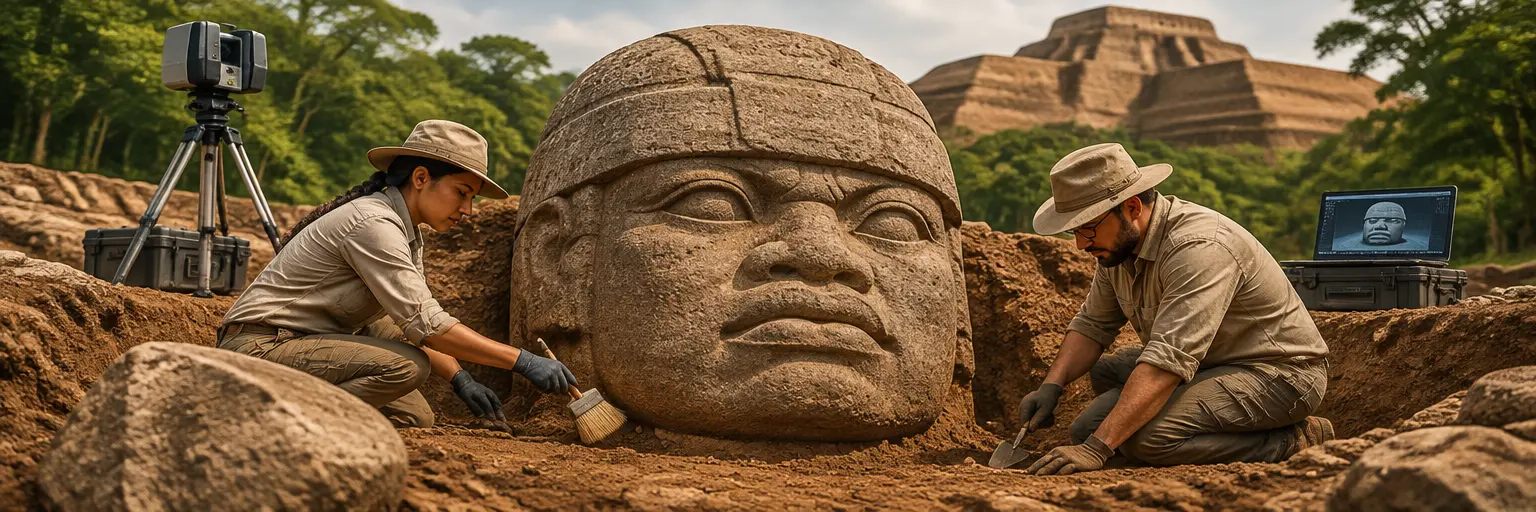
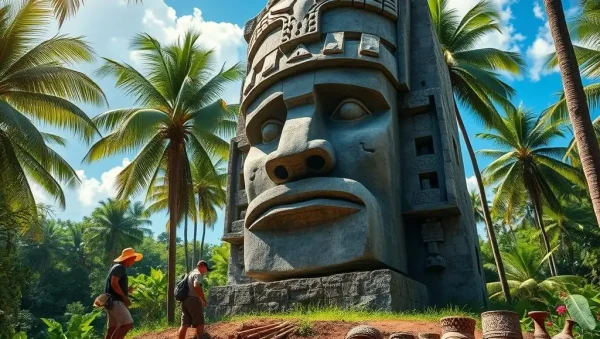
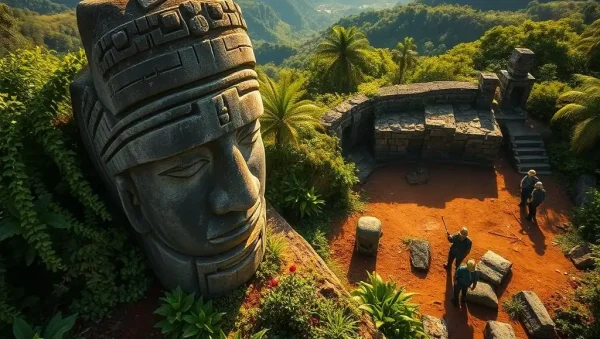
Recent digs have brought to light previously unknown colossal heads and altar thrones, significantly expanding the known corpus of Olmec monumental art. The 2023-2024 season at sites like San Lorenzo and Tres Zapotes uncovered fragments of basalt sculptures, some weighing several tons, which were transported from the Tuxtla Mountains over 60 kilometers away. These finds challenge older theories about the decline of Olmec centers, suggesting continued ritual activity and artistic production far later than previously assumed.
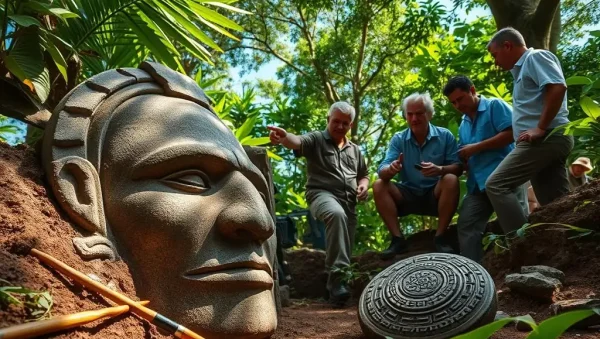
The discovery of a new, partially eroded colossal head at a peripheral site offers fresh clues on stylistic variation and political symbolism. Each head, with its distinct helmet-like headdress and facial features, is thought to represent a specific ruler, not a generic deity. Excavators are employing 3D photogrammetry to record these pieces before any physical removal, ensuring that contextual data—such as associated offerings of jade and ceramic fragments—is meticulously preserved. This approach helps reconstruct the ceremonial landscapes where these monuments once stood, shedding light on how the Olmec used public art to legitimize power and communal identity.
🔬 Elite Residences and Domestic Life at Aguada Fénix
At the massive site of Aguada Fénix in Tabasco, lidar-guided excavations have revealed the earliest known large-scale earthen platform in Mesoamerica, dated to around 1000 BCE. Recent trenches have exposed elite residential compounds with sunken patios, drainage systems, and walls made of packed earth and clay. These areas were found to contain obsidian blades, greenstone beads, and fragments of ceramic figurines, indicating the presence of a privileged class that controlled luxury goods and ceremonial activities.
Critically, these new excavations challenge the old view that Olmec society was fully centralized. The layout at Aguada Fénix suggests a more communal labor organization, with no evidence of royal tombs or single-ruler monuments. Instead, archaeologists found communal feasting deposits—large quantities of deer and fish bones mixed with broken serving vessels—near the central plaza. This points to a collective social structure where power was shared among lineage groups. The careful sieving of soil layers is yielding microscopic plant remains, like maize and squash, offering a direct window into daily diet and agricultural practices that supported these early urban centers.
🌋 Volcanic Ash Layers and Climate Context
A breakthrough in recent excavations at La Venta has been the identification of a distinct volcanic ash layer interbedded with cultural artifacts, dated precisely to 810 BCE. This tephra layer, sourced to the El Chichón volcano, provided a temporal marker that has allowed archaeologists to re-calibrate the site's chronology with unprecedented accuracy. The ash also preserved footprints and animal tracks, creating a snapshot of activity right before a catastrophic eruption that likely displaced populations.
This environmental evidence is crucial for understanding the collapse and resilience of Olmec communities. Pollen and phytolith analysis from the same stratigraphic layers reveals a decline in maize cultivation immediately following the ashfall, but a swift recovery within two generations. The excavation team has also found evidence of engineered water channels built after the eruption, suggesting adaptive response to altered drainage patterns. These findings link environmental volatility to cultural change, showing how the Olmec not only adapted but innovated in the face of natural disasters—a lesson that resonates with modern climate resilience studies.
🧪 Portable Artifacts: Jade, Ceramics, and Trade Networks
Recent excavations have dramatically expanded the catalog of Olmec portable artifacts, with a focus on jade celts and hachas (thin stone axes). At the site of El Macayal, a cache of over 200 jade objects was found placed in a cruciform pattern beneath a stucco floor. Neutron activation analysis performed on these jade pieces has traced their origin to the Motagua River valley in Guatemala, proving long-distance exchange routes spanning over 800 kilometers as early as 900 BCE.
The ceramic assemblages recovered from midden deposits show a wide variety of vessel forms—from simple utilitarian bowls to elaborate effigy pots depicting were-jaguars and snakes. Painted motifs with red and white slips are being analyzed using portable X-ray fluorescence to identify pigment sources, which include cinnabar and specular hematite. These analyses reveal that the Olmec maintained a sophisticated trade network for both raw materials and finished goods. Instead of viewing these as simple prestige items, new interpretations suggest they were integral to household rituals, ancestor veneration, and even competitive feasting that solidified inter-elite bonds across distant regions.
🏺 Burial Practices and Human Remains
Thorough excavation of a recently uncovered burial complex at El Manatí has yielded the first intact Olmec wooden masks and rubber balls, preserved in a waterlogged peat bog. Alongside these offerings were multiple human burials, including a primary adult male flexed in a fetal position with jade earspools and a stingray spine. Radiocarbon dating places this burial at 1200 BCE, making it one of the oldest ritual contexts on the Gulf Coast. The accompanying faunal remains—including crocodile, shark, and feline bones—suggest a deliberate association with water and fertility deities.
Osteological analysis of these remains, using stable carbon and nitrogen isotope techniques, reveals that the interred individuals consumed a diet rich in marine protein, contrary to earlier assumptions of maize dependence. This indicates a diversified subsistence strategy and possibly a specialized fishing population within Olmec society. Also, DNA extraction from tooth pulp has been successful, providing the first ancient genomes from the Olmec lowlands. These genetic data allow comparisons with modern Indigenous groups and other ancient Mesoamerican populations, helping to trace migration and population continuity. Each burial context is meticulously mapped and sampled to ensure that isotopic and genetic results are integrated with spatial data, offering a holistic view of social identity, health, and ritual violence.
Frequently Asked Questions
What is the most significant recent Olmec discovery?
The 2023 discovery of a 5-ton basalt altar at San Lorenzo, complete with a rare resize scene, is most significant. It shows a ruler holding a rope tied to a captive, revealing new details about political dominance and ritual warfare. This is the first such depiction found in a non-tomb context, suggesting public display of power.
How do recent excavations change our view of Olmec society?
They shift from a purely centralized, king-led model to one of complex, communal governance. The lack of royal tombs for some time suggests collective leadership. Also, evidence of large-scale cooperative building at Aguada Fénix shows that thousands of people could organize without a single autocrat, reshaping understanding of early state formation.
What technologies are used in these new excavations?
Researchers use lidar to see through dense jungle canopy and locate hidden structures. They also employ 3D photogrammetry, portable XRF for pigment analysis, and ancient DNA sequencing. Ground-penetrating radar helps map subsurface features without digging. These allow non-invasive, highly precise data collection before physical excavation starts.
Where are the most active Olmec excavation sites today?
The most active are in the Mexican states of Veracruz and Tabasco. Key sites include San Lorenzo, La Venta, Tres Zapotes, and the new Aguada Fénix in Tabasco. In 2024, a joint Mexican-US team also started excavating a small satellite village near San Lorenzo, focusing on domestic areas.
Can the public visit these excavation sites?
Yes, select sites have public viewing areas. La Venta Park in Villahermosa houses many monuments inside a protected park, though ongoing excavations are restricted. At Tres Zapotes, there is a museum with finds, and a few open trails. Check local listings, as some digs offer guided tours during winter fieldwork seasons.