The Aztec Calendar: Scientific Precision in Timekeeping
🌞 The Aztec calendar, renowned for its scientific precision in timekeeping, reflects the civilization's sophisticated understanding of celestial cycles and agricultural rhythms.…
Read article
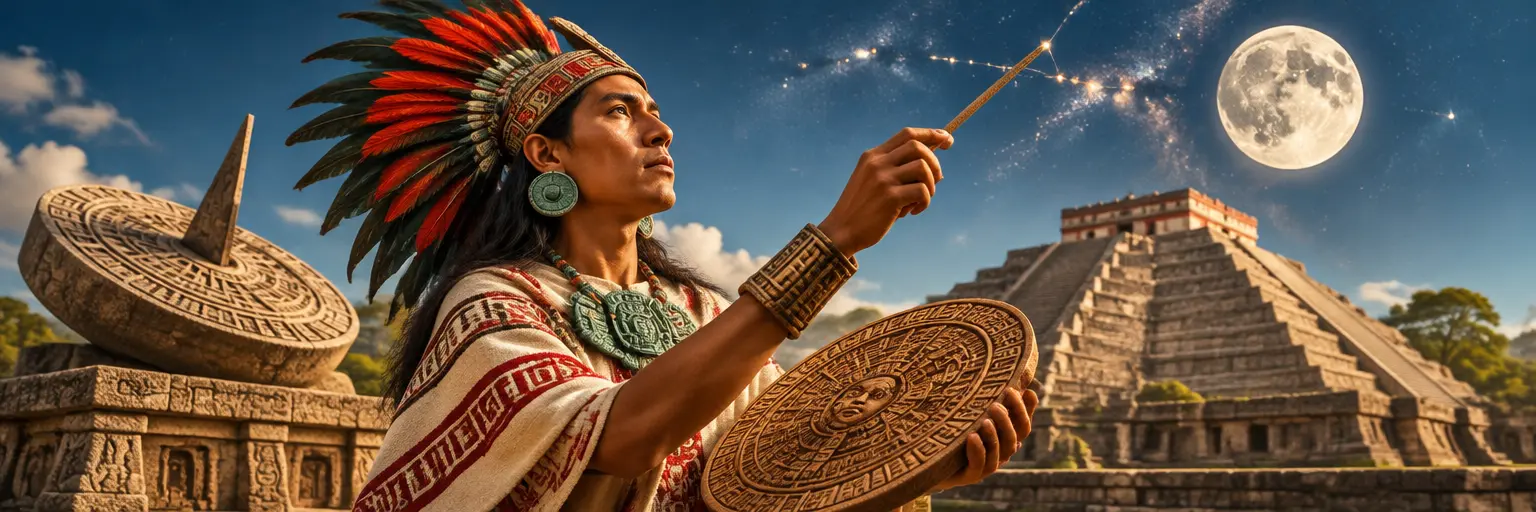
Explore the extraordinary scientific achievements of the Aztec civilization, a society whose ingenuity in astronomy, mathematics, and medicine rivaled—and often surpassed—contemporary European knowledge. From precise celestial calendars that predicted eclipses to advanced herbal pharmacopeias still studied today, the Aztecs (or Mexica) engineered innovations that shaped their world and continue to influence modern science. Their complex numeral system, featuring the concept of zero, enabled intricate engineering feats like the floating gardens of Tenochtitlan, while their botanical knowledge led to treatments for ailments ranging from fever to infection. Delve into how these pre-Columbian pioneers merged observation with ritual, creating a legacy of intellectual rigor that challenges conventional narratives of indigenous history. Uncover the hidden brilliance of Aztec science—where every calculation, from crop cycles to surgical techniques, was a testament to a civilization’s profound understanding of the natural world.
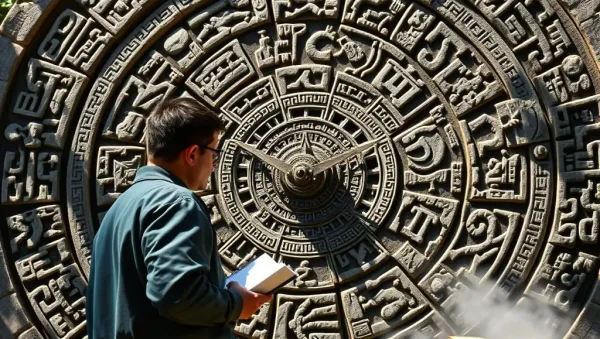
🌞 The Aztec calendar, renowned for its scientific precision in timekeeping, reflects the civilization's sophisticated understanding of celestial cycles and agricultural rhythms.…
Read article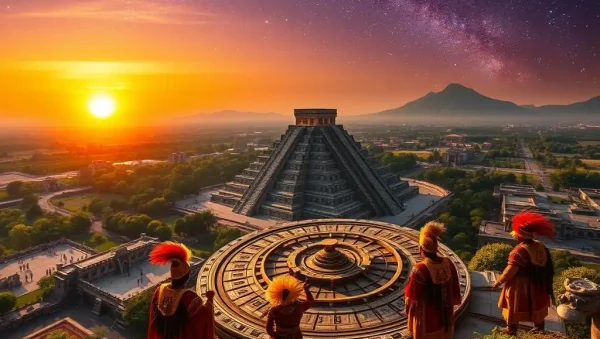
🌌 The Aztecs masterfully combined astronomy and culture, creating intricate calendars and celestial observations that guided agricultural practices and religious ceremonies. Their…
Read article
🌟 Discover the rich heritage of Aztec textile craftsmanship techniques, showcasing the intricate artistry and cultural significance behind their clothing. This article…
Read articleWelcome to our deep dive into the Scientific Achievements of the Aztec civilization, a cornerstone of indigenous ingenuity in the Americas. Here, you’ll discover how the Mexica people integrated astronomy, mathematics, medicine, and agriculture into a sophisticated societal framework that rivaled contemporary European science. This subcategory highlights their empirical methods, precise calendars, and botanical knowledge, offering a rich resource for students, historians, and enthusiasts. Our content is tailored to illuminate the practical innovations that sustained Tenochtitlan and shaped Mesoamerican legacy, ensuring you gain a nuanced understanding of their contributions to global science.
Aztec astronomers meticulously tracked celestial bodies, aligning their architecture and rituals with solar, lunar, and planetary cycles. They developed two interlocking calendars—the 365-day Xiuhpohualli for agriculture and the 260-day Tonalpohualli for divination—which together created a 52-year “calendar round.” This system was so precise that it predicted eclipses and seasonal shifts, guiding crop planting and religious ceremonies. Expect to learn how they used zenithal passages and star alignments at sites like the Templo Mayor to mark solstices, and how their codices preserved these observations for posterity.
Their astronomical records were not merely observational; they informed a complex cosmology where celestial events were tied to divine will and governance. Priests, trained in specialized schools, calculated the movements of Venus and the Pleiades, which influenced warfare and tribute cycles. This integration of science and spirituality underscores the Aztecs’ rational approach to timekeeping, which was more accurate than many contemporaneous European calendars. Our exploration reveals the mathematical sophistication behind their calendar wheels and the societal importance of temporal precision.
The Aztecs possessed an extensive pharmacopoeia, cataloging over 1,500 medicinal plants in texts like the Badianus Manuscript. They treated ailments ranging from fevers and wounds to mental health conditions using herbal remedies, many of which have been validated by modern pharmacology. Their botanical gardens at Chapultepec and Oaxtepec served as living laboratories, where healers experimented with native species like copaxtli (for respiratory issues) and iztactícpatl (a natural anesthetic). This subcategory delves into their diagnostic practices, surgical techniques—including trepanation—and the role of midwives in maternal care.
What sets Aztec medicine apart is its holistic integration of body, mind, and community. Healers, known as ticitl, combined spiritual rituals with empirical remedies, emphasizing preventive care through balanced diet and hygiene. Their use of quinine for fevers and ipeacuanha for dysentery predates European discoveries, showcasing a sophisticated understanding of active compounds. We’ll explore how these practices were transmitted orally and in codices, and their enduring influence on traditional Mexican folk medicine, offering a bridge between ancient wisdom and contemporary alternative therapies.
In the swampy Lake Texcoco, the Aztecs engineered chinampas, or “floating gardens,” which were highly productive raised-bed farming systems. These rectangular plots, built from mud and vegetation, allowed up to seven harvests per year, sustaining a population of over 200,000 in Tenochtitlan. They also constructed elaborate irrigation canals, terraces on hillsides, and the dike of Nezahualcoyotl to control water salinity and prevent flooding. This section highlights their soil fertility management, including the use of aquatic plants and human waste as compost, and their crop diversification with maize, beans, squash, and amaranth.
Beyond chinampas, the Aztecs developed sophisticated aquaculture techniques, farming fish, frogs, and algae in coastal lagoons. They understood crop rotation and intercropping to prevent soil depletion, and their selection of drought-resistant maize varieties reflects early genetic modification practices. Their ability to feed a massive urban center without draft animals or wheeled vehicles is a testament to their ecological intelligence. Learn how these methods influence modern sustainable farming and urban agriculture, with current projects in Mexico City reviving chinampa systems for food security and climate resilience.
Aztec mathematics utilized a vigesimal (base-20) system, using dots and bars to represent numbers, with a shell symbol for zero—one of the first civilizations to do so. This allowed for complex calculations in trade, tribute, and astronomy. They were skilled in measuring land areas for taxation and designing architectural proportions, as seen in the precise geometry of the Great Pyramid. Expect to explore their arithmetic operations, such as addition and multiplication for commodity exchange, and their geometric understanding in constructing aqueducts and temples using right angles and symmetry.
Their mathematical knowledge was encoded in codices, which recorded tribute rolls and census data, demonstrating advanced statistical analysis. The Aztecs also used a continuous counting system for time, enabling the coordination of labor for public works. Unlike the abstract Greek mathematics, Aztec mathematics was highly practical, applied directly to engineering and administration. This section will compare their system to Mayan numerals, clarify why their zero was conceptually independent, and show how their algorithms influenced later Mesoamerican trade networks, providing a foundational understanding of pre-Columbian quantitative thinking.
The Aztecs were master hydraulic engineers, constructing the Chapultepec aqueduct that carried fresh water over two miles into Tenochtitlan, using gravity-fed ceramic pipes. They also built a vast system of drainage canals, sluice gates, and bridges that prevented flooding and enabled sewage removal, showcasing an advanced understanding of fluid dynamics. Their causeways, constructed from stone and earth, doubled as dikes, with removable wooden bridges for defense. This subcategory uncovers their urban planning, including public baths and waste management systems, which maintained hygiene in a city larger than many European capitals.
Their environmental science extended to ecological management of Lake Texcoco, balancing freshwater from springs with saline inflows via a sophisticated network of dams. They cultivated wetland forests around the lake to stabilize soil and provide habitat, and they systematically recycled night soil for fertilizer, creating a circular economy. The Aztecs also developed climatic risk assessment, adjusting planting schedules based on lake levels and celestial signs. By examining their bold solutions, we see principles of modern water management and sustainability that remain relevant today, as cities worldwide confront flooding and water scarcity challenges.
The chinampa agriculture system stands out as revolutionary, enabling a dense urban population through high-yield, sustainable farming. It combined soil science, hydrology, and agroecology, producing multiple crops annually without destroying the environment, a model that continues to inform modern sustainable farming practices.
Both used a 260-day ritual and 365-day solar calendar, but the Aztec system was more centralized for state administration, while the Maya used a Long Count for historical dates. The Aztecs focused on the 52-year cycle renewal, whereas the Maya tracked eras, yet both displayed equal astronomical precision.
Yes, they performed trepanation (drilling holes in the skull) to treat head injuries and epilepsy, with evidence of healing bones indicating survival. They also set fractures, sutured wounds using human hair, and used herbal antiseptics, reflecting a practical surgical skill level advanced for their era.
The Aztecs used a shell symbol for zero in their vigesimal system, primarily to indicate the absence of a value in positional counts. However, their math was more utilitarian than abstract, focusing on land measurement, tribute collection, and timekeeping, rather than pure theoretical calculations.
Yes, several plants like arnica for inflammation, tepezcohuite for burns, and epazote for parasites are used in Mexican traditional medicine. Modern scientists are studying Aztec remedies for compounds effective against diabetes and cancer, validating their empirical knowledge of medicinal chemistry.