Divine Duality: The Role of Quetzalcoatl and Tezcatlipoca in Aztec Religion
🌟 In Aztec religion and mythology, the contrasting deities Quetzalcoatl and Tezcatlipoca embody the duality of creation and destruction, reflecting the complex…
Read article
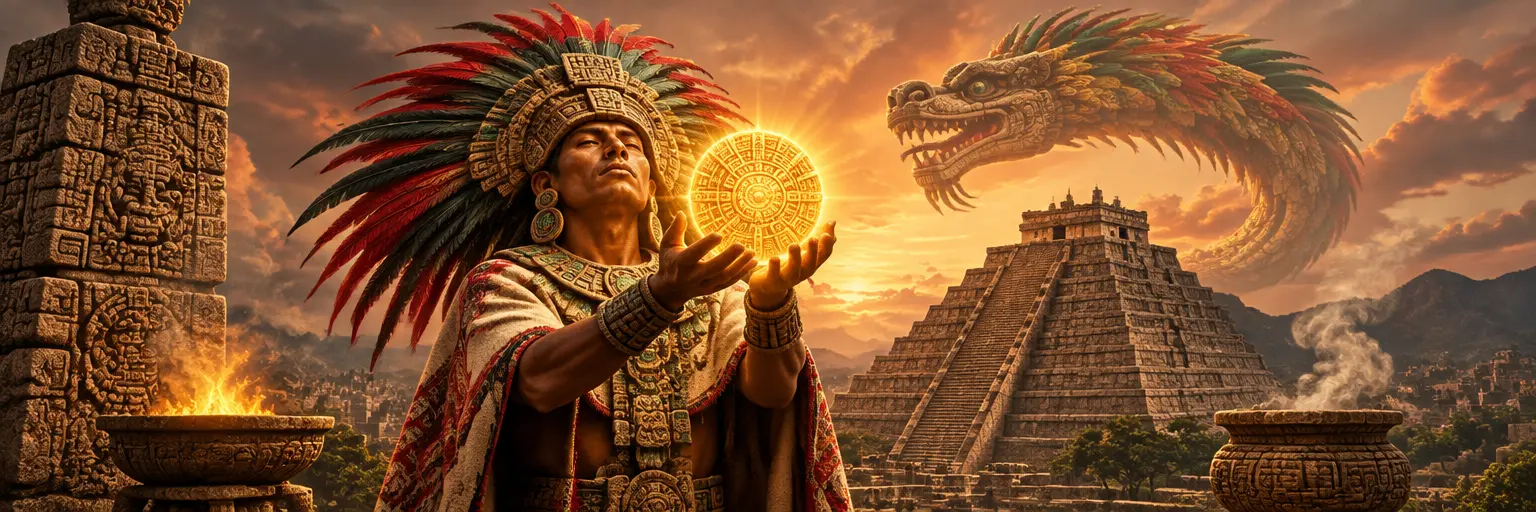
Delve into the sacred world of the Aztecs—where gods walked among mortals, myths explained the cosmos, and rituals sustained the very sun. This subcategory uncovers the rich pantheon of deities, from the feathered serpent Quetzalcoatl to the fierce Huitzilopochtli, and the powerful legends of creation, sacrifice, and rebirth. Discover how religion shaped every aspect of Aztec life—from politics and warfare to agriculture and art—and explore the enduring symbolism that still captivates us today. Perfect for history enthusiasts, students, and curious minds seeking authentic insights into Mesoamerican spirituality.
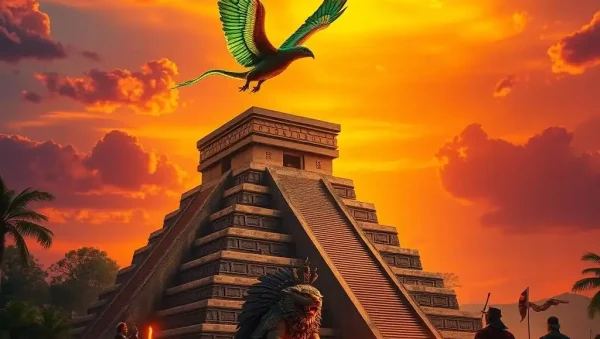
🌟 In Aztec religion and mythology, the contrasting deities Quetzalcoatl and Tezcatlipoca embody the duality of creation and destruction, reflecting the complex…
Read article
🌌 The Aztec creation myth significance reveals profound insights into the culture’s worldview, illustrating the intricate relationship between humanity and the cosmos.…
Read article
The enduring influence of Aztec religion is evident in modern indigenous practices, where ancient rituals, beliefs, and cosmologies continue to shape cultural…
Read article
The intricate relationship between Aztec religion and political power reveals how spiritual beliefs legitimized authority. Rituals and deities shaped governance, demonstrating that…
Read articleDelve into the rich spiritual tapestry of the Aztec civilization, where gods, rituals, and cosmic cycles shaped every aspect of daily life. This subcategory uncovers the pantheon of deities, creation myths, ceremonial practices, and the profound symbolism that defined one of history’s most fascinating belief systems. Whether you’re a student, researcher, or enthusiast, you’ll find detailed insights into how the Aztecs understood the universe and their place within it.
Discover the major gods and goddesses who ruled over war, rain, fertility, sun, and death. Learn about Huitzilopochtli, the hummingbird god of war and the sun, whose temple towered over Tenochtitlan. Explore Tlaloc, the rain deity, and Quetzalcoatl, the feathered serpent representing wisdom and wind, each with unique attributes and myths. This section provides a structured overview of divine hierarchies, including lesser-known spirits and their connections to natural phenomena.
Understanding these deities is essential to grasping Aztec cosmology. Each god had specific festivals, offerings, and priesthoods, reflecting the civilization’s complex theological framework. The pantheon wasn’t static; it absorbed regional gods through conquest and trade, resulting in a dynamic religious landscape. By examining each deity’s iconography and associated rituals, you’ll appreciate how the Aztecs personified forces of nature and human emotion, making the divine both accessible and awe-inspiring.
Uncover the Aztec story of the Five Suns, a series of creation and destruction epochs that explained the world’s origins and future. Each sun represented a different era, governed by distinct deities and ending in cataclysm—from jaguars to floods to fiery rain. The current era, the Fifth Sun, was sustained by human sacrifice and blood offerings, a belief that drove much of Aztec ritual life. This narrative frame highlights the cyclical nature of time in Aztec thought.
Beyond the Five Suns, myths like the birth of Huitzilopochtli and the journey of Quetzalcoatl to Mictlan illustrate themes of sacrifice, rebirth, and cosmic balance. The Aztecs believed the universe operated in 52-year cycles, culminating in the New Fire Ceremony when all fires were extinguished and relit to ensure the sun’s rise. These stories weren’t just folklore; they structured calendars, agricultural practices, and political legitimization, making mythology a living blueprint for societal order.
Step inside the Templo Mayor and other sacred precincts where priests performed elaborate ceremonies to appease the gods. Rituals included music, dance, incense, and offerings of food, flowers, and precious objects. The most controversial practice was human sacrifice, often involving prisoners of war, which the Aztecs viewed as a necessary debt repayment to the sun. This section explains the theological rationale, the mechanics of these rites, and the social roles of priests and victims.
Far from arbitrary violence, sacrifice was a cosmic transaction rooted in reciprocity: gods gave life, so humans gave blood. Specialized priesthoods managed calendars, divination, and bloodletting rituals, which also included self-sacrifice by nobles. The scale and symbolism varied, from heart extraction at temple summits to gladiatorial combat. By contextualizing these practices within Aztec cosmology, you’ll see them as a coherent—if harsh—system aimed at preserving cosmic order, rather than mere brutality.
Explore how mythology influenced the 18 monthly festivals of the xiuhpohualli (solar calendar) and the tonalpohualli (260-day divinatory calendar). Each festival honored a deity with specific foods, dances, and reenactments, such as the feast of Xipe Totec, where captives were flayed to symbolize renewal. The tonalpohualli assigned day signs and numbers to guide personal fate, naming, and warfare decisions. This integration of myth into daily routines made religion inseparable from Aztec identity.
Omens and dreams were interpreted by priests, influencing everything from crop planting to royal succession. Mythical stories shaped naming conventions—children often received names referencing gods or celestial events—and also determined architectural layouts. For example, Tenochtitlan’s central plaza mirrored cosmic directions, aligning temples with cardinal points. By tracing these connections, you’ll understand how the Aztecs lived in a world saturated with divine meaning, where everyday actions carried mythological weight.
Learn how Aztec religion survived the Spanish conquest through syncretism, reshaping into blended Catholic-indigenous practices like the Day of the Dead. Contemporary Mexicans and diaspora communities reclaim Aztec mythology as a source of cultural pride, with deities like Coatlicue and Quetzalcoatl appearing in art, literature, and activism. This section examines archaeological discoveries, such as the Templo Mayor excavations, that continue to reshape our understanding of ritual life.
Modern interpretations also address colonial biases, offering more nuanced views of sacrifice and cosmology. Scholars now emphasize that Aztec myths encoded sophisticated astronomical and ecological knowledge. Popular culture—from video games to films—often borrows Aztec imagery, though sometimes inaccurately.Your exploration here helps separate fact from fiction, fostering respectful appreciation. The legacy is not just historical; it’s a living tradition of resilience and identity.
Huitzilopochtli, the god of war and the sun, was central to Aztec identity, especially for the Mexica people of Tenochtitlan. However, Tlaloc (rain) and Quetzalcoatl (wisdom) were equally vital in different domains. Importance varied by city and context, but Huitzilopochtli’s temple sat at the Templo Mayor’s summit, signifying his supreme role.
Not daily, but frequently—on festivals, war victories, and coronations. Estimates vary widely, from hundreds to thousands annually. These rituals were reserved for specific calendrical dates and crises. The practice was symbolic, not random, and was reserved for captives, slaves, or volunteers in rare cases.
The Five Suns myth describes five successive eras, each ruled by a different god and ending in disaster—jaguars, wind, fire, flood, and monsters. The current Fifth Sun, ruled by Tonatiuh, requires human blood for survival. This cycle explains cosmic renewal and justified sacrifice.
Conquistadors destroyed temples and codices, banning indigenous practices. However, many rituals merged with Catholic saints and holidays, creating syncretic traditions like the Virgin of Guadalupe. Some myths persisted orally, leading to folk practices that blend both faiths today.
Yes. The Templo Mayor in Mexico City is a major archaeological site and museum. Teotihuacan, though predating the Aztecs, was revered by them. Other sites like Malinalco and Tlatelolco offer glimpses into ritual spaces. Always check local guidelines for preservation.