The Role of Cacao: Currency and Culture in the Aztec Economy
Cacao in the Aztec economy was more than just a valuable currency; it symbolized status, facilitated trade, and played a vital role…
Read article
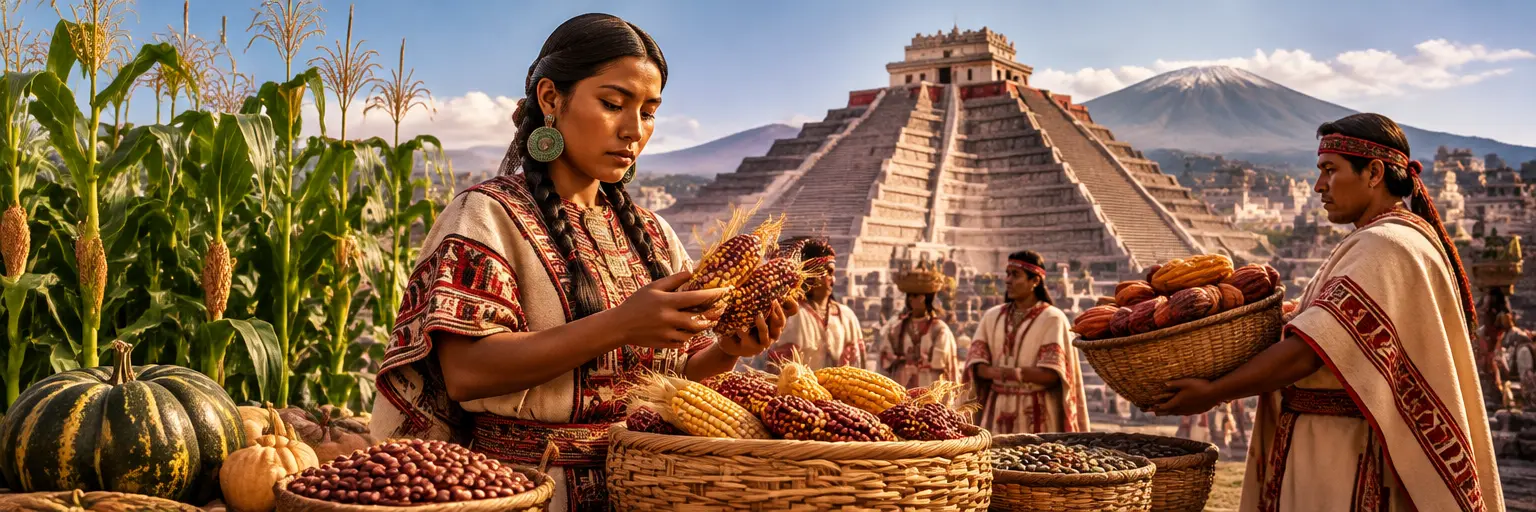
Agriculture and Economy were the twin pillars of the mighty Aztec Empire, fueling its rise from a humble island settlement to the dominant power of Mesoamerica. Through ingenious chinampas—floating gardens that yielded bountiful harvests—and sophisticated trade networks spanning thousands of miles, the Aztecs built a thriving marketplace economy where cacao beans served as currency and tribute flowed from conquered provinces. Discover how this agricultural surplus not only fed a vast population of over 200,000 in Tenochtitlan alone but also supported an intricate social hierarchy, religious festivals, and monumental architecture. From bustling tianguis markets to the strategic cultivation of maize, beans, and squash, this section reveals how sustainable farming and vibrant commerce shaped one of history’s most advanced pre-colonial societies, leaving a lasting legacy in modern Mexican cuisine and trade traditions.
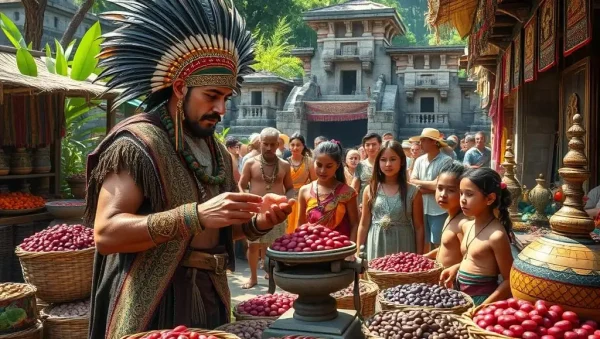
Cacao in the Aztec economy was more than just a valuable currency; it symbolized status, facilitated trade, and played a vital role…
Read article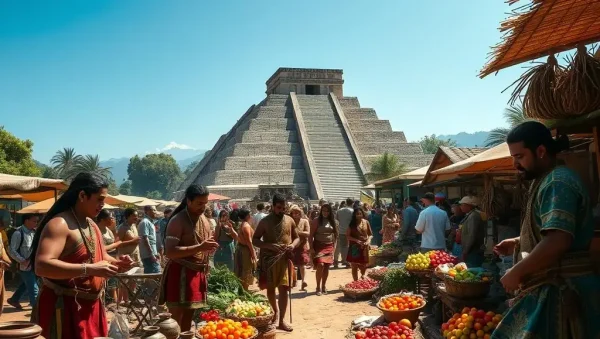
The Aztec economic management strategies showcased remarkable adaptability, enabling them to navigate scarcity and surplus. By employing innovative agricultural techniques and intricate…
Read article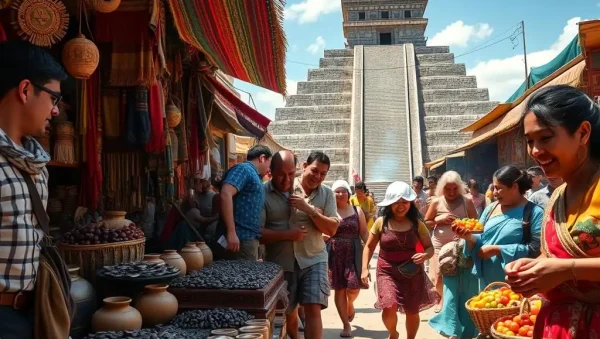
🌍 The Aztec marketplace was a bustling hub of trade and commerce in Tenochtitlan, showcasing the intricate Aztec trade and commerce history.…
Read article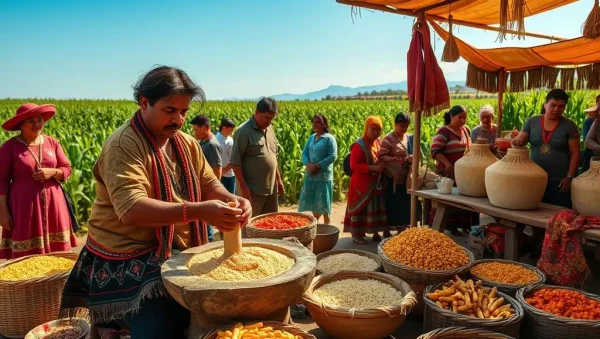
🌽 The importance of maize in Aztec culture cannot be overstated; it was not only a staple food but also a symbol…
Read article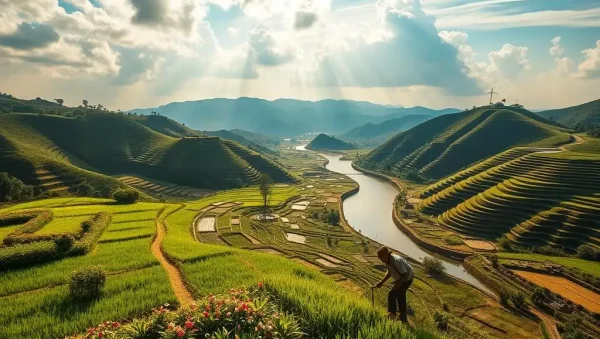
🌱 Discover the remarkable Aztec agricultural techniques history, showcasing innovative practices like chinampas and terracing that transformed landscapes. These methods not only…
Read articleWelcome to the Agriculture and Economy subcategory of our exploration into the Aztec Civilization. Here, you will discover how the Mexica people transformed a challenging lake environment into a thriving agricultural powerhouse, fueling one of the most complex and wealthy empires in the pre-Columbian Americas. From innovative farming techniques to bustling marketplaces, this page unpacks the economic engines that sustained Tenochtitlan and its vast tribute networks, offering you a deeper understanding of how sustainability and trade shaped Aztec daily life and imperial expansion. Dive in to see how maize, cacao, and cotton were more than crops—they were the currency of power and culture.
Perhaps the most iconic Aztec agricultural innovation is the chinampa system, often called “floating gardens.” These were artificially constructed islands on shallow lake beds, made from woven reeds, mud, and organic matter, creating highly fertile, year-round farming plots. By using this method, the Aztecs could harvest up to seven crops per year—including maize, beans, squash, and chilies—ensuring food security for a population of over 200,000 in Tenochtitlan alone. This intensive farming not only sustained the capital but also freed labor for other economic and military pursuits, making chinampas the foundational technology behind Aztec urban growth and political stability.
For modern readers, the chinampa system is a masterclass in sustainable agriculture, offering lessons in water management and soil conservation that are still relevant today. As you explore further, you will see how the Aztecs carefully managed aquatic ecosystems, using nutrient-rich lake sediment and human waste as natural fertilizers. This subcategory highlights how their ingenuity turned a geographic disadvantage—settling on an island in a saline lake—into a strategic advantage, demonstrating that ecological adaptation is a key driver of economic prosperity and cultural resilience.
The Aztec economy was not purely market-based; it was heavily sustained by an extensive tributary system that extracted goods, labor, and resources from conquered provinces. Every 80 to 90 days, subject cities delivered quotas of maize, beans, cotton textiles, cacao, gold dust, and even exotic feathers to Tenochtitlan. This centralized redistribution created a stable supply of essential commodities, while also cementing political hierarchies and the divine authority of the emperor. The tribute lists, recorded in codices like the Codex Mendoza, detail over 30 tribute provinces, showing the empire’s vast reach and its ability to mobilize resources across diverse ecological zones.
Tribute was not merely extraction; it was a complex system of reciprocity and control. In exchange for tribute, local elites received military protection, legal arbitration, and access to luxury trade goods. This dual system of tribute and market exchange allowed the Aztec state to integrate conquered peoples economically without fully disrupting their local production. For those studying economic history, this section reveals how imperial expansion was financed through a combination of coercive taxation and voluntary market participation, a model that offers stark contrasts to European feudalism and demonstrates the sophistication of pre-Columbian statecraft.
No discussion of Aztec economy is complete without visiting the Great Market of Tlatelolco, the largest and most vibrant marketplace in the Americas. Spanish conquistador Bernal Díaz del Castillo described it as having “more daily buyers and sellers than the great market of Rome,” with tens of thousands of people trading goods every five days. Here, you could find everything from basic staples like maize and beans to luxury items such as jade, turquoise, and quetzal feathers. The market was organized into distinct sections by product type, with specialized judges and inspectors ensuring fair transactions and quality control—an early example of consumer protection regulation.
This marketplace operated under a mixed system of bartering and a type of currency, including cacao beans for smaller purchases and quachtli (cotton cloaks) for larger ones. Prices were often set by supply and demand, but also influenced by state-mandated fair-price rules, showing a blend of free enterprise and government oversight. For economic enthusiasts, the Tlatelolco market exemplifies how complex monetary systems and regulatory frameworks can exist outside Western traditions. It also highlights the social significance of market days as civic gatherings, where news, gossip, and cultural exchange flourished alongside commerce, making the market a microcosm of Aztec urban life.
The Aztec agricultural calendar was dominated by staple crops, with maize (corn) being the most sacred and essential, used for tortillas, tamales, and atole drinks. Beans provided complementary protein, while squash offered vitamins and extended soil fertility through companion planting. However, the economy also thrived on high-value trade goods: cacao was so prized that it served as currency and was reserved for elites, while cotton was woven into fine garments and armor. Other commercial crops included tobacco, chilies, tomatoes, and amaranth, which was both a grain and a ceremonial food. These products were traded across long distances, from the Gulf Coast to the Pacific, linking the highlands with tropical lowlands in a complex exchange network.
Beyond food, the Aztec economy dealt in exotic raw materials like obsidian for tools and weapons, turquoise for ceremonial masks, and feathers from quetzal birds, which were more valuable than gold due to their rarity and religious significance. This subcategory will guide you through the seasonal cycles of planting and harvesting, as well as the storage techniques (like granaries) that prevented famine. Understanding these commodities helps you appreciate how ecological diversity was converted into economic leverage, enabling the Aztecs to negotiate, trade, and dominate neighboring regions through both military might and economic interdependence.
Aztec economic organization was deeply tied to social class and land ownership. The calpulli (community) owned agricultural land collectively, distributing plots to individual families for their subsistence, while retaining common lands for public projects and tribute payments. Nobles (pipiltin) held large estates, often worked by mayeque (serfs) who were bound to the land, while commoners (macehualtin) farmed their calpulli plots and paid taxes in both labor and goods. The pochteca, a powerful long-distance merchant class, enjoyed elite status and wealth but were strictly regulated by the state to prevent them from becoming too powerful or engaging in espionage without permission.
This stratification was reflected in economic roles: artisans, such as featherworkers and goldsmiths, were organized into guilds and often lived in specific neighborhoods, while farmers formed the agricultural backbone. The emperor and high priests owned immense personal wealth, but their expenditure on public works—temples, aqueducts, and festivals—remained a form of economic redistribution that maintained social harmony. For sociology and economics students, this section illustrates how property rights, labor obligations, and trade monopolies were intertwined with political and religious authority, providing a nuanced counterexample to simplistic views of ancient economies as purely subsistent or purely market-driven.
Maize (corn) was the most important crop, serving as the dietary staple and holding deep religious significance. It was central to food production, used for tortillas, tamales, and drinks, and also functioned as a measure of wealth and tribute payments. Its cultivation shaped the agricultural calendar and social organization.
Chinampas were built by staking out shallow lake beds, then layering woven reed mats with alternating layers of mud, aquatic vegetation, and decaying matter. This created raised beds surrounded by water canals, which kept roots moist and fertile. They were anchored by trees, like willows, along the edges to stabilize the soil.
Yes, but in a hybrid system. Cacao beans were used as a common currency for small purchases, while quachtli (standardized cotton cloaks) served for larger transactions. For very high-value items like gold or jade, bartering was common. Additionally, the market had official price inspectors to regulate exchanges.
Conquered provinces provided a wide range of goods, including maize, beans, cotton textiles, cacao, honey, tobacco, gold dust, jade, turquoise, and exotic feathers like quetzal. They also supplied labor for public works and military service. Tribute was collected every 80-90 days and recorded in codices for accountability.
No, it was highly diversified. While agriculture was foundational, the economy flourished through craft specialization (like featherworking and obsidian toolmaking), long-distance trade by pochteca merchants, and extensive tribute networks. Markets facilitated exchange, and the state managed both production and distribution through complex regulations and infrastructure.