Gods and Myths: The Spiritual Origins of the Aztec Civilization
The Aztec civilization's spiritual beliefs were deeply intertwined with nature and the cosmos, shaping their rituals, art, and society. Understanding these myths…
Read article
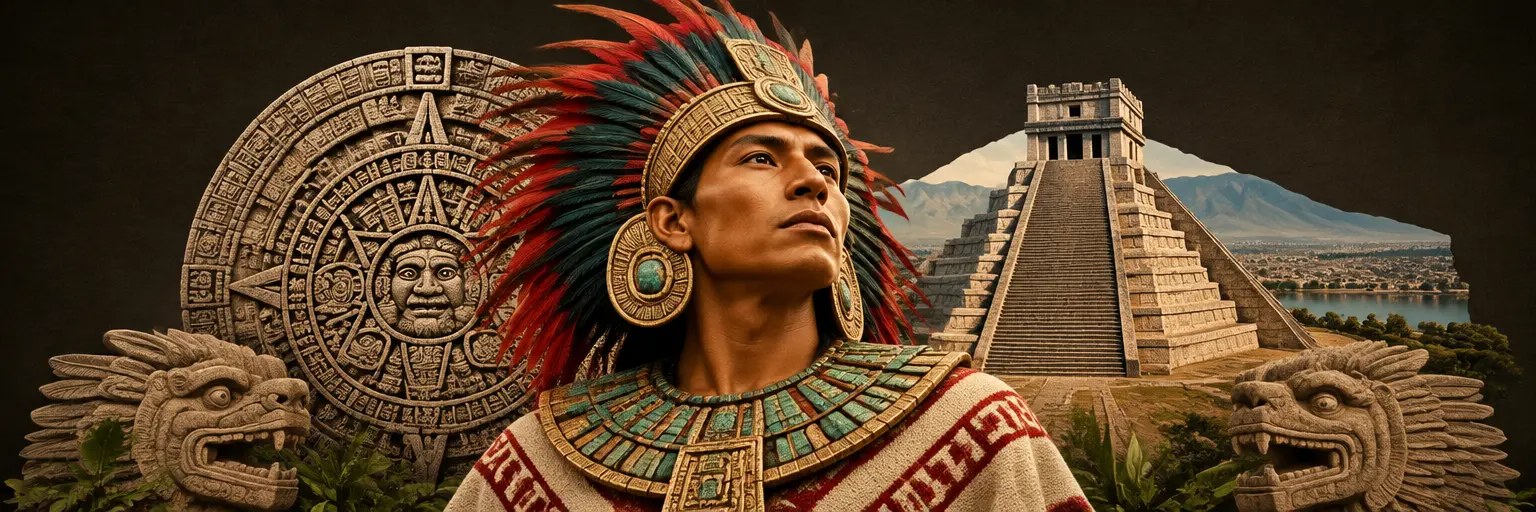
Uncover the fascinating story of the Aztec Empire’s rise, from its mythical migrations and the founding of Tenochtitlán to the powerful dynasties that shaped Mesoamerica. Delve into the origins of this remarkable civilization, exploring how a nomadic people transformed into the rulers of a vast empire through war, alliance, and innovation. Discover the blend of legend and archaeology that reveals their historical evolution, the roles of key emperors, and the cultural foundations that defined their world—all while connecting these events to the broader narrative of Indigenous civilizations before colonization.
The Aztec civilization's spiritual beliefs were deeply intertwined with nature and the cosmos, shaping their rituals, art, and society. Understanding these myths…
Read article
The intricate network of Aztec trade significantly shaped their society, facilitating economic growth, cultural exchange, and the development of power dynamics. Understanding…
Read article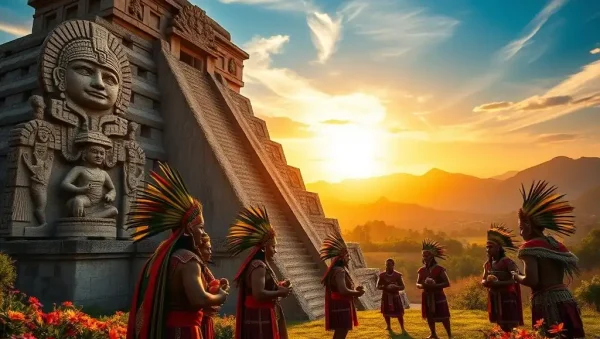
The Aztec religion, rich in intricate beliefs and practices, evolved from ancient Mesoamerican traditions. This exploration delves into the origins, deities, and…
Read article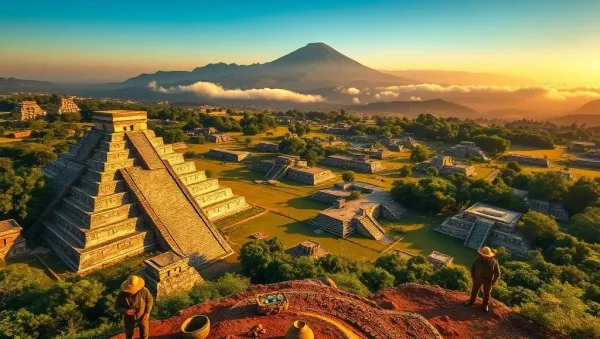
🌍 Recent Aztec civilization archaeological discoveries have unveiled remarkable insights into the rich cultural practices and societal structures of this ancient society,…
Read article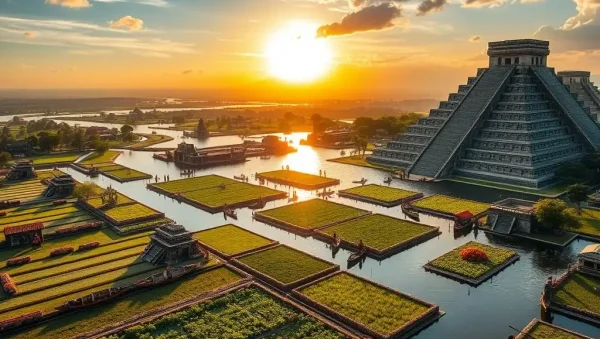
🌟 The Aztec Empire origins and achievements reveal a remarkable civilization that flourished through innovative agriculture, complex social structures, and vibrant cultural…
Read article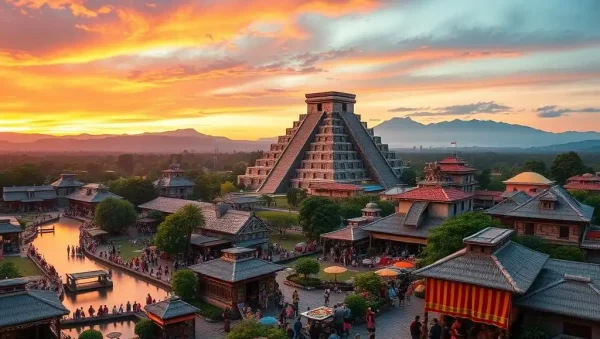
🌎 The intricate relationship between Aztec culture and geography shaped a unique civilization. The diverse landscapes influenced agricultural practices, religious beliefs, and…
Read articleDelve deep into the mists of time to discover how a nomadic tribe from the arid north transformed into the mighty rulers of Mesoamerica. The "History and Origins" subcategory of the Aztec Civilization is your gateway to understanding the mythical, archaeological, and political forces that forged the Triple Alliance. From the legendary Aztlan homeland to the rise of Tenochtitlan on a lake, this section explores the foundational stories, the migration chronicles, and the early kingship that set the stage for one of history’s most sophisticated empires. Here, we separate historical fact from poetic myth to give you a clear, SEO-rich narrative of Aztec beginnings.
Every great civilization has a creation story, and for the Mexica, it began in a place called Aztlan—"Place of Herons." According to the codices, this island paradise was the ancestral home where the Aztecs lived before their long pilgrimage. This section unpacks the symbolic and geographic interpretations of Aztlan, exploring whether it was a real location in northern Mexico or a purely mythological construct designed to legitimize their power. We analyze the key sources like the Codex Boturini and the Tira de la Peregrinación, which depict the departure and the divine mandate from their patron god, Huitzilopochtli.
Expect to learn how the search for Aztlan fueled centuries of scholarly debate. The narrative here emphasizes the ideological importance of this origin point—it was used to frame the Aztecs as the chosen people, destined to conquer and build a new center of the universe. By understanding Aztlan, you gain insight into the cosmovision that guided their every action, from warfare to architecture. This isn’t just history; it’s the sacred charter that justified an empire.
Follow the arduous, centuries-long journey of the Mexica as they wandered through the deserts and mountains of Mesoamerica. This section chronicles the stops, the trials, and the omens that shaped their identity, including the famous episode where they settled at Coatepec, only to be driven out. The migration is not a simple wandering; it is a theologically driven saga. We break down the chronological stages, the alliances made and broken, and the gradual shift from a hunter-gatherer existence to a settled, agricultural society that adopted the cultural trappings of the more advanced Toltec and Chichimec peoples.
Here, you’ll discover why the Aztecs were often seen as parvenus, or upstarts, by the established city-states. The historical records, such as the Annals of Cuauhtitlan, provide a mixed narrative of defeat and resilience. This journey explains their initial arrival in the Valley of Mexico, where they were forced to live on the snake-infested shores of Lake Texcoco, setting the stage for the prophecy of the eagle on the nopal cactus. Expect a rich timeline filled with conflict, adaptation, and relentless perseverance.
The most iconic moment in Aztec history is undoubtedly the founding of their capital, Tenochtitlan, in 1325 CE. According to legend, the wandering Mexica saw the promised sign—an eagle perched on a prickly pear cactus, devouring a snake—on a small, swampy island in Lake Texcoco. This section explores the geographical and strategic genius behind that choice. We examine the chinampa system, the artificial islands that allowed them to farm and expand, and the engineering marvels of causeways and aqueducts that turned a marginal location into an unbeatable fortress.
Expect a deep dive into the archaeological evidence found at the Templo Mayor, which confirms the rapid growth of the city. The founding story is more than a myth; it is a blueprint for urban planning and hydraulic engineering. We explain how the island location provided natural defense against rival mainland powers while facilitating trade via canoes. This section connects the mythical vision to the physical reality, showing how a humble settlement became the breathtaking city that later amazed Hernán Cortés and his men.
The early history of the Aztecs was one of subservience, as they paid tribute to the mighty Tepanec city of Azcapotzalco. However, the pivotal moment came in 1428 when the Mexica ruler Itzcoatl allied with the Acolhua of Texcoco and the Tepanec dissidents of Tlacopan. This section details the political maneuvering and military campaigns that toppled the old order and established the Triple Alliance. We analyze the role of the esteemed advisor Tlacaelel, who rewrote history books to elevate the Aztec god Huitzilopochtli and justify their imperial ambitions.
Here, you will understand how a tributary state became the dominant power in central Mexico. The alliance was not based on equality; it was a hierarchical partnership where Tenochtitlan held supreme authority. We cover the expansionist wars, the Flower Wars for capturing sacrificial victims, and the intricate tribute systems that extracted wealth from conquered provinces. This section shows the transition from humble origins to a sophisticated empire, explaining the socio-political structure that enabled their rapid ascendancy and later domination.
To understand the history of the Aztecs, one must critically evaluate the sources. This section introduces you to the primary documents—pre-Columbian codices, colonial-era chronicles by Spanish friars, and indigenous pictorial manuscripts written after the conquest. We dissect the biases and perspectives of authors like Bernardino de Sahagún, whose Florentine Codex is a treasure trove of information, and Fernando Alvarado Tezozomoc, an Aztec noble who wrote from a native viewpoint. This historiography is essential for separating the historical core from the mythological embellishments.
Expect a critical analysis of the challenges faced by modern historians, including the destruction of original texts by the Spanish clergy. The section highlights how archaeology, iconography, and ethnohistory are combined to reconstruct the Aztec past. You’ll learn about the famous Aztec calendar stone and its role in legitimizing rule, as well as the limitations of oral tradition. This is the foundation for any serious student of history, offering a roadmap to verify facts and understand the cultural lens through which the Aztecs viewed their own origins.
Most scholars believe Aztlan was likely located in the present-day northwestern states of Mexico, such as Nayarit or Sinaloa. However, the exact location is unknown and debated. The Aztecs themselves used Aztlan as a symbolic origin to claim divine ancestry, and archaeological evidence for a specific site remains elusive, making it more a cultural concept than a concrete place.
The traditional chronicles suggest the migration from Aztlan to the Valley of Mexico lasted roughly 200 years, from about 1111 CE to 1325 CE. This long duration is partly due to the inclusion of mythical pauses and divine interventions. Historians believe the actual wandering, interspersed with long settlements, spanned several generations, allowing gradual cultural adaptation.
Acamapichtli, who ruled from 1376 to 1395 CE, is considered the first Huey Tlatoani of Tenochtitlan. He was chosen because he had noble lineage, potentially linked to the Toltecs. His reign established the royal dynasty, but his power was limited, as he initially governed as a vassal of the Tepanecs. It was later rulers like Itzcoatl and Moctezuma I who achieved true independence and dominance.
According to legend, they settled there to fulfill the prophecy of the eagle on the cactus. Practically, the island’s marshy conditions offered natural defensive advantages against aggressive mainland civilizations. The lake provided food, transportation, and building materials, while chinampas allowed for intensive agriculture. This challenging environment forced them to innovate, leading to their eventual strength.
The Triple Alliance was a military and political pact, but Tenochtitlan was the undisputed senior partner, controlling most of the military strategy and tribute flow. Texcoco was second, contributing military support and intellectual/legal expertise, while Tlacopan, the smallest, held a lesser role. Decisions were technically joint, but in practice, the Mexica dictated terms, making it a hegemony rather than a true confederacy.