The Legacy of Mayan Religion: How Ancient Beliefs Persist Today
🌟 The enduring influence of Mayan religion and modern beliefs reveals how ancient spiritual practices continue to shape contemporary indigenous identities, rituals,…
Read article
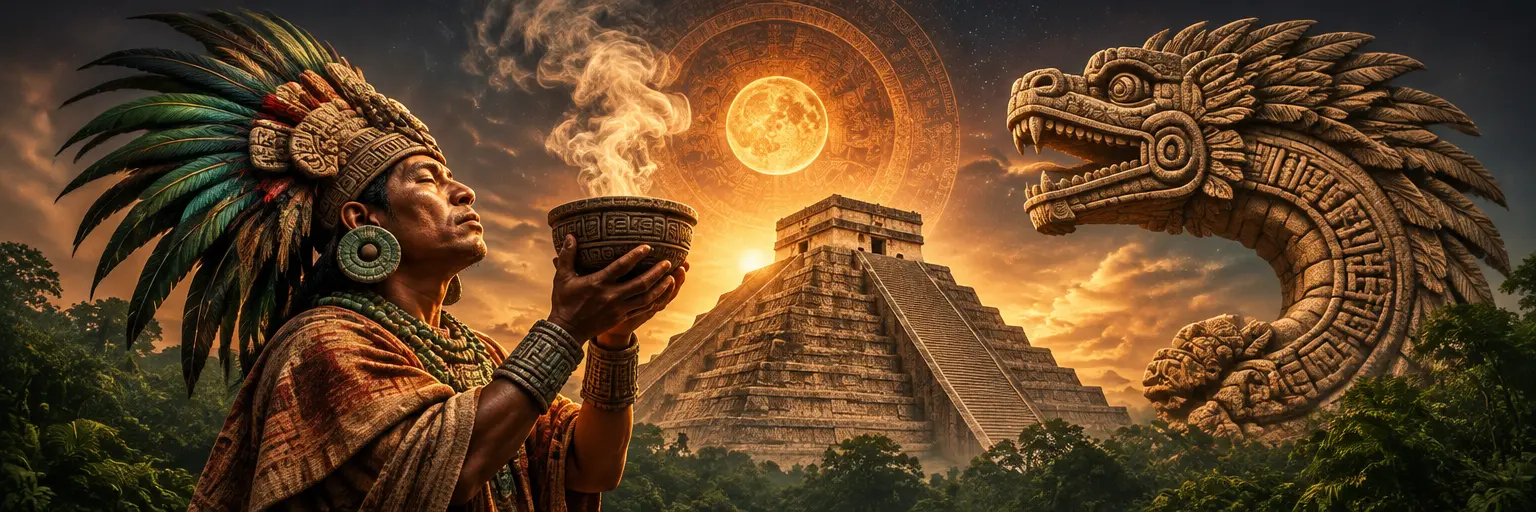
Explore the profound spiritual world of the Mayan civilization, where religion and mythology intertwined to shape every facet of life, from monumental architecture to daily rituals. This sacred system, rich with polytheistic deities, celestial cycles, and vibrant creation stories, reveals a cosmos teeming with divine power and symbolic meaning. Discover how the Mayans honored gods like Itzamna, the creator, and Chaac, the rain bringer, through elaborate ceremonies, blood offerings, and awe-inspiring pyramid temples designed to connect the earthly realm with the underworld Xibalba. Uncover the intricate Popol Vuh, the sacred book of the Quiché Maya, which narrates the heroic twins’ journey through the underworld, embodying themes of rebirth and cosmic order. Delve into how mythological narratives explained natural phenomena, justified royal authority, and guided agricultural calendars, making spirituality a living, breathing force in Mayan society. Perfect for history enthusiasts, students of anthropology, or curious travelers, this exploration illuminates the enduring legacy of Mayan beliefs—a remarkable testament to human imagination and the quest for meaning.
🌟 The enduring influence of Mayan religion and modern beliefs reveals how ancient spiritual practices continue to shape contemporary indigenous identities, rituals,…
Read article
🌌 Discover how Mayan cosmology and daily life are intricately connected, influencing everything from agricultural practices to social structures. This exploration reveals…
Read article
🌍 The Popol Vuh, the cornerstone of the Mayan creation myth, reveals profound insights into Mayan culture and spirituality. Its significance lies…
Read article
🌿 Mayan shaman spiritual practices were central to the community, serving as healers and guides. These spiritual leaders connected with the divine,…
Read article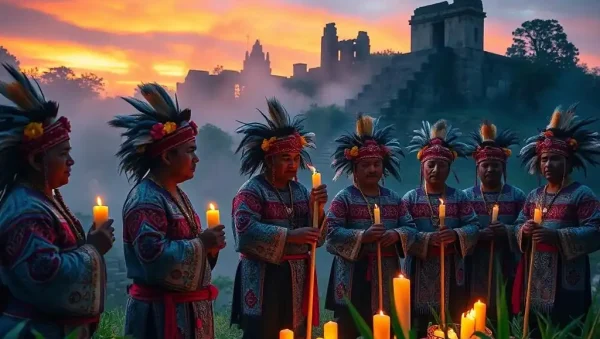
🌍 The transformation of Mayan beliefs postcolonization survival reveals a complex interplay of adaptation and resilience. Indigenous communities integrated new influences while…
Read article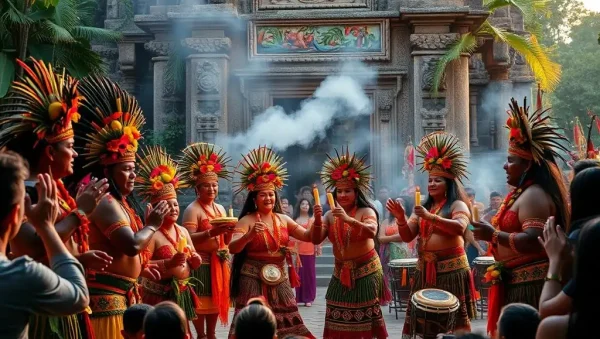
🌟 Maya festivals and ceremonies are vibrant expressions of spirituality, honoring deities and seasonal cycles. These rich traditions showcase the profound connection…
Read articleDive into the rich spiritual tapestry of the Maya, where gods, heroes, and cosmic forces shaped every aspect of daily life, from agriculture to kingship. This subcategory unpacks the intricate pantheon, creation stories, ritual practices, and the profound symbolism that defined one of history’s most sophisticated belief systems. Whether you’re a student, a traveler, or a mythology enthusiast, you’ll discover how Mayan religion was not just a set of beliefs but a living, breathing framework for understanding the universe, time, and human destiny.
Here, you’ll meet the major deities that ruled the Mayan cosmos, from Itzamna, the supreme creator god, to Kukulkan, the feathered serpent, and Chaac, the rain god. Each deity governed specific domains—maize, war, death, the underworld—and their personalities were as complex as human nature itself. Understanding these gods is essential to grasping how the Maya interpreted natural phenomena and justified social hierarchies. Expect vivid descriptions of their iconography, associated symbols, and regional variations across the Yucatán, Guatemala, and Honduras.
Beyond names, you’ll learn how the gods interacted with mortals through myths, prayers, and offerings. For instance, the Hero Twins’ story highlights the duality of sacrifice and rebirth, while the god of maize, Hun Hunahpu, embodies agricultural cycles. The pantheon was not static; it absorbed local deities over centuries, making it a dynamic system. By studying these roles, you gain a framework for reading Mayan art, architecture, and hieroglyphs, where gods frequently appear in royal ceremonies and celestial events.
This section focuses on the Popol Vuh, the “Council Book” of the K’iche’ Maya, which narrates the creation of the world, the failed attempts to make humans from mud and wood, and the eventual success with maize dough. You’ll also explore other creation accounts, such as the Yucatec “Chilam Balam” prophecies, which blend history with mythology. Expect to see how these stories were not just myths but political and spiritual charters that justified royal lineage and territorial claims.
Central to these myths is the cyclical nature of time: the Maya believed the cosmos underwent successive creations and destructions. The Popol Vuh’s hero twins, Hunahpu and Xbalanque, descend into the underworld, Xibalba, to outwit its lords—a tale rich with lessons on resilience, cunning, and the victory of life over death. Reading these myths offers insight into Mayan philosophy, including the concept of duality (light/dark, life/death) and the sacred role of human sacrifice, which was seen as a necessary cosmic debt repayment.
Discover how the Maya performed bloodletting, incense burning, and human sacrifice to communicate with gods. Rituals were held at pyramidal temples like Chichén Itzá, Tikal, and Palenque, often aligned with astronomical events such as solstices and Venus cycles. This section explains the role of shamans and priests, the use of hallucinogenic plants, and the meaning of ritual ballgames, which symbolized cosmic battles. You’ll understand how public ceremonies reinforced social order and how private rituals—like those in caves—were reserved for elite communication with ancestors.
Sacred sites were not merely buildings but thresholds between the human and divine worlds. The cenotes (natural sinkholes) served as portals to the underworld, while temples replicated cosmic mountains. Rituals were timed with the 260-day sacred calendar (Tzolk’in) and the 365-day solar calendar (Haab’), ensuring harmony between human activities and celestial cycles. Expect detailed descriptions of ritual paraphernalia, such as copal incense, jade ornaments, and ceremonial spears, which are now recovered by archaeologists and displayed in modern museums.
Here, you’ll explore Xibalba, the Mayan underworld, a place of rivers, bats, and jaguars, ruled by the Death Lords. In Mayan belief, death was not an end but a transition—souls journeyed through nine levels of Xibalba, facing trials before reaching paradise. This section covers the Day of the Dead precursor rituals, funerary practices, and the role of the Death God, often depicted as a skeletal figure. You’ll also learn how rulers were mummified or cremated with offerings to ensure safe passage.
Cosmologically, the Maya envisioned a layered universe: heavens above, earth in the middle, and underworld below, all connected by the World Tree (Ceiba). The sun god, Kinich Ahau, traveled through the underworld each night, symbolizing rebirth. Understanding Xibalba illuminates Mayan views on mortality, ancestor worship, and the afterlife. Additionally, you’ll see how this underworld influenced modern pop culture, from video games to novels, highlighting its enduring fascination.
No exploration of Mayan religion is complete without their calendars, which were deeply religious. The Tzolk’in (260 days) assigned a day name and number, used for divination and ritual planning; meanwhile, the Long Count tracked cosmic eras. This section explains how priests used calendars to predict eclipses, planetary alignments, and agricultural cycles, believing that time itself was a god. You’ll find tables, examples of day signs (like Ik’, Caban), and their meanings in personal horoscopes.
Numbers held sacred power—four directions, five levels, nine underworld gods, thirteen heavens. The Maya associated each number with colors, deities, and directions. Astrology guided not only planting but warfare and royal marriages. For instance, Venus’s rising signaled the start of conflict. This intricate system demonstrates the Maya’s advanced mathematics and astronomy, which rivaled contemporary European knowledge. By understanding these calendars, you can decode inscriptions on stelae and murals, connecting ancient events to specific dates with astonishing precision.
The primary creation tale is found in the Popol Vuh, where gods first make humans from mud, then wood, and finally maize dough. The hero twins, Hunahpu and Xbalanque, defeat the gods of Xibalba, ensuring the success of the final creation and establishing the cycle of life, death, and rebirth.
Religion permeated everything: agriculture, warfare, medicine, and politics. People offered food, incense, and blood to gods to ensure good harvests and health. Kings were considered divine intermediaries, and their actions, even warfare, were framed as cosmic rituals to maintain order against chaos.
Itzamna (creator and sky god), Kukulkan (feathered serpent, wind, and knowledge), Chaac (rain and lightning), and Hun Hunahpu (maize god) are central. Also, Ix Chel (moon, fertility, weaving) and Ah Puch (death) played significant roles in regional worship.
Yes, but unlike many traditions, the afterlife was not inherently heaven or hell. Most souls went to Xibalba, a challenging underworld, while warriors, women who died in childbirth, and sacrificial victims went to a paradise associated with the sun god. Reincarnation was not common, but ancestor spirits remained influential.
Myths survive through colonial-era documents like the Popol Vuh and Chilam Balam, as well as archaeological inscriptions on stone and pottery. Modern Maya communities still retell stories and practice rituals, such as the Day of the Dead, blending ancestral beliefs with Catholicism, showing resilience of these traditions.