Advanced Mathematics in Mayan Civilization: A Study of Their Numerical System
🌟 The Mayan civilization advanced mathematics in remarkable ways, utilizing a sophisticated numerical system that included concepts of zero and place value,…
Read article
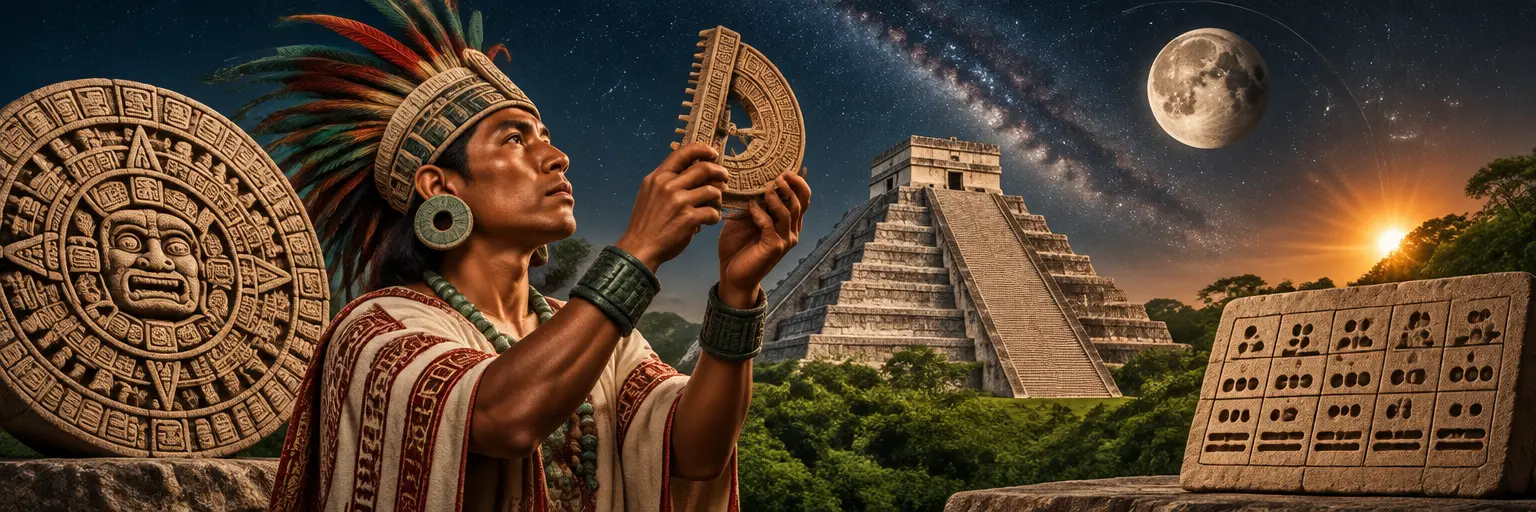
Discover the extraordinary Scientific Achievements of the Mayan Civilization, a legacy of innovation that reshaped our understanding of ancient knowledge. From their precise astronomical observations and the creation of a sophisticated calendar system to their advanced mathematical concepts, including the invention of the concept of zero, the Maya mastered the cosmos and numbers with unparalleled skill. Their intricate hieroglyphic writing, one of the few fully developed scripts in the pre-Columbian Americas, combined with their ingenuity in engineering and agriculture, like terraced farming and water management, showcases a society deeply attuned to science and nature. This page highlights how their relentless pursuit of knowledge in astronomy, mathematics, and medicine not only defined their culture but also laid foundational principles that continue to influence modern science and demonstrate the profound intellectual prowess of Indigenous civilizations.
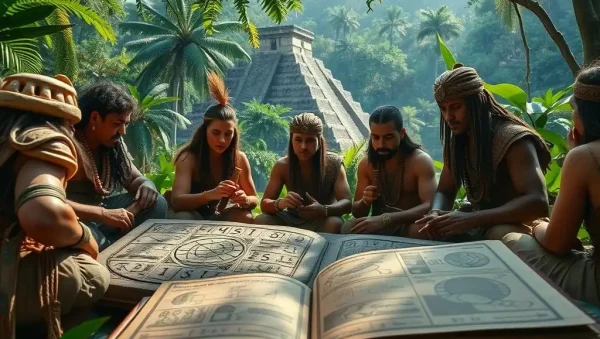
🌟 The Mayan civilization advanced mathematics in remarkable ways, utilizing a sophisticated numerical system that included concepts of zero and place value,…
Read article
🌿 The study of Mayan medicinal plants reveals their profound benefits, showcasing ancient knowledge that intertwines healing practices with biodiversity. This exploration…
Read article
Discover how Mayan medicine, with its holistic approaches and herbal remedies, has shaped modern healthcare practices. This article delves into the ancient…
Read article
Discover the fascinating world of the Mayan ball game physics analysis, where ancient strategies and athletic prowess intertwine. This exploration reveals how…
Read article
Discover the profound influence of Mayan mathematics and the concept of zero, a revolutionary idea that transcended cultures and shaped mathematical understanding…
Read article
The Mayan civilization art and science uniquely intertwined, showcasing advanced astronomical knowledge through intricate carvings and vibrant murals. These artistic expressions not…
Read articleStep into the awe-inspiring world of Maya science, where ancient minds unlocked the mysteries of the cosmos, time, and mathematics with astonishing precision. The Mayan Civilization, spanning modern-day Mexico, Guatemala, Belize, and Honduras, developed scientific systems that rivaled—and often surpassed—contemporary Old World cultures. Here, we delve into their astronomical observatories, advanced numeral systems, and predictive calendars, revealing how these innovations shaped daily life and still echo in modern science. Discover the ingenuity of a people who mapped the stars without telescopes and calculated time with error rates under minutes per century.
The Maya were master stargazers, meticulously recording the movements of the Sun, Moon, Venus, and other planets. They built observatories like the famous Caracol in Chichén Itzá, with windows aligned to equinoxes and planetary cycles. Their Venus tables, found in the Dresden Codex, tracked the planet’s synodic period with an error of only two hours over 500 years—a feat unmatched in Europe at the time. They predicted eclipses, solstices, and the heliacal rise of stars, using these observations to time agricultural planting, religious ceremonies, and warfare.
What makes their astronomy truly revolutionary is its integration with architecture. Entire cities, like Uxmal and Tikal, were oriented to solar and lunar events, creating living calendars. The Maya also tracked the Milky Way as a “cosmic tree,” connecting celestial cycles to earthly rulers. Their ability to calculate the lunar series and the Metonic cycle (19-year eclipse cycle) demonstrates a sophisticated empirical method, built without telescopes but refined over centuries of patient, communal observation.
One of humanity’s greatest mathematical breakthroughs occurred independently in Mesoamerica: the concept of zero. The Maya developed a vigesimal (base-20) positional system, using only three symbols—a shell (zero), a dot (one), and a bar (five). This allowed them to represent enormous numbers and perform complex calculations. The Long Count calendar, which tracked dates over millions of years, relied on this system, marking the beginning of time at 3114 BCE and projecting cycles far into the future.
Unlike the Roman numerals or early Chinese counting rods, the Maya’s place-value system—with zero as a placeholder—enabled arithmetic operations like addition, subtraction, and multiplication. This mathematical sophistication was not just theoretical; it underpinned their calendar round, astronomy, and even economic transactions. The independent invention of zero in the Americas challenges Eurocentric histories, proving that abstract numerical thinking emerged from multiple cultural roots, not solely in ancient India or Babylon.
The Maya created the most accurate calendar system of the ancient world, interlocking two main cycles: the Tzolkin (260-day sacred calendar) and the Haab (365-day solar calendar). Together, they formed a Calendar Round of 52 years, where no date repeated. But their crowning achievement was the Long Count, a linear count of days from a mythological creation date, allowing precise dating of historical events thousands of years apart. The accuracy of the Haab, only 19 minutes off per year, exceeds the Gregorian calendar’s original error.
These calendars were more than timekeeping tools; they were ideological blueprints that governed civic life, prophecy, and kingship. Rulers synchronized their accession dates with auspicious Tzolkin days. Farmers used the Haab to plan maize planting, while priests predicted eclipses using the Dresden Codex’s tables. The survival of these calendars in modern Maya communities—like the highland Guatemalan daykeepers who still use the Tzolkin—demonstrates their enduring legacy, now recognized by UNESCO as intangible cultural heritage.
In the tropical lowlands, where seasonal rains and drought alternated, the Maya engineered remarkable water systems. They built reservoirs, chultunes (underground cisterns), and canals that captured and stored rainwater for months. At Tikal, massive reservoirs could hold up to 900,000 cubic meters, sustaining a population of tens of thousands during dry seasons. They also constructed raised fields and terraces to manage soil erosion and intensive agriculture, increasing crop yields in swampy or hilly terrain.
Their hydraulic expertise extended to aqueducts and controlled flooding in cities like Palenque, where springs were channeled through stone conduits. Recent LiDAR studies have revealed extensive wetland drainage systems in Belize, reshaping our view of Maya agriculture as highly advanced and sustainable. This engineering not only supported dense urban centers but also mitigated climate variability—a lesson for modern water management in tropical regions. The Maya’s integration of water ritual, as seen in cenotes at Chichén Itzá, highlights how technology and cosmology were inseparable.
Maya healers possessed a deep empirical knowledge of medicinal plants, documented in codices like the Badianus Manuscript. They treated infections with antibiotic molds, fever with willow bark (containing salicylic acid, like aspirin), and used copal resin as an antiseptic. Surgical practices included cranial trepanation—drilling holes in the skull to relieve pressure—with evidence of high survival rates. Their herbal baths and sweat lodges (temazcal) promoted hygiene and recovery, blending physical therapy with spiritual rituals.
Their botanical classification was systematic, organizing plants by medicinal action, habitat, and season. The Maya cultivated cacao (used as currency and medicine), vanilla, and chicle (natural latex for chewing gum). They also developed rubber processing from latex mixed with morning glory juice, creating elastic balls and binders. This pharmacopoeia was not folklore; it involved empirical testing of dosage and efficacy. Modern ethnobotanists have validated over 300 Maya medicinal plants, suggesting the scientific method was alive in the Americas before Columbus—a testament to their observational rigor.
Yes, independently. The Maya developed a positional base-20 system using a shell glyph to represent zero, likely as early as 300 BCE. This was a revolutionary abstract concept, allowing them to perform complex calculations and construct the Long Count calendar, which tracked vast spans of time accurately. This predates or matches other ancient cultures, showcasing their unique mathematical genius.
Remarkably accurate. Their Venus table in the Dresden Codex tracked the planet’s synodic period (583.92 days) within two hours over five centuries. They also predicted solar eclipses using the Saros cycle. Without telescopes, they used naked-eye observation over generations, achieving precision that European astronomy only matched later with heliocentric models.
The Tzolkin was a sacred, ritual calendar combining 13 numbers with 20 day names, creating a 260-day cycle. It governed religious ceremonies, personal names, and auspicious dates for marriage or war. It likely originated from agricultural cycles, human gestation, or the zenith passage of the sun in low latitudes. Even today, daykeepers in Guatemala use it for divination.
The Long Count was a linear count of days from a creation date (3114 BCE), allowing precise historical dating over thousands of years. It enabled rulers to record dynastic histories, predict future events, and sync with astronomical cycles. A Long Count date typically includes five parts—baktun, katun, tun, uinal, and kin—with one baktun equaling 144,000 days.
Absolutely. In Guatemala, Mexico, and Belize, modern Maya descendants continue to use the Tzolkin calendar for ritual purposes, maintain ancestral agricultural terraces, and practice traditional medicine. Some communities still observe astronomical events using ancient alignments. However, many mathematical and astronomical codes were lost during Spanish colonization, but living traditions preserve fragments of this scientific heritage.