The Interplay Between Trade and the Development of Mayan Cities
The history of Mayan cities reveals a complex interplay between trade and development, showcasing how commerce fueled urban growth, cultural exchange, and…
Read article
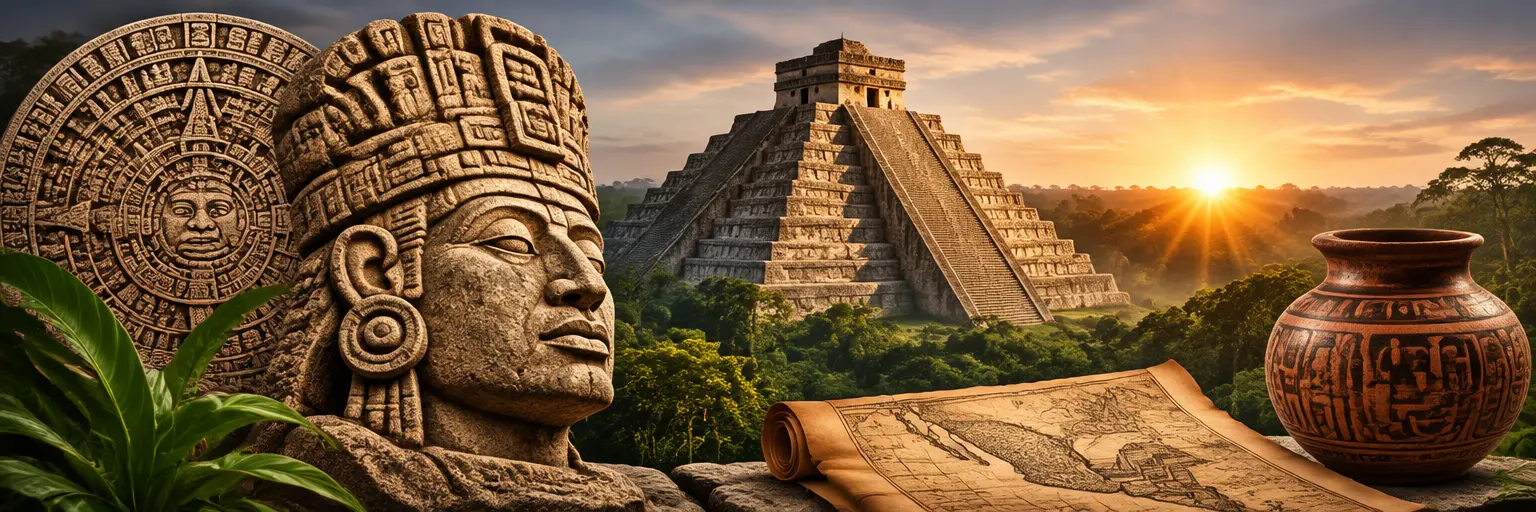
Journey back to the heart of the Yucatán, where the dense jungle still whispers secrets of a world-redefining civilization. The Mayan Civilization did not emerge overnight—it was the product of thousands of years of cultural evolution, agricultural innovation, and astronomical observation, dating back to the Preclassic period (2000 BCE–250 CE). In this section on History and Origins, we uncover the humble beginnings of Mayan society, from early farming villages to the rise of colossal ceremonial centers like El Mirador and Nakbé. Here, you’ll explore how the Maya developed a sophisticated calendar, hieroglyphic writing, and monumental architecture long before their Classic-era heyday. Discover the pivotal role of trade routes, the influence of the Olmec “mother culture,” and the environmental adaptations that allowed this remarkable civilization to flourish across present-day Mexico, Guatemala, Belize, and Honduras. Whether you’re a student, traveler, or history enthusiast, this deep dive illuminates the origins of Maya kingship, sacred maize mythology, and the societal frameworks that sustained them for over three millennia.
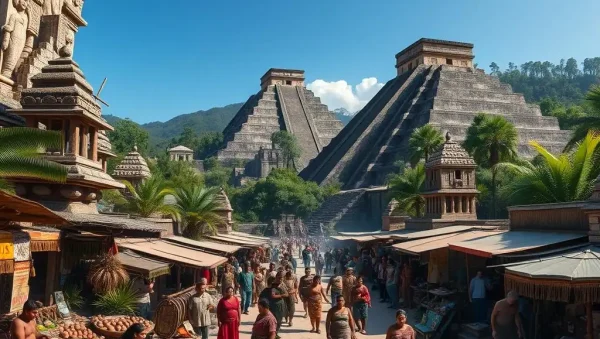
The history of Mayan cities reveals a complex interplay between trade and development, showcasing how commerce fueled urban growth, cultural exchange, and…
Read article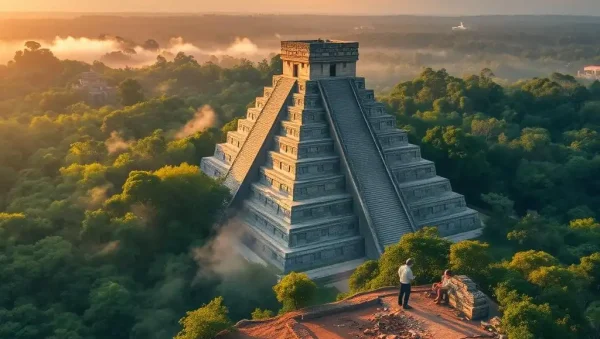
🌍 Discover the captivating Mayan civilization origins and achievements as we journey through time, unveiling the intricate societal structures, remarkable innovations, and…
Read article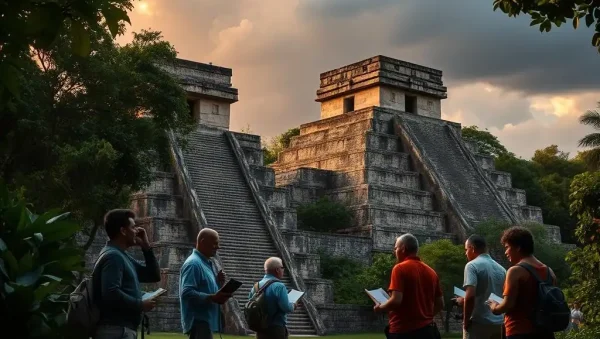
🌍 The climate effects on Mayan civilization played a crucial role in shaping their agricultural practices, societal structures, and eventual decline. Understanding…
Read article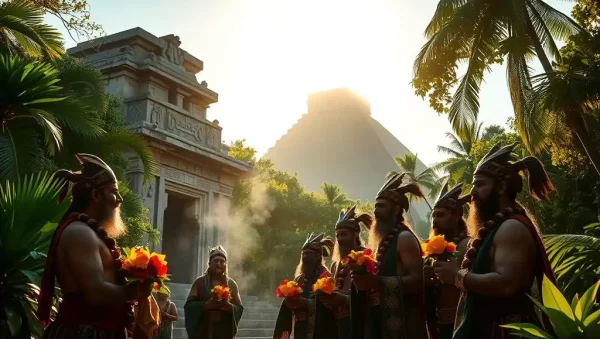
🌎 Mayan religion and spiritual beliefs were foundational in shaping their civilization, influencing everything from agriculture to architecture. This article delves into…
Read article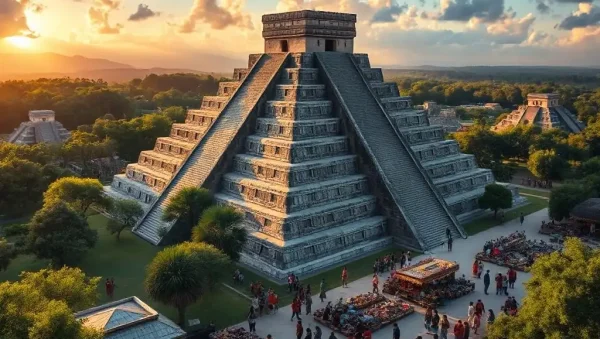
🌟 Discover how the Mayans established their complex society through remarkable achievements in agriculture, astronomy, and architecture, laying the groundwork for a…
Read article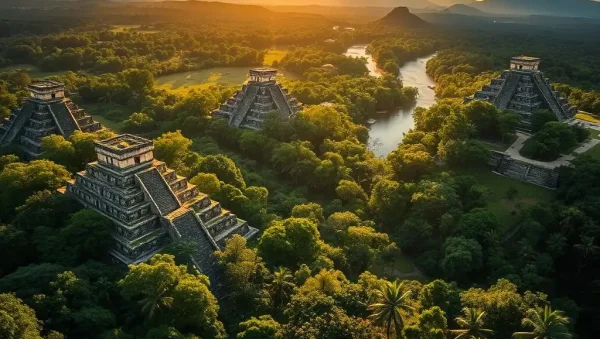
The geography of Mesoamerica profoundly shaped the Mayan civilization's origins and development. Natural resources, climate, and topography influenced agricultural practices, settlement patterns,…
Read article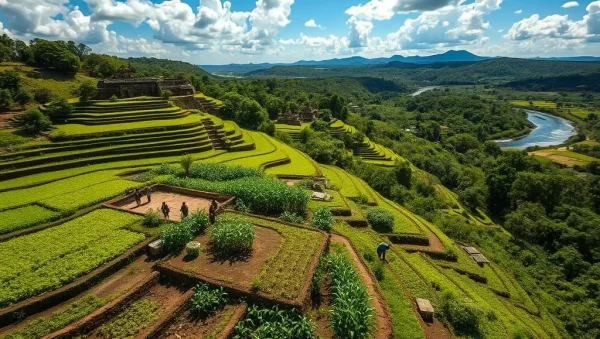
🌍 The Maya early agrarian society marked a pivotal shift from nomadic hunting and gathering to settled farming, allowing for complex social…
Read article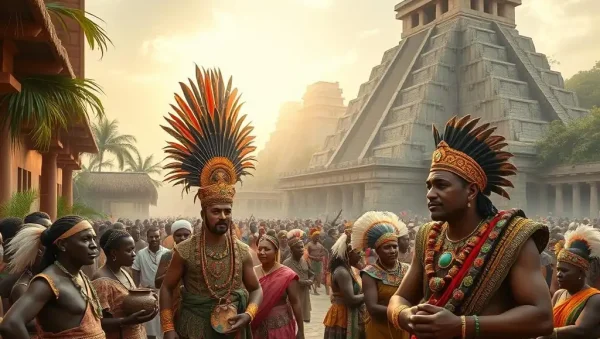
The Maya social structure explained reveals a complex hierarchy where kings and priests wielded significant power, guiding religious practices and governance, while…
Read articleWelcome to the History and Origins subcategory of our Mayan Civilization hub. Here, we peel back the layers of time to uncover where the Maya came from, how their earliest villages transformed into colossal city-states, and what archaeological evidence reveals about their rise. From the Paleo-Indian hunters to the Preclassic giant pyramids, this section is your gateway to understanding the foundational millennia that shaped one of the Americas' most brilliant cultures. Dive into migrations, early agriculture, and the mysterious Olmec connection—all optimized to give you a thorough, search-engine-friendly journey into Mayan antiquity.
The story of the Maya begins long before pyramids, with nomadic hunter-gatherers who crossed into the Yucatán Peninsula around 11,000 years ago. These early peoples left behind stone tools and spear points, adapting to a landscape of jungles, savannas, and coastal lagoons. Over millennia, they began domesticating maize, beans, and squash—crops that would later fuel urban civilization. This era is crucial for Mayan origins, as it set the demographic and dietary foundation for everything that followed. Archaeological sites like Loltún Cave reveal ceremonial activity, suggesting early spiritual traditions that would evolve into complex cosmology.
By 3000 BCE, sedentary villages emerged along riverbanks and lake shores, marking a slow but steady shift from foraging to farming. Pottery fragments from this Archaic period show increasing craft specialization and trade networks stretching across the Isthmus. Understanding these humble beginnings helps you appreciate Mayan resilience and innovation, as they transformed a challenging tropical environment into a cradle of civilization. This section emphasizes the environmental adaptations, early settlement patterns, and the genetic legacy of these first peoples—keywords vital for anyone researching Mayan prehistory.
The Preclassic (or Formative) era is where Mayan identity truly crystallizes. Around 2000 BCE, permanent agricultural villages appear along the Pacific coast and in the Petén lowlands. By 1000 BCE, centers like Nakbé and El Mirador boast massive temple platforms, causeways, and reservoirs—engineering feats that rival later Classic cities. The Middle Preclassic sees the rise of hereditary rulership, stelae carving, and the earliest hieroglyphic writing (c. 300 BCE). This is also when the famous Olmec influence enters the narrative, as shared iconography and architectural styles spread across Mesoamerica, though the Maya adapted these elements into their own unique systems.
By the Late Preclassic (before 250 CE), cities like San Bartolo reveal vivid murals depicting mythological scenes and a fully developed calendar. The colossal pyramid-temple at El Mirador, over 70 meters tall, stands as proof of centralized labor and political power. This period witnessed the consolidation of kingship, with dynastic lines traced through elaborate genealogies. For SEO-rich content, we highlight terms like Preclassic Maya architecture, early Mayan writing systems, and rise of divine kings. Readers will learn how climate shifts and resource competition led to the first great collapse around 150 CE, setting the stage for Classic-era reconfiguration.
The Classic Period is the golden age of Mayan civilization, marked by explosive population growth, monumental art, and intellectual achievement. City-states like Tikal, Calakmul, and Palenque engaged in complex alliances and wars, all recorded in stone. During this era, the Maya refined their hieroglyphic script, creating the most sophisticated writing system in the pre-Columbian Americas. Calendrical mathematics, astronomy, and long-distance trade reached unprecedented levels. This is when the famous K’inich rulers commissioned temples that still awe visitors today, blending political propaganda with cosmic symbolism.
Origins of this efflorescence lie in earlier Preclassic developments, but Classic Maya society evolved distinctive features: divine kingship, royal courts, and a powerful priesthood. The city of Copán, in modern Honduras, became a powerhouse of sculpture and astronomical observation, while Chichén Itzá in the north later absorbed Classic influences. For those searching Classic Mayan political history, this section explains the dynastic successions and the famous rivalry between Tikal and Calakmul. It also addresses the mysterious Classic Maya collapse, possibly caused by drought, overpopulation, and internal warfare—a cautionary tale of sustainability.
After the Classic decline, Maya civilization did not vanish—it transformed. The Postclassic period sees the rise of coastal and northern powers like Mayapán and Chichén Itzá (even if the latter retains earlier roots). These cities emphasize trade over monumental stelae, and the famous Codex-style pottery and books (codices) emerge. The Maya continued to practice ancient rituals while integrating new influences from central Mexico, such as the feathered serpent deity. This era is critical for understanding Mayan resilience and adaptation, as society reorganized into confederacies and smaller polities.
With the Spanish arrival in the 16th century, the Maya faced catastrophic disease and conquest, yet their history and origins survived through oral traditions and a few surviving codices. The last independent Mayan stronghold, Tayasal, fell in 1697—over 170 years after first contact. Colonial documents and the Popol Vuh, the K’iche’ creation epic, preserve invaluable mythological and genealogical information. This section uses keywords like Mayan survival under colonialism, Postclassic trade routes, and indigenous resistance. Readers gain a nuanced view that Mayan culture is not a dead relic but a living legacy that persists in millions of speakers today.
How do we know what we know about Mayan origins? This section demystifies the science behind our knowledge. Excavations at sites like Ceibal and Cuello use radiocarbon dating and stratigraphy to establish precise timelines. Lidar (light detection and ranging) has revolutionized the field, revealing hidden settlements beneath jungle canopy—some surveys mapping over 60,000 structures. The study of ancient DNA from skeletal remains now traces migration patterns, confirming links to early Siberian populations via Beringia. These techniques continuously refine our understanding of Mayan cultural genesis and demographic growth.
In addition to excavation, epigraphy (decipherment of glyphs) has unlocked dynastic histories directly from monuments and ceramics. The earlier work of Tatiana Proskouriakoff and later advances by David Stuart and others now allow us to read names, dates, and events. This interdisciplinary approach combines archaeology, linguistics, and ethnohistory—keywords that help your content rank for Mayan archaeological techniques and new discoveries in Mesoamerica. We also highlight ethical concerns, such as looted artifacts and the repatriation of cultural patrimony, ensuring that your SEO content is both authoritative and socially responsible.
The earliest evidence includes Paleo-Indian spear points from Loltún Cave and Archaic-era pottery dated to around 3000 BCE. The first clearly Mayan village sites, like Cuello in Belize, show settled farming communities by 2000 BCE. These early societies gradually developed social hierarchies and monumental public architecture over the following millennium.
No, the Maya were not direct descendants of the Olmec, but they shared a broader Mesoamerican cultural matrix. The Olmec influenced early Mayan art and religion through trade networks, yet the Maya spoke a distinct language family and developed unique writing, calendars, and political structures. Genetic studies show continuity with earlier local hunter-gatherer populations.
The collapse around 900 CE was likely due to a combination of prolonged droughts, deforestation, soil erosion, internal warfare, and the breakdown of trade routes. It was not a single event but a gradual process that affected different regions at different times. Many Maya cities in the north and highlands continued to thrive well after.
Yes, four pre-Columbian codices survive today: the Dresden, Madrid, Paris, and Grolier Codices. These are folded bark-paper books containing astronomical tables, calendrical calculations, and ritual practices. The Popol Vuh, written in the 16th century but based on oral tradition, is also a crucial source of Mayan mythology and origins.
The earliest known Long Count date is from around 296 BCE at Takalik Abaj, though the system was fully formalized by the Late Preclassic. This calendar tracks a 5,125-year cycle, with the current era beginning on August 11, 3114 BCE. Its mathematical precision shows the deep intellectual heritage of Mayan astronomers and scribes.