European Contact and Conquest: The Mayan Encounter with the New World Order
When Spanish explorers arrived in the Americas, the Maya faced an unprecedented challenge that would reshape their civilization forever. This subcategory delves into the dramatic period of European contact, conquest, and the resilient response of the Maya people. From the first encounters with Hernán Cortés and Francisco de Montejo to the prolonged resistance in the Yucatán Peninsula, you'll uncover how the Maya navigated disease, warfare, and cultural upheaval. Explore the military strategies, diplomatic negotiations, and the eventual colonial transformations that still echo in modern Maya communities, making this a vital chapter in indigenous history.
🌍 First Encounters: The Arrival of Spanish Explorers
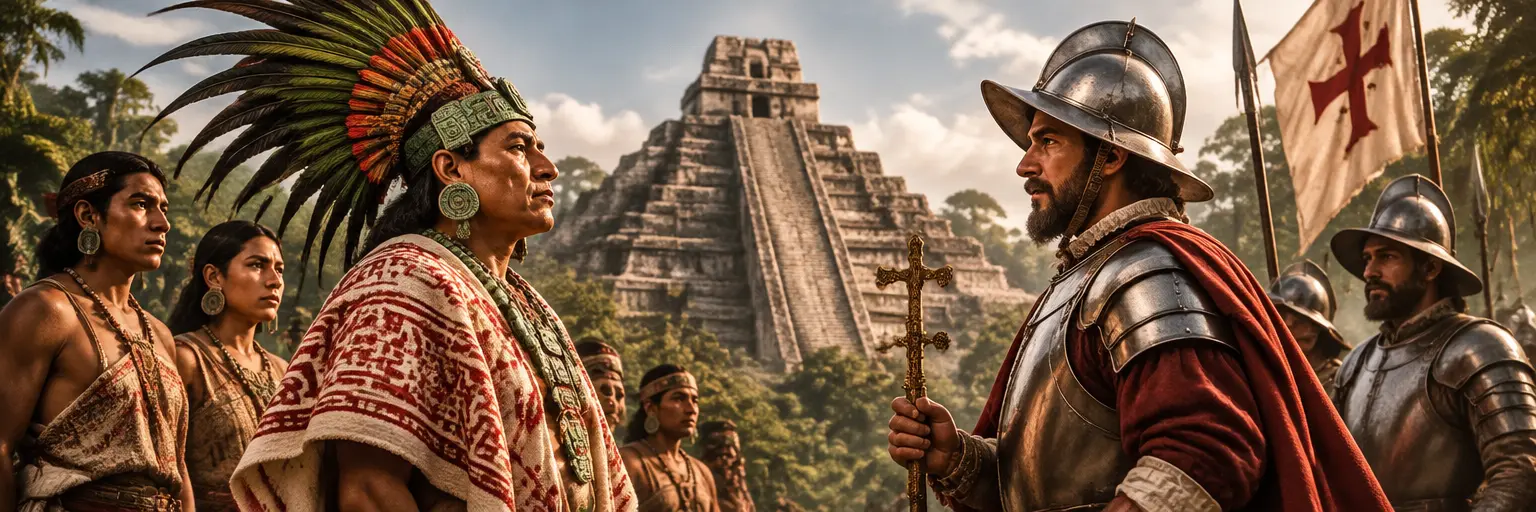
The initial contact between the Maya and Europeans began in 1502 during Christopher Columbus’s fourth voyage, when he encountered a trading canoe near the Bay Islands. Later, in 1511, shipwrecked Spaniards like Gonzalo Guerrero and Jerónimo de Aguilar were captured by Maya lords, learning their language and customs. Guerrero even adopted Maya warfare and married into elite families, becoming a fierce opponent of the Spanish. These early exchanges set the stage for misunderstanding, curiosity, and conflict, as the Maya initially viewed the newcomers as traders rather than conquerors.
Expect detailed narratives of these pivotal moments, including the geopolitical landscape of Maya city-states like Chetumal and Chactemal. You’ll learn how the Maya’s decentralized political structure—unlike the Aztec or Inca empires—made them harder to subdue, as each city-state negotiated separately. This section also clarifies the role of interpreters and cultural brokers, showing how misinformation and linguistic barriers fueled both alliances and hostilities. The accounts here provide a ground-level view of what both sides saw, thought, and feared during these fragile first interactions.
⚔️ The Conquest of Yucatán: Francisco de Montejo’s Campaigns
The Spanish conquest of the Maya heartland was neither swift nor simple. Francisco de Montejo launched his first expedition in 1527, only to be driven back by fierce Maya resistance near the coast. His son, Francisco de Montejo the Younger, renewed the effort in the 1530s, facing a Maya alliance led by the formidable Nachi Cocom and the Xiu dynasty. The conquest dragged on for nearly 20 years, with the Spanish eventually establishing cities like Mérida in 1542, but only after brutal battles and the devastating impact of smallpox and measles, which swept through Maya populations.
This section details the strategic adaptations of both sides, including Maya use of guerrilla warfare, fortified hilltop cities, and scorched-earth tactics. You’ll also uncover how the Spanish leveraged internal Maya rivalries, particularly the long-standing feud between the Xiu and Cocom families, to secure allies. Expect analysis of key battles like the Siege of T’ho and the eventual submission of the northern Yucatán, but note that the southern and eastern lowlands remained unsubdued for decades longer. This is essential for understanding why the Maya were never fully conquered in one decisive stroke.
🏹 Maya Resistance and Rebellion: The Last Stands
Even after the Spanish established colonial control, Maya resistance never truly ceased. The most famous rebellion is the 1546–1547 uprising, where Maya lords from the eastern and southern provinces coordinated attacks on Spanish settlements, nearly overturning colonial rule. Earlier, in 1536, the Itza kingdom at Nojpetén (modern-day Flores, Guatemala) rejected Spanish overtures and remained independent until 1697—over 150 years after the fall of the Aztecs. This prolonged resistance was fueled by the Maya’s deep knowledge of the jungle, their resilient religious practices, and the preservation of their social structures.
This subcategory explores the hidden history of Maya guerrilla movements, including the role of “rebel” towns like Bacalar and the cult of the Talking Cross during the later Caste War. You’ll learn how the Maya used natural barriers like swamps and dense forests to their advantage, making European-style warfare ineffective. Also examined are the psychological and spiritual dimensions of resistance, as Maya leaders invoked ancestral prophecies to rally followers. Despite colonial pressure, these movements prove that the Maya’s spirit of defiance was never extinguished, laying groundwork for modern indigenous rights movements.
📜 Colonial Transformation: Religion, Governance, and Culture Clash
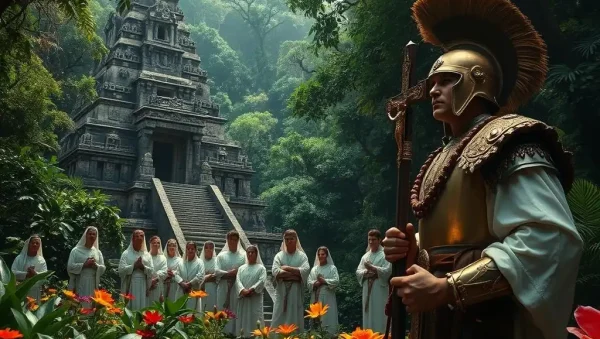
With military conquest came profound social change. Spanish missionaries, particularly Franciscans like Diego de Landa, aggressively imposed Catholicism, burning Maya codices and suppressing traditional rituals. Landa’s infamous auto-da-fé in 1562 destroyed countless records, but ironically, his own writings now serve as a primary source on Maya culture. The colonial administration established encomiendas, granting Spanish lords control over Maya labor and tribute, while the Catholic Church built monasteries atop ancient temples. Yet the Maya cleverly adapted, syncretizing Christian saints with their own deities, and continuing to practice covert ceremonies in remote caves.
Expect a nuanced discussion of cultural survival, including how the Maya preserved their language, calendar, and agricultural techniques under colonial rule. This section examines the legal systems imposed by the Spanish, such as the Reducción policy that forced Maya into planned villages, and the resistance through “non-compliance” like flight to frontier zones. You’ll also read about the role of Maya nobles as intermediaries, who often negotiated better conditions for their people while retaining prestige. This period’s legacy is visible today in the blend of Mayan and Spanish traditions across Mexico and Central America.
📉 Demographic Collapse and Environmental Impact
Perhaps the most tragic consequence of European contact was the demographic catastrophe. Pre-contact Maya population estimates range from 2 to 10 million, but by the 1650s, numbers had plummeted by 90% in some regions. Introduced diseases—smallpox, measles, typhus, and influenza—spread rapidly through dense trade networks, while forced labor in obrajes and sugar plantations worsened mortality. The colonial cattle industry also altered the landscape, as introduced species overgrazed maize fields, and logging of chicle trees disrupted forest ecosystems that the Maya had sustainably managed for centuries.
This section provides data-driven analysis of the collapse, using parish records and archaeological findings to trace population trends. You’ll understand the interconnectedness of disease, famine, and social disruption, as the loss of elders led to loss of ecological knowledge. Environmental historians will appreciate the examination of how Spanish colonial policies on water rights and land ownership conflicted with Maya communal farming. Yet, the Maya’s resilience shines through—they adapted to new crops like citrus and cattle, creating hybrid economies. This tragic yet instructive chapter offers lessons on vulnerability and adaptation in the face of globalization.
🌿 Legacies and Modern Rediscovery
The era of conquest left an enduring imprint on modern Maya identity and the broader world’s understanding of indigenous civilizations. In the 19th and 20th centuries, explorers like John Lloyd Stephens and Frederick Catherwood brought Maya ruins to global attention, sparking archaeological fascination. Today, Maya descendants in Guatemala, Mexico, Belize, and Honduras reclaim their heritage through language revitalization, traditional medicine, and political movements like the 1992 Nobel Peace Prize awarded to Rigoberta Menchú. Even colonial-era documents, such as the Popol Vuh and the Chilam Balam books, are now celebrated as masterpieces of indigenous literature, preserved despite colonial censorship.
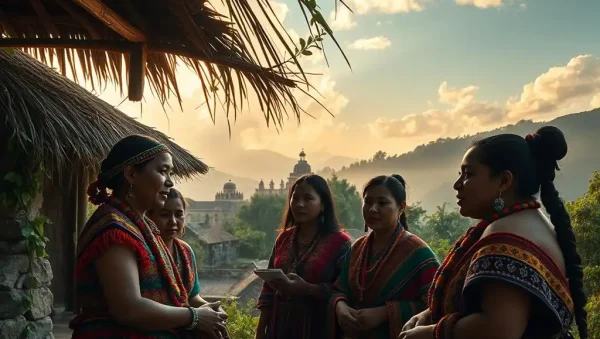
Expect a forward-looking exploration of how the conquest’s legacy influences contemporary land rights disputes, such as the Zapatista movement in Chiapas, which draws on Maya autonomy ideals. Also, delve into how archaeological advances, including Lidar and paleobotany, are reshaping our understanding of pre-conquest Maya complexity, correcting colonial-era biases that portrayed them as primitive. This section emphasizes that the Maya did not disappear—they transformed. By engaging with this history, readers gain a deeper appreciation for the endurance of indigenous knowledge systems and their relevance to modern sustainability and cultural preservation.
Frequently Asked Questions
Why did the Spanish conquest of the Maya take so much longer than the Aztec or Inca conquests?
The Maya were divided into dozens of independent city-states rather than a single centralized empire, so there was no single ruler to capture or capital to sack. Spanish forces had to negotiate or fight each polity separately, while dense jungles and a resilient guerrilla-style defense further slowed campaigns, making conquest a decades-long process.
What role did disease play in the Maya’s defeat?
Disease, especially smallpox, measles, and typhus, killed up to 90% of the Maya population in some regions before and during the conquest. This demographic collapse devastated militaries, disrupted food production, and shattered social cohesion, making resistance far more difficult while also leaving large areas depopulated for Spanish settlement.
Did any Maya kingdoms survive the conquest?
Yes, the Itza kingdom at Nojpetén in the Petén Basin remained independent until 1697, over 160 years after the fall of Tenochtitlan. Smaller groups, like the Lacandon Maya, avoided colonial control until the 20th century, while others isolated themselves in remote valleys, preserving their traditional culture and autonomy for generations.
How did the Maya preserve their culture under Spanish rule?
The Maya adapted by syncretizing Catholicism with their traditional beliefs, hiding rituals in caves and community festivities. They also maintained their language, oral histories, and agricultural practices, while Maya elites often served as scribes, recording their history using the Latin alphabet, which led to works like the Popol Vuh.
What is the modern significance of the European conquest for Maya descendants?
Modern Maya communities use the conquest’s history to assert land rights, cultural identity, and political autonomy, as seen in movements like the Zapatistas. The remembrance of resistance also fuels language revitalization and the defense of traditional governance, while archaeological discoveries continue to correct historical erasures and inspire indigenous pride.