The Role of Women in Maya Agriculture and Economic Life
🌿 Maya women in agriculture played a pivotal role in sustaining their communities, managing crops, and contributing to economic stability. Their expertise…
Read article
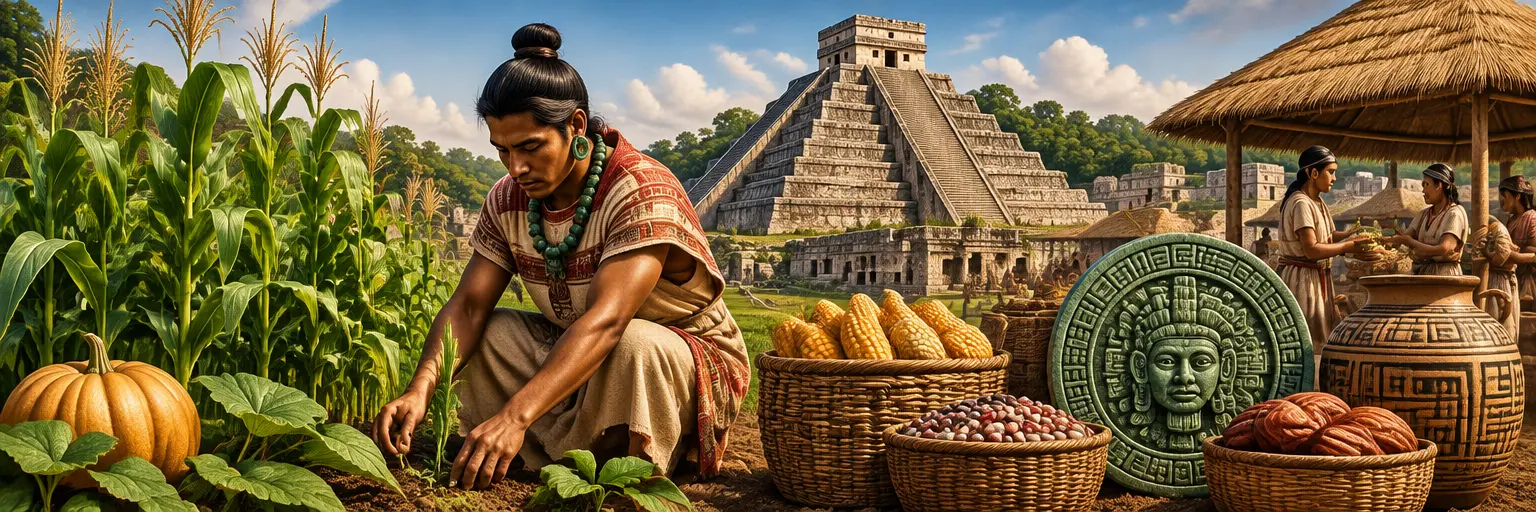
Discover how the Mayan civilization masterfully intertwined agriculture and economy to build one of history’s most advanced societies. 🌽 From ingenious raised-field farming and terraced hillsides to sprawling trade networks that exchanged cacao, jade, and obsidian across Mesoamerica, the Maya turned fertile lands into economic powerhouses. Their agricultural innovations—including milpa crop rotation and water management systems—not only sustained millions but fueled bustling markets, tribute systems, and long-distance commerce. Explore the symbiotic link between maize cultivation and wealth, how cacao beans served as currency, and how environmental stewardship shaped their prosperity. This page reveals the resilient strategies that allowed Maya cities to thrive for over a millennium, offering timeless lessons in sustainable economics and resource management. Dive in to uncover the roots of Maya power and prosperity! 🌿💎
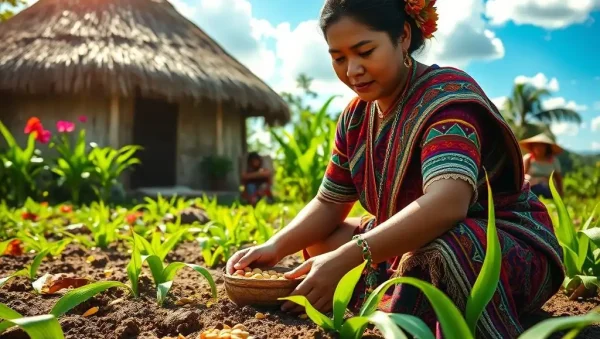
🌿 Maya women in agriculture played a pivotal role in sustaining their communities, managing crops, and contributing to economic stability. Their expertise…
Read article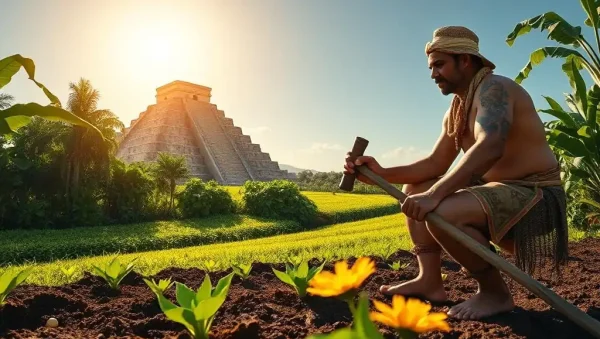
🌱 Maya farming practices and innovations were pivotal in sustaining a thriving civilization, showcasing advanced techniques such as terracing and crop rotation.…
Read article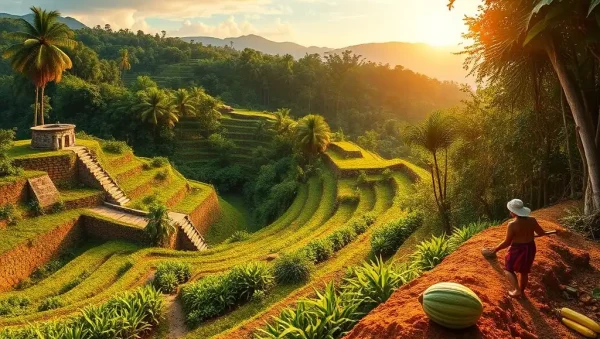
Discover the remarkable Maya agricultural techniques history that transformed their society. From advanced terracing to innovative irrigation, these practices not only supported…
Read article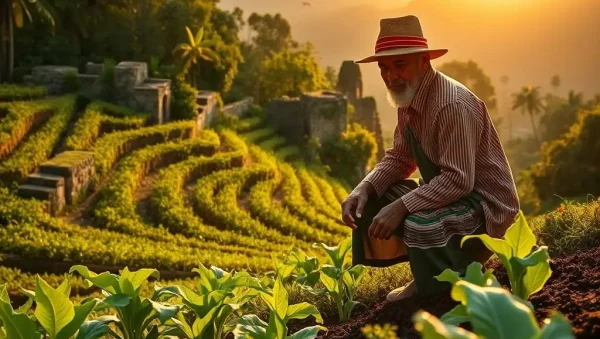
🌱 Discover how Maya agricultural practices today continue to influence modern farming techniques, showcasing sustainable methods that promote biodiversity and environmental stewardship,…
Read articleWelcome to the rich intersection of Mayan agriculture and economic systems, a cornerstone of the Indigenous Civilizations of the Americas. Here, you’ll discover how the Maya ingeniously transformed dense jungles into thriving farmlands and built a complex trade network that sustained millions. This subcategory dives deep into the milpa cycle, cacao as currency, and the marketplaces that connected city-states, offering SEO-rich insights for history enthusiasts, students, and travelers seeking authentic pre-Columbian knowledge.
For the ancient Maya, agriculture was not just survival—it was a sacred, cyclical partnership with the land. The milpa system (shifting cultivation) involved clearing small forest plots, planting maize, beans, and squash together, then letting the land rest for years. This method, called intercropping, enhanced soil fertility naturally and reduced pest outbreaks. Expect to learn how the Maya used raised fields (chinampas) in swampy areas and terraced hillsides to maximize yields without modern machinery, a lesson in sustainable agriculture that resonates today.
Delve into the religious calendar tied to planting, where rituals honored Chaac, the rain god, and the sacred maize god. You’ll see how crop failures were linked to cosmic events, not random chance. This section also explains the three sisters (maize, beans, squash) and their nutritional synergy, which fueled a population of over 10 million. By understanding these methods, researchers can apply ancient resilience to modern climate-smart farming, making this a must-read for agronomists and ecologists.
Water scarcity was the Maya’s greatest challenge, yet they engineered reservoirs, canals, and aqueducts that stored rainwater for months. In cities like Tikal and Caracol, elevated fields with drainage ditches prevented flooding while retaining moisture. This section reveals how the Maya built terraces on steep slopes, reducing erosion and expanding arable land. Expect case studies of Puuc and Petén regions, showing how geography dictated unique solutions—from limestone cisterns (chultunes) to seasonal wetland farming.
Beyond survival, water was a political asset. Controlling access to reservoirs gave elites power, influencing trade routes and alliances. Learn how drought cycles, possibly worsened by deforestation, contributed to civilization’s collapse—a warning for today. This content includes GIS maps and archaeological data, perfect for students of ancient hydrology and environmental history, and it highlights the Maya’s advanced water ethics.
The Maya economy thrived on long-distance trade, moving goods like obsidian (volcanic glass) for tools, jade for rituals, and salt for preserving food. Canoe routes along the Yucatán coast linked to inland river systems, connecting to the Gulf of Mexico and Caribbean. This section explores port sites like Tulum and Xel-Há, where merchants exchanged cacao, feathers, and marine shells for highland minerals. Expect a breakdown of prestige goods versus bulk commodities, showing a layered, sophisticated economy.
You’ll also uncover the role of marketplaces, such as the one at Chichén Itzá, where daily haggling occurred under royal supervision. Trade wasn’t just economic—it spread ideas, religions, and technologies. The mantle (cotton cloth) served as a medium of exchange, while cacao beans were legal tender for smaller purchases. This section ties into economic anthropology, offering insights into how trade shaped city-state power dynamics and the rise of merchant elites.
Discover how the Maya used cacao beans as currency, but also cotton textiles, copper bells, and jade beads for high-value transactions. Taxes (tribute) were paid in maize, labor, or goods to local lords, funding public works like temples and causeways. This section explains the class system—from ajaw (king) and nobles to commoners and slaves—and how their roles tied to production and trade. Expect to see how tribute lists from codices and Spanish records reveal a centralized yet flexible fiscal system.
Economic power was deeply gendered: women produced cotton textiles and food for markets, while men dominated long-distance trade. Learn about market days, seasonal fairs, and the redistribution of surplus by elites as a form of social insurance. This content covers political economy with fresh archaeological findings, showing that the Maya were not barter-only but used standardized currencies and credit—a complex mercantile network centuries before European contact.
How did the Maya store maize for years and avoid famine? Granaries (silos) and underground pits preserved harvests, while raised-bed gardens near homes provided daily vegetables. This section examines food security strategies, including diversification of crops and hunting-gathering supplements, such as deer and iguana. You’ll learn how surplus fed armies and supported massive construction projects, but also how overexploitation led to deforestation and soil depletion, correlating with the Classic Maya collapse.
Furthermore, the Maya cultivated agroforestry, planting cacao under shade trees and managing forest gardens. This permaculture approach increased biodiversity, contrary to modern slash-and-burn stereotypes. Expect data on paleobotany, including pollen and phytolith analysis, revealing which crops were prioritized. For environmental historians, this section offers a cautionary tale of resilience and vulnerability, emphasizing that even sophisticated societies can fall to ecological mismanagement.
The Maya’s staple crops were maize, beans, and squash (the “three sisters”), but they also grew chili peppers, avocados, tomatoes, and cacao. They cultivated cotton for cloth and rubber trees for balls and resin. Root crops like manioc were important in lowland regions, and they harvested wild fruits and game.
Yes, but not coins. Cacao beans served as standard currency for daily purchases, while cotton mantles and jade beads were used for larger transactions. They also employed a form of credit and barter within marketplaces, but cacao was the most accepted medium of exchange across regions.
Severe, prolonged droughts—likely driven by climate change—reduced crop yields, leading to famine and social unrest. Water reservoirs dried up, weakening central authority and contributing to the collapse of southern lowland cities around 900 CE. However, northern Yucatán cities adapted by digging deeper wells.
No. Commoner farmers produced surplus and engaged in trade, sometimes becoming wealthy. Elite farmers had estates with orchards and cacao groves. But most wealth came from controlling trade routes, not just farming. Social mobility was possible through market entrepreneurship or military achievement.
Absolutely. Modern Maya communities in Guatemala, Belize, and Mexico continue to cultivate cacao, often using traditional agroforestry. They produce chocolate for local consumption and global markets, reviving ancient recipes and rituals. This ties directly to sustainable tourism and fair trade initiatives.