Hieroglyphics and Power: How the Maya Used Writing to Maintain Authority
The Maya hieroglyphics and authority were intricately linked, as these symbols not only recorded history but also solidified the ruling elite's power.…
Read article
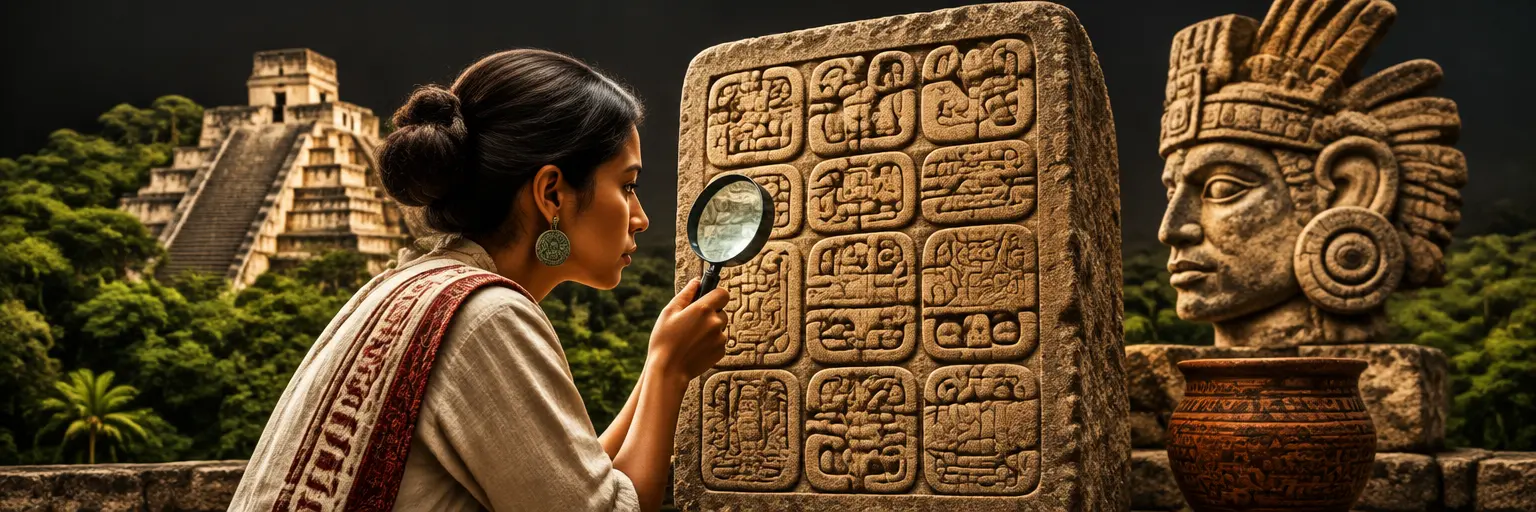
Explore the intricate world of Maya hieroglyphics, one of the most sophisticated writing systems ever developed in the ancient Americas. This unique script, combining logograms and syllabic symbols, offers a rare window into the minds of a brilliant civilization—revealing royal dynasties, celestial calendars, ritual sacrifices, and epic myths carved in stone, painted on ceramics, and inscribed in codices. Unlike many other ancient scripts, Maya writing is not merely pictorial; it encodes complex language, poetic metaphor, and historical precision, making it a true intellectual marvel of indigenous ingenuity. Delve into how modern epigraphers cracked this code, unearthing stories of powerful queens, war captives, and astronomical knowledge that rivaled contemporary Old World science. From the monumental stelae of Tikal and Copán to the delicate glyphs of Palenque’s temple panels, each symbol is a key to understanding the social, political, and spiritual life of a people whose legacy still resonates.
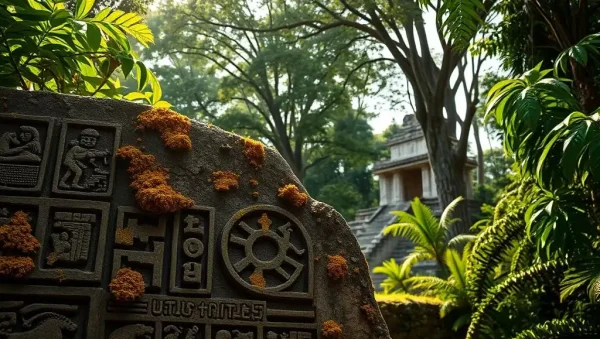
The Maya hieroglyphics and authority were intricately linked, as these symbols not only recorded history but also solidified the ruling elite's power.…
Read article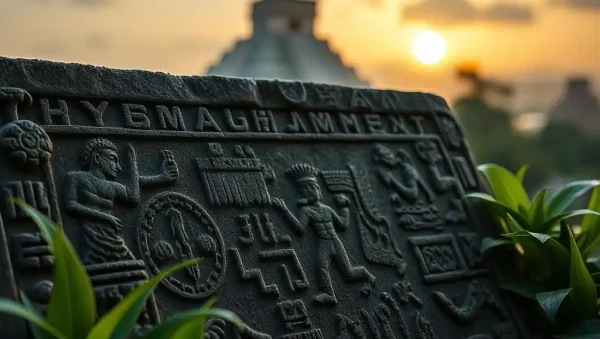
🌟 Maya hieroglyphics reveal profound spiritual significance, offering insights into the rituals, beliefs, and cosmology of the ancient Maya. This intricate writing…
Read article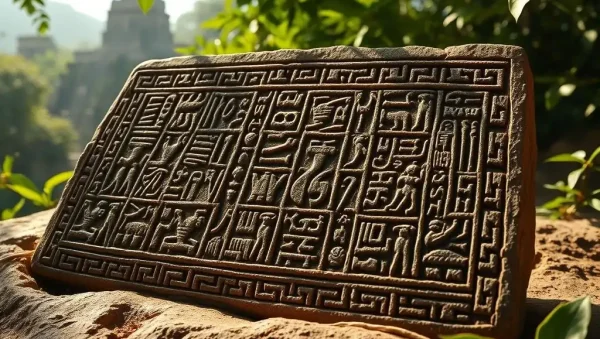
Discover the intricate Maya hieroglyphics artistic craftsmanship that reflects both aesthetic beauty and functional communication. This exploration highlights how these symbols encapsulated…
Read article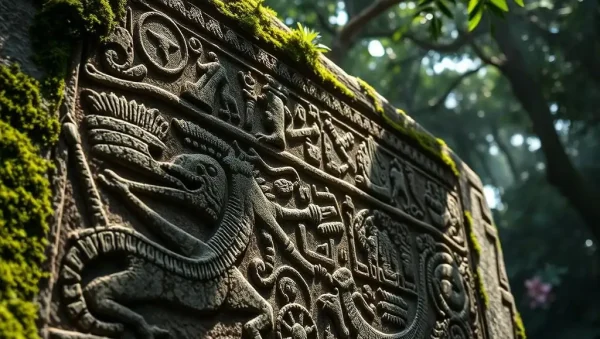
🌟 Discover the rich tapestry of Maya hieroglyphics and creation stories, where ancient symbols reveal profound insights into cosmology and the universe.…
Read article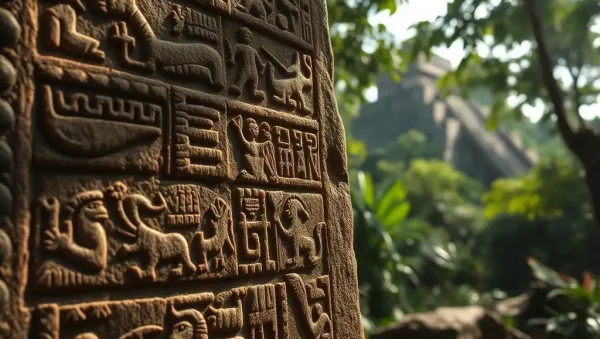
The historical significance of Maya hieroglyphics lies in their role as a sophisticated system of record keeping, preserving vital information about the…
Read articleDive into the intricate world of Maya hieroglyphics, one of the most sophisticated writing systems ever developed in the ancient Americas. Unlike simple pictographs, this script combined logograms and syllabic signs to record history, astronomy, royal lineages, and ritual life. On this page, you will journey through the origins, structure, decipherment, and cultural significance of these carved and painted symbols, revealing how a lost language came back to life through modern scholarship. Perfect for students, history enthusiasts, and travelers planning to visit Maya ruins, this guide is your key to understanding the texts that adorned temples, stelae, and codices.
Maya writing is a mixed system—it uses logograms (symbols representing whole words) and syllabograms (signs representing syllables). For example, the word for “jaguar” could be written as a full jaguar head or spelled out with phonetic signs. This flexibility allowed scribes to create poetic puns and elegant compositions. Over 800 distinct glyphs have been cataloged, though many are rare variants.
Understanding this dual nature is essential for reading inscriptions. Unlike alphabets, Maya glyphs are arranged in paired columns read left-to-right and top-to-bottom. Each glyph block often contains a main sign plus affixes that modify its meaning or sound. By mastering this structure, you can begin to identify names of rulers, dates from the Long Count calendar, and verbs describing war, sacrifice, or accession—turning silent stones into narrated history.
The most famous inscriptions are carved on limestone stelae at sites like Tikal, Copán, and Palenque. These monuments celebrated royal achievements, often paired with portraits of the ruler. Additionally, stairways, lintels, and altar panels were inscribed with historical narratives. The Hieroglyphic Stairway at Copán boasts over 2,200 glyphs—the longest known Maya text.
Beyond stone, the Maya produced codices, folding books made from bark paper coated with lime. Only four pre-Columbian codices survive: the Dresden, Madrid, Paris, and Grolier. These contain astronomical tables, ritual calendars, and divinatory almanacs. While stone texts focus on politics, codices reveal the spiritual and scientific worldview. Museums like the National Museum of Anthropology in Mexico City and the Popol Vuh Museum in Guatemala house replicas and originals, offering close-up views of these delicate treasures.
For centuries, Maya hieroglyphics were considered a mysterious, untranslatable script. Early scholars like Bishop Diego de Landa recorded the alphabet in the 16th century, but his notes were misunderstood. It wasn’t until the mid-20th century that linguists like Yuri Knorozov proposed a phonetic approach, proving that many glyphs represented syllables, not just ideas.
Key breakthroughs came in the 1980s and 1990s with the work of epigraphers like Linda Schele and David Stuart. They deciphered the names of dynasties, historical events, and even emotional expressions. Today, over 80% of common texts are readable. This revolution revealed that the Maya recorded not just royal propaganda but also real conflicts, alliances, and personal names—transforming our understanding of their political landscape and social complexity.
Scribes held a privileged, sacred status in Maya society. Often children of nobility, they trained for years to master the script, pigments, and carving techniques. They were associated with deities like Itzamna, the creator god, and the monkey gods who represented writing and art. Inscriptions often name the scribe, a rare honor in ancient cultures.
Writing materials varied: stone for monumental texts, ceramics for portable records, and bark paper for codices. Scribes used conch-shell ink pots and brushes made from animal hair. Their work was not merely functional—it was an act of creation, as writing was believed to bring order to chaos. Murals at sites like Bonampak show ceremonial scenes where scribes adorned in jaguar pelts present ritual texts, emphasizing the sacred link between words and cosmic power.
Maya hieroglyphs are deeply interwoven with their calendrical systems, especially the Long Count, which tracks days since a mythical creation date in 3114 BCE. Inscriptions often include dates that correlate with astronomical events like eclipses, solstices, or the rise of Venus. These were not idle observations but were tied to prophecies and ritual timing.
A typical text might read: “On 9.16.4.10.8, the ruler K’inich Janaab Pakal took the throne.” Such statements combine numbers, verbs, and celestial references. Understanding the calendar is vital for reading the full narrative. The Calendar Round, a 52-year cycle, also appears frequently, linking the solar year with the sacred 260-day tzolk’in. By decoding these dates, scholars reconstruct dynastic histories and pinpoint real battles, building bridges between myth and archaeology.
One common myth is that Maya writing was solely for elites, but research shows literacy was broader than once thought. Graffiti on plaster walls and pottery indicates non-royal individuals sometimes scribbled texts. Another misconception is that it was purely pictographic; in reality, most signs were phonetic.
Furthermore, people often confuse Maya glyphs with Aztec pictographs. The Aztec system was largely logographic without full phonetic capability, while Maya script can spell any word. Also, the idea that the script was “lost” is misleading—the language itself survived in spoken forms, and descendants retained knowledge of some hieroglyphic traditions. Modern Maya communities, like the Ch’orti’, maintain linguistic ties, proving that the script isn’t dead but dormant, waiting for renewed interest and study.
Not fully, but significantly. Around 80% of the most common texts are now readable, with ongoing research deciphering rare signs and complex literary devices. Epigraphers continue to refine interpretations of poetry, metaphors, and historical narratives, so new readings emerge regularly. However, due to missing context and damaged texts, some inscriptions remain only partially understood.
Scholars have cataloged roughly 800 to 1,000 distinct glyphs, though many are rare variants. The core working set used in most texts is about 300 signs, combining logograms, syllabograms, and grammatical indicators. This complexity is similar to Japanese, which also mixes ideographs and phonetic symbols.
The earliest securely dated inscription is from around 300 BCE, found on a plaster mural at San Bartolo, Guatemala. However, fragments from earlier periods suggest the script developed gradually. The San Bartolo text includes signs for “king” and “sky,” proving the system’s foundation predates the Classic Maya period by centuries.
Absolutely. Several university online courses and books, such as *Reading the Maya Glyphs* by Coe and Van Stone, offer accessible introductions. Start by learning the syllabary and common logograms, then practice with captions from public museums. Tools like the Maya Hieroglyphic Database and interactive dictionaries help beginners build vocabulary.
After the Spanish conquest in the 16th century, colonial authorities systematically destroyed codices and banned indigenous writing. Bishop Diego de Landa burned thousands of Maya books in 1562, a devastating loss. Over time, oral tradition and Spanish literacy replaced hieroglyphic writing, though some Maya communities kept pictorial records in secret for decades but could not sustain the full script.