Understanding Climate Impact on Indigenous Societies
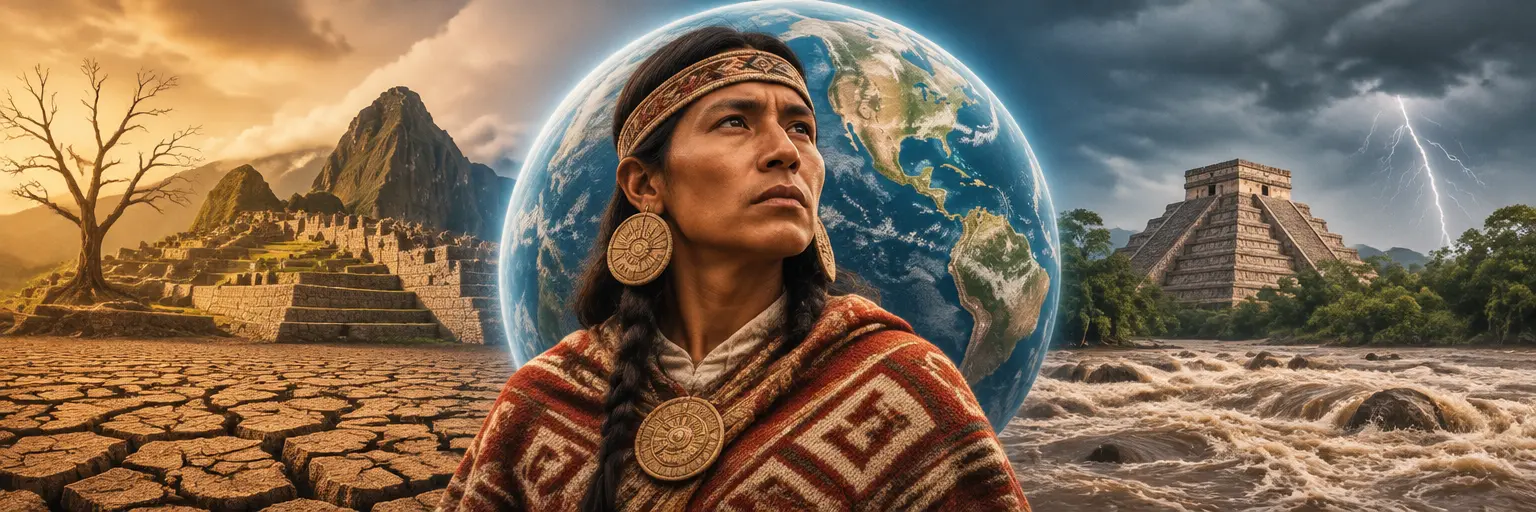
Climate has always been a silent architect of human history, and for the indigenous civilizations of the Americas, its influence was profound and multifaceted. This subcategory delves into how weather patterns, natural cycles, and environmental shifts shaped the rise, flourishing, and sometimes decline of great cultures like the Maya, Ancestral Puebloans, and Andean empires. Here, we explore the intricate dance between atmospheric forces and societal decisions, revealing how these communities adapted, innovated, and sometimes faltered in the face of climatic change. Discover the resilience and vulnerability encoded in their agricultural terraces, water management systems, and seasonal rituals.
🌦️ Agricultural Adaptations and Food Security
Indigenous farmers were master observers of sky and soil, developing sophisticated strategies to mitigate unpredictable weather. For instance, the Maya built raised-field systems, known as *chinampas*, while the Inca engineered terraced slopes with micro-climate zones. These innovations buffered against drought and frost, ensuring stable food supplies even during prolonged dry spells. By examining pollen records and ancient irrigation canals, researchers reveal how communities diversified crops, stored surplus grains, and shifted planting schedules—practices that modern agronomy now rediscovers as climate-resilient models. Their success stories teach us that proactive planning, not just reactive survival, defined their approach to environmental stress.
Yet, even the most advanced systems had limits. Paleoclimate data from sediment cores in Lake Titicaca and tree-ring studies in the Southwest indicate repeated multi-year droughts that tested social cohesion. When rainfall failed, societies often expanded trade networks, moved settlements closer to rivers, or intensified labor for water works. However, over-reliance on a single staple crop, like maize, created cascading vulnerabilities. Understanding these historical thresholds helps us appreciate how climate variability can drive migration, political reorganization, and even collapse—lessons directly relevant to our current global food crisis.
🏜️ Drought, Water Management, and Societal Collapse
Water is the lifeline of any civilization, and its scarcity has repeatedly rewritten histories. The Ancestral Puebloans of Chaco Canyon, for example, built intricate dams and canals, but a megadrought in the 12th century forced them to abandon their monumental centers. Similarly, the Classic Maya collapse (800–1000 CE) aligns with a series of severe droughts recorded in stalagmites from Belize caves. This section examines how centralized water systems, while efficient, created fragile political structures: when the ruler could not deliver rain, public trust eroded. Conversely, decentralized household-based storage proved more resilient, allowing some communities to persist despite erratic rainfall.
Beyond collapse, water management also fostered power and inequality. Controlling access to irrigation often led to elite dominance, as seen in the Hohokam culture of present-day Arizona. Yet, collective labor for communal reservoirs also built social bonds, as documented in Andean *ayllu* groups. By analyzing sediment deposits and ancient aqueducts, we see that climate did not solely dictate outcomes—human choices on storage, distribution, and cooperation were equally decisive. These case studies offer a nuanced view of environmental determinism, highlighting that societal resilience is a dynamic interplay of technology, governance, and cultural values.
🌪️ Extreme Weather Events and Preparedness Rituals
Hurricanes, floods, frosts, and El Niño events were not just natural phenomena but spiritual and social catalysts. The Moche of coastal Peru, for instance, performed elaborate sacrifices during El Niño floods, interpreting them as divine punishment. Similarly, the Maya held ceremonies to appease Chaac, the rain god, during hurricanes. This section explores how indigenous cosmologies integrated climate extremes into their worldview, using rituals to reinforce community unity and political legitimacy. Archaeological evidence, such as offering caches in cenotes or coastal mounds, reveals that these practices were systematic, often timed to seasonal forecasts based on celestial observations.
Practical preparedness complemented these spiritual measures. Communities built elevated platforms for storm surge, stored extra food in sealed granaries, and developed early warning signs from animal behavior. The Taino of the Caribbean adapted to hurricane season by constructing flexible palm-thatched homes that could bend, not break. By merging ethnographic accounts with paleo-storm records, we see that disaster management was an integral part of daily life—not an afterthought. These adaptive strategies underscore a deep ecological knowledge that modern disaster planners are increasingly studying, especially as extreme weather events intensify due to human-induced climate change.
🌿 Long-term Climate Cycles and Migration Patterns
Climate operates on timescales far beyond a single human life, and indigenous societies adapted to multi-decadal cycles like the Medieval Warm Period and the Little Ice Age. During warmer phases, the Norse settled Greenland, but colder, stormier conditions led to their disappearance—while nearby Inuit thrived with flexible hunting strategies. In North America, the Mississippian culture expanded during a wet period, building Cahokia’s massive mounds, only to disperse during the 14th-century droughts. This section traces how long-term shifts in temperature and precipitation reshaped settlement maps, trade routes, and ethnic boundaries. Paleoenvironmental proxies, such as lake levels and ice cores, are paired with settlement abandonment dates to create a detailed chronology of climate-driven migrations.
However, migration was not always a last resort. Many groups practiced seasonal mobility, moving between lowland and highland zones to exploit diverse ecological niches—for example, the Andean *vertical archipelago* system. These patterns reduced risk from any single climate hazard while fostering cultural exchange. Conversely, forced relocation due to prolonged aridity often sparked conflicts over fertile land, as seen in the Great Basin. By understanding these past mobility strategies, we gain insights into how contemporary climate refugees might navigate resource competition, border policies, and cultural preservation, making this historical knowledge profoundly relevant.
📜 Archaeological Evidence and Climate Reconstruction
How do we know about climate impacts without written records? This section introduces the toolbox of paleoclimatology and archaeology working hand in hand. Tree rings, ice cores, lake sediments, and coral reefs provide high-resolution data on past rainfall, temperature, and storm frequency. Archaeologists then correlate these with settlement size, crop residues, and artifact typologies to infer societal responses. For example, stable isotope analysis of human bones reveals dietary shifts during famines, while obsidian hydration dating tracks trade disruptions. Advanced techniques like LiDAR scan hidden terracing, and drone-based thermal imaging detect ancient water channels, offering a bird’s-eye view of adaptation.
Yet, reconstruction is fraught with challenges. Chronological uncertainties, site preservation biases, and the difficulty of separating human-induced land changes from natural climate variability complicate interpretation. Interdisciplinary teams now combine Bayesian modeling with indigenous oral histories, which often encode centuries of environmental memory, such as the Lakota’s stories of Great Floods. By triangulating these sources, researchers build robust narratives of resilience and vulnerability. This section equips readers with the knowledge to critically assess climate archaeology claims, distinguishing robust evidence from speculative extrapolation—a valuable skill in an era of misinformation.
❄️ Modern Climate Change and Lessons for the Future
Indigenous communities today are on the frontlines of anthropogenic climate change, yet their ancestral adaptations offer powerful blueprints. In the Andes, Quechua farmers are reviving ancient *waru waru* raised beds to combat frost and drought, increasing yields by up to 50%. In the Amazon, indigenous fire management techniques, which reduce catastrophic wildfires, are being integrated into government policies. This section showcases contemporary initiatives where traditional ecological knowledge (TEK) meets climate science, forming hybrid solutions that are both culturally respectful and effective. Furthermore, indigenous rights advocates argue that protecting their land tenure is a crucial climate mitigation strategy, as these territories store vast amounts of carbon.
However, the scale and speed of current warming outpace historical precedents, requiring unprecedented cooperation. As glaciers melt and sea levels rise, many coastal indigenous sites, like those in the Arctic and South Pacific, face existential threats. This urgency drives calls for climate adaptation funding, relocation planning, and legal recognition of customary lands. By learning from past successes and failures, we can design more inclusive climate policies that honor indigenous sovereignty. This section bridges ancient wisdom with modern action, making the case that the past is not just a prologue but an active toolkit for our survival.
Frequently Asked Questions
How did the ancient Maya predict or respond to droughts?
The Maya observed celestial cycles and weather patterns, using as many as 17 distinct calendars to anticipate rainy seasons. They built extensive reservoirs, like at Tikal, and adopted raised-field agriculture to store water. During severe droughts, they intensified rituals, increased trade for maize from wetter regions, and sometimes migrated to coastal areas where groundwater was more accessible.
What role did El Niño play in the collapse of Andean civilizations?
El Niño events brought torrential rains and flooding to coastal Peru, disrupting irrigation and destroying fisheries. The Moche civilization, highly reliant on these systems, faced repeated shocks. To appease deities, they escalated human sacrifices, but resource depletion and political instability eventually led to their fragmentation. Subsequent cultures, like the Chimú, built more resilient canal networks and stored surplus to buffer against such cycles.
Can indigenous historical climate knowledge help modern disaster preparedness?
Yes, many indigenous communities have oral traditions and adaptive practices honed over millennia. For instance, the Inuit’s knowledge of sea ice conditions now informs Arctic search-and-rescue operations. Similarly, pastoralists in the Andes read cloud formations to predict frost, improving local early warning systems. Integrating TEK with meteorological data creates more context-specific, community-trusted responses.
Were all indigenous societies equally vulnerable to climate change?
No, vulnerability depended on economic diversity, political flexibility, and geographic location. Mobile hunter-gatherers often coped better than sedentary agricultural states because they could relocate. Societies with multiple food sources, like fishing and foraging, fared well during droughts, while those dependent on a single crop, like maize in some regions, were highly susceptible. However, even complex states survived when they maintained strong trade alliances and storage systems.
How can we use past climate impacts to guide current climate policy for indigenous lands?
Historical data shows that top-down, rigid systems often failed, while community-based, diversified approaches proved resilient. Therefore, modern policy should prioritize co-management with indigenous peoples, recognize their land titles, and fund local adaptation projects. Additionally, preserving sacred sites and traditional knowledge ensures that climate solutions are culturally appropriate and sustainable, not just technically efficient.