Understanding Andean Political Hierarchies
Explore the intricate power structures that governed the Andes before European contact, from the Inca Empire to earlier regional kingdoms. This subcategory delves into how divine kingship, administrative decentralization, and reciprocal labor systems shaped one of the world’s most sophisticated political organizations. Ideal for students, researchers, and history enthusiasts seeking a deeper grasp of indigenous governance.
🏛️ The Sapa Inca: Divine Ruler and Cosmic Axis
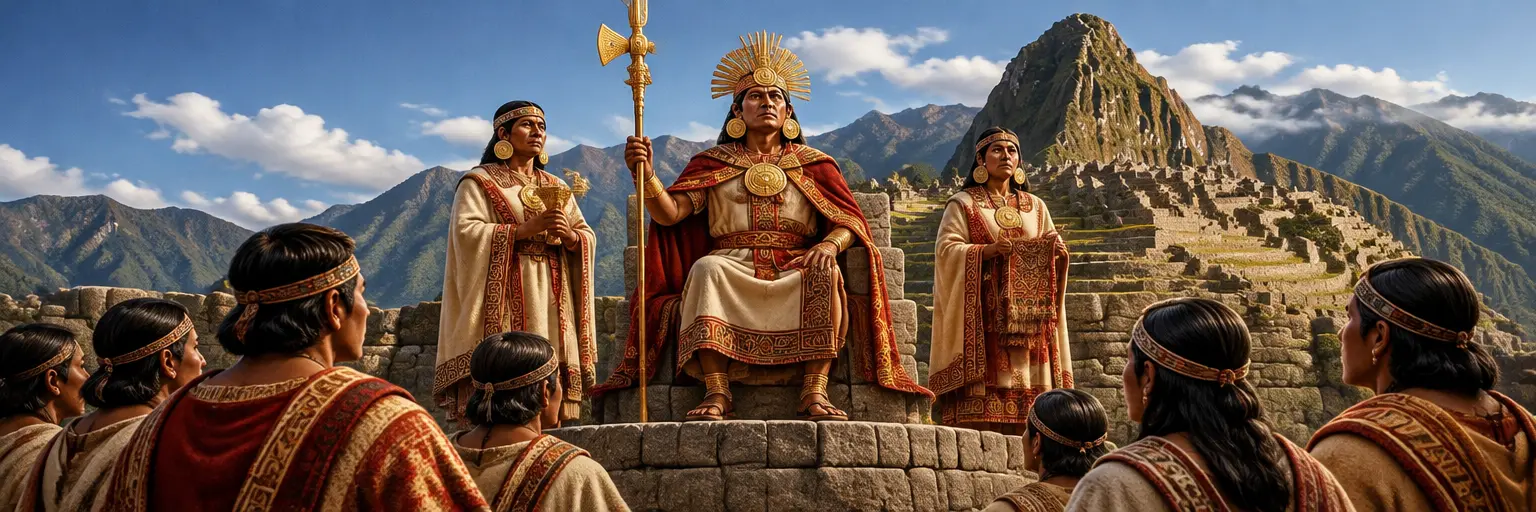
At the apex of Andean hierarchy stood the Sapa Inca, considered a living descendant of the Sun God Inti. His authority was absolute, blending religious, military, and judicial power into a single office. The Sapa Inca’s status was reinforced through elaborate rituals, royal mummies, and the panaca system—a royal lineage that managed his estates even after death. This system ensured political stability but also created complex succession disputes, often leading to civil wars, as seen with Huáscar and Atahualpa.
Understanding the Sapa Inca’s role is key to grasping how ideological legitimacy maintained control over millions across diverse terrains. His “divine” status justified tribute collection, land redistribution, and large-scale public works. By positioning himself as the mediator between gods and people, the Sapa Inca prevented rebellion through reverence rather than constant force. However, this concentrated power also made the empire vulnerable when internal or external challenges targeted the ruler himself.
🌄 Regional Lords: Curacas and Ethnic Authorities
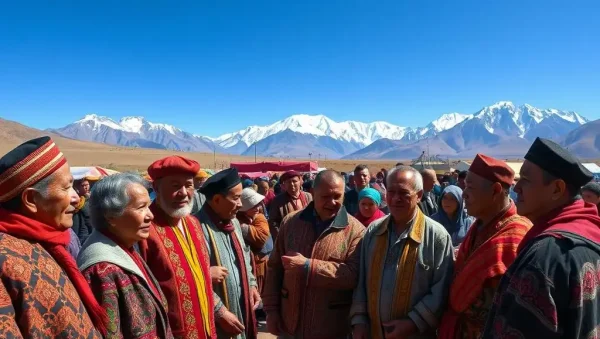
Beneath the Sapa Inca, curacas (local ethnic lords) acted as intermediaries between the state and conquered communities. These leaders retained hereditary rights to their lands and labor, but had to pledge loyalty and pay tribute to Cusco. Many curacas managed mita (rotational labor) and mitmaq (relocated colonists) systems, integrating local economies into the imperial network. Their cooperation was crucial, as direct control from Cusco was logistically impossible across 3,000 miles of mountains and deserts.
The dual governance structure allowed the Inca to preserve cultural diversity while enforcing political unity. Curacas enjoyed privileges like fine clothing, exclusive hunting rights, and multiple wives—status markers that tied their interests to the empire’s survival. Yet, they also bore the burden of meeting quotas, and failure could lead to exile or execution. This delicate balance of autonomy and dependency explains why many curacas actively collaborated with Spanish invaders, hoping to replace Inca overlords, only to lose their own power later.
⚖️ Administrative Networks: The Four Suyus and Decimal System
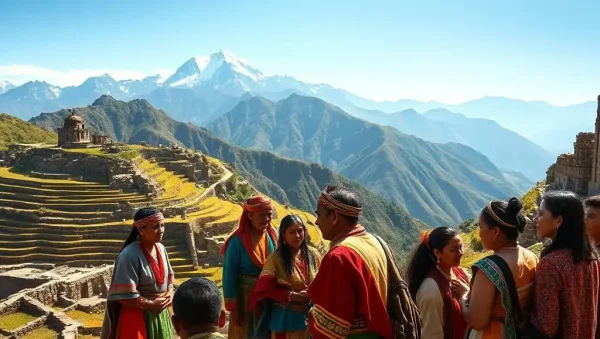
The empire was divided into four suyus (regions) radiating from Cusco, forming the Tahuantinsuyu (“Land of Four Quarters”). Each suyu was governed by an apu (viceroy) from the royal family, responsible for taxation, justice, and military recruitment. Within each suyu, a decimal system organized populations into units of 10, 50, 100, 500, and 1,000 heads of household, with supervisors at every level—using khipus (knotted record-strings) to track census, labor, and storage. This hierarchical grid enabled quick mobilization for projects like building roads, terraces, and warehouses.
This network was not static but adapted to local conditions, allowing flexible integration of conquered peoples. The _mitimaes_ system relocated loyal colonists to volatile areas, simultaneously spreading Inca culture and diffusing resistance. Roads, including the Qhapaq Ñan, connected administrative centers, with chaskis (runners) relaying messages up to 240 km per day. The efficiency of this system astonished Spanish chroniclers, who admired how a few thousand Inca officials could govern millions without writing, paper, or currency.
🛡️ Military and Religious Authorities: Allies or Rivals?
Military commanders (apuskuna) and high priests (willaq umu) formed a powerful elite often second only to the Sapa Inca. The army was organized by suyu, with generals chosen from noble families, though low-born warriors could earn honors through bravery. Meanwhile, the priesthood managed oracles like Pachacamac, managed temple lands, and supervised sacrifices—human and animal—that reinforced state ideology. These two pillars sometimes clashed, as military victories expanded territory while religious authority demanded ritual validation.
However, both groups were ultimately subordinate to the Sapa Inca, who could appoint or remove them at will. The syncretic blending of military conquest and religious justification meant that temples often received a share of war spoils, ensuring mutual benefit. But during crises—such as the smallpox epidemic before Pizarro’s arrival—this alliance fractured, delaying coordinated defense against the Spanish. Recognizing this dynamic helps explain the psychological shock of the conquest: the Inca state’s own religious narratives were used by colonizers to legitimize their rule.
🌿 Pre-Inca Precedents: Wari, Tiwanaku, and Chimú
Andean political hierarchies did not emerge with the Inca. The Wari (600–1000 CE) established provincial administrative centers with orthogonal layouts and storage facilities, influencing later Inca urban planning. The Tiwanaku (500–1000 CE) used a dual-ship system where two leaders held complementary roles—possibly reflecting moiety divisions (upper/lower) still visible in Andean communities today. The Chimú (900–1470 CE) developed a centralized coastal kingdom with a king (the Chimú Capac) ruling over irrigation networks and crafts, which the Inca later absorbed into their own economic systems.
Studying these predecessors reveals that Inca hierarchy was a synthesis rather than invention. The Inca inherited and perfected—through labor taxation and storehouse management—models that had worked for centuries. This continuity also meant that conquered peoples often understood the new Inca overlords as simply another iteration of familiar political logic. By framing the Inca as the culmination of Andean political evolution, researchers can better appreciate why resistance was not universal but often localized and pragmatic.
📜 Legacy: Colonial Transformations and Modern Andean Identity
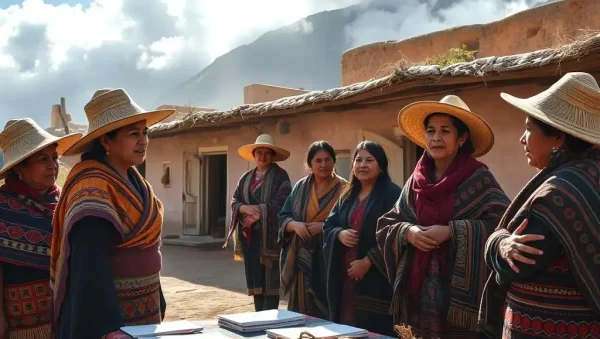
After 1532, Spanish colonizers dismantled the Inca hierarchy but preserved certain native intermediary roles (like curacas acting as tax collectors) for administrative convenience. However, the mita system was repurposed for silver mines (e.g., Potosí), causing demographic collapse. The divine status of the Sapa Inca was deliberately erased, replaced by Spanish encomiendas and corregidores. Yet, despite suppression, many Andean communities retained reciprocal ayllu-based kinship structures, which persist in modern Quechua and Aymara villages as communal governance.
Today’s Andean political hierarchies are a hybrid of indigenous and state systems, visible in Bolivia and Peru’s recognition of traditional authorities as “peasant communities.” The memory of the Inca state fuels contemporary movements for autonomy and indigenous rights, with some leaders drawing direct parallels to pre-colonial sovereignty. This legacy reveals that Andean political hierarchies were not static artifacts but living frameworks—adaptable, resilient, and deeply embedded in cultural identity. For students of political science, they offer an alternative model of diverse, multi-ethnic federalism that modern nation-states still struggle to replicate.
Frequently Asked Questions
What is the difference between a Sapa Inca and a curaca?
The Sapa Inca was the supreme ruler, considered divine and holding authority over the entire empire. A curaca was a local ethnic lord governing a specific community or province. Curacas retained local autonomy but had to swear loyalty to the Sapa Inca, pay tribute, and manage labor quotas. While the Sapa Inca claimed universal dominion, curacas operated as intermediaries, preserving local customs, and their position was often hereditary.
How did the Inca keep control without writing or currency?
The Inca used the khipu (knotted cords) to record census data, tribute, and labor obligations, ensuring administrative precision. They also employed a decimal system of officials, from overseers of 10 families to governors of 10,000. Roads, storage centers (qullqa), and rapid relays of chaskis enabled centralized supervision. Instead of currency, the state redistributed goods and labor through a reciprocal economy, where subjects gave service in exchange for state-provided food, clothing, and protection.
Was the Inca Empire strictly hereditary in its succession?
Succession was not strictly fixed; the Sapa Inca often chose a favored son, but sons from principal wives and coya (queens) could compete. After a ruler’s death, his panaca (royal lineage) held his assets and supported his preferred heir. However, civil wars like the one between Huáscar and Atahualpa were common. This ambiguity weakened the empire, as factions within the nobility vied for legitimacy, sometimes undermining centralized strength.
Did the Inca allow conquered peoples to keep their leaders?
Yes, the Inca typically retained local curacas as intermediary rulers under imperial supervision, provided they accepted Inca authority. This policy minimized resistance, as communities saw their own leaders still in place. However, curacas had to adopt Inca customs, send their children to Cusco for education, and deliver tribute. Unreliable leaders were replaced, and mitimaes were relocated to restive areas to dilute local solidarity.
How did the Spanish exploit Andean political hierarchies?
Spanish conquerors leveraged the existing curaca system to collect tribute and labor, initially retaining native nobles as local tax collectors. They also exploited the divine status of the Sapa Inca, executing him and claiming Spanish kings as new sovereigns. Over time, colonial encomiendas assigned native groups to individual Spaniards, worsening exploitation. Yet, continuous resistance and the survival of ayllu structures meant that many native hierarchies persisted informally, later influencing independence movements and modern indigenous rights campaigns.