Irrigation and Cultivation Technologies: Engineering Marvels of the Americas
Before European contact, Indigenous civilizations across the Americas developed sophisticated irrigation and cultivation systems that rivaled—and often surpassed—contemporary Old World technologies. From the arid deserts of the Southwest to the high Andes and the Amazon basin, these innovations sustained millions of people, shaped landscapes, and created surplus economies. This subcategory explores the aqueducts, terraces, raised fields, chinampas, and water management strategies that demonstrate exceptional agricultural engineering and ecological knowledge. Discover how these ancient practices continue to inspire modern sustainable farming and water conservation.
💧 Desert Hydraulics: Canals and Waffle Gardens
The Hohokam people of present-day Arizona engineered over 1,000 miles of irrigation canals, some up to 30 feet wide and 10 feet deep, transporting water from the Salt and Gila Rivers to maize fields. These canals featured precise gradients that minimized erosion and silt buildup, requiring communal labor and advanced surveying skills. The Zuni and Hopi developed “waffle gardens” and check dams to capture scarce rainfall, while the Ancestral Puebloans built reservoirs and diversion ditches along cliff edges. These systems supported dense urban populations in environments where annual rainfall was under 12 inches, proving remarkable hydrological understanding.
Visitors to this subcategory will learn how water rights, maintenance schedules, and seasonal cycles were governed by social and religious institutions, ensuring equitable distribution. The engineering principles—slope calculations, evaporation control, and soil permeability—were empirically refined over centuries. Modern arid-land farmers and urban planners study these ancient designs for low-cost, gravity-fed irrigation solutions. The resilience of these systems, some functioning for over 1,500 years, offers key lessons in sustainable water use amidst climate change.
🌾 Andean Terraces: Transforming Mountains into Farmland
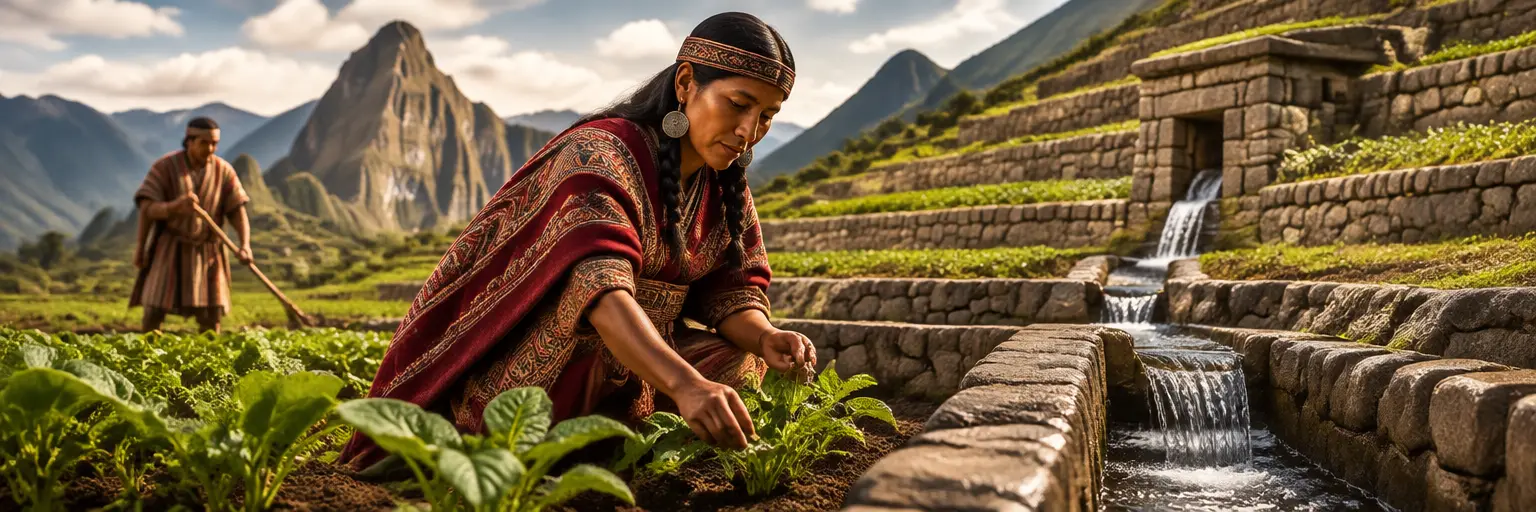
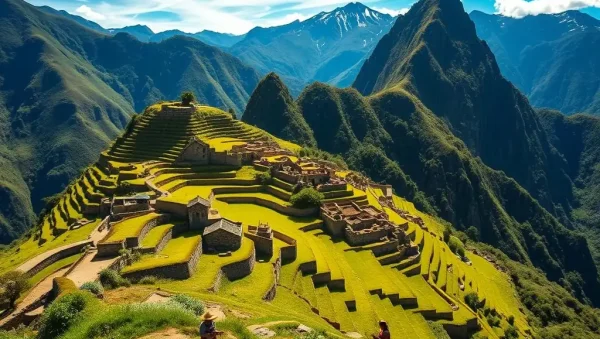
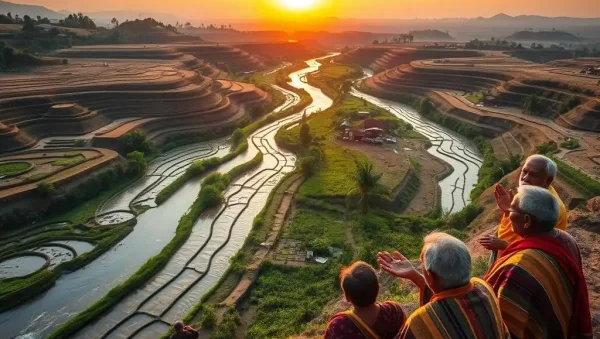
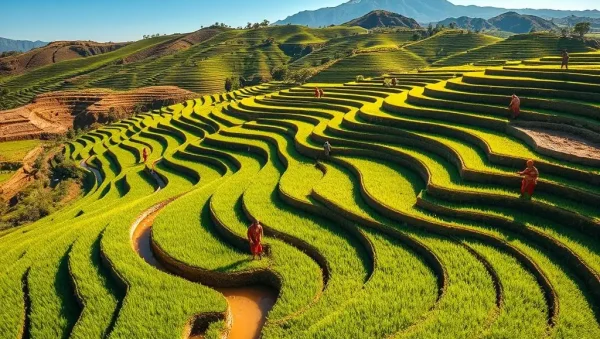
In the steep Andes, the Inca and predecessor cultures (Wari, Tiwanaku) carved thousands of stone-terraced agricultural platforms, called andenes, that converted vertical slopes into arable land. These terraces had layered foundations: gravel for drainage, sand for filtration, and topsoil rich with organic matter, preventing landslides and retaining moisture. They created microclimates by orienting walls to capture solar heat, allowing cultivation of maize, potatoes, quinoa, and over 200 native crop varieties across altitudinal zones. The terraces also integrated irrigation channels that fed from glacial meltwater, with sluice gates controlling flow.
Expect detailed case studies of Moray’s circular sunken terraces, which simulated temperature gradients for crop experimentation, and the 30,000 hectares of terraces still visible in Peru’s Sacred Valley. These systems enhanced soil fertility, reduced frost damage, and extended growing seasons. Today, agricultural engineers and climate-resilience projects revive Inca terraces to combat soil erosion and secure food for mountain communities. This section explains construction techniques, water recycling, and the political organization that maintained these massive earthworks.
🛶 Chinampas: Floating Gardens of Tenochtitlan
The Aztec (Mexica) civilization constructed chinampas—raised, rectangular beds of soil and vegetation on shallow lake beds—around their island capital. These “floating gardens” were built by staking out willow trees in lake margins, weaving reed mats, and piling mud and aquatic plants to form fertile platforms. Interlocking canals between chinampas provided irrigation, transport, and natural nutrient cycling. Each bed measured about 30 by 2.5 meters, yielding up to seven harvests per year of maize, beans, squash, chilies, tomatoes, and flowers. The system supplied food for over 200,000 residents of Tenochtitlan and its valley.
Here, readers will uncover the biology behind chinampa productivity: nitrogen fixation by aquatic plants, pest control via companion planting, and the constant replenishment of soil through canal dredging. This intensive agriculture was dependent on a delicate water-level management system, using dikes and sluices (like Nezahualcoyotl’s dike) to separate freshwater from saline water in Lake Texcoco. Replicas of chinampas exist today in Xochimilco, a UNESCO World Heritage site. This section highlights their role in urban food security and their relevance to rooftop and vertical farming innovation.
🚜 Raised Field Agriculture: The Llanos de Mojos Legacy
In the seasonally flooded Llanos de Mojos of Bolivia, ancient inhabitants constructed millions of raised earthen mounds and ridges, known as camellones, interspersed with floodwater canals. These elevated beds kept plant roots dry during wet periods while using canal water for irrigation during dry spells. The canals doubled as fish ponds and sediment traps, providing protein and fertilizer. The total constructed area exceeds 50,000 square kilometers, including geometric earthworks and causeways. This lowland technology supported high population densities in a region previously deemed unsuitable for agriculture.
This subcategory explains how raised fields altered local hydrology, reduced soil anoxia, and increased night temperature insulation, boosting crop yields. Archaeologists and ecologists have experimentally reconstructed these fields, demonstrating they can outproduce modern slash-and-burn farming by up to 200%. The system’s carbon storage potential and flood mitigation capacity are now studied for climate adaptation in tropical wetlands. Learn about the labor organization, crop rotations (maize, manioc, sweet potato), and the long-term sustainability that allowed the Mojos civilization to flourish for 3,000 years.
💦 Precision Water Management: The Maya and Casas Grandes
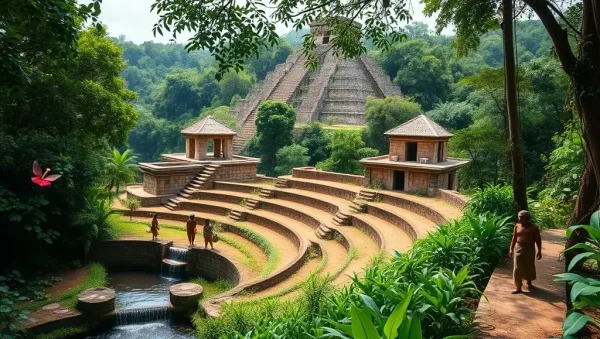
The Maya civilization, despite popular belief, developed advanced water storage and irrigation systems across the Yucatán Peninsula and Guatemala’s lowlands. They built underground cisterns (chultunob), reservoirs (aguadas), and artificial ponds (like Tikal’s) to capture seasonal rainfall. In the Puuc region, they engineered pressure-channel aqueducts and terrace irrigation for fertile valley floors. The community of Casas Grandes (Paquimé) in northern Mexico constructed an intricate network of earthen canals, walk-in wells, and seasonal floodwater farming, supplying a major trading metropolis in the Chihuahuan Desert.
Expect insights into water storage capacity calculations, evaporation control using clay seals, and the ritual significance of water deities—symbolized by cenotes and rain gods like Chaac. These systems demonstrate sophisticated climate forecasting and risk management, with surpluses stored for drought years. Recent lidar surveys reveal the scale of Maya reservoirs, some holding up to 20 million gallons. Modern water engineers study these passive solar-powered, gravity-fed designs for off-grid irrigation. This section underscores how indigenous knowledge integrated ecology, politics, and cosmology into everyday resource management.
🌱 Agroforestry and Polyculture: The Amazonian Green Revolution
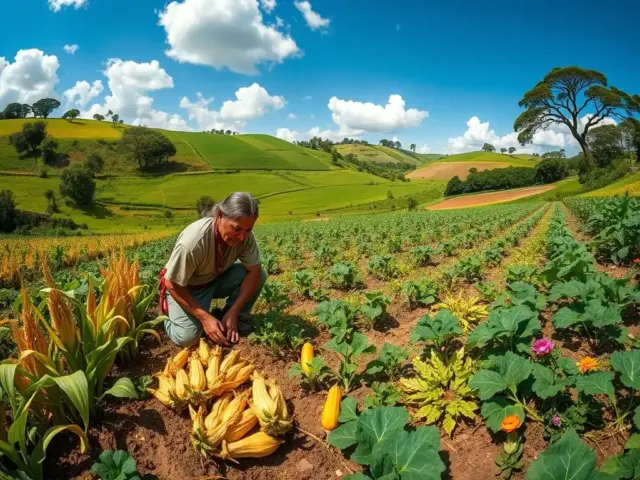
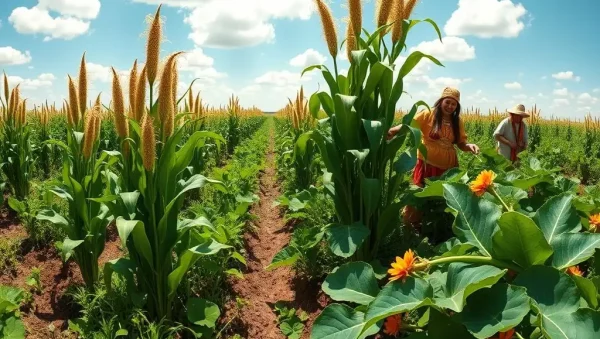
Beyond irrigation, Indigenous cultivators in the Amazon created fertile “dark earths” (terra preta) by mixing charcoal, bone, and organic waste with poor tropical soils. This anthropic soil retains nutrients for centuries, supporting intensive polyculture gardens with over 80 edible plant species per hectare, including cashew, cacao, Brazil nut, and guava. They practiced agroforestry—integrating trees with crops—to maintain canopy, shade, and biodiversity, often using the “three sisters” method (maize, beans, squash) alongside fruit-bearing trees. The Kayapó people planted “resource islands” and trailside orchards to ensure food security during migrations.
This section reveals the science of terra preta: its microbial diversity, high cation-exchange capacity, and self-regenerating fertility. Ethnobotanists document over 400 domesticated or semi-domesticated species in Amazonia, with genetic variants that are still foundational to global food crops (manioc, peanuts, cacao). This subcategory emphasizes how indigenous cultivation techniques enhanced biodiversity rather than reducing it, contrasting with monoculture systems. Modern permaculture and regenerative agriculture draw directly from these ancestral models, including successional planting, mycorrhizal symbiosis, and natural pest deterrence. Understand how these systems enabled complex societies—like the Marajoara and the cacau-cultivating cultures—without massive deforestation.
🙋 Frequently Asked Questions
How did indigenous irrigation systems handle drought?
They used multiple strategies: storing water in reservoirs, cisterns, and underground aquifers; diverting glacial meltwater via stone channels; and practicing crop diversity to ensure at least some species survived. For example, the Hohokam prioritized canal cleaning and had community-based water-sharing rules. Some desert cultures also performed rain-making rituals, but the physical systems emphasized redundancy and seasonal adaptation.
What are chinampas and are they still used today?
Chinampas are raised, rectangular beds built on freshwater lakes, originally used by the Aztecs. They are still cultivated in Xochimilco, Mexico City, where 2,500 hectares remain. Farmers there grow vegetables, flowers, and herbs, using traditional canal navigation and hand tools. These plots are recognized for their high yield and low chemical footprint, though they face threats from urban pollution and land conversion.
Did all pre-Columbian civilizations have advanced irrigation?
Not all, but many adapted to local conditions. For instance, coastal fishers and hunter-gatherers like the Chumash practiced minimal agriculture. However, the Inca, Maya, Aztec, Hohokam, Anasazi, and Mississippian cultures developed complex systems. The Amazonians used soil amendments and agroforestry instead of canal irrigation. Thus, “advanced” means context-specific technologies, not a single universal method.
How does indigenous agronomy influence modern sustainable farming?
Many principles—polyculture, agroforestry, organic soil enrichment, and water conservation—are now validated by ecological science. Terra preta inspires biochar production; Andean terraces inform erosion control; chinampas inspire urban aquaponics. Organizations like the Rodale Institute and FAO have initiated projects to revive these systems in degraded lands. They demonstrate low-input, high-output, climate-resilient farming models.
Can we reconstruct these ancient systems today without losing modern efficiencies?
Yes, but with adaptations. For example, raised field agriculture has been successfully reconstructed in Peru and Bolivia using community labor, with yields comparable to conventional plots and lower fertilizer needs. However, scaling requires addressing labor costs, land tenure, and access to water. Modern engineering can complement these systems, blending indigenous knowledge with advanced sensors, drip irrigation, and renewable energy, but respecting cultural heritage remains vital.