Legal and Justice Systems: The Indigenous Blueprint for Order and Equity
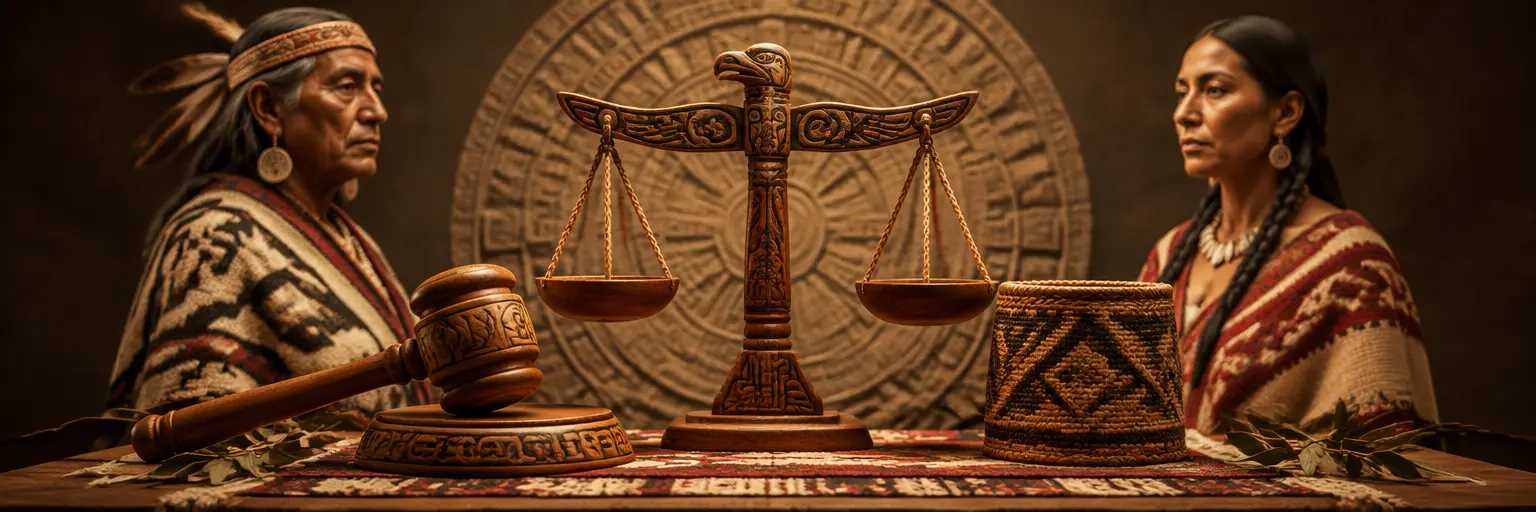
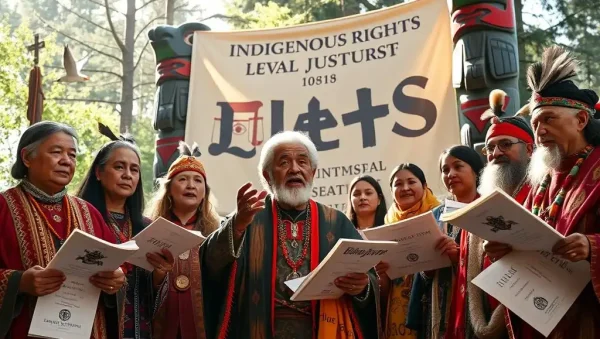
Before European contact, Indigenous civilizations across the Americas developed sophisticated legal codes, restorative justice practices, and governance frameworks that balanced individual rights with communal duties. These systems were not primitive—they were carefully engineered to maintain social harmony, resolve disputes, and ensure sustainable resource management. From the Aztec tlatoani courts to Iroquois clan-based arbitration, these legal traditions shaped everything from trade disputes to criminal sentencing. Explore how these ancestral laws still inform modern indigenous rights movements and offer timeless lessons in conflict resolution.
⚖️ Restorative vs. Punitive Justice: The Healing-Centered Approach
Unlike European punitive systems, most Indigenous legal frameworks prioritized restoration over retribution. The Inca used mit'a labor obligations as restitution for crimes, while the Maya employed community councils to mediate between victims and offenders. Perpetrators often compensated victims directly through goods, labor, or ceremonial apologies—reintegrating the offender into society rather than isolating them. This approach reduced recidivism and maintained communal cohesion, a stark contrast to colonial jails.
For example, among the Haudenosaunee (Iroquois Confederacy), the Great Law of Peace established a council of clan mothers and chiefs who heard cases, with decisions focusing on repairing harm, not punishing the accused. Even murder cases could result in adoption of the offender into the victim’s family to replace the lost member. This system is now cited by modern restorative justice programs worldwide as a model for reducing prison populations and healing trauma.
📜 Codified Laws and Written Constitutions Before Columbus
While many assume writing arrived with Europeans, several Indigenous nations had formal legal codes. The Aztec empire maintained a written legal code on amoxocalli (paper made from bark) detailing property rights, marriage laws, and penalties for theft or assault. The Mixtec codices, such as the Codex Zouche-Nuttall, record genealogical legal disputes and royal inheritance rules. In the Andes, the Inca used quipu (knotted cords) not only for census but also for recording legal decisions and tribute obligations.
These codes were enforced by dedicated judges and courts. The Aztec tecutli served as presiding judges in each district, with appellate courts above them, overseen by the emperor’s council. Trials involved witnesses, evidence, and cross-examination—practices that mirrored but predated Roman law. The existence of these codified systems dismantles the myth that Indigenous peoples lacked legal sophistication, revealing instead a rich tradition of written jurisprudence accessible to both elites and commoners.
🏛️ Governance Structures and Checks on Power
Indigenous legal systems were embedded in representative governance that prevented autocracy. The Iroquois Confederacy divided power among the Mohawk, Oneida, Onondaga, Cayuga, Seneca, and later Tuscarora nations, each sending leaders to a Grand Council. Decisions required consensus—unanimous agreement among all six nations—ensuring no single chief could dominate. The council’s laws were reviewed by clan mothers, who held veto power and could remove chiefs for wrongdoing.
Similarly, the Mexica (Aztec) government featured a tlacateccatl (military commander) and a cihuacoatl (council president) who balanced the emperor’s authority. The Tlaxcalan republic, an enemy of the Aztecs, operated as a council of four lords with rotating supreme power—a tripartite system of checks and balances centuries before Montesquieu’s theories. These structures ensured legal decisions reflected broader community will, not just elite whim, and they remain studied in modern political science.
Citizen participation was key. The Inca used suyuyoc (local magistrates) who were elected by their community, not appointed by the emperor. They held term limits and could be recalled. This grassroots legal democracy ensured that laws stayed relevant to local conditions—whether regulating irrigation access in the highlands or corn storage in the valleys—while still aligning with imperial standards.
🌾 Environmental and Resource Laws: Sustainable Stewardship
Indigenous legal systems were pioneers in environmental regulation. The Inca’s sistema de andenes (terrace farming) was legally protected; farmers could not alter drainage or irrigation paths without council approval. Similar laws across Mesoamerica governed water rights, with the Maya, for instance, mandating that wells and cenotes be shared across clans during droughts. The Aztec empire had specific penalties for overfishing or hunting endangered species like the quetzal bird.
These laws were enforced through community-based monitoring. In the Andes, each village designated llactayuj (land stewards) who inspected fields and reported violations—poaching, soil erosion, or waste—to local judges. Fines were often payable in labor or crops, redistributed to the community. The effect was a legal culture that saw nature as a communal asset, not an individual resource to exploit. Modern environmental law scholars now point to these traditions as evidence that sustainable legal frameworks are not new, but deeply rooted in Indigenous wisdom.
Additionally, the legal calendars linked environmental cycles to law enforcement. The Aztec xihuitl (52-year cycle) included public amnesties and ritual restorations of land boundaries after floods or earthquakes, ensuring legal order adapted to ecological changes. This dynamic, cyclical approach contrasts with the static, permanent laws of colonial governments.
🕊️ Conflict Resolution and Inter-State Treaties
Legal systems extended beyond internal disputes to international diplomacy. The Aztec pochteca (long-distance traders) acted as legal envoys, negotiating trade treaties with independent city-states like Tlaxcala. These treaties included dispute resolution clauses—arbitration by neutral allies, penalty schedules for border raids, and safe-conduct guarantees for merchants. The Maya established the kʼatún cycle as a fixed ritual and legal period for renewing alliances, limiting the duration of treaties to prevent endless entanglements.
The Iroquois Confederacy’s Great Law of Peace also functioned as a multinational treaty among the six nations, codifying mutual defense, extradition of criminals, and shared hunting grounds. When the U.S. Constitution was drafted, the framers studied Iroquois political and legal systems—Franklin even cited them as a model for confederation. Yet, the treaty provisions also included reconciliation rituals, such as the Condolence Ceremony, to heal disputes between confederacy members, showing that law was designed to preserve relationships, not just settle disputes.
In South America, the Inca incorporated conquered groups through mitmaq (resettlement) with legal agreements that granted certain rights in exchange for loyalty. These treaties were recorded in quipu and honored for generations. The complexity of these inter-state laws proves that Indigenous legal systems operated on a regional scale, managing security, commerce, and citizenship without a central legislature—an early example of federalism.
Frequently Asked Questions
Did Indigenous legal systems allow women to serve as judges or lawmakers?
Yes. Among the Iroquois, clan mothers held the power to nominate chiefs and veto laws. In Aztec society, women could serve as cihuatlapixqui (female judges) in cases involving family and market disputes. The Inca employed ñaustas (female magistrates) for disputes within women’s councils. These roles granted women direct legal authority, contradicting colonial-era stereotypes of female subordination.
Were there courts of appeal in Indigenous legal systems?
Absolutely. The Aztec judiciary had a hierarchical structure with local tecutli courts, district appellate courts, and a supreme court in Tenochtitlan, presided by the cihuacoatl. The Inca used tucuyricoc (inspectors) who reviewed local decisions and had absolute authority to overturn them. Appeals often involved presenting new evidence, similar to modern appellate practice.
What punishments did Indigenous legal codes prescribe?
Punishments ranged from restitution (labor or goods) and public shaming to exile and, for severe crimes like treason, execution by stoning. However, imprisonment was rarely used; most sentences were time-limited and aimed at reintegration. The Aztec code, for example, specified public flogging for theft, but allowed the offender to pay double the value to avoid it.
How did Indigenous legal systems handle disputes between different tribes or nations?
While the Iroquois Confederacy used its Grand Council as a supranational court, the Aztec and Maya relied on neutral allied mediators (often priests) to arbitrate inter-state disputes. Treaties often included sunset clauses and annual renewal ceremonies to prevent stalemates. Military force was a last resort, preceded by formal diplomatic negotiations with legal immunity for emissaries.
Are any of these Indigenous legal principles still used today?
Yes. Many tribes in the U.S., Canada, and Latin America operate legal systems based on traditional principles, such as the Navajo Nation’s peacemaking courts, which use restorative justice. The 2007 UN Declaration on the Rights of Indigenous Peoples reflects these frameworks. Additionally, modern international laws on environmental stewardship and treaty rights draw directly from Indigenous legal precedents.