Recent Excavations at Mayan Sites: Unearthing a Lost World
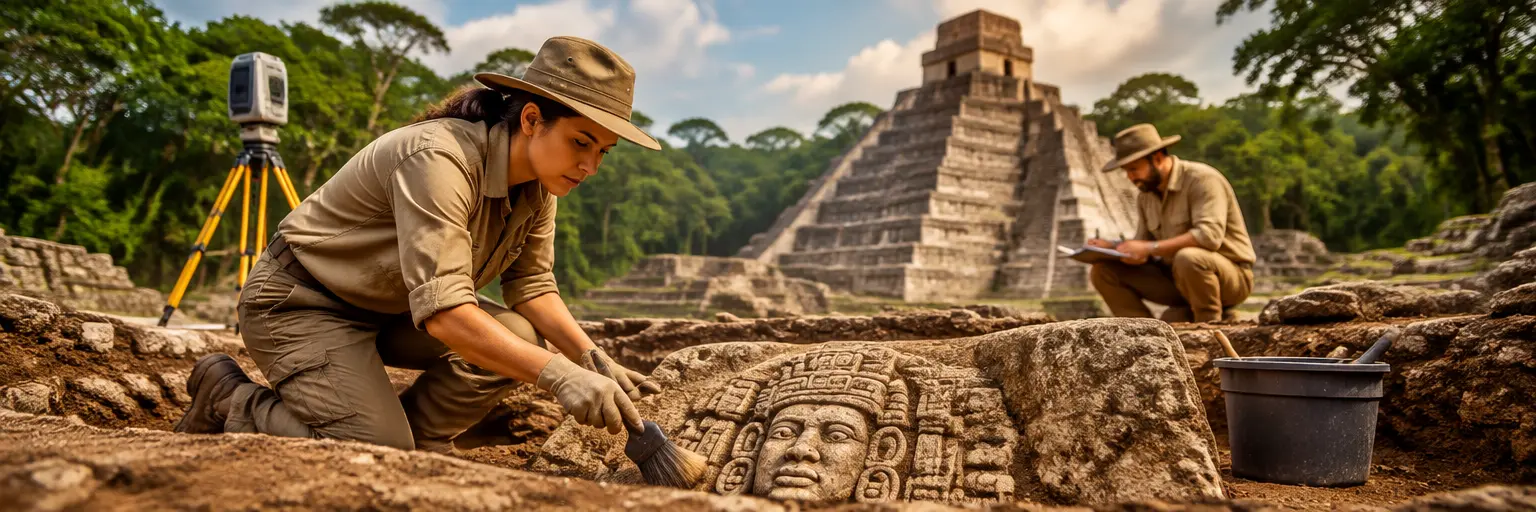
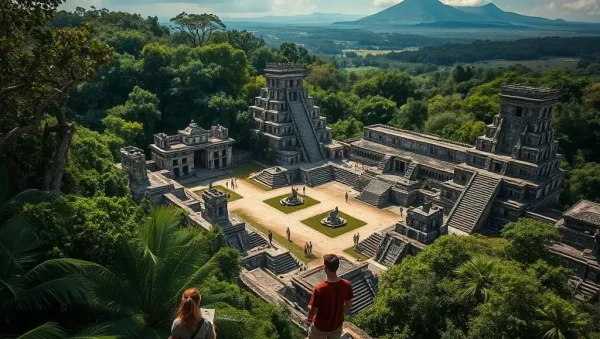
Welcome to our dedicated section on Recent Excavations - Mayan Sites, a dynamic frontier in Mesoamerican archaeology. Here, we dive into the latest discoveries emerging from the jungles of Mexico, Guatemala, Belize, and Honduras. From LiDAR-revealed megacities to newly deciphered glyphs, these digs are rewriting what we know about Maya civilization. Expect cutting-edge research, artifact analysis, and the stories of how modern technology is peeling back centuries of overgrowth to expose the astonishing complexity of ancient Maya society. Join us as we explore the trenches, tombs, and temples that are reshaping history.
🔍 LiDAR and the Discovery of Hidden Megacities
Recent excavations have been revolutionized by LiDAR (Light Detection and Ranging) technology, which penetrates dense forest canopies to map ground contours. At sites like Tikal and Calakmul, LiDAR has uncovered sprawling urban networks—including causeways, defensive walls, and agricultural terraces—that were invisible to ground surveys. These findings have forced archaeologists to expand their estimates of Maya population size and political complexity by millions, revealing a civilization far more interconnected than previously imagined.
What does this mean for you? We provide detailed case studies of the most recent LiDAR campaigns, including the 2023-2024 surveys in the Mirador-Calakmul Basin that identified over 1,000 new settlements. You’ll learn how excavation teams prioritize which anomalies to dig, and how these radar-like scans guide the placement of test pits, trenching, and later full-scale excavation. Expect technical breakdowns of the equipment, data processing, and the controversies over interpreting remote-sensing data without ground verification.
🏺 Recent Tomb Discoveries and Royal Burials
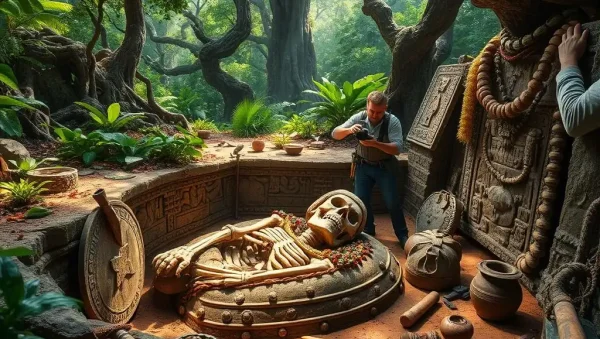
The excavation of royal tombs remains the treasure trove of Maya archaeology. In 2024, a team at Chochkitam (Guatemala) unearthed a jade mosaic mask, ceremonial axe, and cylinder vessel bearing a dynastic name, dating to around 350 CE. Meanwhile, at Palenque, a burial chamber beneath Temple XX has yielded red-painted stucco reliefs and ceramic offerings linked to the K’inich Janab Pakal lineage. Each burial not only provides spectacular artifacts but also reveals burial rituals, social hierarchies, and long-distance trade networks through the sourced materials.
Our coverage dissects the excavation process step-by-step: from the initial discovery of a stone lintel or vaulted ceiling crack, to the careful removal of fill, the mapping of skeletal position, and the lab-based analysis of organic residues. We explain the forensic and iconographic clues used to identify royal status—such as cranial modification, tooth inlays, and accompanying sacrificial victims. You’ll also gain insight into ethical repatriation debates when artifacts leave their countries of origin for temporary research.
🛕 Excavation of Everyday Life: Residential and Agricultural Areas
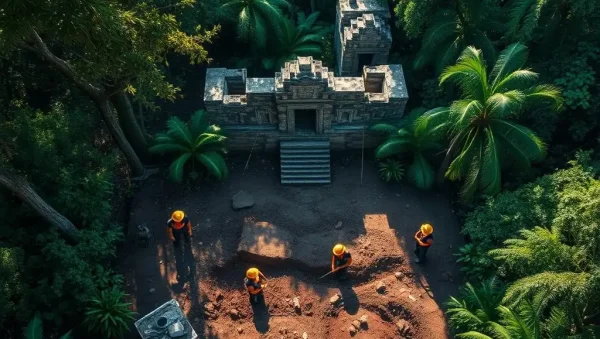
While tombs steal headlines, recent excavations increasingly focus on non-elite households and farming terraces. At Caracol (Belize), archaeologists have turned to “settlement survey” digs in residential plazuelas, uncovering obsidian blade fragments, grinding stones, and faunal remains that illuminate daily diets and craft production. These digs are crucial for understanding how commoners supported the massive ceremonial centers and whether they enjoyed relative autonomy or suffered heavy taxation.
Expect practical summaries of excavation methodology in rural zones: the use of soil chemistry to detect ancient food residues, flotation techniques to recover seeds and insect parts, and the analysis of ceramic wasters to identify local potters. We also highlight experimental archaeology projects that reconstruct Mayan agricultural techniques, such as raised fields and terracing, to test hypotheses about sustainability. This section connects the dirt-level details to broader debates about social inequality and resilience to climate change—topics highly relevant to modern environmental studies.
📜 Deciphering New Inscriptions and Hieroglyphic Texts
Excavations regularly surface carved monuments, stucco facades, and portable objects bearing hieroglyphs. A notable recent find is a panel from La Corona (Guatemala) that records a “snake dynasty” alliance, adding eight columns of previously unknown text. Other digs have produced painted vessels with mythological references that are rewriting the epic cycle of the Hero Twins. Epigraphers work alongside excavators, often analyzing photos of the finds within days to provide historical context that guides further digging.
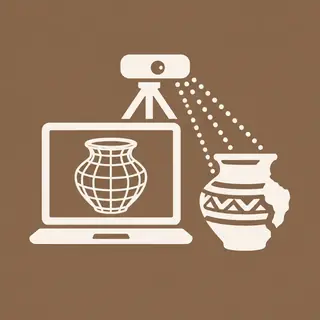
In this segment, we break down how new inscriptions are documented (photogrammetry, latex molds, and 3D scanning) and how they’re integrated into the existing corpus of Maya writing. You’ll learn the process of phonetic and logographic decipherment, the role of grammatical studies, and the debate over how much content is historical versus political propaganda. We also offer tutorials on reading basic glyph blocks and highlight open-access databases where you can explore recent finds yourself. This is your gateway to seeing how a buried stone becomes a historical narrative.
🏛️ Restoration and Conservation at Active Dig Sites
Excavation is only the beginning—conservation is inseparable from discovery. At Copán (Honduras), recent work on the Rosalila Temple has involved stabilizing vibrant painted stucco using silicone-derived consolidants, while at Chichen Itza, the excavation of the Platform of the Skulls included careful reburial after documentation to protect fragile lime-plaster surfaces. Modern digs now embed conservators from day one, documenting the micro-climate, moisture levels, and existing damage before a single trowel is used.
We explain the controversial trade-offs between excavation and preservation: whether to leave structures buried to protect them, or expose them for tourism and research. You’ll read about the use of protective shelters, drainage systems, and the training of local community members as restorers. We also cover how looted sites are being treated—some rescues are “excavations” that salvage artifacts from backfilled looters’ pits—and how ethical guidelines prevent destructive excavation of sites that could be better preserved for future technology.
Frequently Asked Questions
What is LiDAR and why is it important for Maya archaeology?
LiDAR uses laser pulses from aircraft to create 3D maps of terrain even under dense vegetation. It’s vital because the Maya built extensively in tropical forests; LiDAR reveals concealed structures, roadways, and water features that ground surveys would miss, allowing targeted excavation rather than random digging.
How do archaeologists know where to start digging at a Maya site?
They combine LiDAR anomalies, aerial photography, and ground surveys. Excavators also look for characteristic features like mounds, fallen monuments, and vegetation changes. Initial probes (test pits) examine stratigraphy and artifacts to decide if deeper excavation is warranted.
Are recent Maya finds changing what we know about their decline?
Yes. New excavation data suggest a more gradual decline linked to drought, soil degradation, and political fragmentation. Earlier theories of sudden collapse are being refined, with evidence of resilient communities that adapted for centuries before the final depopulation of lowland cities.
Can the public participate in these excavations?
Many projects offer volunteer programs or field schools. You’ll need a background in archaeology or related majors. Check with institutions like the University of Arizona’s Tikal Project or the Proyecto Mirador-Calzada Mocho, which occasionally accept trained volunteers for specific tasks such as artifact washing or mapping.
How are artifacts from recent excavations handled after being unearthed?
They are documented in situ, lifted carefully, and sent to lab facilities for cleaning, cataloging, and analysis. Sensitive materials like textiles are preserved in special storage. After study, many are returned to state or national museums, while some stay in regional research centers for further examination.