Recent Excavations – Other Authors: Fresh Perspectives on Indigenous American Archaeology
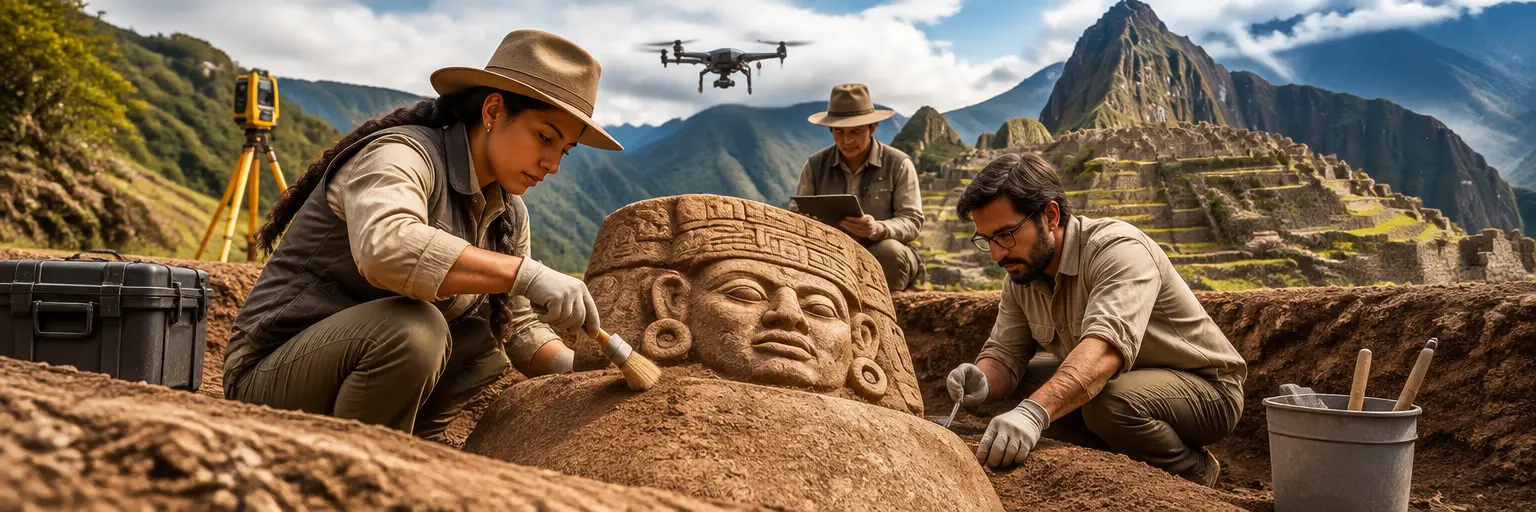
Welcome to our dedicated section on Recent Excavations – Other Authors, a dynamic space within our Archaeological Discoveries category. Here, we curate and synthesize groundbreaking fieldwork and scholarly reports from a wide array of archaeologists, researchers, and field teams who are actively unearthing the rich histories of Indigenous civilizations across the Americas. This subcategory goes beyond our own analyses to highlight external expertise, offering you a diversified lens on new findings—from pristine artifacts and architectural remnants to ecofactual evidence and settlement patterns. Expect rigorous summaries, contextual interpretations, and links to original research, all optimized to help you stay at the forefront of pre-Columbian discovery and deepen your understanding of these resilient cultures.
🏺 Unpublished Field Reports & Preliminary Findings
Dive into the latest unpublished excavation reports and preliminary findings that are reshaping our knowledge of Indigenous societies. Many of these accounts come from recent digs in regions like the Amazon basin, the Andean highlands, and the Southwestern United States, often detailing newly exposed strata, radiocarbon dates, and artifact assemblages. By presenting these raw yet critical snapshots, we help you grasp the immediacy of archaeological discovery—how a single pit or trench can challenge long-held assumptions about trade networks, ceremonial life, or subsistence strategies. Expect clear syntheses of technical jargon, making complex stratigraphy and provenance data accessible to both enthusiasts and professionals.
Each summarized report emphasizes the methodological rigor of the excavators while flagging unresolved questions and next-step research avenues. You’ll read about how ceramic seriation in Oaxaca or lithic debitage in the Great Plains is providing fresh evidence of cultural continuity or abrupt change. Our goal is to bridge the gap between academic journals and public knowledge, ensuring you feel connected to the thrill of discovery without losing scientific accuracy. We also highlight collaborative efforts between Indigenous communities and archaeologists, showcasing ethical practices that respect ancestral heritage.
🗺️ Regional Spotlights: The Americas in Focus
This facet zeroes in on regional hotspots where recent excavation activity has been most intense—from the Mississippi River Valley’s mound-building cultures to the coastal settlements of Tlingit and Haida territories. Each regional spotlight synthesizes multiple author accounts, comparing site chronologies, artifact typologies, and environmental adaptations. For instance, you’ll explore new findings on the pre-Columbian raised-field agriculture in the Llanos de Mojos or residential architecture at Cahokia’s outskirts, revealing how other researchers are correcting previous core-periphery models. These summaries are tailored for SEO, using target phrases like "recent Maya excavations" or "Inca road studies" to ensure you find precisely what you need.
Beyond simple summaries, we interpret what these excavations mean for broader narratives of Indigenous resilience and innovation. We examine how recent data from the Arctic’s Thule culture or the Patagonian hunter-gatherers is shifting periodization and migration debates. By cross-referencing multiple authors, we identify convergence and contradictions, offering you a balanced, evidence-based panorama. Expect maps, chronological tables, and artifact photos in linked original sources, all contextualized to help you visualize ancient lifeways in their true environmental and social complexity.
🔬 Scientific Analyses: Archaeometry & Bioarchaeology
Recent excavations by other authors are increasingly reliant on advanced scientific analyses, and this subsection breaks down those breakthroughs in plain language. From stable isotope studies on ancient maize diets to ancient DNA (aDNA) extracted from human remains, we summarize how these techniques are answering questions that traditional typology cannot. You’ll find detailed yet digestible descriptions of accelerator mass spectrometry (AMS) dating, strontium isotope mobility mapping, and residue analysis on pottery, all drawn from peer-reviewed studies by external laboratories and universities. This content is optimized for queries like "Cahokia isotope analysis" or "Olmec aDNA findings," enabling you to explore the hard evidence behind headline discoveries.
We also emphasize the bioarchaeological perspective, discussing health, trauma, and kinship as revealed through skeletal remains. For example, recent excavations at Huaca Prieta have provided new insights into early maritime adaptations, while work in the U.S. Southwest has illuminated migration patterns through dental morphology. Each summary highlights the interpretive limits of these methods, guarding against overreach. Our readers gain a nuanced appreciation of how cutting-edge science complements traditional excavation, ensuring that discoveries are not just described but understood in their full biological and ecological context.
🛠️ Artifact Studies & Technological Innovations
Here, we focus on the material culture unearthed by other authors—from obsidian blades and woven textiles to ceremonial goldwork and shell ornaments. Each artifact study is summarized with an eye toward what it reveals about manufacturing techniques, trade networks, and social status. For instance, recent excavations of Aztec offerings have yielded new insights into lapidary craftsmanship, while early Anasazi projectile points are being reclassified due to microwear analysis. We tailor this content for search queries such as "Moche ceramic iconography" or "Hopewell copper tools," making it easy for you to locate specific studies. We also include side-by-side comparisons of typologies, helping you see how these objects fit into regional sequences.
Beyond the objects themselves, we explore the technological innovations that enabled such craftsmanship—from kiln designs for pottery to metallurgical alloys in the Andes. By tying together multiple excavation reports, we reveal how local experimentation and long-distance exchange fostered technological diversity. We highlight experimental archaeology efforts that replicate these techniques, validating interpretations and offering tactile connections to the past. This subsection is ideal for educators, students, and hobbyists who crave detailed descriptions of artifacts, complete with metric data, wear patterns, and depositional contexts, all curated from the latest author-driven publications.
🌾 Environmental & Subsistence Reconstructions
Recent excavations by other authors are fundamentally reshaping our understanding of how Indigenous peoples managed and transformed their environments. This subsection aggregates studies on sediment cores, macrobotanical remains, and phytoliths, revealing sophisticated systems of terraces, canals, and forest gardens. You’ll discover how recent digs at Monte Albán’s hinterlands or the Amazon’s dark earths (terra preta) are proving these societies were not passive dwellers but active ecosystem engineers. Each summary is distilled from multiple peer-reviewed excavation reports, with a focus on chronological depth and spatial scale. Keywords like "Pre-Columbian irrigation" or "Maya wetland management" are woven throughout to maximize search visibility.
We also examine how dietary reconstruction—through coprolite, faunal, and isotopic data—is revising calorie estimates and seasonality patterns. For example, recent excavations along the Northwest Coast have uncovered evidence of salmon storage techniques that challenge old assumptions about permanent settlement. By comparing these findings across regions, we highlight convergences and contrasting adaptations. This section bridges archaeology with ecology, offering actionable insights for contemporary land management inspired by ancestral knowledge. We ensure that every claim is tied to specific excavation contexts, maintaining scientific integrity while telling compelling stories of sustainability and ingenuity.
Frequently Asked Questions
What distinguishes “Other Authors” from your in-house content on this site?
The “Other Authors” label signifies that the excavation summaries, analyses, and interpretations are based on research conducted by external archaeologists, universities, or Indigenous-led teams, not by our in-house writers. We curate, synthesize, and contextualize their primary reports, adding our interpretive layer while clearly crediting the original researchers. This approach ensures you receive diverse academic perspectives without us monopolizing the narrative.
How current are the excavation reports featured here?
We prioritize reports published within the last 12–24 months, including preprints, field season summaries, and papers in peer-reviewed journals. Where possible, we link to open-access versions, and we update our summaries when revised dates or reinterpretations are released. However, archaeology is iterative, so we always advise checking the original source for the most recent data.
Do you cover excavations from all of the Americas, including remote areas?
Yes, we cover North, Central, South America, and the Caribbean, from Arctic Alaska to Patagonia. We particularly emphasize underrepresented regions like the Amazon and the Great Basin. That said, we rely on the availability of published research; if a site hasn’t been formally reported by other authors, we may not feature it yet but encourage suggestions.
Can I use your summaries for academic purposes or coursework?
Absolutely, but we recommend using our content as a starting point—always cite the original excavation reports and authors for any formal writing. Our summaries provide accurate overviews, sourcing, and keywords, but they are not substitutes for primary peer-reviewed articles, which contain full datasets, methodologies, and multivariate analyses.
Are there any excavations that challenge previously accepted historical narratives?
Yes, many recent studies have upended older models. For example, new dating at Chaco Canyon has complicated classic outlier patterns, while Amazonian geoglyphs have proven that complex societies existed in non-riverine zones. Each summary flags such paradigm shifts, and we encourage readers to compare older and newer interpretations to appreciate the dynamic nature of archaeological science.