Education and Knowledge Transmission in Indigenous Civilizations of the Americas
Welcome to our dedicated exploration of how Indigenous civilizations across the Americas preserved, taught, and evolved their vast reservoirs of knowledge—from astronomy and agriculture to oral traditions and spiritual rites. This subcategory uncovers the sophisticated systems of learning that predated European contact, showing that education was not a formal classroom affair but a deeply integrated, community-driven process. Here, you will discover how the Aztec, Maya, Inca, Iroquois, and many other nations passed down wisdom through generations, shaping resilient cultures that still influence modern education and ecological stewardship today.
🌽 Oral Traditions and Storytelling as Living Libraries
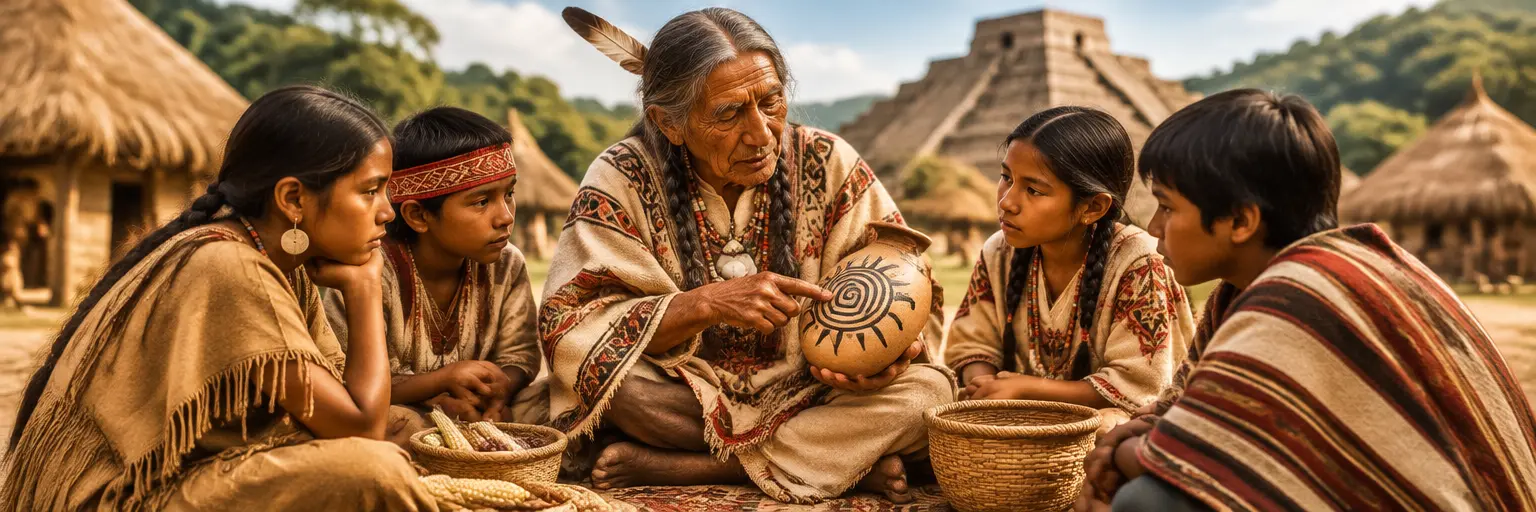
For countless Indigenous nations, knowledge transmission relied on oral traditions—epic poems, creation myths, genealogies, and seasonal calendars memorized and recited with precision. These narratives were not mere entertainment; they encoded scientific observations, legal codes, and historical records. The Maya’s Popol Vuh and the Inca’s quipu (knotted cords) complemented memory, while Aztec tlacuilos (scribes) painted codices that blended pictographs with phonetic elements. Expect to learn how storytellers underwent rigorous training, using mnemonic devices and rhythmic patterns to ensure accuracy across centuries.
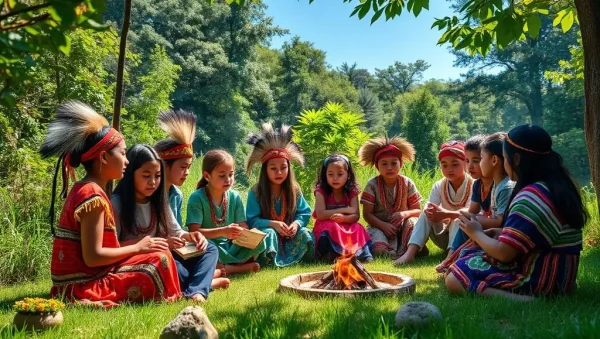
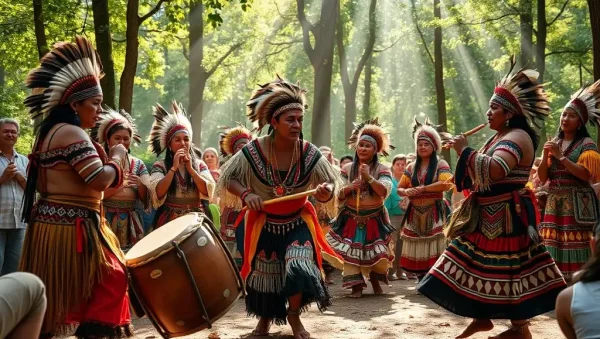
In this facet, we highlight how oral transmission fostered adaptive resilience: stories changed with circumstances, absorbing new lessons while preserving core values. For example, the Hopi of the Southwest used cyclical narratives to teach drought management, while the Iroquois Confederacy’s Great Law of Peace was recited at every council fire for over five centuries. This section examines the social roles of elders, the gendered division of knowledge, and how performance rituals—like the Aztec cuicacalli (house of song)—turned education into a communal, sensory experience.
🏛️ Formal Schools and Elite Training: Aztec, Maya, and Inca Systems
Contrary to popular myth, some Indigenous societies had institutionalized schooling. The Aztec empire ran two mandatory schools for boys: the telpochcalli for martial and agricultural skills, and the calmecac for noble youth destined for priesthood, law, and high administration. The Maya operated specialized academies for astronomy and writing, while the Inca established yachaywasi (houses of knowledge) for the elite amautas (wise men). This section details curricula, discipline, and the intertwining of religious and practical education.
Expect a nuanced view of gender and class: noble girls in Tenochtitlán learned religious rites and weaving, while commoners trained for war and farming. The Inca, however, famously educated only the panaca (royal lineage), but their empirical knowledge—such as agricultural terraces and khipu accounting—was so effective that Spanish colonizers adopted it. We also explore how these systems were not “primitive” but rigorous, with memorization, apprenticeships, and oral exams culminating in public demonstrations of skill, often tied to calendar rituals.
🔭 Astronomy, Mathematics, and Applied Sciences
Indigenous education excelled in the STEM fields, particularly astronomy and mathematics. The Maya developed a vigesimal (base-20) system, the concept of zero, and calendar calculations more precise than contemporary European calendars. Their Dresden Codex contains eclipse predictions and Venus tables, taught to initiates through decades of observation and computation. The Inca used quipus to record population, tribute, and astronomical events, while the Aztec relied on tonalpohualli (260-day sacred calendar) to guide daily life. This section reveals how practical learning took place in open plazas and observatories.
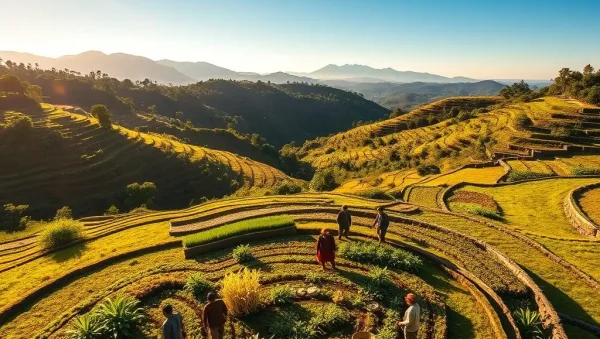
You’ll see how education merged with spiritual cosmology: celestial bodies were deities, and astronomical knowledge was sacred. For instance, the Inca’s Intihuatana stones functioned as solar clocks, and their Qhapaq Ñan road system was aligned with solstices. This subcategory also covers agricultural sciences—crop rotation, terracing, and irrigation—taught through hands-on fieldwork, plus the medicinal botany of the curandero (healer), which rivaled any early modern pharmacopeia. These practical skills were passed down in apprentice guilds, not only to elites but also to skilled commoners.
🌿 Ecological and Sustainability Education
Long before modern environmentalism, Indigenous societies practiced sustainable resource management as a core educational pillar. The Amazonian Tupi taught children to identify hundreds of plant species, while the Pacific Northwest Coast’s Haida used potlatch ceremonies to redistribute wealth and reinforce ecological reciprocity. The Inca’s mit’a labor tax funded irrigation and storage systems, but also included obligatory education on soil conservation. This facet explores how intergenerational knowledge about weather patterns, animal behavior, and fire ecology was transmitted through seasonal rituals and work parties.
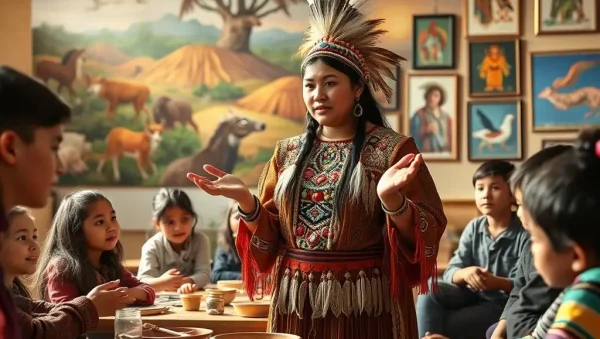
Here, we focus on the ethical dimension of learning: knowledge was not property but a responsibility to ancestors and future generations. For example, the Pueblo peoples’ katsina ceremonies taught children to respect water sources, while the Maya’s milpa (swidden) farming cycle included fallow periods, explained through myth. This section argues that sustainability was not a separate subject but the very fabric of daily lessons, with children learning by observing elders, working alongside them, and then reflecting through storytelling—a model modern educators now call “place-based education.”
📜 Impact on Modern Education and Cultural Revival
The legacy of Indigenous knowledge transmission is not merely historical. Today, language revitalization programs in communities like the Cherokee and Quechua are reviving traditional pedagogies, including oral history nights and mentorship by fluent elders. This section examines how modern schools incorporate Indigenous science—for instance, using fire-stick farming techniques in Australian Aboriginal curricula, though our focus remains the Americas. Expect to see case studies on the Nahuatl language immersion in Mexico and the Mapuche educational schemes in Chile, which blend ancestral wisdom with state systems.
Moreover, this facet addresses decolonizing curricula: many universities now teach Maya mathematics or Inca engineering not as curiosities but as sophisticated, testable systems. We’ll also highlight how Western environmentalists borrow from Indigenous land-management principles, often incorrectly, and what authentic collaboration looks like. By exploring these dynamics, you’ll understand that Indigenous education was never static—it adapted to European contact, survived through hidden practice, and now merges with digital platforms, ensuring that the wisdom keepers of today’s generations continue their legacy.
Frequently Asked Questions
What was the primary method of education in most Indigenous civilizations?
Oral transmission and hands-on apprenticeship were primary, but formal schools existed in the Aztec and Inca empires. For most, education happened through daily participation, storytelling, and ritual ceremonies, with elders serving as teachers. Memorization was aided by songs, rhymes, and mnemonic devices like quipus or pictographs, ensuring that practical skills and sacred knowledge remained accurate across generations.
Did Indigenous women receive formal education?
Yes, though often in separate spheres. In Aztec society, noble girls attended ichpochcalli to learn religious rites, weaving, and household management, while some became priestesses in calmecacs. Among the Inca, acllawasi (houses of chosen women) trained select girls in weaving, brewing, and ceremonial roles. For commoners, education was gender-divided but equally rigorous, with girls learning childcare, gardening, and crafts alongside their mothers.
How accurate were Indigenous astronomical observations before 1492?
Remarkably accurate. Maya predicted eclipses within minutes and tracked the synodic cycle of Venus to within two hours per century. Their calendar’s Long Count was more precise than the Julian calendar. Inca used solar observatories, and Aztec built the Templo Mayor aligned with solstices. This knowledge was derived from centuries of systematic observation, recorded in codices and transmitted through priestly schools.
What role did the quipu play in Inca education?
The quipu was a set of knotted cords used for numeric recording and accounting, but also for storytelling and historical records. Inca elite quipucamayocs (knotkeepers) underwent rigorous training, learning complex coding systems for census, tribute, and calendrical data. Unlike writing, quipus encoded data that required trained interpreters, making education crucial for institutional memory. Today, linguists are still deciphering their semantic possibilities.
How can modern educators incorporate Indigenous knowledge ethically?
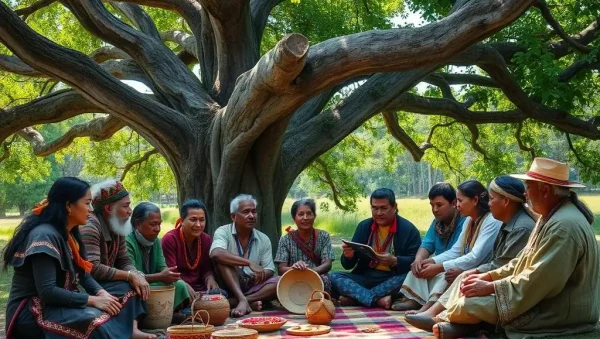
Ethical incorporation requires community consent and reciprocity. Educators should invite Indigenous knowledge keepers as co-teachers, not just guest speakers; credit their expertise; and align with tribal protocols. Avoid trivializing sacred rituals or extracting knowledge without benefit to the community. Successful examples include land-based learning programs, language immersion schools, and collaborative research on traditional agriculture or medicine, all of which preserve and adapt ancestral wisdom.